

Death Stranding 2: On the Beach arrived on PlayStation 5 on June 26, 2025, then reached PC on March 19, 2026. Its return across platforms matters because Hideo Kojima has spent decades arguing that sequels should not settle into safe repetition. He wants surprise. He wants disruption. He has even used the word “betray” when discussing what creators should do with audience expectations.
That philosophy is defensible only under one condition: the game has to give the player something substantial in return. A sequel cannot demand trust while treating the controller as a decorative object. If Kojima breaks an expectation, the break needs to create fresh agency, a sharper perspective, or a thematic payoff that the safer version could never achieve. Otherwise, “betrayal” becomes an elegant label for wasting the player’s investment.
My position is direct. Kojima is right that sequels die when they become production-value upgrades to an established formula. He is wrong whenever the shock itself becomes the point. Metal Gear Solid 2: Sons of Liberty remains the crucial case study because it contains both the brilliance and the weakness of this approach. Death Stranding 2, with its returning Social Strand System, is where that argument gets its modern test.
Table of Contents (6)
“Betray” Is a Boundary, Not a Blank Check
Kojima’s language is deliberately provocative. He has said that he always wants to surprise people, while also drawing a hard line against “surprises that get booed.” That distinction matters. He is not arguing for random reversals, arbitrary deaths, or a sequel that abandons every recognizable feature merely to prove that its creator remains unpredictable.
His own explanation is more practical. He treats player expectation as a central straight line: a creator has room to move away from it, but only to a certain point. His example of giving a player a car gets to the heart of the issue. A game can alter the route, the physics, the stakes, and the purpose of the journey. It still needs a steering wheel. The player needs a functional relationship with the thing they believed they were buying into.
That is where games differ from films, and Kojima has acknowledged as much. A filmmaker can sharply disorient an audience because the audience remains seated and passive. A game asks somebody to make decisions, learn rules, and inhabit a role. The player carries part of the work. Completely severing that relationship does not produce daring art by default. It can produce frustration with better lighting.
The phrase “betray the audience” therefore needs to be read as controlled deviation. The audience expects a straight road; the designer takes a difficult turn but leaves the vehicle intact. Kojima’s best work with surprise has always depended on that distinction. His weakest tendency is assuming that a dramatic narrative change automatically feels interactive because it happens inside a game.
Metal Gear Solid 2 Proved the Power and the Problem
Metal Gear Solid 2: Sons of Liberty launched in Japan in 2001 for PlayStation 2 before rolling out internationally across 2001 and 2002. Its most famous structural move was a transfer of playable focus from Snake to Raiden after a Snake-led opening. Players arrived expecting a familiar continuation with Snake at the center. Kojima used that expectation as material.
The shift was never intended as a prank for its own sake. Kojima explained that Raiden’s presence created a contrast that made Snake feel more iconic. That is a real artistic objective. By putting Snake at a distance, the game changes him from a direct player avatar into a larger-than-life figure viewed through somebody else’s uncertainty. It turns the expected hero into an object of legend, performance, and projection.

That remains a more interesting sequel decision than simply putting Snake in larger environments with more elaborate cutscenes. It challenged what the series’ identity meant. It asked players to recognize that their attachment was not only to a character, but to the fantasy of controlling that character.
Yet Metal Gear Solid 2 also exposes the limitation in Kojima’s defense. Raiden drew a hostile reaction from part of the audience, and Kojima later acknowledged that he was a little unpopular with players. More importantly, Kojima himself said in 2002 that the game had too much passive, non-interactive material. That admission should be attached permanently to every celebration of the twist.
The problem was never that players lacked the intelligence to understand Raiden. The problem was that a game asking players to accept a major change in role has to let them actively explore why that change matters. A structural surprise earns trust through play. It changes the player’s decisions, limitations, tools, responsibilities, or relationship to the world. Narrative explanation can reinforce that work, but it cannot perform it alone.
That is the standard Kojima set for himself. Metal Gear Solid 2 remains bold because its protagonist shift was tied to a specific idea about hero worship and player identification. It remains flawed because the game’s most radical argument often arrives through sequences where the player is watching rather than participating. The concept was ahead of its audience in some ways, yet the interactive delivery did not always meet the ambition.
Death Stranding 2 Has a Clear Contract With Players
Death Stranding 2: On the Beach begins from a stronger position than Metal Gear Solid 2 did. Its identity already rests on a system rather than a conventional power fantasy. The returning Social Strand System gives players asynchronous connections with other players through the world itself. Structures, support, and traces of other people’s labor form part of the game’s language.
That returning system is the steering wheel. It is the core promise that makes a sequel legible. Players may accept unfamiliar systems, altered priorities, strange objectives, and a narrative turn that changes how they read the world. They should expect the sequel to preserve the idea that connection has mechanical weight. The Social Strand System is not background decoration. It is the franchise’s argument about how players affect one another without requiring conventional competitive multiplayer.
For that reason, Death Stranding 2 has no need to imitate the exact Snake-to-Raiden maneuver. Repeating a famous surprise would be the laziest possible interpretation of Kojima’s philosophy. The lesson of Metal Gear Solid 2 is not “swap the expected protagonist.” The lesson is that the sequel should force the player to reconsider what their role means.
A sequel to Death Stranding has an unusual advantage here. Its player-facing systems already make cooperation, preparation, infrastructure, and persistence part of the experience. A meaningful surprise can emerge from changing the consequences of those systems. It can make a previously comfortable behavior morally complicated, strategically inadequate, or emotionally revealing. It can turn connection into a responsibility with new costs. That would be controlled deviation. That would use interactivity instead of hiding behind a trailer-ready reveal.
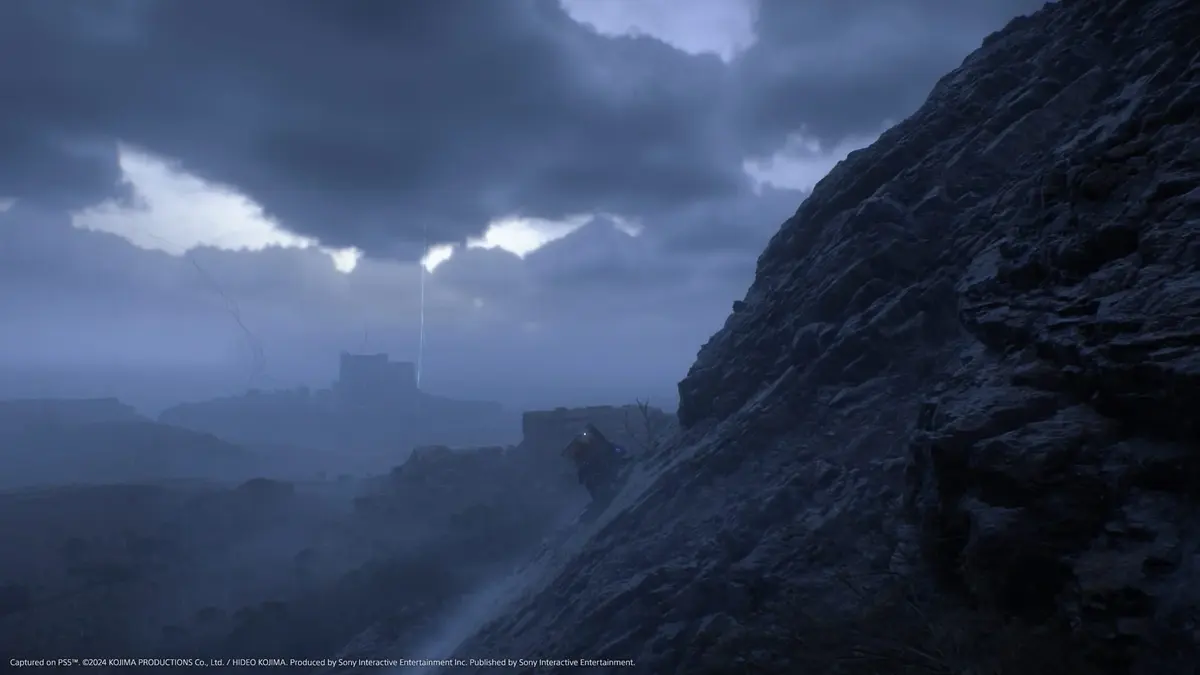
The Standard for a Sequel That Wants to Shock Players
Players should be far less impressed by the existence of a twist than by the work a twist does after the reveal. Kojima’s sequel philosophy holds up when it meets four basic standards.
- The familiar core remains usable. The player needs a recognizable foundation, such as Death Stranding 2’s Social Strand System, before deviation has meaning.
- The disruption changes player behavior. A surprise earns its place when it alters decisions, tactics, relationships, or responsibilities through the controller.
- The new perspective has a purpose. Raiden mattered because he changed the way Snake was perceived. Any comparable shift needs that level of thematic precision.
- The game respects the investment it asked for. Players can accept discomfort. They will not accept being made irrelevant to the experience.
This is where developers routinely confuse secrecy with design. Secrecy protects a surprise before launch. Design gives the surprise value after launch. The first is a marketing tactic. The second is the difficult part. Kojima understands the difference in theory, but his own history proves how easy it is to overestimate what a high-concept narrative move can carry by itself.
Kojima’s Best Argument Against Safe Sequels
There is a temptation to treat player trust as a demand for predictability. It is not. Player trust means that a game’s systems, themes, and perspective remain in conversation with one another. A sequel can make that conversation uncomfortable. It can refuse the obvious sequel fantasy. It can even deprive players of the role they assumed was guaranteed. But it has to replace that comfort with something more revealing than surprise for surprise’s sake.
That is why Kojima’s insistence on moving away from the conventional remains valuable. A sequel built entirely from familiar icons and polished repetition treats players like consumers of a franchise logo. It turns interactivity into routine. The industry has enough follow-ups that protect every expectation so aggressively that they have nothing new to say by the time the credits roll.
But the opposite failure is real and deserves less indulgence than Kojima often receives. A creator does not get credit merely for refusing the expected route. Surprise without agency is a cutscene with an ego problem. A shocking structural change that leaves the player performing the same emotional and mechanical labor is a cosmetic rebellion.
Death Stranding 2 Must Make Its Betrayal Useful
Death Stranding 2: On the Beach carries forward the system that gives the series its identity, and that gives Kojima room to take risks without severing the player contract. The return of the Social Strand System establishes continuity. Any major departure has to deepen what that system means for the player, rather than merely disrupt expectations around it.
Kojima has the right instinct: sequels should not become locked into a formula. The hard truth is that disruption only earns trust when the player receives a more meaningful role on the other side of it. Metal Gear Solid 2 showed the ambition of that idea and the cost of leaving too much of the argument outside the player’s hands. Death Stranding 2 has the systems to meet a higher standard.
FinalBoss // Gear
Level up your setup
01Top-rated gaming headsetson Amazon→02High-refresh gaming monitorson Amazon→03Gaming chairson Amazon→04Discounted game keyson Kinguin→
Affiliate links · As an Amazon Associate, FinalBoss earns from qualifying purchases.
Want to Level Up Your Gaming?
Get access to exclusive strategies, hidden tips, and pro-level insights that we don't share publicly.
Ultimate Gaming Strategy Guide + Weekly Pro Tips