
Google DeepMind taking a minority stake in Fenris Creations and using an offline version of EVE Online for AI testing is the kind of story that sounds nerdy and distant right up until you realize what it actually signals: one of the most famously brutal virtual societies in gaming is now being treated as a serious laboratory for long-horizon AI. Not a gimmick. Not “NPCs that feel more alive.” A lab. And honestly, that’s both more interesting and more unsettling than the usual AI-in-games fluff.
The headline facts are straightforward enough. The studio formerly known as CCP Games has rebranded to Fenris Creations, regained independence from Pearl Abyss in a deal reportedly valued around $120 million, and announced a research partnership with Google DeepMind. The AI work is happening in a local, offline EVE environment that regular players can’t access, with a focus on long-term planning, memory, continual learning, and multi-agent behavior. Fenris says the live game isn’t the target. That matters. But it is not the whole story.
Table of Contents (5)
This is less about EVE players and more about EVE as a stress test for intelligence
Most game-related AI announcements are marketing confetti. Smarter companions. Better enemy flanking. Procedural chatter nobody asked for. This is not that. DeepMind is interested in EVE Online because EVE is one of the few game spaces where “winning” can involve logistics, deception, coalition management, resource forecasting, territorial control, delayed payoffs, and social maneuvering over days, weeks, or months. In AI terms, that’s catnip.
That also explains why the partnership is centered on an offline instance instead of Tranquility, the live game. If you’re trying to study planning across long time horizons, persistent memory, and coordination between multiple agents, you do not want an uncontrolled player environment blowing up your experiment every five minutes. You want a sandbox where variables can be isolated, reset, and measured. Safe experimentation is the polite phrase. Contained artificial societies is the more honest one.
And to be fair, this is exactly what EVE is unusually good at providing. Its economy has been studied for years because it behaves less like a theme park MMO and more like a messy, player-driven system with feedback loops, cartel behavior, power blocs, and periodic self-inflicted disasters. If DeepMind wants an environment that sits somewhere between a strategy game, a market simulation, and a geopolitical soap opera, there really are not many better options.
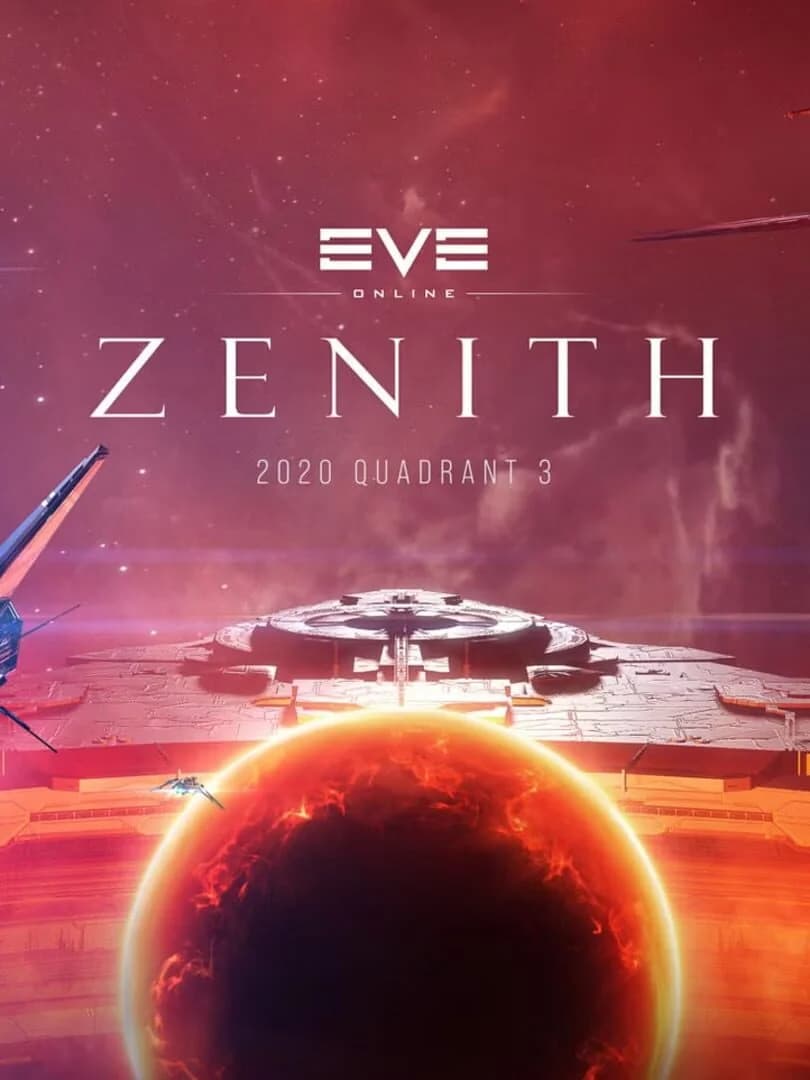
The part PR would rather you not stare at too hard: this is also a business survival move
There’s a second story here, and it’s the one a cynical industry watcher notices immediately. Fenris did not just announce a flashy research collaboration. It also re-emerged from Pearl Abyss ownership and reasserted its independence. Those things landing together is not random. A minority stake from DeepMind is research credibility, yes, but it is also strategic capital and a powerful narrative reset for a studio trying to define itself after a corporate divorce.
Studios love to frame deals like this as pure vision. Sometimes they are. More often, they’re vision plus balance sheet. Fenris now gets to tell investors, partners, and players that it is not merely the keeper of an aging but durable MMO. It is the steward of a “one-of-a-kind simulation” valuable enough for one of the biggest AI labs on the planet to buy into. That is a much stronger story than “we bought ourselves back and hope the next decade goes better.”
None of that makes the partnership fake. It just makes it legible. EVE has always sold itself on scale, consequence, and emergent human behavior. Now those same qualities are being monetized in a different direction: not just as entertainment, but as research infrastructure. That’s a very 2026 sentence, and not an especially comforting one.
The real question is not “will this touch the live game?” but “when, and how?”
Fenris says this work will not affect the live game or current development plans. That claim is plausible in the short term. An offline research environment is not the same thing as deploying AI agents into New Eden and letting them run wild in your alliance logistics chain. But anybody pretending there is a permanent firewall here is kidding themselves.
Research partnerships do not stay quarantined forever unless they fail. If they succeed, the pressure to turn findings into product is enormous. That does not necessarily mean “AI pilots in nullsec tomorrow.” It could mean internal tooling first: economy modeling, behavior simulation, QA automation, content balancing, or predictive systems for live ops. It could mean experimental AI-driven encounters in side projects. Rock Paper Shotgun noted that the companies are also exploring AI-enabled gameplay experiences, and that phrase deserves a raised eyebrow the size of a titan.
Because here’s the uncomfortable question I’d put to Fenris or DeepMind directly: what is the line between using EVE as a safe simulation and using what you learn there to alter how players are managed, monetized, or manipulated elsewhere? “Offline only” answers where testing happens. It does not answer where the incentives go.
That matters because the games industry has a habit of introducing powerful new systems through the least threatening language available. First it’s research. Then it’s optional tools. Then it’s “enhanced experiences.” Then six quarters later it’s embedded everywhere because the metrics looked good in a board deck. We’ve seen lighter versions of this pattern with live service telemetry, personalization systems, and monetization design for years. AI will not magically make the industry more restrained.
EVE is a smart choice for AI research, but it may be a terrible proxy for humanity
There is one more wrinkle here that’s worth keeping in frame. EVE Online is a brilliant sandbox for studying complex, adversarial, multi-agent systems. It is also a deeply specific culture with weird incentives, self-selecting players, entrenched hierarchies, and a tolerance for spreadsheets and betrayal that would get most normal communities evacuated. That makes it useful. It also makes it dangerous to over-read.
If DeepMind talks about EVE as a testbed for general-purpose intelligence, the word “general” is doing a lot of work. Agents that learn to navigate EVE-style competition, delayed rewards, and coalition behavior may become better at exactly those things inside other constrained systems. That’s impressive. It is not the same as solving intelligence in a broad human sense. The industry loves to mistake difficult benchmarks for universal ones. Gamers should know better by now.
Still, dismissing this outright would be lazy. There is real substance here. Long-horizon planning and continual learning remain hard problems. Multi-agent environments with persistence and economic feedback are rare. EVE gives researchers something closer to a living strategic ecosystem than most benchmark suites ever could. If DeepMind wanted a flashy demo, it had easier options. The fact that it chose New Eden suggests it wants systems that break simplistic models fast. That’s serious work.
What to watch next
- Specific disclosures at EVE Fanfest or in follow-up briefings. If Fenris starts talking about concrete “AI-enabled gameplay experiences,” that is when this shifts from research story to product story.
- Whether Fenris keeps the firewall clean between offline experimentation and live EVE Online. The wording matters. “No impact today” is not the same as “no deployment planned.”
- Any signs that the partnership expands beyond research into operational tooling, economy simulation, or player-behavior systems. That’s where the practical consequences show up first.
- How transparent DeepMind is about results. If the company is using EVE as a flagship benchmark, the actual failures will be as revealing as the successes.
The easy version of this story is “DeepMind bought into the EVE studio and wants to train AI in space spreadsheets.” Cute, but not enough. The harder, more honest read is that one of gaming’s most complex virtual worlds is being repositioned as both a research asset and a corporate lifeline, with the usual promises that players won’t feel a thing. Maybe that firewall holds. Maybe this really does stay a clean, offline experiment for a while. But once a live-service universe starts proving useful as a model for intelligence itself, it’s hard not to wonder whether the game remains the product, or whether the game has quietly become the raw material.
FinalBoss // Gear
Level up your setup
01Top-rated gaming headsetson Amazon→02High-refresh gaming monitorson Amazon→03Gaming chairson Amazon→04Discounted game keyson Kinguin→Affiliate links · As an Amazon Associate, FinalBoss earns from qualifying purchases.
Want to Level Up Your Gaming?
Get access to exclusive strategies, hidden tips, and pro-level insights that we don't share publicly.
Ultimate Gaming Strategy Guide + Weekly Pro Tips