
What changed here is not that EVE Online is “getting AI.” The meaningful development is that Google DeepMind now has a controlled stake in the studio formerly known as CCP Games, and it is using an offline version of EVE as a research environment for problems current AI systems still handle badly: long-horizon planning, persistent memory, shifting incentives, and adaptation over time. For anyone who has watched both AI demos and MMO marketing for years, that distinction matters. This is not a live feature announcement. It is a bet that one of gaming’s messiest social-economic sandboxes can function as a serious systems testbed.
Fenris Creations, the rebranded studio behind EVE Online, said the work will happen on isolated servers that players cannot access. That is the first reassuring detail, and also the one the announcement needs most. EVE has more than enough trust issues built into its ecosystem already; the last thing the game needs is confusion over whether research agents are touching the live economy or player behavior. On the available reporting, they are not.
Table of Contents (5)
This is really a story about why EVE still matters
EVE Online has spent two decades proving that it is less a traditional MMO than a machine for producing complicated incentives. Markets move. Alliances form and fracture. Logistics matters until it suddenly matters more than combat. Players create local order, then break it. If DeepMind wanted a polished arena for clean benchmark wins, there are easier options. EVE is useful precisely because it is not clean.
That makes the partnership more interesting than the usual “AI meets games” headline. Most game-AI stories are about content generation, NPC dialogue, automation pipelines, or some executive trying to shave costs while calling it innovation. This one is narrower and, frankly, more serious. DeepMind research director Alexandre Moufarek described EVE as a “one-of-a-kind simulation” for testing general-purpose AI in a safe sandbox. Strip out the press-release polish and the argument is straightforward: if a model can operate inside something as economically and socially unstable as EVE, it may learn capabilities that do not show up in static benchmarks or short-session tasks.
That does not mean EVE is a perfect proxy for the real world. It is still a game, with abstractions, hard rules, and constrained objectives. But compared with the toy environments AI research often leans on, New Eden offers a much uglier and therefore more useful mix of partial information, delayed consequences, resource competition, cooperation, betrayal, and strategic patience. Those are exactly the areas where “look what the model can do” demos tend to get thin.
The minority stake matters more than the lab framing suggests
The uncomfortable observation is that this is not just a research collaboration between friendly partners. DeepMind reportedly took a minority stake in Fenris as part of a $120 million transaction tied to the studio’s separation from Pearl Abyss. That changes the texture of the deal. It suggests DeepMind does not merely want access to a fascinating simulation; it wants influence over the company that owns and evolves that simulation.
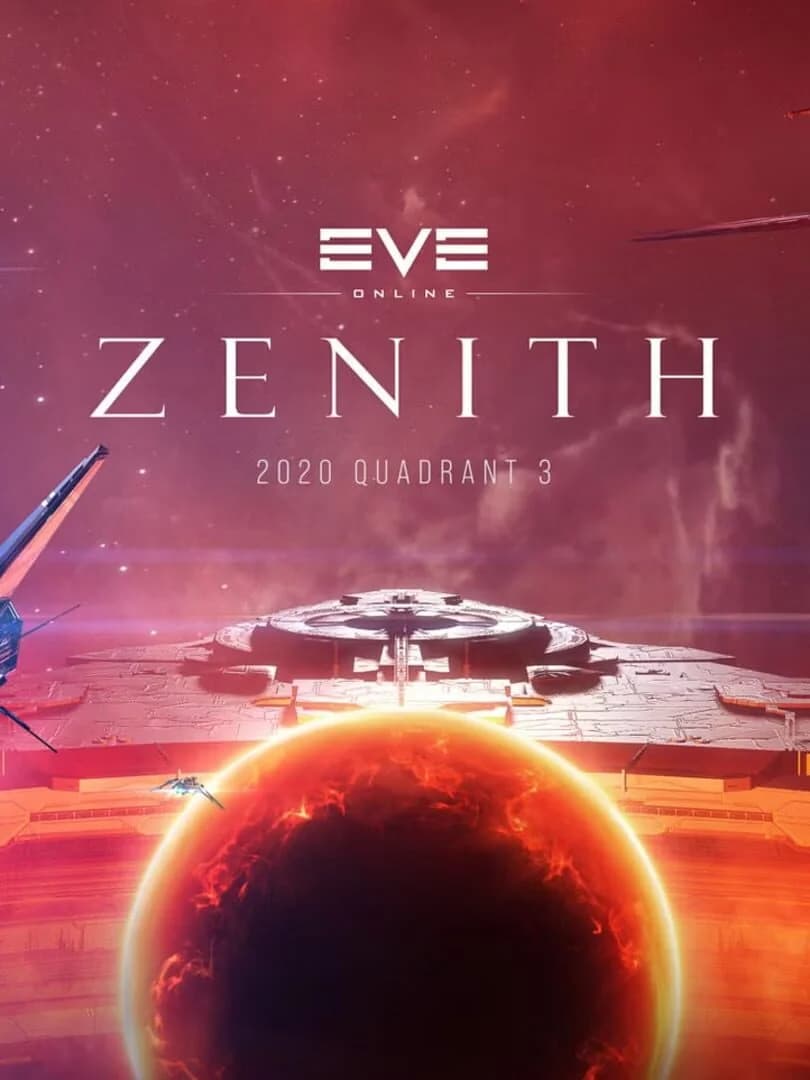
There is a practical reason for that. If EVE is going to be a long-term research platform, the owner of the world matters. Stability matters. Roadmap control matters. The ability to shape instrumentation, server conditions, and experimental design matters. A simple licensing arrangement would leave too much exposed to corporate drift. Taking a stake reduces that risk.
It also lands at a revealing moment for the studio itself. Fenris has re-emerged from Pearl Abyss ownership with the same leadership, the same core EVE business, and a strong incentive to prove that the company is more than a legacy MMO operator managing an aging but durable universe. The rebrand alone would have been corporate housekeeping. Pairing it immediately with DeepMind turns it into something else: a claim that EVE is not just commercially persistent, but strategically valuable outside entertainment.
That is a smarter narrative than “we are independent again.” Independence sounds nice. Strategic relevance gets investors and partners to pay attention.
What this does not answer is the part players should actually care about
Fenris says the research will not affect the live game. Good. But the obvious follow-up question is what, exactly, the company means when it also talks about exploring AI-enabled gameplay experiences. That phrase covers a lot of ground, and most of it deserves scrutiny.
There is a meaningful difference between using EVE as a sealed research environment and using research outcomes to shape player-facing systems later. One is essentially infrastructure for machine-learning experiments. The other raises familiar industry concerns: automation replacing authored design work, reactive NPC claims that overpromise, or systems that create new moderation and fairness problems in a game already notorious for trust warfare and market manipulation.
If I were in the room with PR, the question would be simple: does this partnership end at the offline sandbox, or is Fenris laying groundwork for live products, live tools, or live economy intervention informed by DeepMind research? Right now, the public messaging is careful enough to avoid committing either way. That is sensible corporate language. It is not a complete answer.
There is another reason to keep the distinction sharp. EVE’s value as a research environment comes from complexity produced by real player behavior over many years. But that same history makes live integration risky. In a single-player game, experimental AI features can be annoying. In a player-run MMO economy, they can destabilize trust very quickly. Once players suspect invisible systems are nudging outcomes, every bad market move and every strange ecosystem shift becomes conspiracy fuel. EVE does not need help generating paranoia.
The industry pattern here is bigger than one MMO
Studios have been trying for years to position games as more than games: metaverse platform, social operating system, creator economy, digital nation-state, pick your favorite overcooked pitch deck. Most of those claims collapsed because they were marketing first and utility second. This case is more grounded. DeepMind is not pretending EVE will become the future of everything. It is using EVE because the game already contains the kind of interacting systems that are expensive to build from scratch and hard to simulate credibly.
That is why this partnership deserves more attention than the usual AI announcement, even if it never results in a player-facing feature. It points to a narrower, more believable relationship between games and AI research: not games as branding exercise, but games as mature synthetic environments for stress-testing agents against messy coordination problems. In that framing, EVE is less product and more laboratory apparatus.
There is precedent for games serving as AI benchmarks, but EVE changes the scale and texture of the challenge. It is not just tactics or micro-decisions. It is strategy over long periods, under uncertainty, with economic and political consequences. That makes it closer to the kind of persistent adaptation researchers keep saying they want, and farther from the kind of benchmark theater the field keeps rewarding.
What to watch next
- Any technical disclosure from DeepMind or Fenris about the actual task design. “Long-horizon planning” is credible in EVE. It is also vague enough to hide weak experiments.
- Whether Fenris keeps the wall between research sandbox and live game rigid. That line needs to stay bright.
- Any mention of AI-enabled products, developer tools, or simulation systems tied to EVE or adjacent projects. That is where player impact begins.
- Whether the partnership produces papers, benchmarks, or reproducible results instead of just corporate prestige. Without that, this is mostly an expensive signaling exercise.
- How Fenris uses the post-Pearl Abyss reset. If the company starts presenting EVE as a platform for research and systems experimentation, that will tell you this deal is part of a larger repositioning rather than a one-off lab access arrangement.
The practical reading is simple. DeepMind did not choose EVE because space ships are cool. It chose EVE because stable, persistent, adversarial systems are still where modern AI claims get stress-tested the fastest. Fenris, meanwhile, gets more than funding and prestige. It gets a way to argue that one of the oldest MMOs still has strategic value in a market obsessed with whatever was announced five minutes ago.
FinalBoss // Gear
Level up your setup
01Top-rated gaming headsetson Amazon→02High-refresh gaming monitorson Amazon→03Gaming chairson Amazon→04Discounted game keyson Kinguin→Affiliate links · As an Amazon Associate, FinalBoss earns from qualifying purchases.
Want to Level Up Your Gaming?
Get access to exclusive strategies, hidden tips, and pro-level insights that we don't share publicly.
Ultimate Gaming Strategy Guide + Weekly Pro Tips