
DemonSchool’s VHS-Horror RPG Could Reinvent Tactical Strategy
Game intel
Demonschool
Demonschool is a new-style tactics RPG where motion equals action. Defeat big weirdos in between the human and demon worlds as Faye and her misfit companions,…
Overview
When DemonSchool’s September 3, 2025 release winked into view during Nintendo Indie World Japan, genre fans did a double take. Developed by Necrosoft Games and published by Ysbryd Games, DemonSchool fuses Persona-style social bonds, Shin Megami Tensei demon taming, and mid-century Italian horror aesthetics. Imagine VHS-static corridors, fiends peeking from behind lockers, and tactical skirmishes that reward empathy as much as raw power. The big question: will this audacious mix deliver spine-tingling thrills and emotional depth, or buckle under its own creativity?
Where to Play
DemonSchool arrives simultaneously on PlayStation 5, PlayStation 4, Xbox Series X|S, Xbox One, Nintendo Switch, Steam Deck, and PC (Steam and Epic). Whether you’re a console purist, handheld devotee, or PC strategist, you can explore haunted hallways anywhere. Native Switch and Steam Deck support ensure smooth portable performance, while next-gen optimizations highlight every VHS-filtered frame and demon-detail. At launch, full localization in English, French, Spanish, Japanese, and Simplified Chinese underscores its global ambition.
Gameplay Mechanics
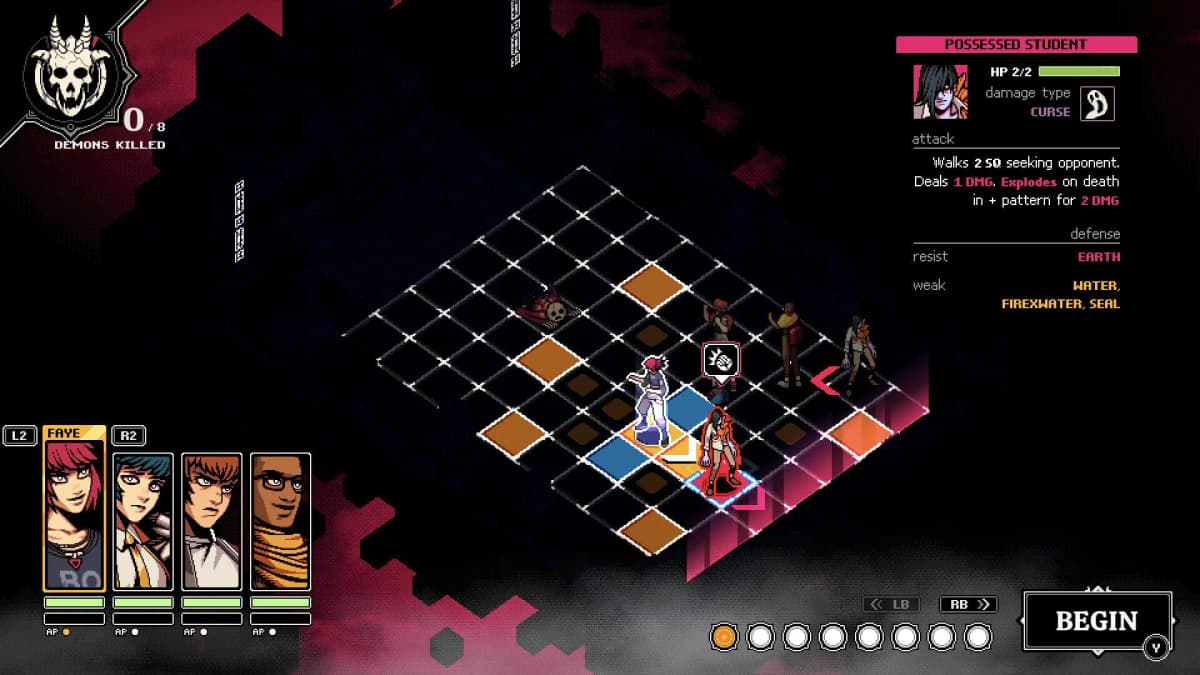
Turn-Based Grid Combat
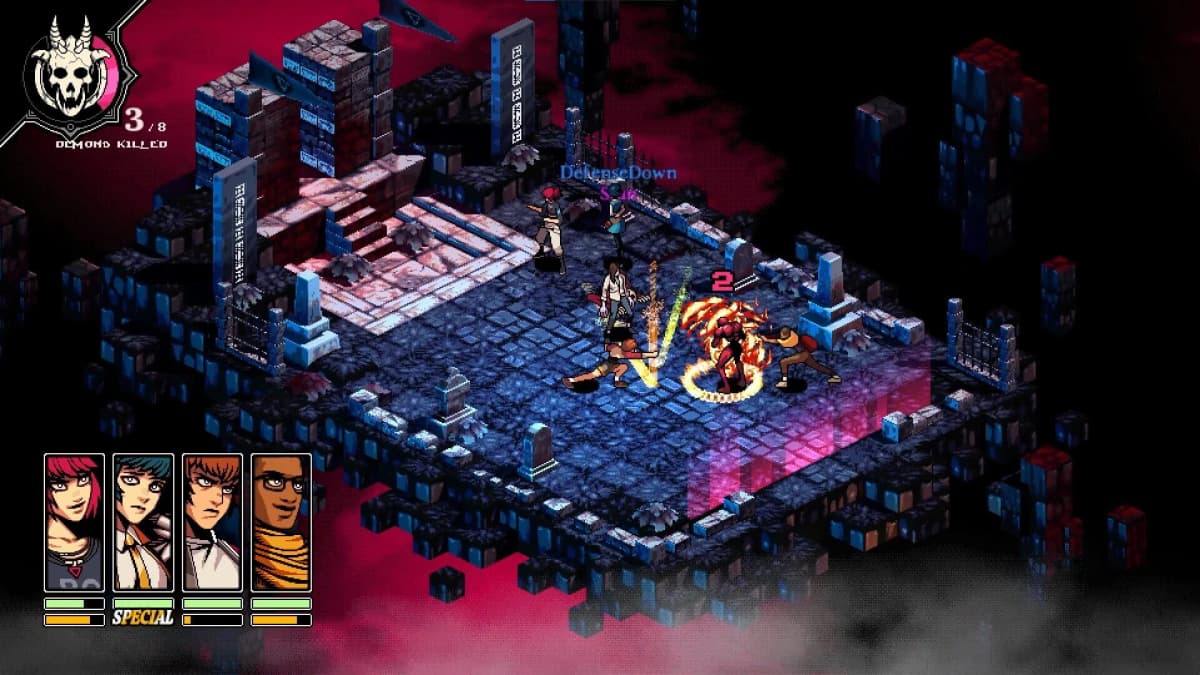
Fights take place on dynamic grids where positioning is half the battle. Movement isn’t just about reaching high ground—it’s about weaving spells, staging ambushes behind flickering projectors, and exploiting cover from broken desks. Each classroom transforms into a strategic stage where terrain features alter the flow of battle.
Planning vs. Action Phases
DemonSchool splits each turn into two modes. In the Planning Phase, you chart movement paths, assign spells, set defensive stances, and queue Combo Links. Then the Action Phase plays out your blueprint in cinematic fashion—complete with dramatic camera angles and lingering static glitches. It feels like directing a micro horror movie where one miscalculation can scatter your team.
Unlimited Rewind System
The signature mechanic is an unlimited rewind function. Mess up a combo or see your formation fall apart? Roll back time, tweak your approach, and replay until it clicks. Early impressions suggest this encourages bold experimentation—risky traps, daring flanks, elaborate combo chains—without the dread of game over. Still, some worry that infinite retries could undercut tension. Will each rollback feel like a learning moment, or will suspense fade under endless do-overs?
Boss Fights as Tactical Riddles
Boss encounters turn classrooms into demonic arenas. Picture encircling a phantom hall monitor perched atop a desk splashed with spectral ichor, only to rewind and refine tactics after a bone-crushing roar. Every boss is a puzzle: balance aggressive pincer attacks, reinforce weak points with magical wards, and time Combo Links to exploit elemental vulnerabilities. When you finally prevail, victory tastes earned; when you fail, you’ll happily replay sequences until your plan snaps into place.
Social Simulation & Narrative Depth
Social segments in DemonSchool are more than downtime—they directly upgrade your combat toolkit. Befriend the class clown to unleash prank-based stuns; earn the art president’s trust to paint sigils that boost fire magic; team up with the science club to rig experimental traps. As friendships deepen, you unlock Combo Links—unique tandem abilities that blend individual specialties into devastating signature moves.
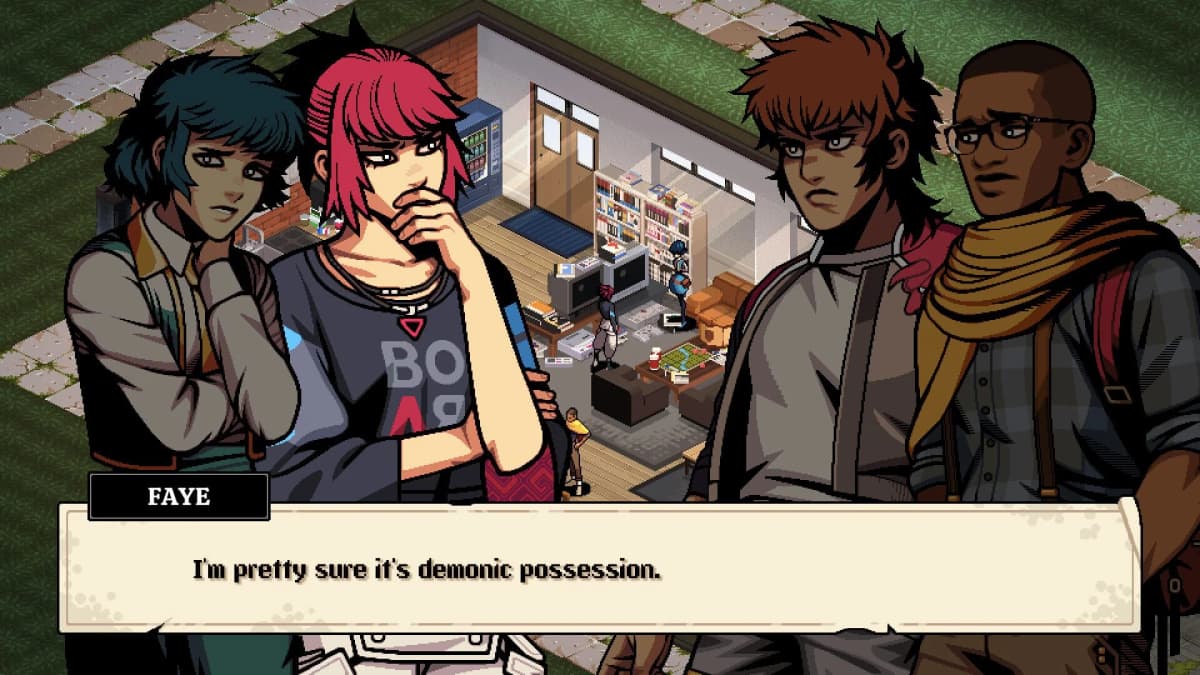
But it’s not all numbers and stats. Side quests spring from character-driven dilemmas: help the drama club expose a hidden underground rehearsal space doubling as a demon-summoning altar, or guide the literature enthusiast through a cursed anthology that reveals secret map shortcuts and unlocks ancient grimoires. Each choice carries emotional weight, shaping relationships and unlocking branching cutscenes that can end in triumph, betrayal, or haunting loss. In one early preview, aiding the literature geek uncovered a sorrowful backstory about a vanished friend trapped between realms—an encounter that left testers genuinely unsettled.
Visuals & Aesthetics
DemonSchool’s art direction merges 2D noir-style panels with full 3D environments. Demons materialize from CRT screens flecked with static, evoking Lucio Fulci–style nightmares, while character sprites feature expressive manga-influenced linework. A perpetual VHS-grain overlay bathes every corridor in uneasy dread, and cutscenes shift between panel-by-panel storytelling and fluid, spine-tingling animation. The result is a hybrid aesthetic that can seduce the imagination—though on lower-end hardware, some testers noted occasional clutter when too many effects overlap.
Want to Level Up Your Gaming?
Get access to exclusive strategies, hidden tips, and pro-level insights that we don't share publicly.
Ultimate Gaming Strategy Guide + Weekly Pro Tips
Developer Background
Necrosoft Games, led by industry veteran Brandon Sheffield, earned indie cred with experimental shooters like Hyper Gunsport and charming puzzle hybrids such as Gunhouse. Publisher Ysbryd Games is best known for cult hits like VA-11 HALL-A and World of Horror, masters of offbeat narratives and retro-infused visuals. Their partnership on DemonSchool unites two studios renowned for risk-taking—but blending social sim, horror motifs, and tactical depth remains a tightrope walk even for seasoned developers.
Why It Matters
Tactics RPGs increasingly flirt with social sim elements, yet few dare to marry horror and rewindable combat as boldly as DemonSchool. If it nails its dual loops—rich, emotionally charged relationship arcs and endlessly replayable, rewindable battles—it could reset genre expectations. But if it leans too heavily on anime tropes or a too-forgiving rewind system, it may sacrifice edge for spectacle. Its success hinges on balancing heart, fear, and strategic complexity.
Conclusion
- Release Date: September 3, 2025, on PS5, PS4, Xbox Series X|S, Xbox One, Switch, Steam Deck, and PC.
- Key Features: Dual-phase grid combat, unlimited rewinds, bond-driven Combo Links.
- Visual Style: 2D/3D hybrid drenched in VHS horror and manga flair.
- Potential Impact: May redefine how tactics RPGs blend narrative and replayability—or buckle under ambition.
As launch day looms, DemonSchool deserves a spot on your radar. If Necrosoft and Ysbryd stick the landing, expect a school-life strategy game equal parts spine-chiller, drama epic, and tactical puzzle—a fresh formula for gamers craving horror with heart.