
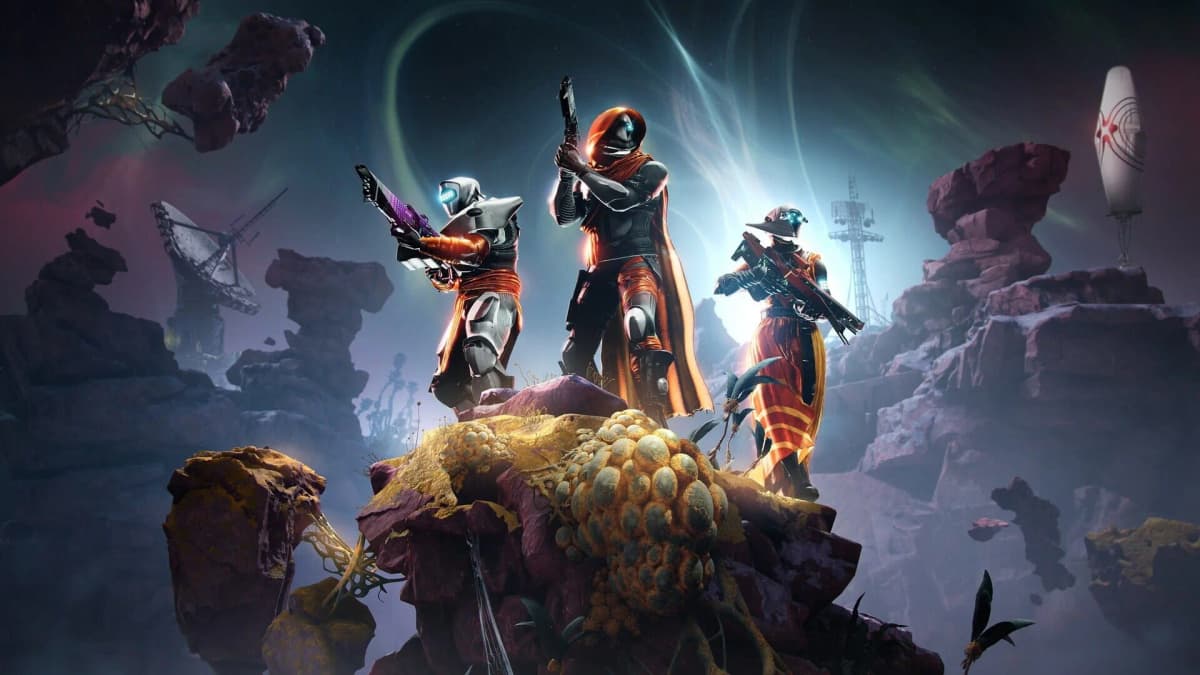
Tim Sweeney’s argument is the kind of thing that sounds undeniable at first. Destiny 2 was “only very rarely profitable.” The content treadmill never stopped. Bungie just confirmed that active live-service development ends on June 9, 2026, with a final update called Monument of Triumph, while 292 employees at the Bellevue headquarters face a formal separation date of July 9, 2026. Staring at those numbers, it is almost comforting to believe that generative AI-faster, cheaper, relentless-could have kept the whole machine humming. Almost.
But here is the thing. I keep thinking about what actually made people stop logging in. It was not the production budget. It was the rhythm. The seasonal model started to feel like a second job scripted by an algorithm that already existed, one obsessed with engagement metrics rather than genuine surprises. If Sweeney thinks generative AI would have fixed that, he is solving a math problem while ignoring the player sitting in front of the screen.
Table of Contents (4)
The Numbers Are Brutal, and Sweeney Knows It
There is no universe where Destiny 2’s live-service pipeline was sustainable as built. Sony’s Hermen Hulst confirmed a reduction in force hitting most of the Destiny team and parts of the Marathon crew. Pete Parsons and Justin Truman are steering a studio that has to pivot to an incubation phase for whatever comes next. The game will remain playable, just as the original Destiny still is, but future seasons and expansions are canceled or not planned. Sweeney looked at that corpse and concluded the killer was scale. If Bungie had used AI to generate weapons, environments, dialogue, and mission frameworks, the “enormous scale of content that had to be produced nonstop” might not have bled the studio dry.
He is not wrong about the pressure. Live-service games are content furnaces. Anything that speeds up prototyping, fills out localization, or automates routine asset work is a genuine lifeline. If AI had shaved months off production cycles, maybe some of those 292 jobs survive. Maybe the final update is not a gravestone but another season. The logic is cold, but it is coherent.
What the Spreadsheet Cannot Capture
Coherent is not the same as correct. Destiny 2’s problem was never a lack of stuff. The game is overflowing with stuff. The problem was the cadence-the feeling that new content arrived on a conveyor belt, each season slightly more exhausted than the last. Design intent is not a commodity you can prompt into existence. Weapon balance, raid mechanics, narrative payoff, the subtle alchemy that makes a strike feel satisfying instead of robotic—these things require taste, not throughput.
Generative AI is very good at producing volume. It is not good at producing judgment. You can train a model to spit out ten thousand gun concepts, but you still need a human who understands how trigger weight, audio design, and perk synergy combine to make a weapon feel like Destiny. You can automate dialogue trees, but you cannot automate the creative direction that turns a villain from a bullet sponge into a character players actually remember. Sweeney’s proposal treats content like a gas tank: pour more in, and the car runs longer. But players do not leave because the tank is empty. They leave because the fuel starts tasting like ash.
The Real Attrition Was Trust, Not Cost
Think about the last time you bailed on a live-service game. Was it because you read the quarterly earnings and decided the profit margin was too slim? No. You left because the loot felt cheap, the story threads went nowhere, or the new season asked you to grind the same activity with a fresh coat of paint. That is a quality problem, not a production-cost problem. Lowering the cost of creating content does nothing to guarantee that the content is worth creating.
If Bungie had deployed AI to churn out more seasons faster, we might have gotten an even more bloated calendar of filler. The issue was never that humanity needed help making Destiny 2 bigger. It was that the model demanded endless growth from a team that was clearly already stretched past its limit. Faster tools do not fix broken expectations; they just let you disappoint people more efficiently.

Monument of Triumph and the Human Cost
Now we are left with Monument of Triumph. A hand-crafted send-off for a game that defined a decade of shooter history, built by a skeleton crew in a studio that has to reimagine itself entirely. There is something almost defiant about that update being human-made. Every texture, every line, every encounter in it will exist because someone at Bungie chose to put it there, not because a diffusion model generated ten variations and a producer picked the third one.
And yet, the layoffs haunt that same moment. If Sweeney is right—if AI really could have reduced the burn rate enough to keep the live-service dream alive—then Monument of Triumph is proof that human-scale production was always doomed. But if he is wrong, then the update is proof that the only thing keeping players around this long was the human touch, and no amount of synthetic content could have replaced it.
I keep going back and forth. If Monument of Triumph lands with the weight that last hand-crafted updates sometimes do, does it prove Sweeney wrong—that human intent was the only thing ever worth paying for? Or does its very existence as a finale prove him right, that the only way to survive was to stop pretending human teams could outrun an infinite content treadmill? Either way, the game ends. The people leave. And the industry is left wondering whether the future of live-service is smarter tools, or simply smaller dreams.
FinalBoss // Gear
Level up your setup
01Top-rated gaming headsetson Amazon→02High-refresh gaming monitorson Amazon→03Gaming chairson Amazon→04Discounted game keyson Kinguin→
Affiliate links · As an Amazon Associate, FinalBoss earns from qualifying purchases.
Want to Level Up Your Gaming?
Get access to exclusive strategies, hidden tips, and pro-level insights that we don't share publicly.
Ultimate Gaming Strategy Guide + Weekly Pro Tips