
Table of Contents (7)
Destiny was always built on the promise of tomorrow, and that’s why this hurts so much
For most of its life, Destiny has sold a very specific fantasy: not just the raid you’re doing tonight, but the idea that all of this is building toward something bigger. The next expansion. The next subclass. The next loot chase. The next reinvention that will finally get everything right. Even when Bungie stumbled, and God knows it stumbled, the studio could usually count on one thing: players believing there was still a future worth waiting for.
That’s why the recent reporting around Bungie lands like a body blow. Not because anyone seriously thought live-service games lasted forever, and not because every veteran player was still pretending Destiny 2 was in perfect health. It lands because Bloomberg’s reporting, widely echoed elsewhere, paints a picture that is much worse than a routine transition. Bungie is reportedly planning significant layoffs as it winds down active development on Destiny 2. It reportedly does not plan to immediately begin production on Destiny 3. And, maybe most damning of all, there was reportedly no new project lined up for the Destiny development team at that time.
I think that last detail is the real story. People are getting hung up on the phrase “Destiny 3 isn’t in active production,” because sequel talk is easy headline material. But the deeper problem isn’t just that Destiny 3 isn’t ready. It’s that Bungie appears to have reached the end of one of the most important live-service games of the last decade without a clearly greenlit next home for the people who made it. That is not a cute little pause. That is strategic drift.
What the reporting actually says, and what people keep exaggerating
Let’s be precise, because this kind of story gets mangled fast. The public reporting does not mean “Destiny is dead forever,” and it does not prove that Destiny 3 was secretly finished and then canceled in some dramatic boardroom betrayal. That’s fan-fiction. The more grounded read is harsher and, frankly, more believable: Bungie is winding down active Destiny 2 development, the June 9, 2026 update was described as the final content update for the game, and there is no immediate move into full Destiny 3 production.
That distinction matters. “Not in active production” is not the same as “never happening.” Franchises this large don’t vanish because one report says the next numbered game isn’t spinning up right now. But when the same reporting also says layoffs are coming and no new project has been greenlit for that team, I stop treating the absence of a sequel as a temporary mystery and start treating it as evidence of a studio that doesn’t know how to bridge its own future.
And no, I don’t find that reassuring. Sometimes fans hear “not canceled” and cling to it like a life raft. I get the instinct. I’ve done it with games I love. But “not canceled” can still mean “not resourced,” “not approved,” “not prioritized,” or “not happening until years after the audience you had has scattered.” In practical terms, those can feel almost identical.
This looks less like one bad break and more like a portfolio failure
The easiest way to misunderstand Bungie’s current mess is to treat it as the normal end of a long-running game. Long-running game winds down, staff move to the sequel, cycle continues. Clean handoff. Sad, but logical. That does not seem to be what’s happening here.
What makes this situation ugly is the reported production gap. Follow-up coverage has consistently pointed to the same broad pattern: Bungie staff had been pitching ideas, but none had been greenlit. That means the issue isn’t simply that Destiny 2 reached its last major chapter. The issue is that Bungie appears to have let a huge, experienced team approach the edge of a cliff without building a real bridge to the next thing.

I don’t say that lightly, because game development is messy and plans change all the time. But there’s a difference between healthy iteration and corporate paralysis. When a studio as important as Bungie is winding down its flagship, not moving directly to its most obvious successor, and reportedly planning significant layoffs in the same window, that doesn’t read like nimble creativity. It reads like management failing to convert talent into a roadmap.
And yes, this also seems tied to Marathon. Reporting around the situation indicates Bungie’s internal plan centers on that game as the main absorbing project, with some Destiny staff already shifted in that direction. That matters because it changes how I read every “maybe someday” statement about Destiny 3. If the studio’s staffing flexibility depends on Marathon’s needs rather than a direct ramp-up to the next Destiny, then Destiny is no longer driving Bungie’s future. It’s waiting in line behind the company’s attempt to justify its present.
Why this hits harder for Destiny players than a normal studio shake-up
Layoffs are always awful, and I don’t want to flatten that into content-strategy chatter. Real people lose jobs when executives lose the plot. But for players, Destiny adds another layer because this isn’t just a product line. It’s a habit machine, a social space, a weekly routine, a lore obsession, a buildcraft rabbit hole, and for some people a full-blown identity. That’s what makes the phrase “the game will remain playable” feel almost cruelly incomplete.
Sure, the servers may stay up. That is not the same thing as a living game. Anyone who has spent time in aging live-service communities knows the difference immediately. The economy stops mattering in the same way. Seasonal speculation dries up. Theorycrafting narrows. The communal sense that your effort is part of an evolving world starts to evaporate. You can still play. You just can’t pretend the horizon is doing the heavy lifting anymore.
That’s why I think a lot of the public reaction has felt less like surprise and more like delayed grief. People weren’t merely mourning a patch schedule. They were mourning the collapse of a long-standing assumption: that Bungie, whatever else it messed up, would keep Destiny moving forward in some recognizable way. Once that assumption breaks, players stop reading the game as an ongoing home and start reading it as a museum they used to live in.
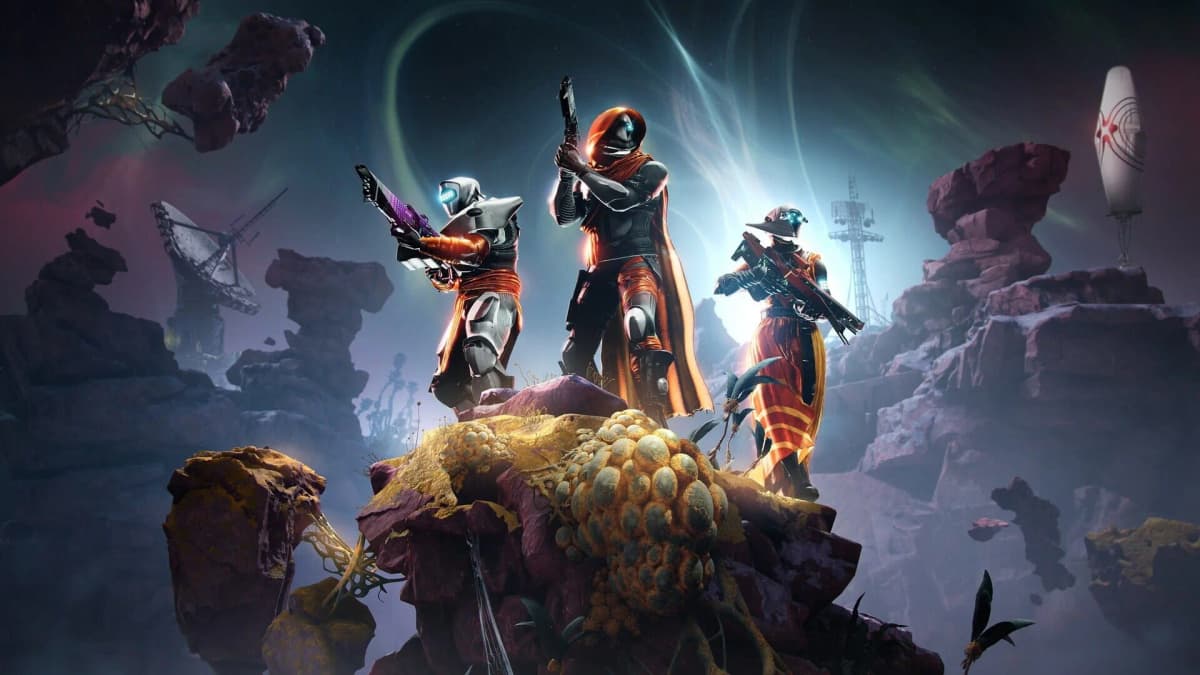
And that changes behavior fast. People stop grinding for hypothetical futures. They stop buying on faith. Clans drift. Creators diversify or bail. Friends who only logged in because there was always another event around the corner suddenly discover there isn’t. This is what fans sometimes miss when they say, “Well, if the servers stay on, what’s the big deal?” The big deal is that live-service games are powered by momentum, not just functionality.
I don’t buy the comforting fantasy that Bungie can casually return to Destiny whenever it wants
There’s a fallback argument I keep seeing: Destiny is too valuable to stay dormant, so Bungie or Sony will obviously circle back with a big sequel once the timing is right. Maybe. But people say “obviously” about this industry far too often, and it keeps blowing up in their faces.
Here’s my issue with that optimism. A true Destiny 3 isn’t just a logo and a trailer. It would be one of the most expensive and politically messy projects Bungie could greenlight. It would have to answer old wounds from the move from Destiny to Destiny 2, justify another reset to a player base already trained to distrust content loss, and somehow feel new enough to matter without detonating what still works. That is a brutal design and business problem even when a studio is healthy. In the middle of layoffs and portfolio uncertainty? It’s even nastier.
So no, I don’t see “they’ll just make Destiny 3 later” as the safe bet. I see it as wishful thinking covering for the fact that Bungie may not currently have the confidence, internal alignment, or project approval pipeline to make that call. A franchise can be valuable and still be stranded. We’ve seen that before across the industry. IP value is not the same thing as execution readiness.
This is the part where some fans get defensive and accuse anyone saying this out loud of dooming. I’d argue the opposite. Pretending there’s a straightforward master plan here is the real cope. If Bungie had a clean handoff, if it had a confident sequel path, if it had a settled answer for where its people were going next, this conversation would sound very different.
The fairest counterpoint is also the one that shouldn’t comfort anyone
To be fair, there is a real counterargument. Bungie has survived ugly periods before. Destiny itself has been written off, mocked, revived, and reworked more times than any sane franchise should have to endure. “Not in active production” leaves room for incubation, prototyping, executive reconsideration, or a later greenlight once the studio stabilizes. If you want the most optimistic credible read, it’s that Bungie is between phases, not at the end of the road.
I don’t dismiss that. It’s plausible. It may even prove true.
But notice what that still means for players right now. It means uncertainty, not assurance. It means the next chapter is hypothetical while the layoffs are reportedly concrete. It means people are being asked, once again, to emotionally float a company through ambiguity because the brand name still has power. I’m done giving studios extra credit for futures they haven’t earned.
That’s where my sympathy has a limit. I can feel awful for developers and still say Bungie the organization does not deserve blind trust here. The studio spent years training this audience to think in long arcs and permanent investment. If the result is a winding-down flagship, no active numbered successor, and a team reportedly left without a greenlit landing zone, then players are not “overreacting” by seeing that as a serious failure of leadership.
What I think Destiny players should do now
My practical take is blunt: treat Destiny 2 like a legacy game, not a bridge. If Bungie somehow delivers a true next chapter down the line, great. Judge that when it exists. But do not make present decisions based on the comforting idea that your current attachment is automatically feeding into a healthy future.
- If you still love playing Destiny 2, keep playing it for what it is now, not for what you hope it might become later.
- If you were planning purchases out of franchise loyalty, slow down and ask whether you’re buying fun or buying hope.
- If your clan only survives because everyone assumes Bungie will reignite the treadmill soon, start building social plans outside Destiny.
- If you follow every rumor about Destiny 3, pay more attention to staffing and project approvals than to lore breadcrumbs and wish-casting.
That may sound cold, but I think it’s healthier than the alternative. The worst habit live-service games create is teaching players to confuse devotion with leverage. We act like loyalty guarantees stewardship. It doesn’t. Sometimes loyalty just makes you easier to drag through another year of uncertainty.
My bottom line is simple: the ugly part of this story isn’t merely that Destiny 3 isn’t actively in production. It’s that the reporting suggests Bungie let one of gaming’s biggest ongoing worlds approach its endpoint without a convincing, approved next step for the people behind it. That’s not a dramatic cliffhanger. That’s a warning sign. Until Bungie shows something more concrete than absence, I’m treating the old promise of Destiny-that there’s always a bigger tomorrow just ahead-as officially broken.
FinalBoss // Gear
Level up your setup
01Top-rated gaming headsetson Amazon→02High-refresh gaming monitorson Amazon→03Gaming chairson Amazon→04Discounted game keyson Kinguin→Affiliate links · As an Amazon Associate, FinalBoss earns from qualifying purchases.
Want to Level Up Your Gaming?
Get access to exclusive strategies, hidden tips, and pro-level insights that we don't share publicly.
Ultimate Gaming Strategy Guide + Weekly Pro Tips