
Table of Contents (17)
Why Rune Linguistics Is Confusing (And How to Finish It Fast)
After spending a couple of evenings banging my head against the Rune Linguistics task, I realised the objective itself is simple — but the game does a terrible job of explaining the prerequisites and the exact socketing order. I tried stuffing random runes into any item with sockets, wondered why nothing triggered, and only then pieced together how Ritual runes, Invocation runes, and Offerings actually work.
This guide walks you from zero to completion as efficiently as possible:
- What you must unlock first (DLC + questline)
- How to access the Rune system via Alom in Kurast Bazaar
- Where to quickly farm your first usable runes
- The exact socket order (Ritual top, Invocation bottom)
- How to trigger Offerings so Rune Linguistics actually completes
If you focus on just this task, you can go from nothing to a completed Runeword in around 30–60 minutes, depending on your gear and activity choice.
Step 1: Make Sure You Actually Qualify
My first mistake was trying to do Rune Linguistics on a character that didn’t even meet the base requirements. Before anything else, you need:
- Vessel of Hatred DLC installed on your account
- A Seasonal character (current season)
- Access to the Fundamentals of Faith questline
Rune Linguistics is tied directly to the Vessel of Hatred content. If you don’t own the DLC, or if you’re on an Eternal character, you can grind as much as you want and nothing will update the objective.
Quick check: if you don’t see rune-related UI in your inventory and there’s no quest pointing you towards Kurast / Faith-related objectives, you either haven’t progressed far enough in the DLC content or you’re on the wrong character type.
Step 2: Finish “Fundamentals of Faith” and Talk to Alom
The real unlock for the Rune system is the quest Fundamentals of Faith. I tried to skip side content and go straight into farming runes — that doesn’t work. The game will let runes drop, but Rune Linguistics and rune crafting stay effectively “locked” until you complete this step.
2.1 Complete the “Fundamentals of Faith” Quest
Progress through the Vessel of Hatred storyline until you receive the Fundamentals of Faith quest. Follow it through to completion; it serves as your introduction to the Offerings and rune concepts.
Once the quest is finished, you’ll get directed towards Kurast Bazaar. This is where the real switch gets flipped.
2.2 Speak to Alom in Kurast Bazaar
Head to Kurast Bazaar (you’ll unlock it naturally through the DLC path). Look for Alom, the rune specialist NPC.
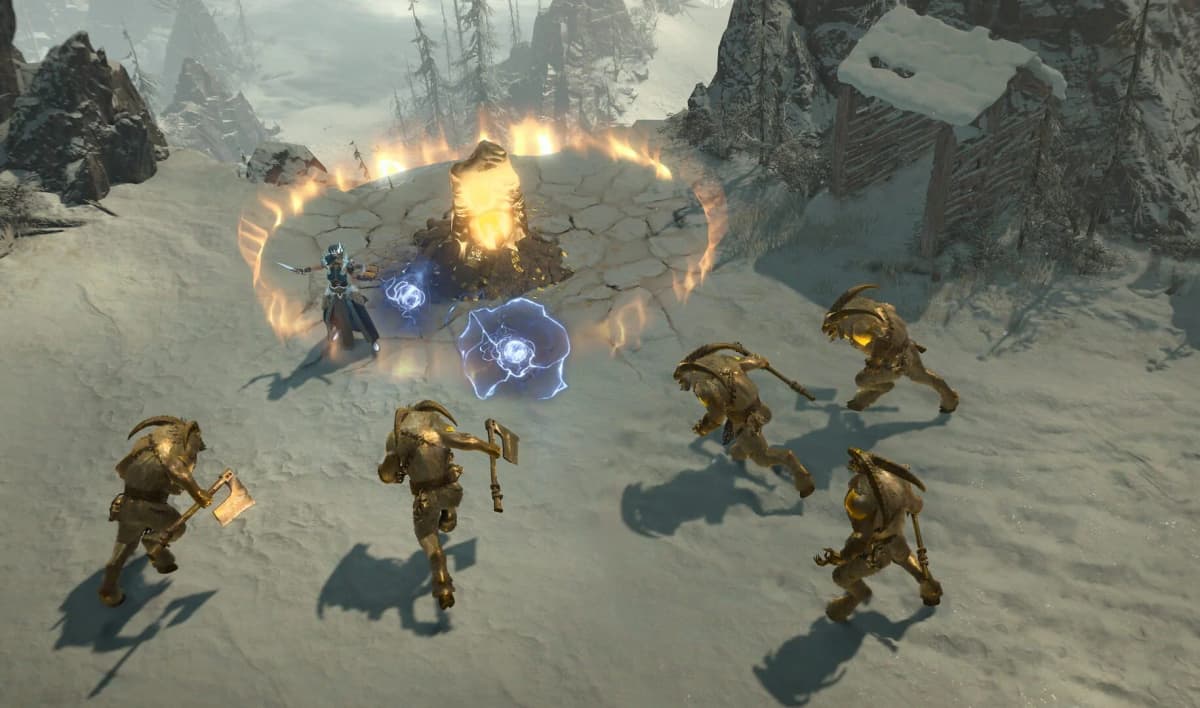
- Talk to Alom once Fundamentals of Faith is done.
- He will formally introduce the Rune and Runeword systems.
- After this conversation, the Rune Linguistics seasonal objective can now be completed.
Don’t make my mistake of ignoring him. Until you talk to Alom, the game effectively considers your character “uneducated” in runes, and simply socketing runes won’t register for the task.
Step 3: Get Your First Ritual and Invocation Runes
Rune Linguistics only cares that you create and trigger one valid Runeword. For that, you need:
- 1 Rune of Ritual (goes in the top socket)
- 1 Rune of Invocation (goes in the bottom socket)
- 1 item with exactly two sockets
Ritual and Invocation runes start dropping from a lot of mid-to-endgame content as soon as you’re in the right seasonal+DLC context. From my runs, the fastest ways to get a small pool of runes are:
- Helltides — constant elite density, good rune drop rate, plus Cinders to open chests.
- Whisper Caches — turning in Grim Favors gives caches that often include runes.
- Nightmare Dungeons — especially efficient if you’re already pushing sigils for XP.
- Lair / World Bosses — decent chance to spit out a couple of runes per kill.
- Seasonal events — whatever the current season mechanic is, its reward caches can contain runes.
In my experience, doing a single Helltide rotation plus turning in one set of Whispers is usually enough to get at least one Ritual and one Invocation rune of any type. You don’t need “good” ones for Rune Linguistics — just any valid pair that can form a Runeword.
If your drops are awful, remember: runes are tradeable. I completed the task on one character by simply buying a cheap Ritual+Invocation pair off another player and slapping them into a throwaway item.
Step 4: Understand the Two Rune Types (This Is Where Most People Fail)
The breakthrough for me came when I finally internalised this rule:
Ritual runes go in the top socket and build Offerings. Invocation runes go in the bottom socket and spend Offerings.
If you mix this up, the Runeword simply won’t work.
- Ritual runes (about 15 in total) create Offerings when you meet a condition:
- Moving a certain distance
- Standing still for a short time
- Casting specific skill types (mobility, macabre, etc.)
- Invocation runes (around 26 of them) consume Offerings to trigger big effects:
- Free casts of skills (sometimes cross-class)
- Defensive procs or bursts of damage
- Other build-defining bonuses
For Rune Linguistics, you don’t need a meta setup. You just need a pair where the Ritual can generate Offerings naturally for your build. If you’re struggling, pick a Ritual rune that rewards basic things you’re doing anyway, like moving or standing still briefly.
- Ritual runes (about 15 in total) create Offerings when you meet a condition:
- Moving a certain distance
- Standing still for a short time
- Casting specific skill types (mobility, macabre, etc.)
- Invocation runes (around 26 of them) consume Offerings to trigger big effects:
- Free casts of skills (sometimes cross-class)
- Defensive procs or bursts of damage
- Other build-defining bonuses
For Rune Linguistics, you don’t need a meta setup. You just need a pair where the Ritual can generate Offerings naturally for your build. If you’re struggling, pick a Ritual rune that rewards basic things you’re doing anyway, like moving or standing still briefly.
🎮 Get This Game at the Best Price
Compare prices instantly and save up to 80% on Steam keys with Kinguin — trusted by 15+ million gamers worldwide.
*Affiliate link — supports our independent coverage at no extra cost to you

Step 5: Socket Your First Runeword (Exact Order Matters)
Once you’ve got at least one Ritual rune and one Invocation rune, you’re ready to put the Runeword together.
5.1 Find a Two-Socket Item
Runewords in this system are strictly two-rune words. That means:
- The item must have exactly two sockets.
- Only these items can host Runewords; three- or four-socket items won’t work for this system.
- It doesn’t have to be good gear; for Rune Linguistics, you can use a junk rare.
Don’t repeat my blunder of trying to throw runes into a three-socket drop and wondering why the tooltip never showed any Runeword effect.
5.2 Place Ritual on Top, Invocation on Bottom
Open your inventory and do the following:
- Hover over the two-socket item and use the socket command (mouse click on PC, or follow the button prompt on console).
- First, socket your Ritual rune into the top slot.
- Then, socket your Invocation rune into the bottom slot.
If you place them the other way around, it will not form a valid Runeword. You should see the Runeword details show up in the item tooltip once the pair is correctly placed.
At this point you’ve technically “created” the Runeword, but Rune Linguistics only completes once you use it by triggering the Offering system.
Step 6: Trigger Offerings and Activate the Runeword
This is the final piece that confused me: just slotting the runes is not enough. You must actually build and spend Offerings during gameplay so the Runeword effect goes off.
6.1 Read What Your Ritual Rune Wants
Hover over your Ritual rune and read its condition carefully. Examples of what I’ve used:
- Generate Offerings by moving a set distance.
- Generate Offerings by standing still for a short duration.
- Generate Offerings by casting certain skill categories (mobility, macabre, etc.).
Make sure whatever it wants is something your build can actually do easily in combat. For the task, I usually pick a “move X meters” Ritual and just kite around enemies.
6.2 Build Offerings, Then Let Invocation Spend Them
Once you know the condition:
- Go into any combat encounter (a quick Helltide pack, dungeon pull, or even overworld elites).
- Deliberately perform the Ritual condition until you see Offerings stacking (watch for the rune UI / buff icon).
- Keep playing — once you hit the required threshold, your Invocation rune will automatically spend the Offerings and fire its effect.
The exact trigger style varies by Invocation, but you will usually notice a distinctive animation or buff effect. When this happens for the first time on that character, Rune Linguistics should instantly complete.
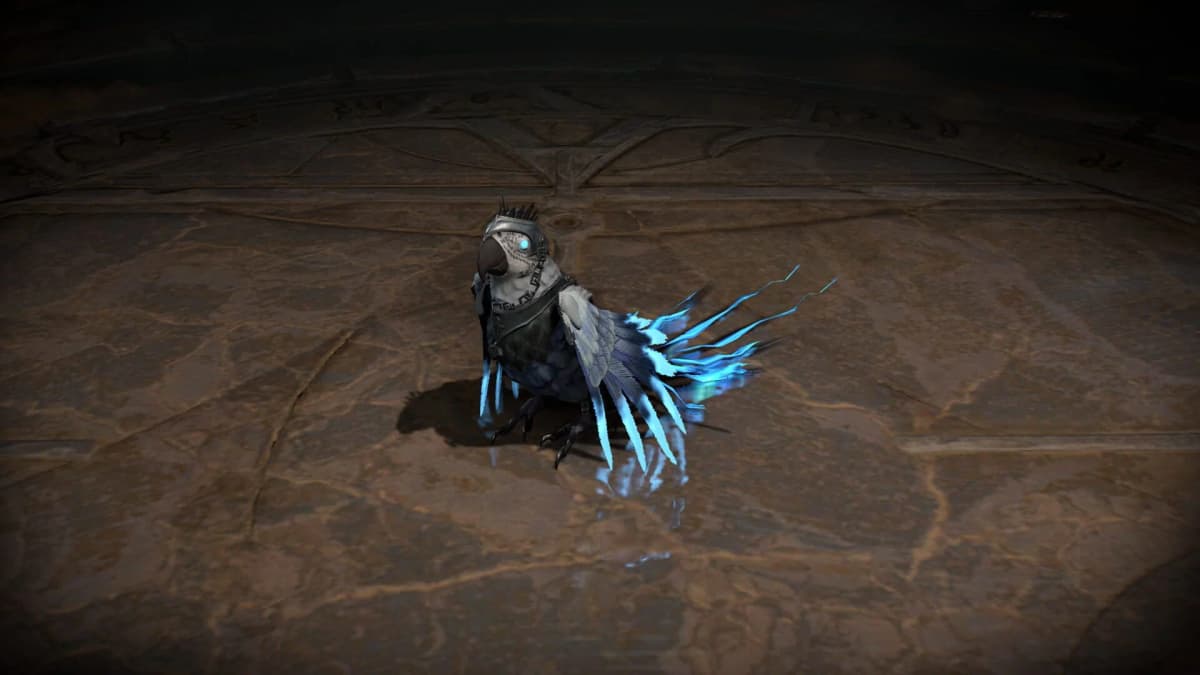
If it doesn’t, double-check:
- You’re on a Seasonal character with Vessel of Hatred.
- Fundamentals of Faith is completed and you’ve spoken to Alom.
- Your Ritual rune is in the top slot, Invocation is in the bottom slot.
- The Ritual condition is actually being fulfilled (movement, skills, etc.).
Three Simple Starter Rune Combos for Easy Completion
You don’t need optimized combos for this task, but if you want something that actually feels good while you play, here are sets that worked well for me:
- Movement-focused combo (great for any class)
Use a Ritual that generates Offerings by moving (e.g., “gain X Offerings every Y meters moved”) plus an Invocation with a defensive or damage proc. You’re always moving in Diablo 4 anyway, so this one almost triggers itself. - Stand-still combo (channelers / turret builds)
Use a Ritual that builds Offerings while standing still, combined with any Invocation that rewards burst windows. This felt great on my Sorcerer spamming core skills from one spot. - Skill-cast combo (spammy builds)
Pick a Ritual that builds Offerings from using a skill category you already spam (basic/core/mobility) and any Invocation that converts those Offerings into extra damage or utility.
For Rune Linguistics, don’t overthink it. As long as Offerings are being built and spent, the game counts it.
Extra Tip: Use the Jeweler If Your Drops Are Awful
On one alt I had a pile of duplicated runes but no good Ritual to pair with my Invocation. Visiting the Jeweler solved it:
- You can exchange runes for different ones.
- You can upgrade into higher tiers (eventually even Mythic) using special materials.
- This is overkill for Rune Linguistics itself, but handy if RNG refuses to give you a Ritual that matches your playstyle.
If you’re just trying to clear the seasonal objective, I wouldn’t burn rare upgrade materials here — save the high-end crafting for a proper build once you understand which Runewords you actually like.
What You’ve Unlocked (And Where to Go Next)
Once Rune Linguistics is completed, you’ve done more than tick a seasonal box:
- You’ve unlocked the core Rune and Runeword system for that character.
- You understand how Ritual and Invocation runes interact via Offerings.
- You’ve tested at least one live Runeword and seen it trigger in combat.
From here, the real fun is experimenting. Start collecting more runes from Helltides, Nightmare Dungeons, lairs, and seasonal activities, and play around with combinations that naturally fit your class and build. The strong Runewords feel almost like mini-legendary powers layered on top of your existing gear.
If I could rewind to my first attempt, I’d do it this way: unlock Fundamentals of Faith, talk to Alom immediately, farm one decent Ritual+Invocation pair from a quick Helltide, put them in a trash two-socket item with Ritual on top and Invocation on bottom, then deliberately trigger Offerings once. That’s all Rune Linguistics is asking you to do — and once you see it work, the rest of the system finally clicks.
FinalBoss // Gear
Level up your setup
01Top-rated gaming headsetson Amazon→02High-refresh gaming monitorson Amazon→03Gaming chairson Amazon→04Discounted game keyson Kinguin→Affiliate links · As an Amazon Associate, FinalBoss earns from qualifying purchases.
Want to Level Up Your Gaming?
Get access to exclusive strategies, hidden tips, and pro-level insights that we don't share publicly.
Ultimate Guide Strategy Guide + Weekly Pro Tips