
Table of Contents (16)
One Bloody Afternoon With Diablo 4’s Warlock Completely Rewired How I Play
About an hour into my hands-on with Diablo 4’s upcoming Lord of Hatred expansion, I realized I’d stopped watching my health globe.
Not because the game suddenly got easy, but because I was too busy cackling at the screen while a pack of fiery lunatics I’d just conjured sprinted into a mob and detonated like infernal confetti. This wasn’t the careful, kite-heavy Sorcerer I’d sunk a season into. This wasn’t the fragile Necromancer hiding behind a wall of skeletons. This was something nastier, louder, and way more unhinged.
The Warlock, one of the two new classes arriving with Lord of Hatred, is Blizzard finally giving in to the heavy metal album cover that’s been living in Diablo’s head since 1996. It’s a demon-wielding mage that can be a summoner, a melee bruiser, a trap-controlling ritualist, or even a stealthy status-effect assassin – and after several hours swapping between pre-made builds and my own ugly experiments, I walked away thinking: this class might actually change how people approach Diablo 4’s endgame.
Key takeaways from my time with the Warlock
- The Warlock supports four radically different archetypes (Legion, Vanguard, Ritualist, Mastermind) that genuinely feel like separate classes.
- New skill trees lean hard into how skills behave instead of just “+5% more damage,” which makes build-crafting way more interesting.
- Endgame “War Paths” (Blizzard used that name in my session, though some material calls them War Plans) could give classes clearer roles in group content.
- Set bonuses, deeper crafting, and the long-awaited loot filter all seem aimed at fixing Diablo 4’s most tedious late-game habits.
- Even in a limited preview, Warlock builds already look primed to shake up the meta and party compositions.
My setup and where I’m coming from
I’ve been bouncing in and out of Diablo 4 since launch on PC, mostly on a Ryzen 7 / RTX 3080 rig at 1440p. I loved the campaign tone, bounced hard off the early endgame grind, then got dragged back in by later patches and the Spiritborn class from last year’s expansion.
Blizzard invited me to a closed preview build of Lord of Hatred on PC. For about five hours I hopscotched between four pre-configured Warlocks – each specced into a different playstyle – and then spent another chunk of time mangling my own build with the new skill tree tools. I didn’t get to roam freely around Skovos or grind the new War Paths system for days, but I saw enough to understand how the Warlock slots into Diablo 4’s evolving ecosystem.
Four personalities in one class
The most interesting thing about the Warlock isn’t that it summons demons. Diablo has been doing that dance since the Necromancer first threw bones at things. What makes this class feel different is how it weaponizes demons as temporary tools and how each spec leans into a completely different combat role.
Legion – the gleeful meat-grinder summoner
Blizzard started me on the “Legion” build, and it instantly clicked. Imagine a Necromancer who’s done pretending to care about their minions. Every button you press either throws a demon at something, burns a demon, or detonates a demon to make other demons explode. It’s obscene in the best way.
My basic attack was literally firing suicidal Fallen lunatics at enemies. They’d sprint, shriek, and explode into a splash of damage and burning ground. One skill yanked a swarm of smaller fiends out of a portal, then buffed me when they inevitably died. Another marked a target so any demon that hit it would deal bonus damage and then burst into gore.
The ultimate, though, is where Legion sells the fantasy. “Fiend of Abaddon” drops a hulking demon with a claymore into the middle of the fight. It’s so big it messes with your camera framing for a second. The Fiend just starts carving circles through the crowd, and the whole thing feels like you’ve dropped a raid boss on top of a trash pack.
Compared to my old Necro, Legion is more aggressive and more disposable. Minions are ammo, not pets. I found myself diving into the thick of it to position demons, not kiting on the edge of the screen. In a party, this feels like the perfect “trash clearing” spec: set the tempo, keep the screen on fire, and let slower, tankier builds clean up what survives.
Vanguard – becoming the monster
Then Blizzard flipped the script. The “Vanguard” Warlock doesn’t summon demons – it becomes one.
This build is all about close-quarters carnage and fire. One skill plopped a grotesque demonic head on the floor that belched a cone of flame. Another primed enemies so they’d explode into lava when they died, setting off chain reactions that felt straight out of a Diablo 2 cow run. But the core of Vanguard is its Metamorphosis ultimate.
Hit that key and your Warlock literally transforms into a demon. Your hotbar wipes clean and refills with a new set of claw swipes, lunges, and brutal area attacks. The first time it happened, I completely lost track of my rotation. I just spammed whatever lit up and watched packs evaporate.
By the third Metamorphosis, I started to feel the rhythm: dive in with a gap-closer, drop a cone of molten breath, chain a couple of cleaving swipes, and then disengage right before the form dropped so I wouldn’t be left naked in the middle of an elite pack. It’s a high-skill, high-APM playstyle that reminded me more of an action fighter than a traditional ARPG caster.
One concern I had: swapping your entire skill bar for a short window is disorienting, especially in a game that already has a lot of visual noise. If Blizzard wants Vanguard to be endgame-viable, those demon-form abilities need to be extremely legible and distinct, or average players are going to mash blindly and die in nightmarish sigils. But in terms of fantasy? Vanguard is the most “Diablo-ass Diablo” thing I’ve played in years.
Ritualist – zoning the battlefield
Ritualist is where the Warlock started feeling like a genuine support/controller option, and it’s probably the build that surprised me the most.
Instead of direct summons or claws, you’re painting the ground with sigils and totems. I dropped a sigil that cracked the earth into a molten ring, slowing and burning anything dumb enough to step in. Another planted a totem that chained enemies together, so when I focused one, the others took shared damage and were rooted in place. A hex field cursed demons inside it, and whenever I killed something inside the area, my Warlock turned invisible.
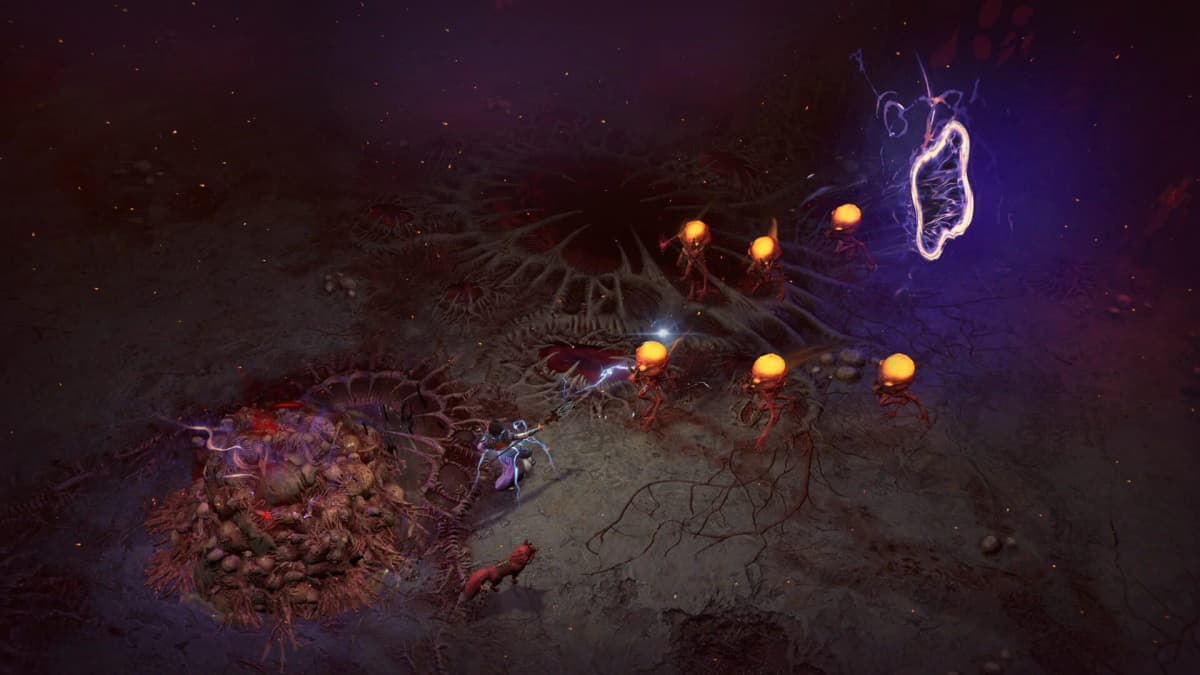
That invisibility ended up being a huge deal. I’d carve a lethal corridor with a couple of sigils, bait enemies into it, then vanish to reposition on the next pack. It felt less like playing “Diablo but with demons” and more like playing a sadistic dungeon architect, rearranging the flow of the fight.
The Ritualist ultimate is exactly as ridiculous as you want it to be: a screen-spanning sigil that pulses multiple times and basically resets the room. In one test dungeon, I chained it with another player’s Barbarian shouts and watched an entire elite pack and its adds simply cease to exist before anyone took serious damage.
For coordinated groups, I can easily see Ritualist becoming the brain of the party. You’re not topping the DPS charts, but you’re deciding who lives long enough to cast anything.
Mastermind – a rogue in demon robes
The last preset, “Mastermind,” is the one I struggled with the most – and the one min-maxers are probably going to fall in love with.
This version of the Warlock plays like someone stuffed a Rogue and a curse specialist into the same corpse. You get fast, ranged attacks, tons of mobility options, and a toolkit built around layering status effects: weaken here, poison there, curse that elite, then dash through for an execution-style finisher.
You’re also made of wet tissue. More than once I got cocky, disappeared into a pack thanks to an invisibility trigger, and emerged straight into a frozen pulse or poison nova that erased me in a heartbeat. Mastermind clearly expects you to know dungeon layouts, enemy patterns, and your own cooldowns inside out.
Its ultimate is one of the nastiest-looking things in the Warlock kit: a cloud of ravenous hell bugs that scuttle across the map munching on anything with a health bar. It’s less flashy than dropping a giant demon or sigil, but paired with your debuffs it shreds priority targets scary fast.
I wouldn’t pick Mastermind for my first full playthrough of Lord of Hatred, but as a second or third character – once I know which mechanics I can safely exploit – I can absolutely see myself going all in. It has “speedrunner spec” written all over it.
Mixing hellflavors: building my own abomination
After trying Blizzard’s curated builds, they let me off the leash and handed me a respec. This is where the Warlock, and the new skill tree philosophy, started to show their teeth.
Instead of sprinkling points into bland passives – the old “+3% fire damage” cruft – almost every skill pick now twists how something behaves. One Warlock perk turned a demon “wall” I’d been using defensively into a roaming pack of monsters that would actively hunt enemies. Another node modified an area curse so that instead of just debuffing, it granted me damage reduction while I stood inside it.
I tried to build a greedy hybrid: Legion-style demon spam with a few Ritualist control tools and a pinch of Vanguard tankiness. It… sort of worked. Trash mobs evaporated, but boss fights exposed how much I’d diluted my focus. I had no single, clean damage window like Metro-Vanguard’s Metamorphosis, and my sigils weren’t strong enough to really pin elites down.
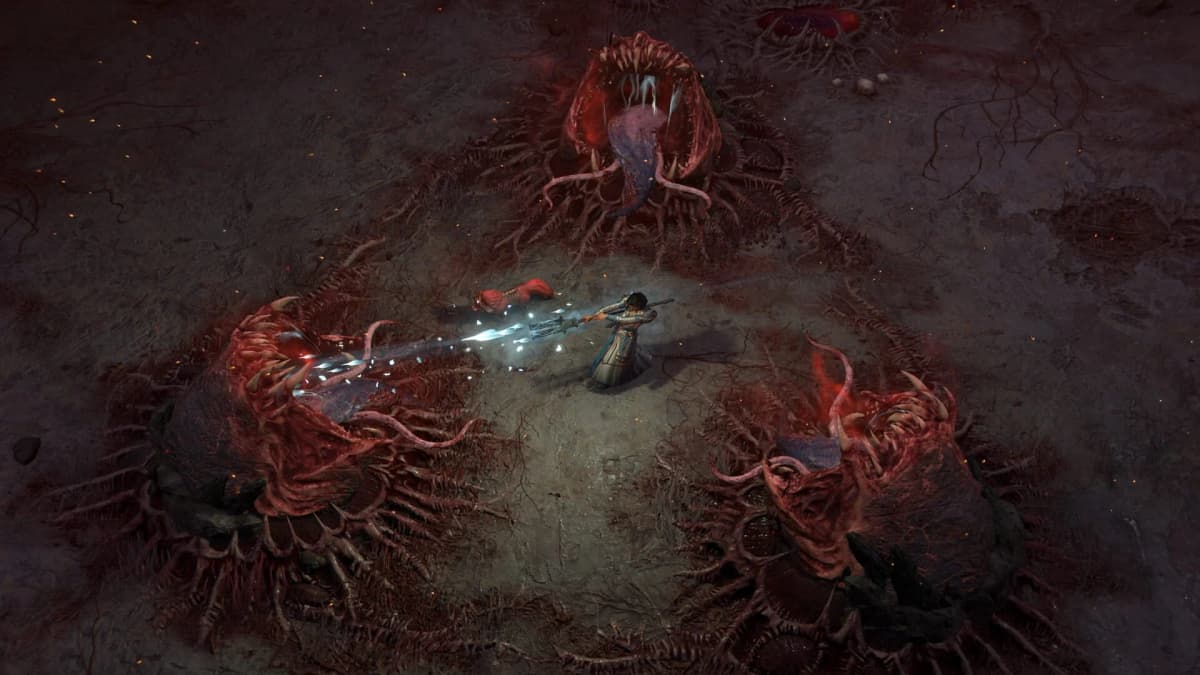
And that’s actually encouraging. The tree tempts you into wild mixes, but it definitely feels like there are coherent archetypes hiding in there that will reward specialization. Unlike launch Diablo 4, where so many builds were just “follow this guide and pray for the right uniques,” I already feel like you’ll be able to find weird off-meta Warlock identities just by leaning hard into a handful of key modifiers.
This design shift isn’t just for the new kids either. In our Q&A, Blizzard stressed that the overhauled trees roll out to all classes, not only the Warlock and the new Paladin. One example they showed: a Sorcerer modifier that turns the classic fire Hydra summon into an ice Hydra instead, completely changing how it fits into a build. If they follow through on that promise across the board, that’s a bigger deal than a single flashy new class.
Endgame hopes: War Paths, sets, and the loot filter miracle
I didn’t get to grind the endgame properly, but Blizzard did walk us through their new progression layer, which they called “War Paths” in the build I played. Some materials and other outlets have referred to “War Plans,” so the name might still be in flux, but the gist is the same: a structured set of long-term goals and modifiers that sit on top of Nightmare dungeons and other high-level content.
Think of it as a mix of Diablo 3’s Adventure Mode bounties and Path of Exile’s Atlas: you pick a path that nudges you toward certain activities and offers themed bonuses and challenges. Where the Warlock fits in is interesting. Legion felt perfect for any path that wants fast pack clearing. Ritualist screams “push higher tiers with control and safety.” Vanguard is the risk-reward option for players who want to live in melee range.
I’m cautiously optimistic here. Done right, War Paths could finally give classes more defined roles in endgame, rather than everything just devolving into “whatever clears the same dungeon 2 seconds faster.” Done wrong, they’ll just create a new flavor-of-the-month meta. The Warlock’s flexibility at least gives me hope that you won’t see only one “correct” spec for each path.
On the loot side, Lord of Hatred is clearly Blizzard admitting they heard the complaints. Set bonuses are back in a big way, there are new crafting systems coming online, and the long-prayed-for loot filter is finally happening.
I didn’t get to mess with sets directly, but the pitch sounds closer to Diablo 2 or early Diablo 3: sets that push you toward specific playstyles without completely erasing non-set options. As a Warlock player, that’s huge. If there’s a Legion-focused set that rewards sacrificing demons, or a Ritualist set that supercharges sigil stacking, we might actually see sets define archetypes instead of choke them.
The loot filter is the change my click-fatigued wrist is most excited about. Anyone who’s run late-game dungeons in Diablo 4 knows the feeling of staring at a floor carpeted in yellow items and wanting to Alt+F4. Being able to hide irrelevant drops – for example, cutting out low-tier rares or non-Warlock armor when you’re deep into pushing – could take a huge chunk of mindless tedium out of the loop.
All of this will need weeks of real-server time before we know if it truly fixes Diablo 4’s itemization woes. But for once, it feels like the systems are being built around build variety instead of in spite of it, and the Warlock is the poster child for that shift.
How the Warlock actually feels in a party
Hands-on previews are usually solo affairs, but Blizzard did drop us into a few dungeons with other human players and a dev-controlled Paladin. That’s where the class really sold me.
On Ritualist, I fell into a support groove without anyone asking. I’d drop a rooting sigil at choke points, chain elites to trash, and pop my giant screen-filling ritual when we pulled more than we expected. The Paladin waded in and soaked hits, a Rogue dashed through and cleaned up priority targets, and I felt like the puppet master deciding which pack even got to play the game.
Swapping to Legion, I basically became the pace car. I sprinted into each room first, vomiting demons in every direction, and the rest of the party just followed the explosions. When we had two Warlocks in the group, we naturally split duties: one pure Legion for clearing, one leaning into Mastermind for boss burn phases.
The important bit: even with multiple Warlocks, nobody felt redundant. That’s been a quiet problem with Diablo 4’s launch roster; four Sorcerers in a group often meant four flavors of “frost and fireball with slightly different passives.” With the Warlock, you could easily run two or three and still cover different jobs.
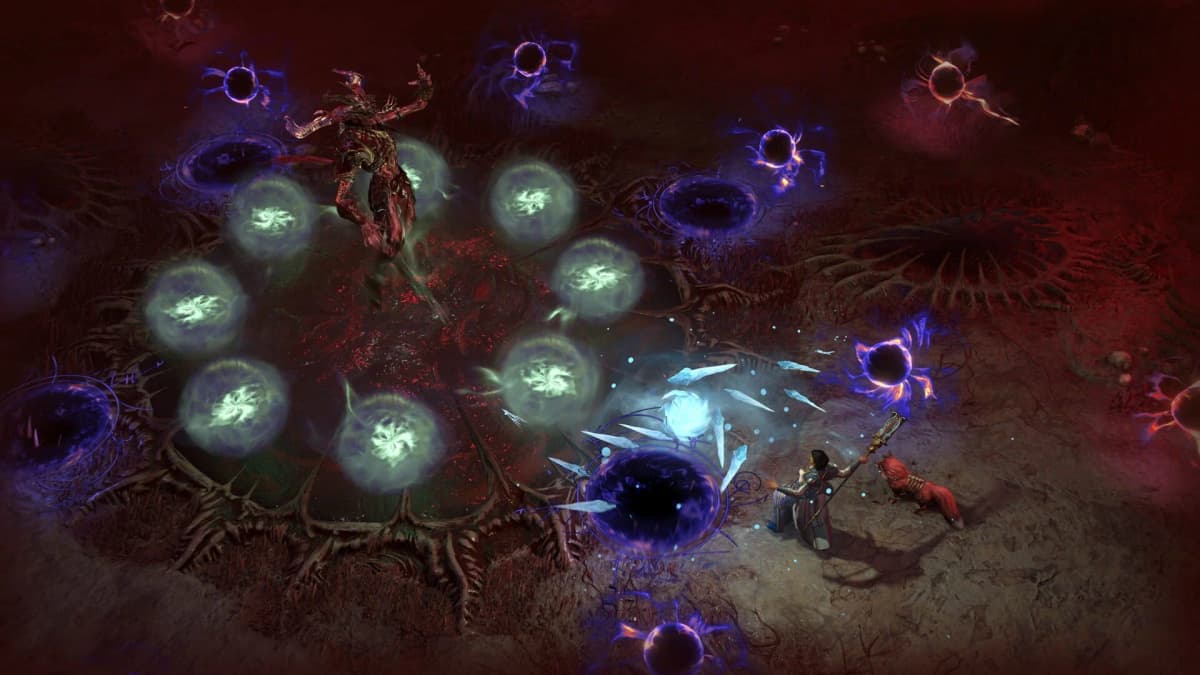
Visual clarity is a potential issue. Giant sigils, demon walls, hellbug swarms, and Paladin auras all firing off in the same tiny corridor gets busy fast. In this build, I could still read enemy telegraphs, but I’d love to see more robust options for dialing down specific VFX for serious endgame pushing.
Performance and polish in the preview build
On my preview machine (roughly equivalent to my home 3080 setup), the build ran at a steady 90–120fps at 1440p with high settings. Even with multiple Warlocks spamming summons and sigils, I didn’t see any catastrophic drops or stutters.
The Warlock’s animations are standout work. Legion’s suicidal demons have just enough goofy wobble in their run to be darkly funny. Vanguard’s metamorphosis form feels weighty, with a satisfying hitch at the end of big swipes. Ritualist sigils burn into the ground with these intricate infernal patterns that almost make you want to stop and admire them – right up until a goatman caves your head in.
That said, this was a controlled preview slice. No world bosses, no open-world clutter, no 100-player towns full of cosmetics and mounts. Diablo 4 has run well for me since its big performance patches, and I didn’t see anything here that suggests Lord of Hatred will break that, but we’ll only know for sure when launch servers are on fire.
Concerns and unanswered questions
As hyped as I am about the Warlock, a few worries are rattling around the back of my skull.
First, complexity. Between the dense new skill trees and the Warlock’s four distinct archetypes, this class could absolutely overwhelm newer players. Blizzard’s preset build templates will help, but if you’re the type who gets decision paralysis staring at Path of Exile’s passive tree, prepare yourself.
Second, class identity. The Warlock already steps on the Necromancer’s toes as an aggressive summoner and on the Rogue’s toes as a stealthy assassin. In the builds I played, the Warlock’s kits felt sharper and more modern than some of the launch classes. That’s exciting, but only if the promised reworks really do uplift everyone else, not just the new hotness.
Finally, balance. Legion in particular walked a fine line between “strong and fun” and “this is going to get nerfed into the ground three weeks after launch.” So much of its kit is frontloaded burst and chained explosions that I can easily imagine it trivializing certain endgame activities if the numbers are even slightly overtuned.
Blizzard is pitching this expansion and the skill-tree overhaul as a kind of “2.0 moment” for Diablo 4. From what I played, that’s not an empty slogan – but it does raise the stakes. If the Warlock launches feeling incredible while older classes stay stuck in their more limited trees, the community backlash will be brutal.
Who should play the Warlock?
After my time with it, here’s who I think the Warlock is going to hit hardest:
- Pet-class enjoyers who always end up rolling Necromancer or Druid, but wish those classes felt less passive.
- High-APM melee fiends who like the idea of a caster that still lives on the front line (Vanguard is absolutely your lane).
- Tactical control players who enjoy shaping the battlefield with traps, sigils, and crowd control.
- Meta-chasers who want a class with room for off-meta experimentation and wild skill interactions.
If you’re brand new to Diablo 4, I’d actually still recommend starting with something simpler like Barbarian or Sorcerer to learn the game’s basics. But as a second or third character, or for anyone who already lives in Nightmare dungeon tiers, the Warlock looks like candy.
Bottom line: a hellbound wildcard that Diablo 4 desperately needed
Walking out of the session, I wasn’t thinking about my old characters or my half-finished seasonal grinds. I was theorycrafting Warlock builds in my head: “What if I run a Legion core but steal that roaming demon wall node? How greedy can I be with Mastermind’s invisibility windows? Could a Ritualist-focused set break Nightmare dungeon scaling?”
That’s the biggest compliment I can give this class: it made me care about builds again, not just about chasing slightly better item rolls.
Lord of Hatred still has plenty to prove – especially with War Paths, set balance, and how generously it treats non-Warlock classes. But based on this hands-on, the Warlock itself feels like a home run: flexible, flavorful, and just messy enough to invite hours of experimentation.
Preview score for the Warlock and systems I saw: 9/10 excitement. If Blizzard sticks the landing on the rest, Diablo 4 might finally become the long-term ARPG obsession it always wanted to be.
TL;DR
- Warlock is a new Diablo 4 class that can play four wildly different roles: summoner, melee bruiser, controller, or stealthy assassin.
- The reworked skill trees focus on changing how abilities behave rather than just raising numbers, which makes experimenting far more rewarding.
- Endgame War Paths, set bonuses, deeper crafting, and a proper loot filter are all built to support that build diversity.
- In group play, multiple Warlocks can coexist without feeling redundant, which bodes well for long-term class health.
- Balance and complexity are the big question marks, but right now, the Warlock feels like the most exciting reason to return to Sanctuary.
FinalBoss // Gear
Level up your setup
01Top-rated gaming headsetson Amazon→02High-refresh gaming monitorson Amazon→03Gaming chairson Amazon→04Discounted game keyson Kinguin→
Affiliate links · As an Amazon Associate, FinalBoss earns from qualifying purchases.
Want to Level Up Your Gaming?
Get access to exclusive strategies, hidden tips, and pro-level insights that we don't share publicly.
Ultimate Reviews Strategy Guide + Weekly Pro Tips