

DigiGods 2.0 Reboots Social VR With Chaos, Creativity & Community
Game intel
DigiGods
Create, play, & share in a physics-based sandbox environment where you can shoot, parkour, or simulate any type of gameplay you desire, taking the best of VR g…
Every so often, an update in virtual reality feels less like a tweak and more like a wholesale metamorphosis. DigiGods 2.0 is exactly that kind of overhaul. Far beyond the usual bug fixes and incremental feature drops, this relaunch from Squido Studio stands as a bold manifesto for multiplayer creativity. As someone who’s long observed social VR straining to balance playful chaos with meaningful connection, I’ve waited for a moment when a sandbox truly lives up to its promise. With a vast new city to explore, an arsenal of physics-fueled toys, and smoother tools for gathering friends, DigiGods 2.0 doesn’t just refine its predecessor—it reinvents what a social VR experience can be.
At its core, this reboot is powered by an ambition to give players a blank slate and trust them to fill it with jokes, challenges, and spontaneous spectacles. From the studio that prided itself on “gameplay first” in earlier titles, there was always potential for something wild and unfiltered. But DigiGods 2.0 pulls back the curtain entirely, inviting up to sixteen avatars into a single hub and handing over the keys to imagination. It’s a gamble on player agency, and so far, it’s paying off in moments that feel unscripted, hilarious, and deeply social.
A Fresh Canvas: The New DigiCity Hub
Stepping into DigiCity is like vaulting into a neon-lit playground built on a grid of interconnected plazas, alleyways, and floating platforms. Unlike most VR lobbies that feel sterile or overly utilitarian, this hub radiates character: street vendors hawk pixelated treats, wall art comes alive in bursts of particle effects, and every corner hints at a potential minigame or challenge. It’s just big enough to encourage exploration but compact enough that you don’t spend ten minutes lost before bumping into somebody. In one evening session, I watched a group transform a fountain square into an obstacle course lined with glowstick trails, while across the way two newcomers teamed up to test-drive cosmetic hats before committing to a new look.
Because the hub supports sixteen players at once, random encounters carry real weight. You might meet a veteran who guides you through a hidden staircase to a rooftop vantage point, or suddenly find yourself in a five-person chase game sparked by a single balloon gun. The studio’s decision to enable seamless teleport between portals means you can dart from a quiet corner where someone is tweaking avatar expressions into a raucous rave space without loading screens grinding momentum to a halt. It’s this sense of fluid transition—combined with lively environmental cues—that finally makes the world feel alive and purpose-built for social mischief.
Unleashing the Toybox: Gadgets and Gravitas
If the hub is a neon salad bar of social possibilities, the new toybox is the dressing slathered on top. Balloon Guns now come in standard and “surprise” variants that wrap unsuspecting targets in clusters of floating orbs. Yo-Yos aren’t just flashy time-wasters; they can be looped through city railings to create impromptu ziplines or tethered between two players to craft a swinging bridge. Then there are Rave Spinners—glowing discs that leave a trail as you fling them through the air, turning every corridor into a kinetic light show. These gadgets feel like party favors that graduated summa cum laude: they’re intuitive to grasp, yet each physics-based interaction can be exploited in delightfully unpredictable ways.
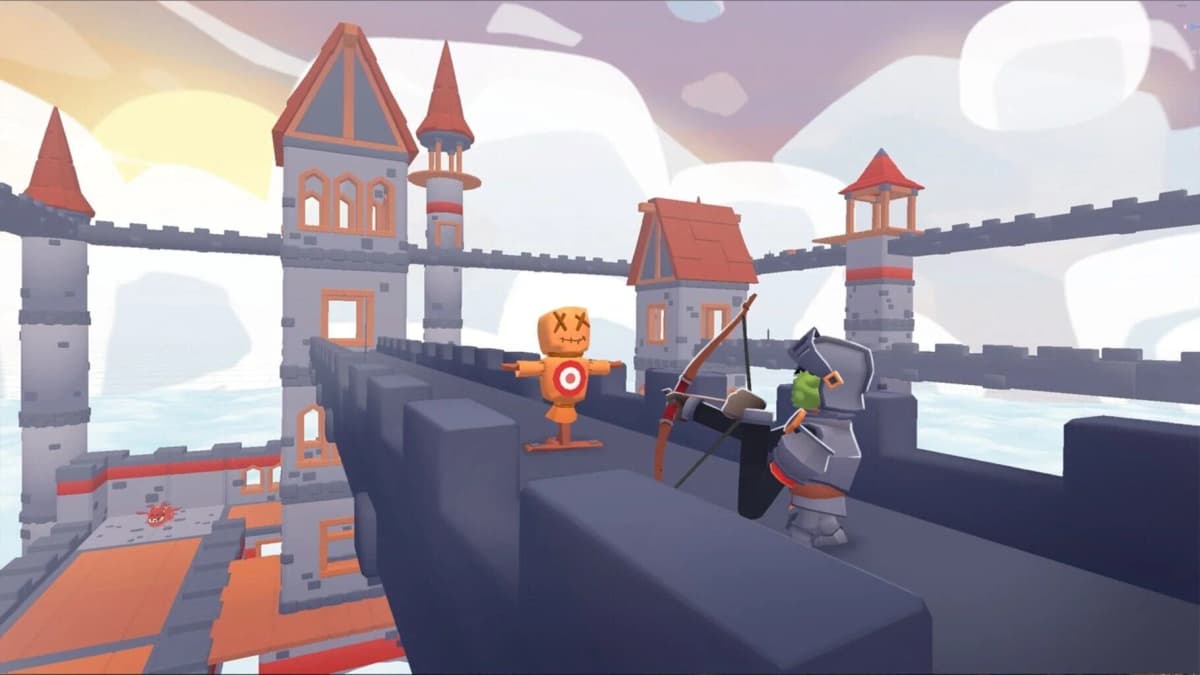
On a recent session, a trio of friends constructed a makeshift shooting gallery by pinning targets to balcony railings and then volleying Balloon Guns up from below. Another group used Yo-Yos to string together floating crates, creating a precarious parkour gauntlet. I even spotted a competitive dance-off where players used Rave Spinners as freestyle props, beating each other to see who could pull off the most dazzling trail. What’s remarkable is that none of these scenarios were prebuilt by the developers; they emerged entirely from player imagination. And because each toy obeys the same physics rules, every throw, ricochet, and snag feels deeply consistent, which fuels endless tinkering.
Making Chaos Work: Emergent Play Examples
Emergent gameplay is often heralded as the holy grail of sandbox design, but it can quickly slip into spaghetti code if mechanics don’t align. With DigiGods 2.0, however, I’ve seen dozens of micro-events unfolding in real time—none of them scripted, all of them sticky. In one session, a spontaneous sport dubbed “Urban Curling” took shape: players used their balloon guns to loft inflatable objects down a tiled boulevard, racing to see whose shot slid the farthest before bouncing off environmental props. In another corner, masked up in neon face paint, a small cohort staged a “stealth tag” match in a section of the hub that was cloaked in artificial fog and backlit columns.
What keeps these antics from dissolving into frustration is that every tool and surface behaves predictably. When your Yo-Yo sails through an open window and crashes into a stack of crates, you don’t get stuck in a glitch loop—you adjust your angle, regrip, and try again. When a Rave Spinner bounces off a wall and spins back at you, you can anticipate its trajectory, turning a harmless bounce into a playful ambush. These tiny feedback loops give each gadget a satisfying weight and a low barrier to entry. Even rookies who stumble into the hub can pick up a balloon gun and immediately feel like they’re part of the action.
Arcade Mode and the Friendliest Tutorial Yet
Onboarding new players has always been VR’s Achilles heel. Throwing novices into a chaotic server full of toolkit veterans can lead to confusion, frustration, and quick exits. DigiGods 2.0 addresses this head-on with an Arcade Mode: a series of bite-sized challenges that guide you through movement mechanics, toy interactions, and basic objectives—all wrapped in humorous lore vignettes narrated by a cheeky digital guide. Instead of dry bullet-point tips, the tutorial choreographs playful obstacles. You might have to dodge hula-hoop lasers with your stretchy new arms or target a moving drone with glowstick throws, all while the guide cracks jokes about your “prehistoric grip strength.”
Completing Arcade Mode awards you a set of baseline cosmetics and a modest chunk of in-game currency, but more importantly, it unlocks confidence. When you emerge into the live hub, you’re not that wide-eyed visitor who just pressed the wrong grab button—you’re a budding experimenter with a sense of what’s possible. And for veterans, the mode doubles as a refresher; it’s surprisingly fun to run through the same challenges again and see how much faster or more creative you can get. This dual-purpose design ensures that learning the ropes never feels like a chore—and that’s a fundamental improvement in a genre where onboarding often ends at a blinking “Ready?” screen.
Fair Play: Monetization Without Mayhem
There’s nothing more soul-crushing in a social VR title than paywalls wedging themselves into the middle of creative flow. DigiGods 2.0 largely avoids that pitfall. The core sandbox tools and the majority of the toybox are free from day one, so everyone can riff on the same playground. Cosmetic tiers—including hat packs, neon body paint, and expressive emotes—sit behind an in-game currency called K-OS, earned through quests or Arcade Mode. Premium bundles exist, but they feel optional rather than mandatory. Players I spoke to appreciate that you never have to shell out real dollars just to play catch with a yo-yo or launch a surprise balloon barrage.
It’s worth noting that long-term grinders might find the K-OS drip pace deliberate—and some more aggressive battle royales would call this stingy. But the studio’s ethos seems to favor gradual reward loops over flash-in-the-pan monetization. There are no loot boxes, no random chance spins, and no abilities locked behind paywalls. That restraint preserves the integrity of impromptu skirmishes, so you’re never pitted against someone simply because they bought a better toy. It keeps the spotlight on creativity and skill, rather than on wallet size.
Want to Level Up Your Gaming?
Get access to exclusive strategies, hidden tips, and pro-level insights that we don't share publicly.
Ultimate Gaming Strategy Guide + Weekly Pro Tips
Under the Hood: Performance and Connectivity
All the bells and whistles in the world mean little if the experience is marred by lag, loading screens, or jittery frame drops. Fortunately, Squido Studio invested heavily in optimization. Transitions between the hub and minigame instances now take only seconds, and party invites ping reliably across headsets. In my tests on a midrange tethered PC setup and a standalone headset, avatars maintained solid frame rates even when a dozen participants gathered around a single physics object. Voice chat stability has improved, too—spatial audio cues felt clear and directional, which is critical when you’re dodging foam projectiles in a crowd or whispering strategy in a stealth tag match.
Perhaps most importantly, these performance gains came without sacrificing visual charm. Character shading, neon glow effects, and particle bursts all remain crisp. The world’s ambient soundtrack and dynamic soundscapes respond to player actions without stutter or unintended cutouts. In a landscape where unreliable netcode and slow load times can drive players out as quickly as novelty items draw them in, DigiGods 2.0 keeps the rhythm of play moving, moment to moment.
Community First: Tools That Bring People Together
A vibrant sandbox lives and dies by its community, so the new social tools matter as much as gadgets or graphics. DigiGods 2.0 adds friend lists with custom tagging, group voice channels, and even region-based filters so you can queue up with local players or hunt down new collaborators from across the globe. In one late-night session I joined a spontaneous “paintball tower defense” game organized via an in-world bulletin board. My teammates ranged from total strangers to people I’d met only once before, yet coordinating felt effortless thanks to the updated party UI and quick-access emote wheel.
Squido also introduced recurring community challenges—weekly quests that encourage diverse playstyles, from “set up the largest yo-yo stunt” to “decorate a hidden alley and earn the most ‘likes.’” Rewards tie back into the cosmetic economy, but more crucially, they serve as prompts that guide social interactions. In a genre prone to empty servers or fragmented player bases, these recurring events have seeded consistent gatherings. Patterns emerge: happy hour meetups in the neon market, late-night parkour tournaments under the floating walkways, and even role-play sessions in the city’s back alleys.
Where DigiGods 2.0 Fits in VR’s Landscape
Social VR has seen plenty of contenders: giant stages of user-generated content, avatar-focused chatrooms, physics toys that promised absurdity but often felt half-baked. DigiGods 2.0 stakes out a unique territory by marrying robust physics interactions with a coherent world design and a fresh coat of accessibility polish. It doesn’t try to be everything for everyone—instead, it zeroes in on sandbox chaos and leans into the unpredictable joy of emergent play. That focus gives it a clarity of purpose that few competitors can match.
Of course, all sandboxes face the same challenge: staying fresh as more players discover it and build their own spectacles. Squido Studio’s roadmap is still taking shape, but if they continue adding new toys, environmental zones, and community-driven events with the same appetite for experimentation, DigiGods could settle into a long-running habit for social VR enthusiasts. Unlike one-off party games, this feels like a living world that evolves in surprising directions every week.
Conclusion: A Sandbox Worth Shaking Up
DigiGods 2.0 is more than a patch—it’s a confident statement that social VR can be both polished and playground-like, inviting and anarchic. By centering emergent toy interactions, smoothing out onboarding, and reinforcing genuine social ties, Squido Studio has set a new benchmark for what a multiplayer VR sandbox can achieve. I’ll be coming back again and again, not because the world demands it, but because the best moments here are unscripted memories made with other players. And in VR’s wild frontier, that’s the real magic.