
I’ll cut straight to the gut feeling: Digimon Story: Time Stranger is the best monster-lab I’ve tinkered with in years wrapped in a slow, 15-to-20-hour narrative cocoon that almost scared me away. When it finally hatches, the big swings land-clever combat loops, a ridiculous 451-strong roster, character beats that blindsided me-but you have to live with it long enough to see the sparkle. I did. It was worth it. But I had to fight the game’s pacing as much as its bosses.
Table of Contents (13)
My first weekend: Eight years to stop the apocalypse, and about 15 hours to get going
Context matters. I’m the “fiddle-with-systems” sicko who loved Cyber Sleuth’s spreadsheets but bounced off Survive’s stilted rhythm. I put 52 hours into Time Stranger on PC (Ryzen 7 5800X3D, RTX 4070 Ti, 32GB RAM) at 1440p on High, using a DualSense via Steam Input. I also spent a night on PS5 in Performance mode to sanity-check frame pacing. Most of my time was in “Balanced” difficulty with one late pivot to the higher setting for post-credits bounties. That’s the headspace I’m coming from.
The premise hooks fast: as an ADAMAS agent (Dan or Kanan), you witness Tokyo go sideways-Digimon clashing in Shinjuku—then get slingshotted eight years into the past to stop the apocalypse you just watched. The opening hours have that electric, conspiratorial vibe I go feral for: slick cutscenes, excellent Japanese VO, a tone that says “we’re going places.” Then the story idles in neutral. For a dozen-plus hours, I felt like I was jogging in place, pushing through dungeon corridors and combat gates while the plot refused to actually move. It’s not that nothing happens—lore crumbs are sprinkled—but the cadence is sleepy. By hour 16, I started wondering if this was one of those games you admire more than you enjoy.
And then it finally starts cooking. Threads tighten, stakes sharpen, and a few relationships—especially Aegiomon’s and Inori Misano’s—find warmth and tension I didn’t expect. It never turns into a narrative powerhouse, and the final sprint leans on familiar beats, but I was surprised more than once and genuinely moved twice. Which, after the mid-game slog, felt like the game earning back trust.
Combat clicked when I stopped “doing damage” and started playing the SP economy
Turn-based, six-Digimon squad (three active, three in reserve), SP-driven skills, attribute triangles, element weaknesses—the scaffolding will be familiar. What got its hooks in me wasn’t novelty so much as the way Time Stranger layers tiny, practical decisions that compound into momentum. The Analyze button is your best friend: one tap to pull up known strengths/weaknesses, and suddenly you’re planning two turns ahead. “Do I spend 24 SP on a high-accuracy, Wind-aligned multi-hit or bank those points because the boss is charging a nuke I need to interrupt?” That’s the loop, minute to minute.
Two tricks pulled me from “competent” to “oh, I get it now.” First, replacing a party member doesn’t burn the turn. This turns the bench into a tactical resource, not dead weight. I started building trios that could flex against element shifts, then swapping in a status specialist when I spotted a window. Second, the game leans on charge-up telegraphs for big boss moves, which you can disrupt by hitting specific weaknesses. When that lightbulb went on, fights shifted from “attrition” to “control.” I wasn’t just passing checks; I was setting the rhythm.
There’s also a nice cadence to the meta tools: your ADAMAS agent can pre-empt with a DigiAttack to shave off an opener or drop a Cross Art at scripted moments to yank a fight back from the brink. Resting for a few seconds between encounters heals your squad—such a quietly generous quality-of-life decision that keeps the inventory for emergencies instead of basic maintenance. And yes, there’s auto-battle. I avoided it for bosses but used it shamelessly for filler corridors while I tuned builds in my head.
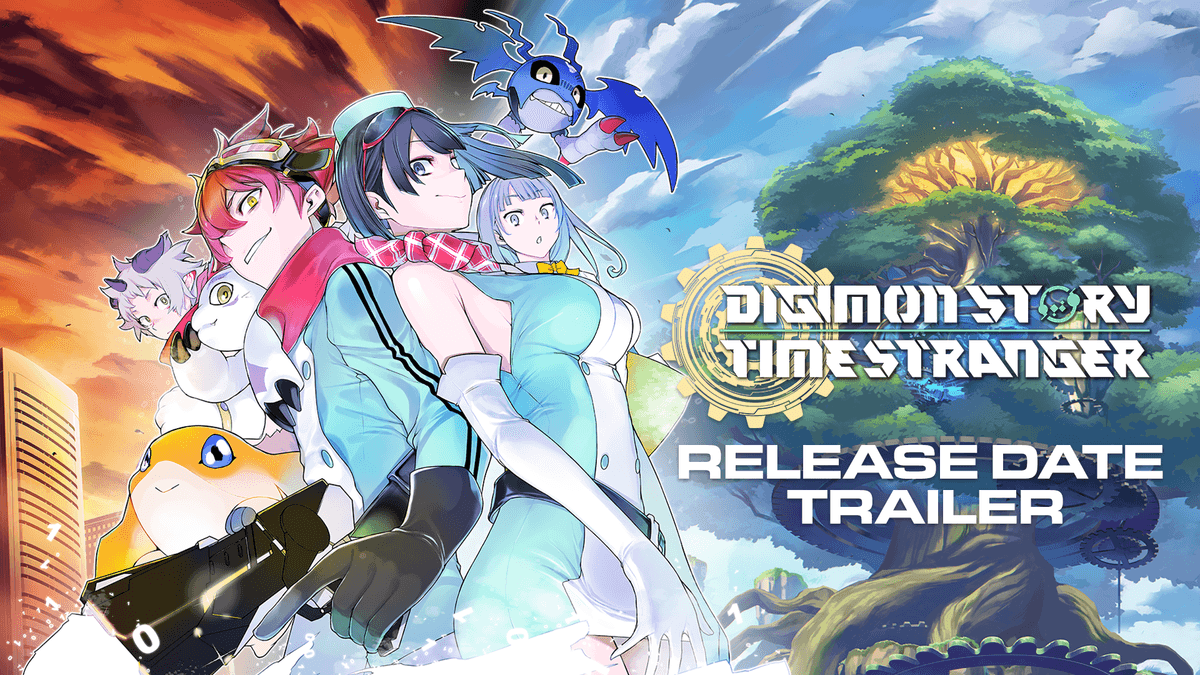
Digivolution is the heart: 451 reasons to lose a weekend
Time Stranger’s monster management is catnip if you like knobs and dials. There are two primary acquisition routes: Conversion and Digivolution. Every time you beat a wild Digimon, you bank data toward a scan. Hit 100% and you can generate that partner; push to 200% and you mint a stronger base version. It’s a smart incentive to fight the same family a few extra times without making it pure grind. My first “oh no I live here now” moment was camping an early zone to push a Tentomon line past 160%, then realizing the jump was exactly enough to survive a mid-game boss’s splash damage on Balanced.
Digivolution is where the puzzle sharpens. It’s non-linear, with multiple branches, each gated by stat thresholds, traits, affinities, or other quirks. Flip forms and you reset to level 1, which sounds punitive until you factor in Talent ranks (which raise future level caps) and the way new forms fast-track back up with the right setup. The personality Traits (Zealous, Strategic, Tolerant, etc.) and Attributes (Data, Virus, Vaccine) actually matter—enough that I started keeping alternates in the bank to pivot a role rather than forcing a favorite into a square hole.
The Digifarm—customizable from the Interworld Cinema hub—is a godsend. Stick someone there and watch passive gains roll in, then slot gear and liaison skills to nudge growth. Layer that with the agent’s five skill trees (leveled with Anomaly Points), and you’re not just grinding numbers; you’re steering a roster’s identity. By hour 25, I’d met 290 Digimon and logged complete data for 210 in my Digidex. By credits, I was at 316 seen and 246 fully registered. Not because the game demanded it—because the system kept whispering “one more branch, just to see.” That’s the good stuff.
The bummer: encounter creep and corridors that overstay
Let me be blunt: the encounter pacing could use a haircut. There were stretches where I felt like I was fighting because the level designer needed five more minutes of playtime, not because the game had a point to make. Dungeons lean functional rather than inventive, and while the combat rules, great meals need variety. The main story gates are especially guilty; you’ll sometimes clear a room, jog twenty seconds, hit another mandatory fight, rinse, repeat. After hour 10, I started toggling auto for these chains and saving my brain for the good stuff.
Boss fights, on the other hand, are the antidote—a mix of pattern reads and resource control that genuinely rewards preparation. One memorable mid-game clash forced me to stack Speed and accuracy over raw attack because the boss’s packet loss (cute) debuff kneecapped crit-chasing builds. It felt great to adapt, but getting there required wading through too many samey hallways.
Story and characters: better late than never, with a few standouts
Once the plot wakes up, it treats its ideas with more care than I expected. The time-travel mystery isn’t a twist machine; it’s a steady unwind with just enough bite. Aegiomon, who often joins you in battle, ended up as the emotional anchor I didn’t know I needed—stubborn, earnest, and written with a warmth that makes his biggest beats land. Inori Misano’s arc walks the line between earnest and saccharine in a way that works more often than not. Mirei Mikagura’s deadpan guidance at the Interworld Cinema? Chef’s kiss, perfectly pitched.
Other characters are a mixed bag. Some allies—Merukimon, Minervamon, Shellmon, Sirenmon—get moments that flesh them out beyond “cool partner creature.” Human side characters don’t fare as well; my liaison operator talked a lot without saying much, and the protagonist’s lack of voice hurts more than I expected. Even if you keep the default name, not hearing them speak drains presence. And I have to call it: Nanimon is aggressively unfunny and feels like a relic the writers were too nostalgic to cut. The good news is the main cast ultimately carries the weight, just on a delay.
Side stuff: cards, errands, and tinkering for the sake of tinkering
The optional layer is wide if not always deep. The card mini-game (Jogmon) ate more time than I planned; it’s lightweight deck-building with a few genuinely rude AI spikes, and the rewards—skill chips, materials, the occasional cosmetic—make dabbling worthwhile. Side missions swing between clever bite-sized puzzles and “go there, beat that,” but the XP, Anomaly Points, and the excuse to experiment kept me roped in. There are outer-world dungeons you can poke at for stronger drops and scan rates, and the fast travel from the Cinema hub keeps the back-and-forth painless.
I also appreciated the New Game+ carrot. After rolling credits, you can spin a fresh run with two higher difficulties (Mega and Mega+), carrying over Agent skills, Anomaly points, and cash. It’s a smart way to let your hard work breathe without trivializing the early hours. I’m not usually a NG+ person for JRPGs, but the buildcraft here has me tempted.
Tech check: smooth on PC, steady on PS5, and a UI that mostly respects you
On my PC, High settings at 1440p sat between 90-144 fps depending on the dungeon density, with cutscenes seemingly capped at 60. I had a couple of small hitches in the Interworld Cinema after the day-one patch, but nothing catastrophic—no crashes across 52 hours. I did hit a funny UI quirk where text wouldn’t scale correctly at 125% Windows scaling; switching to 100% fixed it. Controller rumble is conservative, and the DualSense’s extra toys don’t do much on PC beyond basic haptics.
On PS5, Performance mode ran at a stable 60 in the areas I tested, with quicker loads than my NVMe PC install by a hair—credit to Sony’s IO magic. Quality mode looks cleaner but feels unnecessary for a game where clarity of icons and turn order matters more than the extra gloss. The visual identity is consistent across platforms: colorful, clean, and a little sterile. It’s not chasing cutting-edge fidelity, but the animation work in key scenes—especially the opener and late-game reveals—hits the right notes.
What worked for me, and what didn’t
- Combat that rewards foresight: bench swaps that don’t eat turns, interruptible boss nukes, SP planning—great momentum.
- Digivolution depth without cruelty: 200% scans, Talent ranks, and Digifarm make growth feel guided, not grindy.
- Generous QoL: Analyze at a tap, passive heals between fights, immediate retries, and fast travel keep friction low.
- Japanese VO and cutscene craft: even when the plot stalls, performances carry scenes farther than they should.
- Encounter bloat: too many mid-dungeon speed bumps that feel like padding more than design.
- A sluggish first act and a safe final act: the middle sings, the start and end hum along.
- Silent protagonist blues: a voiced lead would’ve added texture this story needed.
Who should actually play this
If you love teambuilding and can happily sink hours into stat thresholds and branching forms, this is your buffet. Fans of Cyber Sleuth who wanted more breadth in the roster and a kinder growth curve will feel seen. If you need a briskly paced JRPG with a plot that sprints from beat to beat, Time Stranger is going to test your patience. It’s not punishing, but it asks you to settle into its tempo before it returns the favor.
Two moments that sold me
After 11 hours, I hit a boss that kept charging a map-wide burst. I wiped three times trying to heal through it. Then I clocked the interrupt cue and rebuilt my team with an emphasis on speed and a specific element combo. The next attempt, I chained a swap-in stun into a weakness break, reset his charge, and flipped the tempo. That “wait, I can bully this” switch changed how I approached every fight after.
Later, around hour 28, a cutscene recontextualized an earlier throwaway scene involving Aegiomon and Inori. I won’t spoil it, but the game finally trusted me to read between the lines, and for five minutes I forgot about the corridors and stats and just sat in the moment. It’s the exact sort of surprise you hope a slow-burn JRPG has tucked away.
The bottom line
Time Stranger is a paradox I’m happy to recommend: a stellar, player-first monster collection and combat sandbox yoked to a story that takes too long to get where it’s going and occasionally mistakes repetition for challenge. When it hits, it really hits—clever boss design, generous progression, and a roster that begs to be explored. I ended credits itching to respec half my farm and see what I could bend on Mega difficulty. That’s a good sign.
If you can accept the early crawl and a handful of dated character beats, there’s a rich, rewarding RPG underneath that respects your time more than it initially seems to. I came in for the Digimon nostalgia and left because I ran out of excuses to keep tinkering.
Score: 8/10
TL;DR
- Deep, flexible digivolution and team-building with 451 Digimon; growth feels satisfying, not cruel.
- Turn-based combat shines in boss fights—bench swaps, SP economy, and interrupts create great flow.
- Story starts slow (15-20 hours) but improves; a few standout character arcs carry the middle act.
- Encounter pacing can drag; too many filler fights in corridor-heavy dungeons.
- Strong VO and cutscene direction; performance is smooth on PC and steady on PS5.
- Recommended for system tinkerers and monster-collecting sickos; less so if you crave a brisk JRPG.
FinalBoss // Gear
Level up your setup
01Top-rated gaming headsetson Amazon→02High-refresh gaming monitorson Amazon→03Gaming chairson Amazon→04Discounted game keyson Kinguin→Affiliate links · As an Amazon Associate, FinalBoss earns from qualifying purchases.
Want to Level Up Your Gaming?
Get access to exclusive strategies, hidden tips, and pro-level insights that we don't share publicly.
Ultimate Reviews Strategy Guide + Weekly Pro Tips