**Digital Foundry’s deep dive into Crimson Desert on Xbox paints a brutal picture for Series S – heavy cuts and ~720p upscaling – while Series X delivers a far more respectable, if still imperfect, experience.**
Table of Contents (18)
Crimson Desert on Xbox: When Ambition Smashes into Series S Limits
When Microsoft first pitched the Xbox Series S as a “next-gen console at a lower price,” I remember thinking: this is either genius, or it’s going to age like milk once the really big open-world games land.
Crimson Desert is exactly the kind of game I had in mind. Massive, dense, visually loud in every direction – the sort of open-world RPG that lives or dies on streaming, memory management, and GPU headroom. So when Digital Foundry dug into the Xbox versions and came back effectively saying, “We cannot recommend the Series S build,” I wasn’t even shocked. Just a bit sad that the prediction finally caught up with reality.
The bottom line from their analysis is harsh but clear: on Xbox Series S, Crimson Desert is running with an internal resolution around 720p in its performance-focused mode, with aggressive cuts to effects, textures, shadows, and ray tracing stripped out entirely. The image often looks closer to a last-gen or even Switch-class port than something carrying a “Series” badge. On Series X, things are much better – not flawless, but recognizably “current-gen” with solid performance modes that sit in the same ballpark as PS5.
It took me a while to understand why the gap between Series S and Series X feels so extreme here, more than in a lot of cross-platform releases. The moment it clicked was when I looked at the combination of three things: how low the internal resolution drops, how heavy the visual cuts are, and how inconsistent the frame delivery can be when the game is under real load. This isn’t just “lower resolution and fewer bells and whistles.” It’s fundamental compromises on how the game looks and feels moment to moment.
Let’s unpack what Digital Foundry and others have found, how the different modes actually behave on each Xbox, and who – if anyone – should play Crimson Desert on Series S right now.
Specifications
Platform/Mode
Xbox Series S – Performance
Internal Resolution
~720p (FSR-style upscaling to 1080p/4K output)
Target Frame-Rate
40 FPS on 120 Hz displays, 30 FPS cap on 60 Hz displays
Visual Settings
Reduced textures & shadows, lower draw distance, no ray tracing, aggressive LOD cuts
Recommended For
Only if you absolutely must prioritise fluidity and have a 120 Hz display
Platform/Mode
Xbox Series S – Quality
Internal Resolution
~1080p (upscaled to 4K output)
Target Frame-Rate
30 FPS (can dip in heavy scenes)
Visual Settings
Higher texture/shadow quality than Performance, still no ray tracing, noticeable pop-in
Recommended For
Most Series S owners – image quality is far better than Performance
Platform/Mode
Xbox Series X – Performance
Internal Resolution
~1080p (upscaled, often to 4K output)
Target Frame-Rate
60 FPS (mostly stable, occasional dips)
Visual Settings
Higher detail across the board than S, still with some cuts vs PC; no full-fat RT
Recommended For
Almost everyone on Series X – strong mix of clarity and smoothness
Platform/Mode
Xbox Series X – Quality / Graphics-Focused Mode
Internal Resolution
Higher internal res (above 1080p, upscaled to 4K)
Target Frame-Rate
30 FPS (heavier load, more drops possible in busy towns)
Visual Settings
Best console image quality, more effects, higher LODs; ray tracing-style effects limited vs PC
Recommended For
Players who are fine with 30 FPS and want max visual fidelity on a big 4K TV
These aren’t official marketing numbers; they’re the real-world ballpark figures extracted from frame and pixel counts. And once you see this laid out, the shape of the problem on Series S becomes obvious: the “Performance” mode is asking a tiny GPU, with a tight memory budget, to run a huge open-world action RPG. The only way it can cope is by cutting resolution and fidelity to the bone.
What Really Stands Out: Digital Foundry Doesn’t Recommend the Series S Version
I’ve watched a lot of Digital Foundry coverage over the years, and they’re usually pretty diplomatic about weaker ports. They’ll say things like “a compromised but acceptable experience” or “if this is your only platform, it’s fine.” With Crimson Desert on Xbox Series S, the tone shifts.
Their conclusion is blunt: they do not recommend the Series S version at this time. That’s unusual and, frankly, telling. When a channel built on nuance and caveats effectively says “don’t play it here,” that’s not just pixel-peeping — that’s a warning about basic playability and presentation.
Eurogamer’s coverage of the same DF findings even described the Series S image as looking like a Switch game in places. That sounds like hyperbole until you actually see footage of the performance mode: character edges break down into chunky pixels, distant geometry collapses into shimmering noise, and effects are stripped back so far that the world feels weirdly flat compared to its Series X and PS5 counterparts.
This is the moment where the “$299 next-gen box” pitch collides with an ultra-ambitious open world. It’s not that Series S can’t run modern games — it absolutely can, and plenty of titles look decent on it. But Crimson Desert is one of those projects that refuses to scale gracefully down to the smaller hardware without serious surgery.
Xbox Series S Performance Mode: The 720p Trade-Off
Let’s start with the worst offender: Series S Performance mode. On paper, this is the mode that should excite action-RPG fans. Faster input response, smoother camera pans, less motion blur-induced smear. In reality, it feels like the mode that shows just how much the console is struggling.
Digital Foundry’s analysis pegs this mode at roughly 720p internal resolution, upscaled to your display. That alone would be a big compromise in 2026, but resolution is only half the story. To hold that higher frame target, the game also slashes textures, shadow quality, foliage density, and general draw distance. Ray tracing? Gone. Fancier lighting? Also dialled back.
The end result is an image that looks soft and noisy almost all the time. Fine detail — fabric textures, stonework, foliage — simply doesn’t survive the combination of low internal res and heavy reconstruction. On YouTube, you can almost excuse it as compression. On a 55-inch TV or a decent monitor, it’s impossible to ignore.
There’s another catch: the whole 40 FPS idea. On a 120 Hz display, the game can target 40 frames per second, which sits in a weird-but-playable middle ground between 30 and 60. Once you’ve played a good 40 FPS mode (like some of Sony’s first-party titles), it can actually feel surprisingly smooth, especially with VRR helping hide minor dips.
But on a regular 60 Hz TV, that same mode essentially collapses into a 30 FPS cap. You’re not getting the fluidity of 40, and you’re still paying the price in image quality. So unless you’ve got a 120 Hz panel and VRR, the “Performance” label is misleading: you’re sacrificing visuals for a frame-rate that isn’t truly higher in practice.
Worse, even then, this isn’t a locked, watertight experience. DF notes that when things get intense — combat in dense towns, heavy particles on screen — the frame-rate can waver, and you start feeling that familiar hitch-and-jerk motion that ruins the whole point of a performance mode.
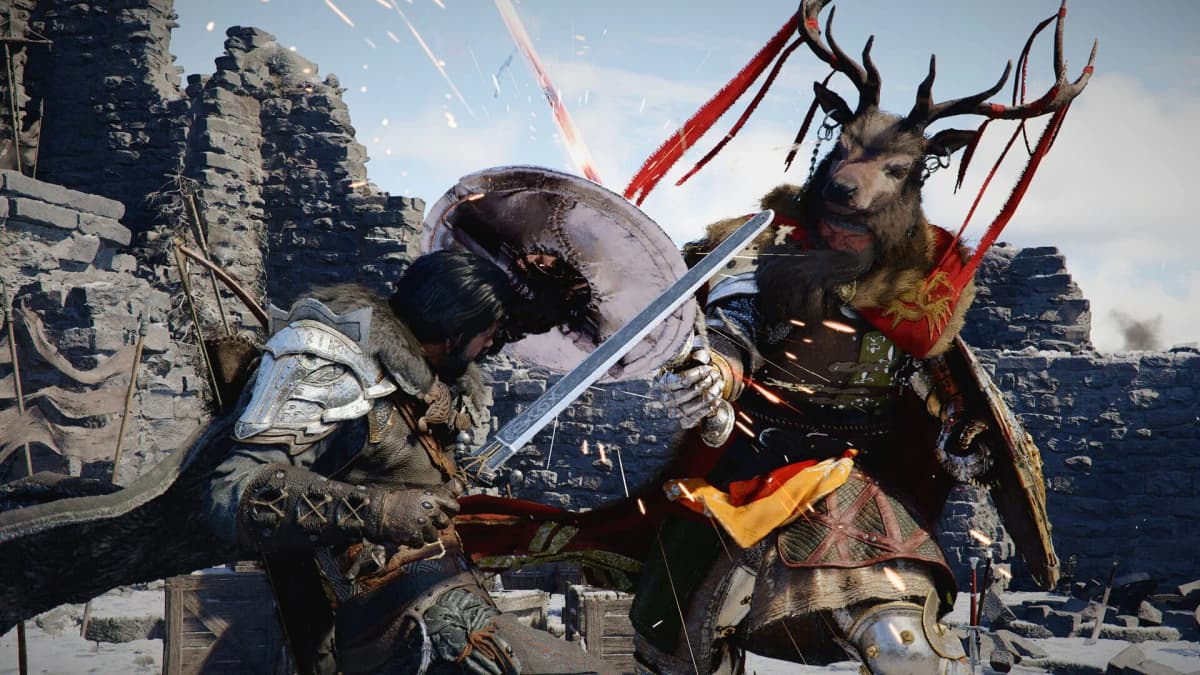
Screenshot from Crimson Desert
Personally, this is exactly the kind of compromise I hate. I’d rather play at a clean, stable 30 FPS with a respectable image than stare at a smeared 720p reconstruction that can’t hold its nerve. And by the end of DF’s breakdown, it’s clear they lean the same way: they explicitly steer Series S owners towards the Quality mode instead.
Xbox Series S Quality Mode: The “Least Bad” Option
Switching to Quality mode on Series S bumps the internal resolution up to around 1080p, again upscaled to whatever your console is outputting. That alone makes a big difference. Edges are cleaner, foliage has some life to it, and characters stop looking like compressed YouTube thumbnails walking around.
Textures and shadows step up a notch too. You’re still nowhere near Series X or a well-tuned PC, but at least it stops feeling like a late-gen Xbox One port. It starts to look like a modest, but recognisably “current” game.
The cost, predictably, is frame-rate. This is a 30 FPS mode, and not always a perfectly solid one. In quiet fields or smaller interiors, it behaves itself. In busy towns, large battles, or intense weather, you can see dips into the mid-20s. That alone wouldn’t be a deal-breaker, but Crimson Desert is a timing-sensitive action RPG, not a slow cinematic adventure. So any extra latency you pile on top of a 30 FPS baseline quickly becomes noticeable in dodges, parries, and camera control.
Digital Foundry also points out the streaming and pop-in issues that plague the Series S version. Assets appear late, shadows snap in, and you can see LOD transitions slap you in the face as you ride through dense areas. This is where the Series S’s tighter memory budget and GPU really start to show. There’s only so much art and geometry you can keep ready when you’re juggling a world this big with 10GB of RAM split with the OS.
Still, if I absolutely had to play Crimson Desert on a Series S today, this is the mode I’d use. It’s the only one that lets the art direction breathe a little instead of blending everything into a low-res soup. But it’s very much a “make the best of a bad situation” choice, not something I’d call a satisfying next-gen experience.
Xbox Series X: A Much Healthier Picture (With Asterisks)
Jumping from Series S to Series X is like swapping glasses with the right prescription. The fundamentals of Crimson Desert – dense towns, big draw distances, dramatic lighting – finally look like they belong on modern hardware.
In Performance mode on Series X, DF reports an internal resolution in the ~1080p range, reconstructed up to a 4K output signal using upscaling techniques similar to FSR. That’s a pretty typical console trick in 2026: use a mid-range internal resolution, throw smart reconstruction at it, and bank on the fact that most people sit a couple of metres from a TV.
At that resolution, with the Series X’s much beefier GPU, texture quality, shadows, and LODs all get a serious upgrade compared to the S. Environments look thicker and more convincing; foliage density is back; distant objects stop disintegrating into aliasing. This finally looks like the game the trailers were gesturing at, even if it’s not pushing the kind of razor-sharp image you’d see on a strong PC build.
More importantly, the 60 FPS target in Performance mode is mostly hit. There are dips — think dense hubs, big encounters, CPU-heavy scenes with lots of NPCs and physics — but this is the kind of fluctuation VRR can smooth out nicely on a modern screen. Without VRR, you’ll notice the occasional stutter, but this is a world away from the “mixed bag” experience on Series S.
The Quality/Graphics-focused mode on Series X is where things start to feel a bit more like the PS5 Pro-style experience: higher internal resolution (pushing further towards the panel’s native 4K), extra detail, and more expensive effects switched on. DF’s broader console coverage suggests that across PS5 and PS5 Pro, this game tries to layer in ray-traced-style enhancements, but it’s not the full PC-grade RT feature set. The same applies broadly on Series X: you get a bump in lighting and detail, but not the “everything ray traced, no compromise” dream.
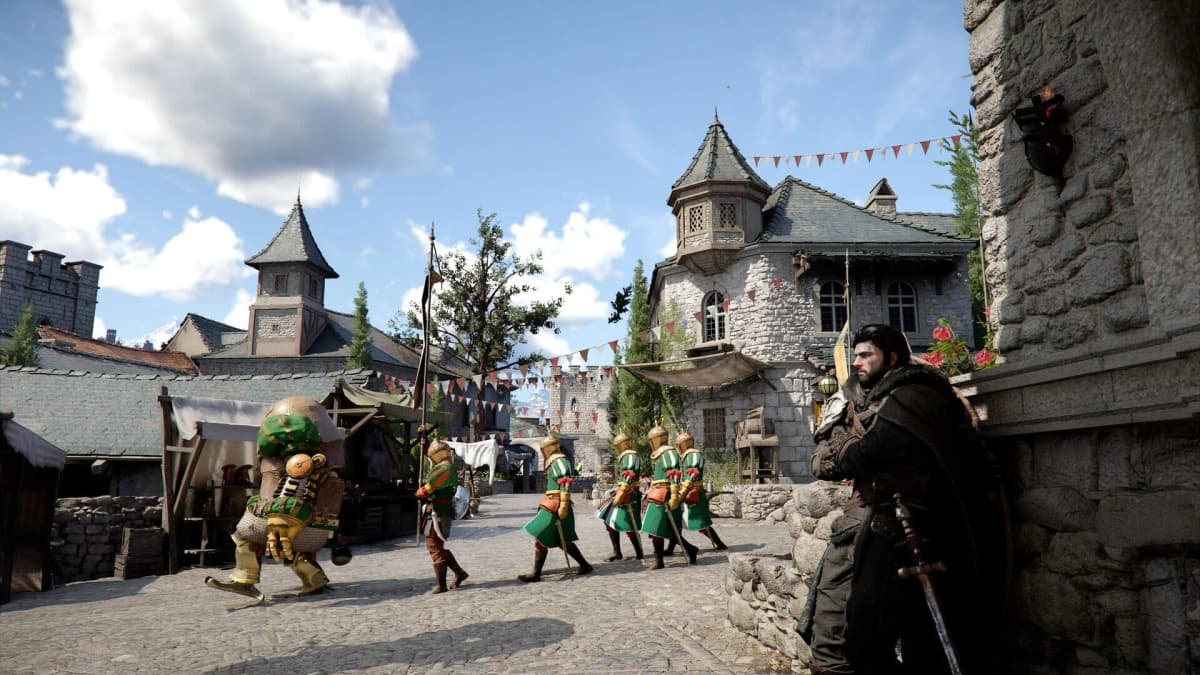
Screenshot from Crimson Desert
The trade-off, as always, is 30 FPS. And just like on Series S, that 30 isn’t always perfectly locked. CPU-heavy scenes are an issue across consoles – DF found that even PS5 Pro can drop frames thanks to crowds and simulation. So while Series X holds up better than PS5 in some respects and certainly better than Series S, you’re still dealing with a game that’s pushing the hardware hard in every direction.
Affiliate links · As an Amazon Associate, FinalBoss earns from qualifying purchases.
Personally, if I were playing on Series X, I’d stick with Performance mode almost unconditionally. Crimson Desert’s combat and traversal just feel better above 50 FPS, and the graphical step down from Quality mode isn’t brutal in the way it is on Series S. This is the sweet spot where the game is clearly built to sing on consoles.
Controls, Input Lag, and the 30 vs 40 vs 60 FPS Problem
Frame-rate in Crimson Desert isn’t just a number you look at in a graph; it genuinely changes how the game feels in your hands. Digital Foundry’s earlier look at the PS5 versions flagged a couple of things that absolutely carry over to Xbox: complex and sometimes clunky controls, and input lag that becomes a real nuisance in the lower frame-rate modes.
On any console, a 30 FPS action game stacks up latency fast: you’ve got the inherent controller latency, the engine’s own input queueing, the TV’s processing (if you’re not in game mode), and the simple fact that you’re only getting fresh frames every 33ms. Add even a little bit of uneven frame delivery, and your dodges and parries start to feel like they’re issuing commands via email.
Crimson Desert isn’t trying to be a frame-perfect fighting game, but it leans heavily on reactive combat. The difference between 30 FPS and a solid 60 on Series X is night and day in terms of responsiveness. Even the 40 FPS mode on 120 Hz panels sits in a noticeably better place than a wobbly 30 on Series S.
This is why the DF verdict on Series S stings so much: to play the game in a way that feels responsive, you’re pushed towards the performance-oriented mode, but that mode looks rough and still isn’t rock solid unless your setup is basically ideal (120 Hz, VRR, tolerance for heavy softening). To make it look tolerable, you fall back to Quality — and the game’s input response starts to feel mushy in demanding fights.
On Series X, the tension eases. Performance mode gives you enough frame-rate headroom that the game starts to feel closer to what the combat system is clearly designed around. You still have to accept that big settlements and heavy scenes will tug it down occasionally, but it’s the kind of fluctuation you can live with.
Why the Series S Struggle Here Is So Severe
It’s tempting to just shrug and say, “Well, Series S is weaker, of course it looks worse.” But Crimson Desert is a good example of why the gap can get this bad when a game leans hard into certain technical directions.
First, the memory situation. Series S has 10GB of RAM total, and not all of that is available to games. Big open worlds love memory. You need it for high-res textures, high-detail meshes, audio, animation data, streaming buffers — everything. When you’re trying to keep a busy medieval city, a distant landscape, and a horde of enemies ready to go, 10GB gets tight fast.
Developers respond by cutting texture quality, trimming draw distances, and using more aggressive LOD transitions. That’s exactly what you see in the Series S version: textures with less bite, geometry popping in, and a world that feels thinner the faster you move through it. The fact that DF and others are calling out pop-in explicitly tells you those trade-offs are right at the edge of acceptability.
Then there’s pure GPU grunt. The Series S GPU is significantly weaker than Series X’s — that’s not news — but you really feel the delta in a game that is both CPU-heavy and asking the GPU to do a lot of fancy lighting, effects, and upscaling work. When you’re already running around 720p just to hit your frame target, there’s no spare room to keep everything looking lush. Something has to give, and in Crimson Desert, almost everything gives: shadows, effects, ray tracing, foliage, you name it.
The last factor is time and budget. To make a Series S version shine (or at least not fall apart), studios effectively have to treat it like an additional platform with its own set of constraints, not just a slider you pull down from the Series X build. That means bespoke LOD setups, texture variants, streaming tweaks, CPU optimisation passes… and all of that eats into development time.
Looking at Crimson Desert as it stands, it feels like the developers got the Series X and PS5 versions into a “good enough” shape, then had to wrestle the Series S build into something that technically runs but doesn’t get the same love. That’s speculative, but the end result lines up with that kind of production reality: visually brutal cuts and a recommendation from DF not to bother.
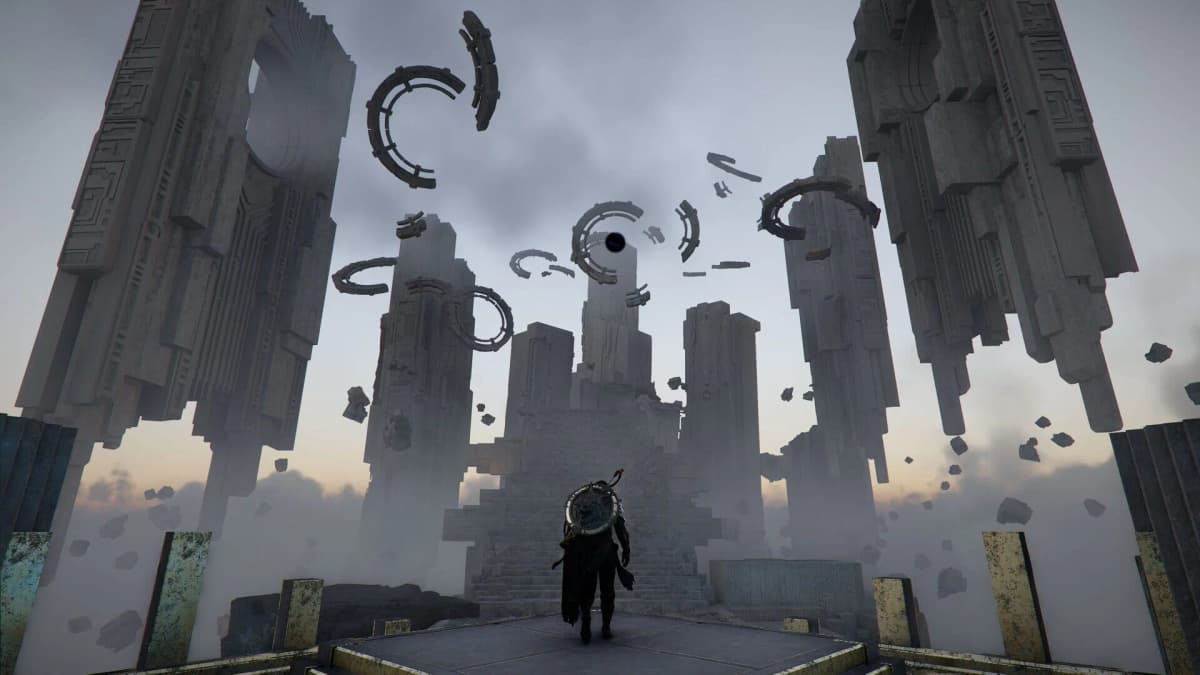
Screenshot from Crimson Desert
Could Patches Save the Series S Version?
Crimson Desert is clearly still in flux on consoles. On PS5, a late patch added a fixed 4K output option and tweaked various graphics modes, and there’s every indication that the developers will continue to fiddle with performance, LODs, and upscaling across platforms. The Xbox versions could absolutely see improvements over the next few months.
What’s realistic, though, is worth grounding. You can expect:
Stability fixes to reduce hard stutters and streaming hitches.
Better frame pacing, especially in 30 FPS modes.
Fine-tuning of LOD distances and pop-in behaviour.
Slightly better upscaler behaviour or sharpen filters.
What you shouldn’t realistically expect on Series S is a miracle jump in internal resolution or a full restoration of high-end effects. The hardware is what it is. If the game is currently targeting ~720p to hit a frame goal, and it’s still struggling in places, there’s no magic patch that suddenly makes 1080p60 with richer effects happen on the same silicon.
So yes, I’d expect the Series S build to become less rough, less hitchy, and slightly nicer to look at over time. But the fundamental balance — low resolution plus visible cutbacks vs. okay-ish performance — is probably here to stay.
Practical Advice: If You Own a Series S or Series X
For Xbox Series S Owners
This is where the honesty hurts a bit. If Crimson Desert is on your radar and your only console is a Series S, you’re stuck between three options:
Buy it now and live with heavy compromises.
Wait and see what patches deliver.
Play it elsewhere (PC, cloud, another console) if possible.
Given Digital Foundry’s clear “do not recommend” stance on the Series S version, I lean strongly towards the second or third options. If you absolutely, unavoidably want to play it on Series S right now:
Use Quality mode. The image is far less offensive than in Performance.
Make sure your TV is in proper game mode to keep latency as low as possible.
Consider turning down motion blur and camera effects if the options allow – DF’s PS5 testing and community tips suggest this often helps clarity and perceived smoothness.
Even then, go in expecting something that looks and feels like a stopgap port of a much bigger vision. If you’re sensitive to image quality or frame drops, it’s going to grate on you.
For Xbox Series X Owners
On Series X, the conversation shifts from “should you even play this?” to “how should you set it up?” Here’s how I’d approach it:
If you value responsiveness and smoother camera control, use Performance mode. This is where Crimson Desert finally feels like a current-gen action RPG, not just looks like one.
If you’re on a big 4K TV and are comfortable with 30 FPS, the Quality/Graphics mode is worth a look, especially if patches solidify the frame-rate. You do get a cleaner, richer image.
If you have a VRR-capable display, absolutely enable it. Those little dips and spikes in busy towns become much less annoying.
Just like on PS5, don’t be afraid to tweak the in-game graphics options beyond the headline “mode” toggle. Community testing on PlayStation found that certain combinations – like disabling excessive blur or tweaking particle quality – made a visible difference. Xbox benefits from the same logic.
The key takeaway is that Series X owners don’t need to panic. This isn’t a disaster the way the Series S version arguably is. It’s a demanding, slightly rough console port that can still deliver a legitimately impressive visual and gameplay experience with the right mode selection.
✓ PROS
+
Series X Performance mode offers a mostly solid 60 FPS with decent upscaled 1080p visuals
+
Art direction and world density still come through on Series X despite cuts
+
Flexible modes (30/40/60-style) let you prioritise frame-rate or resolution
+
Patches so far show the devs are willing to improve console performance over time
✗ CONS
–
Series S Performance mode runs around 720p with brutal cuts, often looking sub-gen
–
Digital Foundry currently does not recommend the Series S version at all
–
30 FPS modes on both consoles suffer from latency and occasional drops
–
Streaming/pop-in and LOD transitions are very noticeable on Series S and still present on Series X
–
Over-complicated graphics menus and poorly explained settings make it hard to find the “best” setup
What This Says About the Future of Series S
Crimson Desert isn’t the first game to make the Xbox Series S sweat, but it’s one of the clearest examples yet of how far you can stretch that hardware before things start breaking. Earlier cross-gen titles and well-optimised AAAs often scaled down gracefully: lower resolution, fewer effects, but still recognisably the same core experience.
Here, the scaling feels more like triage. The developer has had to make so many cuts, across so many aspects of the presentation, that the Series S build almost feels like a different, downgraded product. When DF says they can’t recommend it, they’re not just talking to hardcore videophiles — they’re signalling that the basic balance of clarity, smoothness, and responsiveness is off.
This raises awkward questions for the long tail of this console generation. As more games chase fully streaming-heavy worlds, dense crowds, complex lighting, and bigger simulation budgets, the Series S will keep needing fairly bespoke optimisation work to stay on the right side of playable. Some studios will put that time in; others, frankly, won’t be able to without compromising somewhere else.
From a player’s perspective, we’re already at the point where you can’t just assume “Series S version = Series X version but softer.” For a growing number of demanding games, you need to actively check how the S holds up before buying. Crimson Desert might end up as a turning point people cite in a few years when they talk about the moment Series S stopped feeling like “next-gen enough” for the biggest, most ambitious releases.
7/10 on Xbox Series X (with the right mode); 4/10 on Xbox Series S in its current state
VERDICT
On Xbox Series X, Crimson Desert is a demanding but ultimately rewarding showcase of what this generation can still do: a visually dense world, strong 60 FPS performance mode, and enough flexibility to tune your experience. It’s not perfectly optimised, and you’ll need VRR and some tolerance for dips to get the most out of it, but DF’s findings line up with what I’d call a “rough but worth playing” console version.