
Table of Contents (9)
Remember When Pirates of the Caribbean Actually Got Its Own Games?
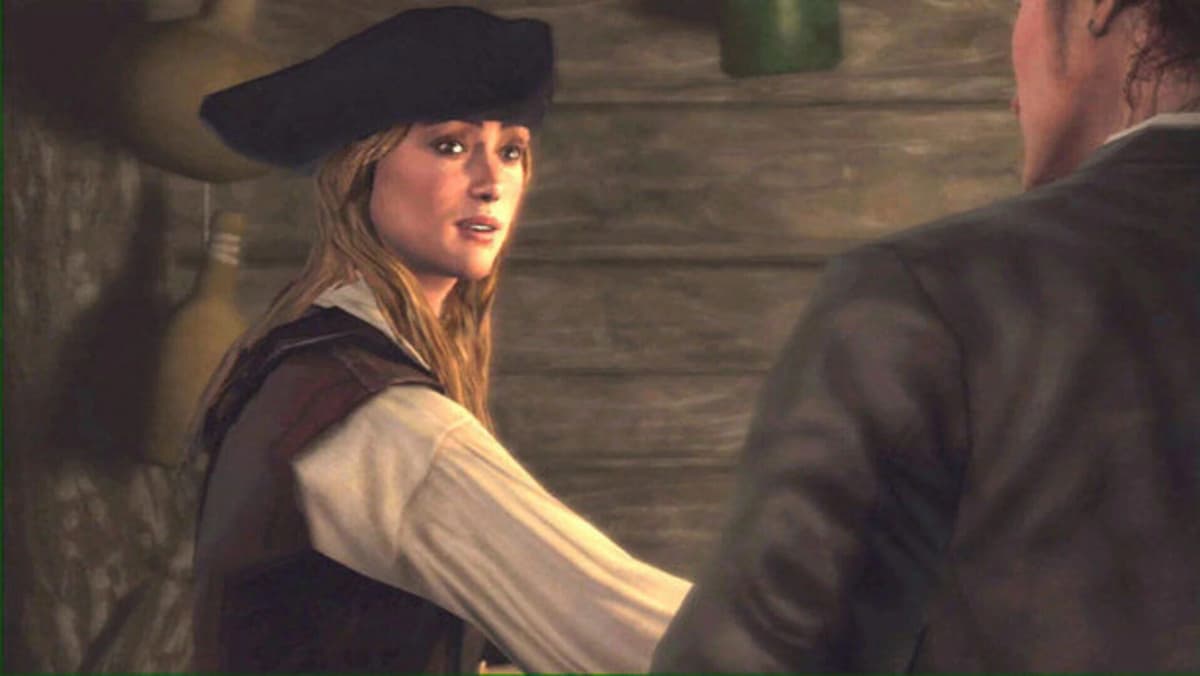
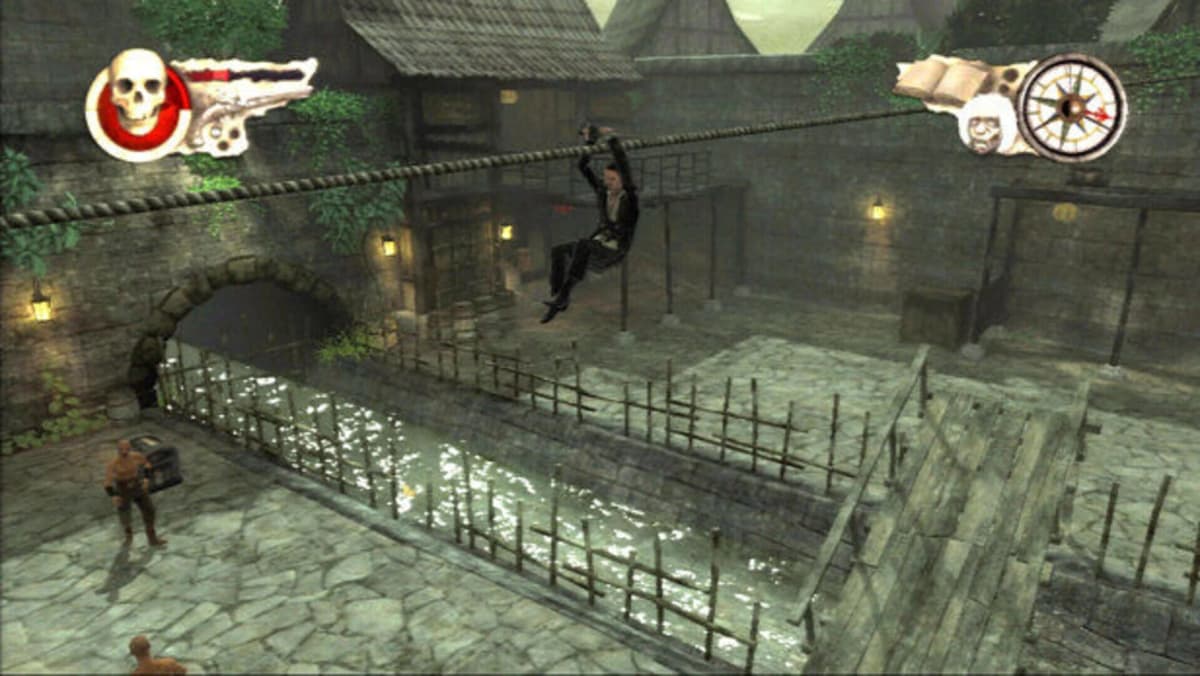
I still picture Pirates of the Caribbean: At World’s End as a PlayStation 2 game first. That’s the box I saw in rental stores, the disc I scratched to hell, the janky combat I fought against more than the actual soldiers. But that’s the funny thing: it wasn’t just a PS2 game. It was everywhere – PC, PS3, Xbox 360, Wii, PSP, Nintendo DS. If a device could run polygons and vaguely resemble a console, there was probably a Jack Sparrow on it.
Back then, that was just how things worked. Big movie, big marketing blitz, big wall of tie-in games. It didn’t really matter whether you played it on PS2 or Wii; what mattered was that the movie had a game. The film didn’t just end when the credits rolled – you went home, turned on your console, and stayed in that world a little longer, even if it meant tolerating stiff animations and recycled voice lines.
That’s the part I miss. Not the quality – At World’s End is not some lost masterpiece – but the idea that a film like Pirates of the Caribbean would almost automatically come with its own standalone game. A box on the shelf. A disc you owned. A weird, imperfect, self-contained extension of that universe that was about it and nothing else.
Fast forward to now, and Jack Sparrow hasn’t vanished from games. If anything, he’s more visible than ever. He just lives inside other people’s games – inside Sea of Thieves, inside Fortnite, inside mobile strategy titles gearing up for a PC port. Disney didn’t stop putting Pirates in games; it just stopped letting Pirates be a game.
At World’s End Was Mid… and That’s Exactly Why It Matters
I’m not going to pretend At World’s End was secretly incredible. It was stiff, clumsy, and aggressively 2007. Combat felt like mashing through slightly interactive cutscenes. Environments blurred together. The Wii version had its own motion-waggle nonsense. It was the definition of “licensed game: the job.”
But it also did something that’s basically extinct now: it tried to condense two films into a playable adventure without just photocopying the script. It mashed together setpieces from Dead Man’s Chest and At World’s End, rewired scenes so you could play as Jack, Will, and Elizabeth, and twisted the pacing so you felt inside the trilogy instead of watching it from the outside.
It made no sense as storytelling, but it made perfect sense as a kid who just left the cinema and wasn’t ready to let go. That janky sword fight on the beach? That was “my” version of the movie. That awkward boss encounter on the deck in the middle of a storm? Still in my head, decades later. Not because it was good, but because it was mine.
The licensed games of that era – Harry Potter, Spider-Man, Pirates of the Caribbean – all lived off that same fantasy: the film as a place you could go back to, not just a product you consumed once. They weren’t DLC for some ongoing platform. They were their own thing, with their own box art and their own space in the conversation. You can point at a shelf and say, “That’s the Pirates game.” Not an event. Not a skin. A game.
For a Second, Pirates Looked Like a Real Gaming Franchise
Pirates wasn’t even some throwaway one-and-done license. For a hot minute, it looked like Disney actually wanted to build a proper video game footprint around the brand. There was Pirates of the Caribbean on PC and consoles in 2003 (the Bethesda-published one that started life as something else entirely), then curiosities like Jack Sparrow’s Legend in 2006, and the big swing: Pirates of the Caribbean Online, the MMO that ran from 2007 until its shutdown in 2013.
Then, of course, there was LEGO Pirates of the Caribbean in 2011 – the last time Pirates got a big, bold, standalone console game with its name on the box. It wasn’t revolutionary, but it was visible, it was everywhere, and it said something simple but important: Pirates of the Caribbean is big enough to carry its own game.
The real “what if” moment, though, was Pirates of the Caribbean: Armada of the Damned. That was the one that felt like a potential turning point – an original story, bigger scope, RPG elements, something with actual personality instead of a rushed movie retelling. And then Disney pulled the plug in 2010 before release.
Looking back now, that cancellation feels like a hinge in time. Before it, you could at least argue over what a proper Pirates game should be – action-adventure, open-world RPG, MMO. After it, the conversation quietly died. There hasn’t been a major standalone AAA or AA Pirates console game since. Not really. The brand didn’t stop being useful; it just got repackaged for a different strategy.
Disney Stopped Making Games. It Started Supplying Content.
This isn’t just a Pirates problem; it’s a Disney problem. Around the early 2010s, Disney more or less realised that making full games around movie IP is expensive, risky, and often thankless. You have to spin up teams, align production with film schedules, swallow the cost if reviews tank, and then watch the game vanish from the charts in a month.
Why burn cash on building entire game ecosystems when other people have already done that for you?
So Disney pivoted. It closed studios, stepped away from being a traditional publisher, and leaned into a new role: the mega-licensor feeding live-service machines. Instead of “here’s a Pirates game,” the message became “here’s Pirates inside your favourite game.” Lower risk, built-in audience, instant visibility. From a pure business perspective, it’s hard to argue with.
And Pirates was a perfect guinea pig for that model: iconic music, recognisable characters, obvious gameplay hooks with ships and swordfights. Exactly the sort of thing that slots neatly into someone else’s sandbox.
Sea of Thieves: The Collaboration That Proved Disney Right
If there’s one moment that locked this new era in place, it’s Sea of Thieves: A Pirate’s Life.
When Rare brought Jack Sparrow and Davy Jones into Sea of Thieves, it wasn’t as some lazy cameo. It was a full-blown narrative expansion, a campaign where the tone of Pirates of the Caribbean clicked eerily well with the game’s existing colourful pirate fantasy. Rare and Disney talked openly about wanting the crossover to feel “authentic” to both worlds, not like one was just parasitically riding on the other.
It worked. The expansion landed, and Sea of Thieves had one of its busiest months ever, hitting around 4.8 million players. That’s the kind of spike that makes executives salivate. From Disney’s point of view, it was proof: the brand still had punch, and the best way to exploit it wasn’t to bankroll a full game and pray. It was to license Jack Sparrow into a thriving live-service ecosystem, let Rare do the heavy lifting, and take the win.
As someone who loves actual, self-contained games, this drives me mad – because it’s not bullshit. It’s brutally effective. A Pirate’s Life is one of the best uses of Pirates in games, full stop. It’s fun, it’s lovingly crafted, and it respects both sides of the crossover.
But the success story comes with a catch: Pirates of the Caribbean stopped being a
But the success story comes with a catch: Pirates of the Caribbean stopped being a
🎮 Get This Game at the Best Price
Compare prices instantly and save up to 80% on Steam keys with Kinguin — trusted by 15+ million gamers worldwide.
*Affiliate link — supports our independent coverage at no extra cost to you
Kingdom Hearts and Fortnite: Pirates as Seasonal Content
The same pattern plays out elsewhere. In Kingdom Hearts III, the Pirates world returns looking almost unsettlingly close to the films. Tetsuya Nomura has talked about how the Caribbean was interesting because it opened up so many gameplay angles: ship battles, underwater segments, land combat, even aerial moments. It’s a designer’s playground.
But again, Pirates is a chapter in someone else’s saga. A cool chapter, sure, but still just one world in a mash-up universe whose actual spine is Square Enix melodrama and Keyblade lore.
The Fortnite crossover in 2024 took the logic to its most naked form. Epic rolled out a limited-time Pirates of the Caribbean event: Jack Sparrow skins, themed cosmetics, special quests, a temporary aesthetic repaint so that, for a few weeks, Fortnite felt dressed up like the Caribbean. It was slick. It was fun. And it was completely disposable by design.
Months before, Disney and Epic had announced their big alliance, pitched by Disney CEO Bob Iger as the company’s “biggest entry into the world of video games” yet. The idea was simple: plug Disney’s juggernaut IP into Fortnite’s attention machine and emerging ecosystem. No need to worry about platform launches, online infrastructure, long-term content pipelines – Fortnite already has that.
This is the new model in its purest form. Pirates doesn’t need to carry a game. It just needs to fuel engagement for a few weeks in a place where millions already live. Make a splash, sell some cosmetics, move on to the next crossover. From a cold spreadsheet angle, it’s genius. From the point of view of someone who remembers buying At World’s End on a disc, it feels like watching an old friend reduced to a battle pass page.
Meanwhile on Mobile: Tides of War and the Steam March
To be fair, Pirates hasn’t been totally absent as a “main” act. Pirates of the Caribbean: Tides of War, a mobile strategy title, has been quietly doing numbers for years. It’s exactly what you’d expect: base building, timers, fleet management, familiar faces glued onto monetisation systems. Successful enough that plans exist to bring it to Steam, effectively turning a mobile live-service into a PC one.
That, in itself, says plenty about where Disney’s head is at. If a Pirates product is going to live on PC in 2026, it’s not going to be some ambitious spiritual successor to Armada of the Damned. It’s going to be a port of an already-proven mobile live-service machine. That’s safer. The design is already road-tested. The spending funnels are built. The “game” at that point is an ongoing service where Pirates is the theme wrapped around the business model.
Compare that to At World’s End. Flawed as it was, you bought it once and that was the whole deal. No battle pass, no “check in daily for rewards,” no limited-time cosmetics. Just a finite, slightly clunky adventure that pretended to be the movies for eight-to-ten hours and then let you move on with your life.
I’ll take the messy, over-ambitious PS2-era tie-in over an eternal drip feed of timers and VIP boosts any day.
What We Lost When Movie Games Stopped Being Games
The thing that stings about Pirates’ trajectory isn’t that Disney made some incomprehensible decision. It’s that the decision makes perfect sense and still feels like a downgrade for the medium.
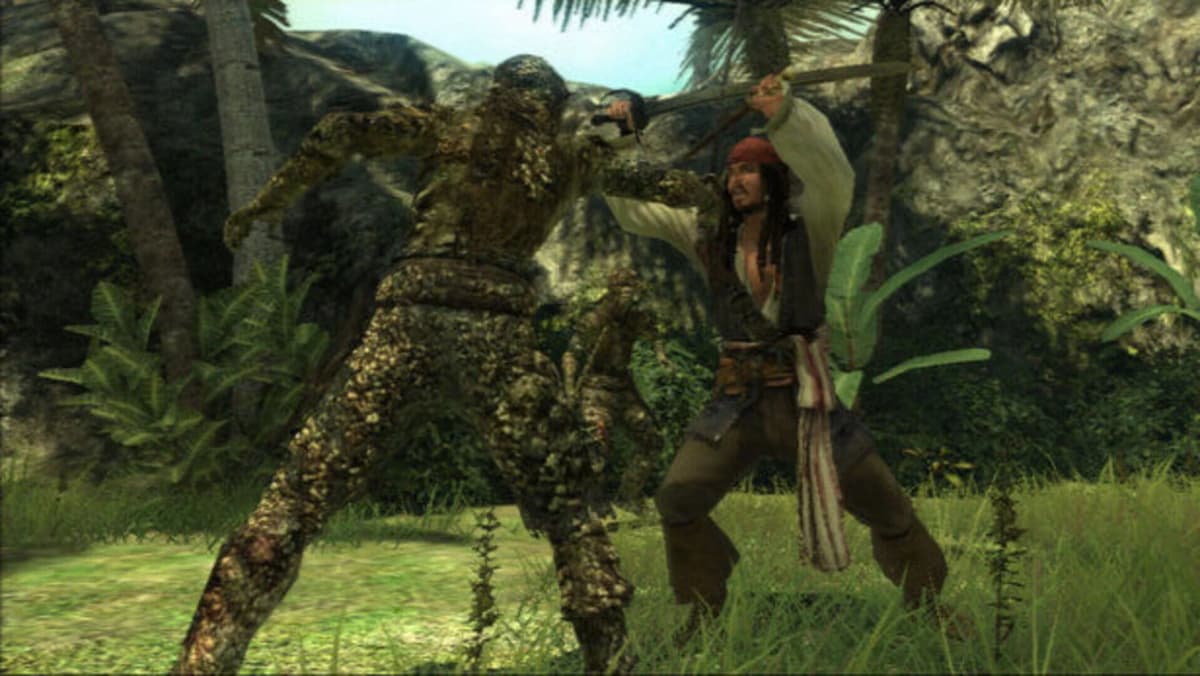
Standalone licensed games – the At World’s End types – were awkward, often bad, and absolutely part of a marketing machine. But they also treated the movie as something worth centering. The game was about that film’s world, that tone, those characters. Even when they were cynically rushed, there was at least a pretense that this universe deserved its own dedicated slot in gaming.
Today, Pirates of the Caribbean exists in games mostly as a mood board slapped onto platforms that already have their own agendas. In Sea of Thieves, Pirates decorates Rare’s vision of cooperative piracy. In Fortnite, it’s another costume party in a never-ending carousel of crossovers. In Tides of War, it’s the skin wrapped around a free-to-play economy.
And it’s not just Pirates. This is the future for most big film IPs. Instead of risky boxed products with a six-month dev-crunch death march, we get guest appearances, timed events, and mobile spin-offs that slip onto PC once they’ve proven their retention metrics. From Disney’s point of view, that’s not a bug. That’s the business model.
But that shift quietly kills a specific kind of magic. The magic of walking out of a cinema, going home, and slotting in a game that exists solely to live in that film’s shadow. The magic of a bad-but-memorable platformer or brawler that, years later, still sits in the back of a drawer as a time capsule for that one summer.
At World’s End is absolutely that sort of time capsule for me. It’s not a game I replay because of its mechanics; it’s a game I replay because it represents a way of thinking that’s basically gone. “We have a movie. so, we need our own game. Full stop.”
FinalBoss // Gear
Level up your setup
01Top-rated gaming headsetson Amazon→02High-refresh gaming monitorson Amazon→03Gaming chairson Amazon→04Discounted game keyson Kinguin→Affiliate links · As an Amazon Associate, FinalBoss earns from qualifying purchases.
Want to Level Up Your Gaming?
Get access to exclusive strategies, hidden tips, and pro-level insights that we don't share publicly.
Ultimate Gaming Strategy Guide + Weekly Pro Tips