
Table of Contents (10)
The moment The Division 2 finally felt dangerous again
I knew Realistic Mode meant business the first time I peeked out from behind a burned-out SUV, lined up what I thought was a safe shot, and just dropped dead from a single round I never even saw coming. No armor bar to save me, no magical health regen to bail me out, no second chances. Black screen. Mission failed. Back to the start.
I have close to two thousand hours in The Division 2 and more than a thousand in the first game. I have melted more bullet-sponge bosses than I care to remember, min-maxed enough builds to qualify as unpaid QA, and spent entire evenings watching yellow numbers vomit out of enemies’ heads. It is safe to say I love this franchise, but I also know exactly how safe and predictable it can feel once you understand the meta.
Realistic Mode threw all of that muscle memory straight in the bin. Ten hours later, I am convinced this “little” free experiment is the most important thing Ubisoft has done with The Division in years. It rips away the comfort blanket of RPG bloat, leans into lethality and survival, and quietly points at what The Division 3 could be… if Massive does not lose its nerve.
What Realistic Mode actually changes under the hood
On paper, Realistic Mode sounds like a simple modifier. In practice, it rewires how the entire game feels. It is built on top of the Warlords of New York expansion, but instead of layering more gear treadmill on top, it strips the RPG out almost completely.
Weapons, armor and skills use fixed stats. No god rolls, no build crafting, no exotics that turn you into a tanky demigod. Your rifle is just a rifle, and the enemy’s rifle is just as deadly. A clean headshot is usually an instant kill unless you or the target have serious protection. Explosions in your vicinity often mean instant death. Drones and gadgets feel fragile instead of being superhero crutches.
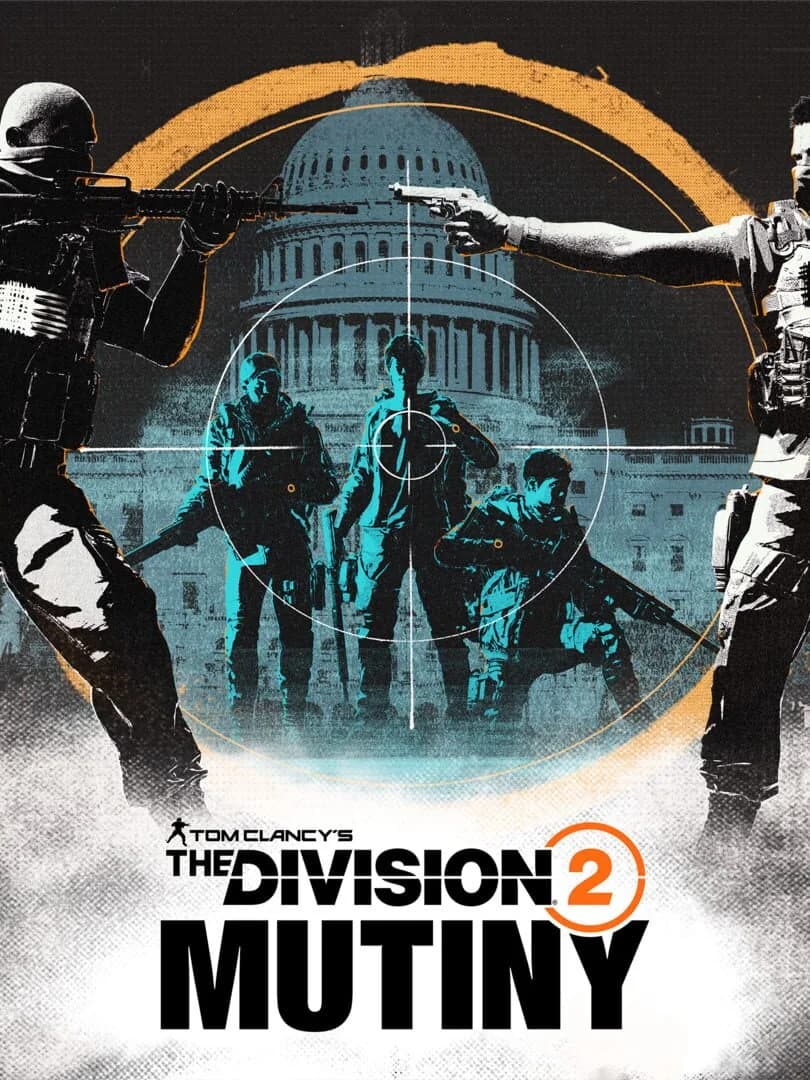
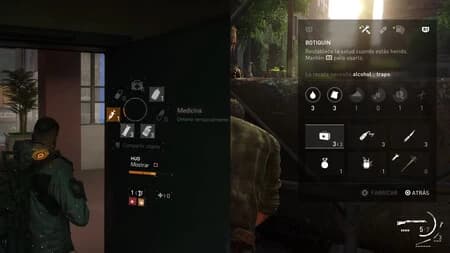
The HUD is brutally minimal. Your usual barrage of outlines, waypoints and comfort UI gets dialed back. Health regeneration is gone. Ammo is scarce and mostly comes from corpses rather than the usual overflowing caches. Skills have longer cooldowns. Fast travel is limited to your main base and safe houses instead of the usual teleport-anywhere convenience. In some implementations, heavier armor even slows you down, although that system still feels inconsistent and in need of refinement.
In other words, Massive temporarily turned The Division 2 from a loot-driven power fantasy into something closer to a tactical survival shooter. The rhythm changes completely. Instead of running from cover to cover like a DPS checklist and dumping magazines into red bars, you move slowly, you clear angles, and every single bullet fired has weight.
A decade of The Division made me hungry for exactly this
I remember the first time I played the original game’s Survival DLC. That feeling of scrambling for clothes in a snowstorm, counting every bullet, terrified of both NPCs and other players, felt closer to a tense thriller than a looter shooter. Then I went back to the main game and went right back to unloading a full LMG belt into a guy with a beanie and an orange HP bar the size of a bus. The dissonance never really went away.
Across The Division and The Division 2, Massive built one of the best gunplay and cover systems in the genre and then buried it under layers of spongey health, bloated armor bars and loot RNG addiction. The mechanics were always sharp, but the fantasy pushed you toward standing up in the open and facetanking damage because your armor regeneration build would simply out-heal bad decisions.
Realistic Mode finally respects how lethal a modern firefight should feel inside this universe. Suddenly, the incredible sound design, the weapon feedback, the level layouts, the cover placement, all of it sings in a way the base game rarely allows. When a stray shot can end a thirty-minute push, suppressing fire, flanking and timing matter more than finally getting that perfect chest piece.
It also quietly opens a door for players who could never get into The Division because they bounced off the RPG side. I have heard the same complaint from friends for years: they love the setting, hate putting a full magazine into a guy’s skull. This mode is practically designed for them. It takes the exact same maps, the same core mechanics, and reframes them into a tactical experience that rewards precision instead of spreadsheet worship.
The ugly side: when a brilliant idea feels like a rough mod
Here is the thing though. You can feel, constantly, that Realistic Mode is a prototype hacked together on top of existing content. It is a fantastic proof of concept, but it is nowhere near finished.
The ammo economy is a mess. I had missions where I ran dry and ended up desperately kiting enemies with a sidearm, and others where I was drowning in bullets. Pistols, which have infinite ammo in this mode, should be your reliable backup. Instead they spray like a busted Nerf gun. I had shots go wide at knife-fight range that felt ripped straight out of an old Fallout game, and not in a good way. If you are going to make every bullet matter, the guns need to be laser-focused and trustworthy.
The AI is the other big offender. Enemies are still tuned for the classic Division dance, where they eat three magazines before going down. Their behavior has not caught up with the new lethality. NPCs happily sprint across open ground, ignore suppression, and push angles they would never risk if they died in one or two shots. Meanwhile, you are playing like a terrified SWAT trainee because you know one mistake equals a body bag.
The mismatch creates awkward situations. A single rusher can delete you before you even register his animation, while entire squads of riflemen stand in the open like they are still rocking endgame HP pools. It feels like someone flicked the damage slider to “realistic” but left the brains on “arcade”. For a mode that lives or dies on immersion, that disconnect hurts.
Then there is the structure. Because the mode is grafted onto Warlords of New York, it plays like a heavily edited remix of that DLC campaign rather than a fully built survival fantasy. Safe house placement, loot routes, encounter pacing… none of it seems designed from the ground up for the new ruleset. I have been calling it a “concept adaptation” in my head, because that is exactly what it feels like: a clever mod put out officially as a free event.
And just so it is clear, I actually mean that as a compliment and a criticism at the same time. As a free limited-time experiment, this is shockingly bold. As a foundation for the future of the series, it is crying out for deeper systemic work.
Ubisoft accidentally stumbled into its best idea in years
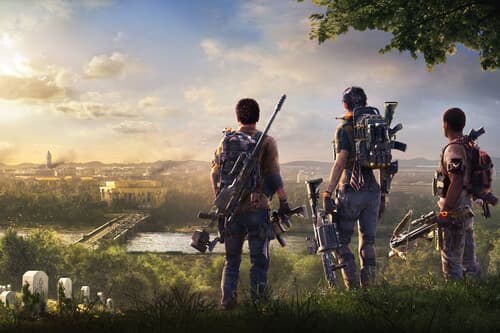
Massive and Ubisoft rolled Realistic Mode out as part of The Division’s tenth anniversary celebrations and the 2026 roadmap. Crossplay is finally on the horizon, a Central Park DLC is coming, The Division Resurgence is launching on mobile, and The Division 3 is officially in the works somewhere in the background. The marketing message is clear: the franchise is alive and kicking again.
Ubisoft accidentally stumbled into its best idea in years
Massive and Ubisoft rolled Realistic Mode out as part of The Division’s tenth anniversary celebrations and the 2026 roadmap. Crossplay is finally on the horizon, a Central Park DLC is coming, The Division Resurgence is launching on mobile, and The Division 3 is officially in the works somewhere in the background. The marketing message is clear: the franchise is alive and kicking again.
🎮 Get This Game at the Best Price
Compare prices instantly and save up to 80% on Steam keys with Kinguin — trusted by 15+ million gamers worldwide.
*Affiliate link — supports our independent coverage at no extra cost to you
Within that context, Realistic Mode being free for a limited window is not a random stunt. Warlords of New York itself is heavily discounted during the event, and on PC the base game has hit absurdly low sale prices. They want as many people as possible to pile in, hammer this mode, and scream about it online. This is user research disguised as a party favor.
It also feels heavily inspired by Ghost Recon Breakpoint’s Immersive Mode, another post-launch pivot where Ubisoft stripped away gear scores and RPG fluff to save a struggling game. That mode was genuinely excellent and, for many players, should have been the default experience from day one. Realistic Mode sits in the same category: a late-stage course correction that suddenly makes everything else look strangely outdated.
The difference here is that The Division is not a dying brand in desperate need of a lifeline. It is a series that plateaued. Players know what to expect, and a lot of us were quietly bracing for The Division 3 to be the same treadmill in a new city. Realistic Mode blows a hole in that assumption. It proves that you can strip back the numbers, lean into lethality and survival, and still feel absolutely like The Division rather than some generic mil-sim clone.
If Ubisoft has any sense, they will treat this as a prototype for the next decade of the franchise rather than just a seasonal novelty. The danger is that it becomes exactly that: a fun, limited-time modifier they rotate in and out to pad content calendars, without ever committing to the deeper structural changes it hints at.
The obvious path forward: a brutal hybrid for The Division 3
I do not want The Division 3 to abandon its RPG DNA completely. The buildcrafting, the exotic hunting, the weird synergies between skills and talents are a big part of why I stuck around for thousands of hours. Throwing that away to chase a pure survival audience would be a self-inflicted gunshot wound.
What Realistic Mode shows, though, is that the combat model absolutely needs to move closer to this lethal baseline. Enemies and players should feel fragile enough that good positioning and teamwork matter more than whether you farmed the right chest piece for a two percent crit bump. Headshots should be terrifying. Exposed flanks should be punished. Firefights should end in seconds, not minutes.
Imagine a hybrid where you still have builds, but the numbers operate in a narrower band. Better gear improves consistency and utility rather than turning you into an immortal turret. Instead of 200 bullets into a named enemy, maybe it is two or three if you play like an idiot and stand in the open. Armor and skills give you a razor-thin margin for error, not an entire extra health bar.
Layer proper survival systems on top and things get interesting fast. The series already flirted with this through the first game’s Survival DLC. Expand that thinking into the open world: temperature, contamination, improvised crafting for meds, food, special ammo and armor plates. Toss in meaningful debuffs from illness or exposure and buffs from good prep work, and suddenly going out on a mission at night in the rain becomes a real decision instead of just a change in lighting.
On the structural side, The Division absolutely should lean harder into the MMO-lite direction it keeps flirting with. Shared world PvE, proper public events, dynamic activities that pull nearby agents together, a Dark Zone that actually feels like a living ecosystem instead of an instanced side mode. Fallout 76 and Destiny have shown both the pitfalls and the potential of that approach. The Division’s urban setting and grounded gear make it a perfect fit for a persistent, evolving city under siege.
Realistic Mode is the test bed for all of this. It answers the most important design question: can The Division function when the player is not a walking tank. The answer, even in its messy current state, is a loud yes. Now Massive needs to build systems, AI and content that are designed for that answer instead of retrofitted around it.
My line in the sand: make it permanent or stop wasting everyone’s time
For all my praise, I am not going to pretend the limited-time nature of Realistic Mode does not annoy me. Tying it to an anniversary event and a DLC window makes marketing sense, but from a player perspective it is classic live-service nonsense. You get people invested in a new way to play, tease them with a different fantasy, then yank it away because the calendar says the party is over.
If Massive is serious about community feedback, Realistic Mode needs to become a permanent pillar of The Division 2 while they figure out how far to push the concept in The Division 3. That can be its own playlist, its own character template, even its own progression track. What it cannot be is a one-month novelty that vanishes just when players start to master it.
There is precedent for getting this right. Other developers have taken rough, divisive launches and turned them around by listening obsessively to their communities, patch after patch, until the game basically rebirthed itself. When that happens, it is usually because the studio is willing to admit that the players banging a particular drum might actually see the potential more clearly than the original roadmap did.
Realistic Mode is the drum. It is the loud, messy, slightly broken signal that a lot of us are sick of magdumping into elite sponges and are ready for a harsher, more grounded version of this universe. If Ubisoft retreats from this experiment or treats it purely as a nostalgia hook for the tenth anniversary, that will be a failure of courage more than anything else.
Where this leaves me as a Division lifer
After around ten hours in Realistic Mode, going back to the standard game feels strangely hollow. I still enjoy the loot chase, the buildcrafting, the familiar loop. I always will. But I have now tasted a version of The Division 2 where I actually fear open streets again, where flanking matters more than recalibration farming, and where a random patrol can end my run in a handful of bullets.
That is the version I want to see evolve. Not as a complete replacement for the RPG blueprint, but as a core branch of the franchise. A second axis the series can lean on when the grind starts feeling stale. A place where the people who fell in love with Survival, or bounced off the health bars, finally feel at home.
For the first time in a while, I am genuinely excited about what The Division could become rather than just what the next season pass will contain. Realistic Mode is not perfect. It is unbalanced, undercooked, and occasionally infuriating. It is also the clearest sign yet that Massive still understands the most important truth about this series: that when the bullets are loud, the streets are hostile and death is always one mistake away, The Division stops being a numbers treadmill and becomes something tense, memorable and alive.
Now it is on Ubisoft to decide whether this was a cute anniversary trick or the first real step toward a braver, meaner, more interesting future for its best modern franchise. I know which one I am betting my next thousand hours on.
FinalBoss // Gear
Level up your setup
01Top-rated gaming headsetson Amazon→02High-refresh gaming monitorson Amazon→03Gaming chairson Amazon→04Discounted game keyson Kinguin→Affiliate links · As an Amazon Associate, FinalBoss earns from qualifying purchases.
Want to Level Up Your Gaming?
Get access to exclusive strategies, hidden tips, and pro-level insights that we don't share publicly.
Ultimate Gaming Strategy Guide + Weekly Pro Tips