
DLSS 5 adds developer-controlled neural lighting and material detail to engine-rendered frames. Nvidia’s revised model reduces its processing and memory costs, but those savings do not translate directly into equal gains in game frame rates.
DLSS 5’s 3D-Guided Neural Rendering stage sits between the engine-rendered frame and the displayed image. By that point, the game has already supplied its geometry, textures, lighting and motion information. The neural model builds on that frame to generate additional lighting and material detail in real time.
That position in the rendering pipeline explains both the appeal and the concern. Developers gain another way to enhance surfaces and illumination, but the stage’s settings also affect character appearance, color and overall presentation. In Hogwarts Legacy, the important questions are how tightly those changes are constrained and how much GPU time they consume.
Table of Contents (6)
The revised DLSS 5 model, by the numbers
Nvidia’s revision reduces the model’s size and operating costs compared with the September release. These figures describe the neural-rendering implementation. They are not Hogwarts Legacy benchmark results.
| Property | Revised DLSS 5 specification | Practical meaning |
|---|---|---|
| Rendering method | 3D-Guided Neural Rendering | Adds generated lighting and material detail on top of the engine-rendered scene. |
| Model size | Approximately 118 million parameters; about 24% smaller | Shrinks the model’s learned parameter footprint. It does not determine the game’s download size. |
| GPU processing cost | About half the September version’s overhead, according to Nvidia | Cuts the extra work that neural rendering adds. Total game performance depends on more than this one stage. |
| 4K VRAM usage | 20% lower, according to Nvidia | Lowers the neural-rendering workload’s memory demand. The game’s other allocations stay the same. |
| Frame processing | One frame in, one frame out, using motion vectors | Enhances a rendered frame without increasing the number of displayed frames. |
| Local GeForce support | GeForce RTX 50-series desktops and laptops | Support for an older DLSS feature does not mean a card supports this neural-rendering stage. |
What 3D-Guided Neural Rendering changes, and what it leaves alone
The game engine still defines object placement, character assets, textures and the underlying scene composition. DLSS 5 processes the resulting frame to add effects such as more detailed reflections, ambient occlusion and subsurface scattering. Subsurface scattering describes how light travels through a surface before emerging elsewhere, as it does in skin. DLSS 5 also adjusts broader lighting and color relationships.
Keeping the engine’s geometry intact does not guarantee that a character looks the same. Changes to facial shading, skin response or contrast alter perceived appearance without modifying the underlying mesh. This matters when judging claims about preserving artistic intent, because asset structure and final presentation are separate things.
Motion vectors describe how pixels move between frames. DLSS 5 uses them to keep its output consistent as objects and the camera move. Moving footage is therefore the real test of the effect. A still image cannot show whether highlights stay attached to a surface or whether fine details shimmer during motion.
The one-frame-in, one-frame-out design also separates this stage from Frame Generation. Neural rendering adds processing to an existing frame rather than creating new ones. Super Resolution, Frame Generation and Ray Reconstruction remain independently selectable parts of a developer’s DLSS integration.
What developers control through the SDK
The SDK gives developers several controls over how the model behaves and where its output is applied. Developers having these controls does not mean every game will expose matching sliders in its graphics menu.
- Model selection: Studios can choose between models with different learned parameter weights. They can use one model throughout a game or switch models for particular scenes, gameplay sequences and cutscenes.
- Structure Intensity: Adjusts high-frequency visual detail, including the strength of ambient occlusion, reflections and subsurface scattering.
- Tone Intensity: Controls broader lighting and color changes. A zero setting keeps the result closer to the colors of the engine-rendered frame, while higher settings allow stronger tonal adjustments.
- Semantic AI masking: The system recognizes scene categories, so developers can enhance environments while reducing or disabling the effect on characters.
- Engine-level masks: Artists can isolate particular assets or groups, such as foliage, glassware or water droplets, instead of applying the same treatment to everything nearby.
Each control solves a different problem. Lowering Tone Intensity limits a scene-wide color shift. Masking a character limits changes to that character while keeping stronger processing on the environment. Choosing a different model changes the underlying learned behavior instead of only turning an effect down.
The final look therefore depends heavily on integration choices. Two games using DLSS 5 can allow very different amounts of visual change.
Hogwarts Legacy keeps its faces and puts the effect on the world
The March reveal drew criticism for how it transformed character models in Hogwarts Legacy and Resident Evil Requiem. The shipping Hogwarts Legacy integration is far more restrained. Avalanche Software tuned DLSS 5 with the SDK’s developer controls to preserve the game’s established art style. The update mainly changes environmental lighting and materials and leaves character faces largely unchanged. Characters no longer look substantially different from the original presentation. This split matches the SDK’s ability to treat environments and characters differently.
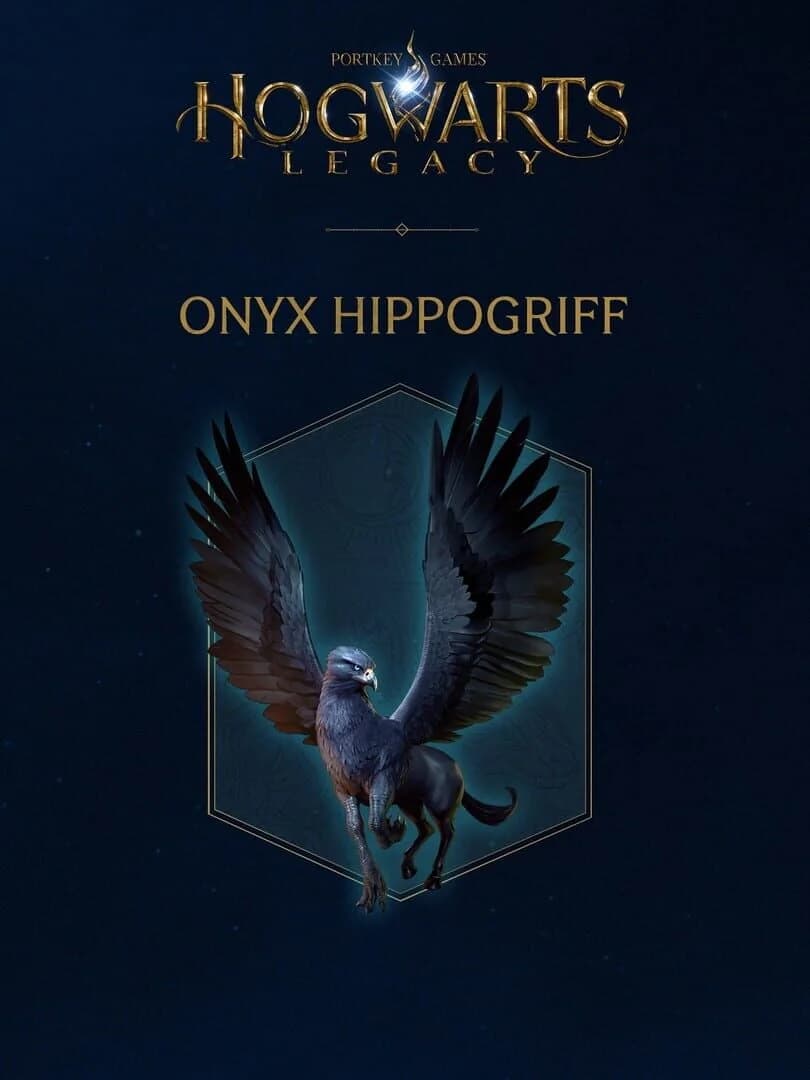
The Onyx Hippogriff mount shows where that split matters. Its silhouette and feather detail come from the game’s own assets, and DLSS 5 does not replace the underlying model. Because the update concentrates on environmental lighting and materials, flights over the landscape on the Hippogriff are where the change will show most: lighting and surface response across the world around the mount.
The update does not include a separate, Hippogriff-specific mask or setting. The effect on the mount comes from the same game-wide tuning that governs everything else. What matters to players is whether its appearance stays consistent in motion and as lighting conditions change during a flight.
What the smaller footprint means for performance
Parameter count, runtime memory use and processing time measure different things. The roughly 118 million parameters are the model’s learned coefficients. Its working memory also depends on intermediate calculations, image buffers and implementation details. The 24% size reduction on its own does not tell you a download size or a precise VRAM allocation in megabytes.
The separate 20% cut in 4K VRAM use bears more directly on memory pressure. Hogwarts Legacy still needs memory for textures, geometry and other rendering resources. A smaller DLSS 5 allocation leaves more room inside that budget. It does not shrink the game’s other allocations or add physical capacity to the card.
The halved GPU overhead applies only to DLSS 5’s own processing cost compared with the September version. The engine’s other rendering work is unchanged, so halving one stage reduces total frame time by less than halving the whole frame would. Nvidia’s NBA 2K27 figures illustrate the scale. The original model was expected to cost about 60% in performance when enabled. The updated model is cited at about 30%.
For reference, 60fps leaves about 16.7 milliseconds per displayed frame, and 120fps leaves about 8.3 milliseconds. The neural-rendering pass has to fit inside that budget alongside everything else the engine draws. For that reason, Nvidia’s headline figures do not show which Hogwarts Legacy settings a particular RTX 50-series card can sustain.
Compatibility, release timing and how to test it fairly
Local GeForce support targets RTX 50-series hardware. DLSS 5 is also available through GeForce NOW and on RTX Spark systems. The revised model launches alongside the RTX Spark chip in new laptops. Older RTX cards keep access to the other DLSS features they support, but they do not get this neural-rendering stage. A game’s general DLSS support label does not tell you whether it supports DLSS 5.
Nvidia announced the revised, lighter DLSS 5 model in October. The Hogwarts Legacy PC update arrives on November 5 (overseas time). It adds DLSS 5 with 3D-Guided Neural Rendering and moves the game’s other DLSS technologies to their latest versions. Separately, Nvidia’s updated RTX Remix workflow was released on October 23. It lets users enable DLSS 5 with 3D-Guided Neural Rendering and Frame Generation in Performance Mode through Remix’s developer settings, using either the NVIDIA app or the GitHub build. That workflow is not the Hogwarts Legacy patch.
When you compare DLSS 5 on and off, keep Super Resolution mode, output resolution, ray tracing and Frame Generation the same in both runs. Otherwise, changes in reconstruction quality or generated frames can hide the actual cost and look of neural rendering. Test two scenes: a moving character close-up and an outdoor flight on the Onyx Hippogriff. Facial shading, feather detail and environmental highlights stress the integration in different ways, and the flight is where the update’s lighting and material changes are concentrated.
FinalBoss // Gear
Level up your setup
01Top-rated gaming headsetson Amazon→02High-refresh gaming monitorson Amazon→03Gaming chairson Amazon→04Discounted game keyson Kinguin→Affiliate links · As an Amazon Associate, FinalBoss earns from qualifying purchases.
Want to Level Up Your Gaming?
Get access to exclusive strategies, hidden tips, and pro-level insights that we don't share publicly.
Ultimate Tech Strategy Guide + Weekly Pro Tips