
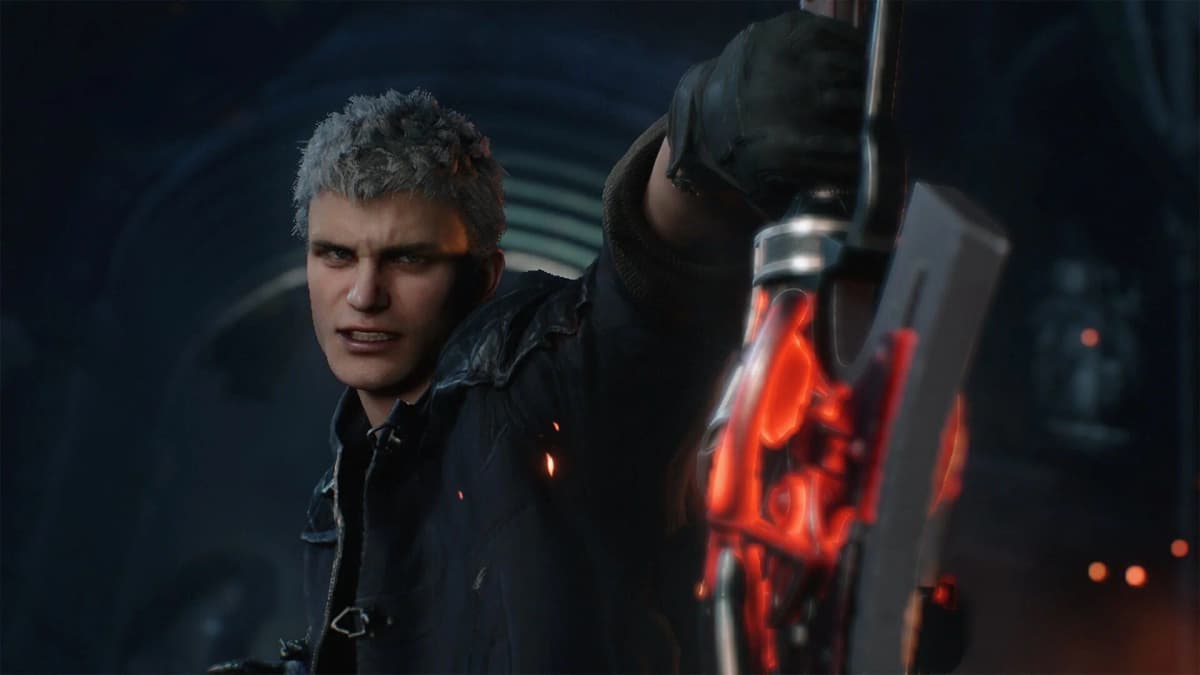
Devil May Cry 5: Devil Hunter Edition launched for Nintendo Switch 2 on June 23, 2026, consolidating the 2019 action title and its subsequent downloadable content into a single release. Capcom’s positioning emphasizes two primary attributes: a 60 frames-per-second target maintained in both docked TV and handheld modes, and a digital launch price of $29.99 available through July 31, 2026, before reverting to a $39.99 standard rate. The edition contains no new content created exclusively for Switch 2. Instead, it functions as a technically refined portable migration of an existing Special Edition, making its value contingent almost entirely on hardware preference and prior ownership status.
Table of Contents (4)
Handheld 60 FPS Functions as the Technical Proof Point
The 60 FPS target is the central engineering claim. Devil May Cry 5 is a precision action title built on frame-dependent mechanics: animation canceling, jump-cancelling, and input-perfect parries require not merely high frame rates but consistent frame pacing. Variable performance introduces input lag and timing drift that directly degrade combat efficacy. On Switch 2, the handheld mode maintains a strict 60 FPS cap during standard combat encounters and environmental traversal across Red Grave City, delivering the baseline fluidity the genre demands.
The achievement is not absolute. Under maximum load-specifically dense enemy spawns and complex boss phases-the frame rate can dip to approximately 55 FPS, with isolated moments reaching 50 FPS during peak particle density and on-screen enemy counts. These reductions are transient and do not produce sustained stutter or recursive frame pacing errors. Nevertheless, they define the hardware ceiling. The RE Engine, which powers Devil May Cry 5, is being asked to maintain a locked sixty on silicon designed for hybrid portability. The dips confirm that the lock is a target under stress rather than an absolute floor.
It is worth noting that the dips correlate directly with scenarios that stress both CPU and GPU simultaneously: multiple enemies executing complex state machines, dense particle effects from Nero’s Devil Breakers or Dante’s style switching, and large boss model geometry with full-screen effect overlays. These are not edge cases in Devil May Cry 5; they are standard high-level play conditions. The fact that the degradation is minor-five to ten frames—rather than catastrophic suggests efficient profiling, but it also confirms the hardware is operating near its limit.
TV mode operates under an identical performance profile, which is itself a notable departure from prior hybrid hardware generations. Historically, Switch titles have sacrificed resolution, effects density, or frame stability when transitioning to handheld states. The parity between docked and portable modes in Devil Hunter Edition suggests the Switch 2’s GPU and memory bandwidth are sufficient to handle the RE Engine at this performance tier without aggressive dynamic resolution scaling or the removal of post-processing passes. Capcom has not publicly detailed the specific optimization methods—whether through reduced background LOD, adjusted shadow cascades, or CPU scheduling improvements—but the functional output is a consistent cross-mode experience.
The RE Engine’s behavior on Switch 2 is relevant beyond this single title. Capcom has built its contemporary pipeline around this technology, powering Resident Evil, Street Fighter, and future Devil May Cry installments. A stable 60 FPS conversion of Devil May Cry 5—among the most visually demanding RE Engine titles due to its urban density, particle-heavy combat, and large boss geometry—suggests the Switch 2 can accommodate the middleware without fundamental architectural compromises. This has implications for prospective ports of other Capcom titles with comparable or lesser throughput demands.
The Content Package Is Archival, Not Expanded
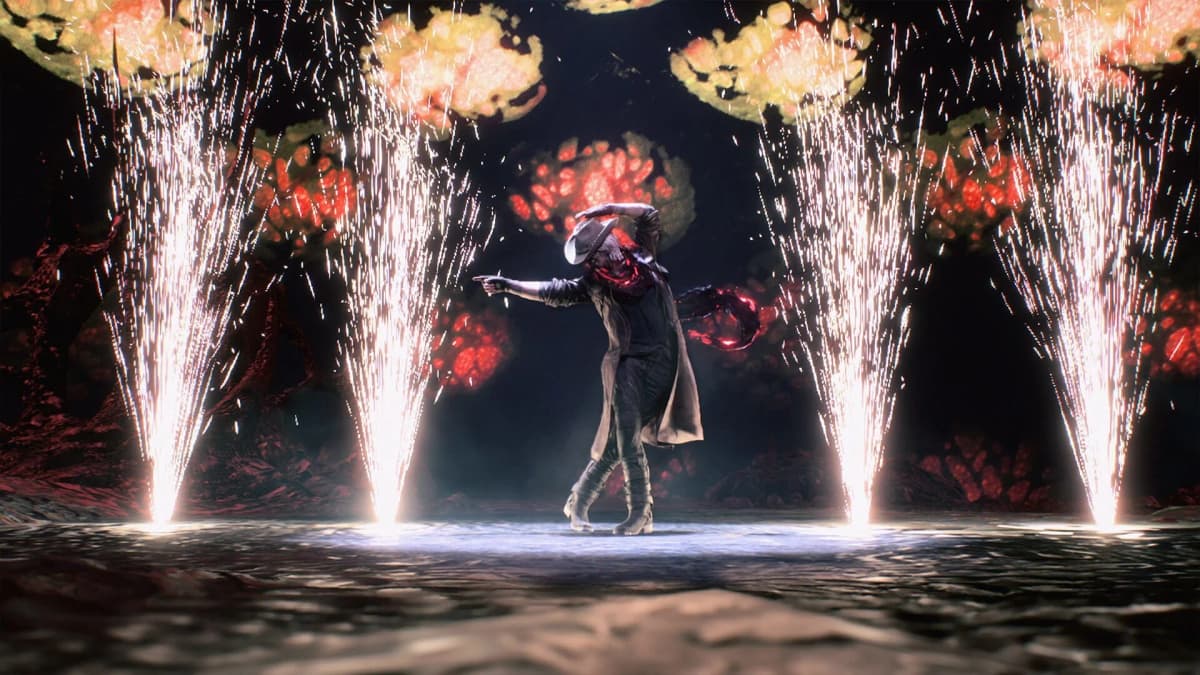
Devil Hunter Edition bundles the base campaign, the playable Vergil mode, and an assortment of previously released cosmetic and functional add-ons. The specific items include additional Nero Devil Breaker arms, Dante’s Cavaliere R motorcycle weapon, the EX Color Pack, alternate costume color variants, supplementary battle tracks, alternate style announcers and title call voices, and the live-action cutscenes originally included in prior deluxe offerings. For a player with no existing Devil May Cry 5 library, this represents the complete commercial and functional archive of the title.
The limitation is compositional. Every element in the Devil Hunter Edition was available previously. Vergil as a playable character debuted in the 2020 Special Edition release on PlayStation 5, Xbox Series X, and PC. The Devil Breaker variants, weapon skins, and audio packs were sold as individual DLC items or included in earlier season passes. The live-action cutscenes were a legacy bonus from the original deluxe version. There are no new missions, no exclusive weapons, no additional boss encounters, and no gameplay modifiers unique to the Switch 2 SKU. Capcom has treated this as a compilation product rather than an expanded re-release.
The playable Vergil content remains the most substantial inclusion. His campaign reuses the base game’s level geometry and enemy placements across Red Grave City but replaces the player character toolkit with Vergil’s distinct mechanics: the Concentration gauge, summoned swords, and Yamato-based teleportation. It is a full alternate playthrough, not a token bonus chapter. For a new purchaser, it effectively doubles the campaign’s mechanical variety. For an existing Special Edition owner, it offers nothing unseen.
The July 31 Discount Is the Only Variable
The $29.99 early-adopter price, valid through July 31, 2026, is the single actionable differentiator in this release. Ten dollars beneath the standard $39.99 rate, the discount places the product in the impulse-purchase tier for a major franchise title. After the deadline, the price reverts, and the edition must be evaluated against the broader market. On competing platforms, Devil May Cry 5: Special Edition frequently participates in seasonal sales at or below the $29.99 threshold, often with superior resolution and more stable performance under extreme load. The post-discount Switch 2 version offers portability as its sole compensatory advantage.
The purchase calculus is therefore determined by ownership history. A new entrant to the franchise who intends to play primarily in handheld mode receives a complete package at a reasonable introductory price. A player who already owns the Special Edition on PlayStation 5, Xbox Series X|S, or PC receives no mechanical, narrative, or cosmetic incentive to migrate. The lack of platform-exclusive content removes the standard justification for double-dipping. Unless handheld access carries specific personal value exceeding the cost of repurchase, the edition is redundant for existing owners.
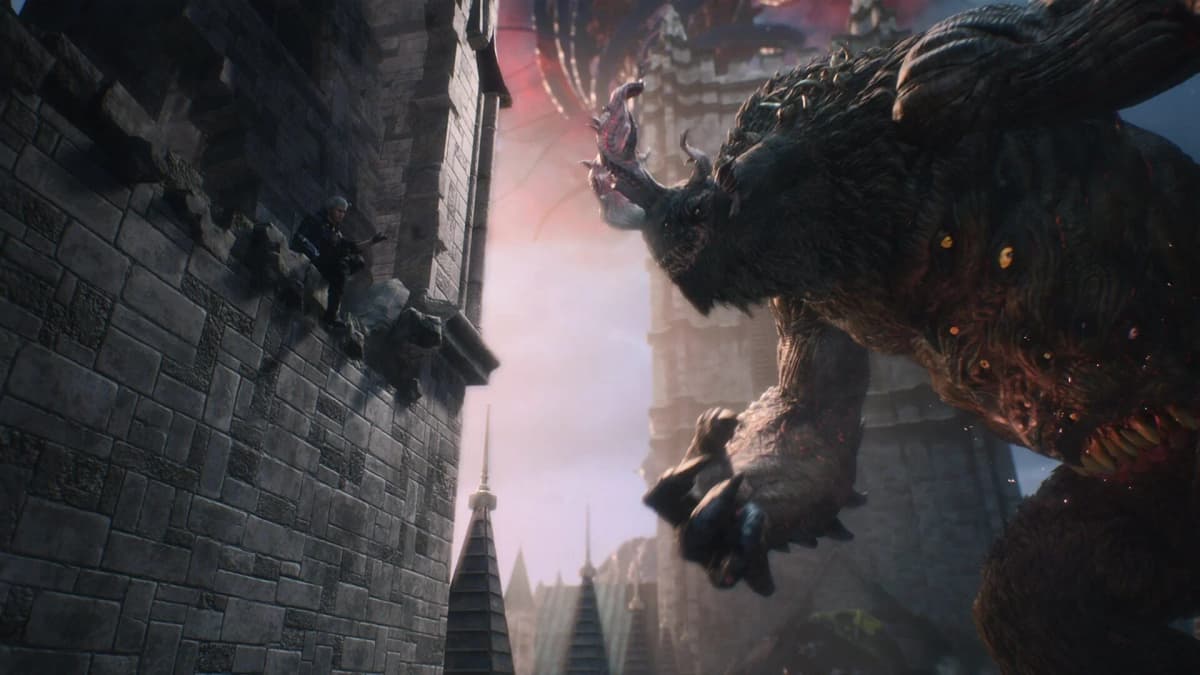
Capcom’s pricing strategy also signals the product’s market role. By front-loading a discount, the publisher treats Devil Hunter Edition as an install-base builder during the Switch 2’s early lifecycle rather than a premium marquee release. It is a low-risk proposition designed to populate hardware libraries with a proven action title, leveraging the technical credibility of a stable 60 FPS handheld conversion to demonstrate the new console’s capabilities.
What to Watch
First, monitor whether Capcom issues a post-launch patch to eliminate the 50-55 FPS dips during boss encounters and maximum enemy density. A stabilization update would convert the current 60 FPS target into a verified floor and strengthen the technical justification for the port. Absent such a patch by mid-July, the existing performance variance is the definitive shipping state.
Second, track any announcements regarding Switch 2-exclusive content. The current SKU contains no exclusives. A retroactive addition—whether a new Devil Breaker, an exclusive weapon skin, or an additional Bloody Palace variant—would fundamentally alter the value proposition for existing owners. Without it, the edition remains a platform migration with no backward-compatible purchase path.
Third, the July 31 pricing deadline is the immediate decision boundary. Prospective buyers must determine whether the $10 discount justifies purchase before verified long-term performance data and comparative eShop sales on other platforms are fully established. After the discount expires, the edition reverts to a standard price point that removes the primary incentive for immediate adoption.
FinalBoss // Gear
Level up your setup
01Best-selling Switch 2 gameson Amazon→02Switch 2 accessorieson Amazon→038BitDo controllerson Amazon→04Discounted game keyson Kinguin→
Affiliate links · As an Amazon Associate, FinalBoss earns from qualifying purchases.
Want to Level Up Your Gaming?
Get access to exclusive strategies, hidden tips, and pro-level insights that we don't share publicly.
Ultimate Gaming Strategy Guide + Weekly Pro Tips