
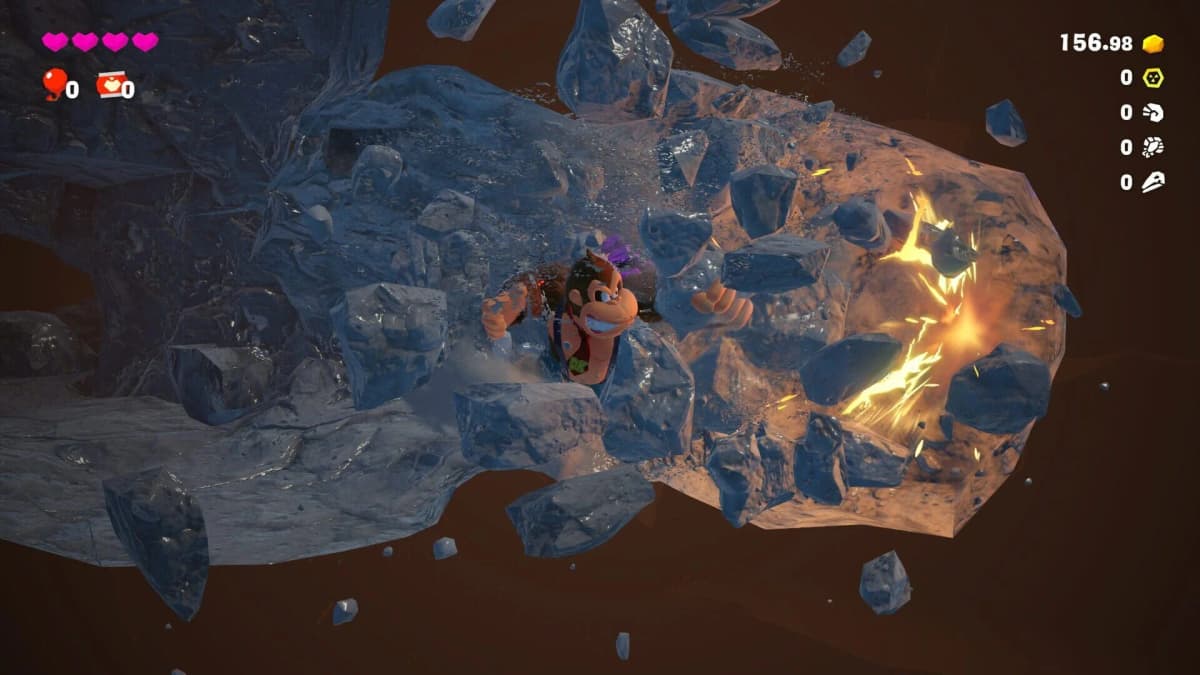
When Donkey Kong Bananza hit Nintendo Switch 2 in July, I braced myself for familiar banana-pelting and barrel-jumping antics. Instead, Nintendo delivered a physics-powered sandbox so liberating it feels like a manifesto of player agency. Bananza’s standout innovation—full environmental destruction—does more than let you bash crates; it hands you a toolkit to reshape each level on the fly. One dedicated fan even spent four days pulverizing every breakable element in the lagoon stage “Strate du Lagon,” stripping away Nintendo’s glossy veneer to reveal the skeletal geometry beneath. That endurance run doesn’t just impress—it hints at where platformers might venture next.
Game Info
- Title: Donkey Kong Bananza
- Platform: Nintendo Switch 2 exclusive
- Release: July 2024
- Genre: Platformer / Adventure
- Developer: Nintendo EPD
- Metacritic Score: 91/100 (critics)
- Core Mechanic: Terrain destruction to uncover secrets
Destruction Unleashed: A Four-Day Stress Test
Fans have christened this deep-dive tactic “exploration destructrice.” In under 100 hours, user Tinduscom methodically pummeled every crate, vine and platform in “Strate du Lagon.” What began as a lush lagoon soon resembled a skeletal blueprint of support beams and hollowed-out cliffs, complete with hidden triggers and ancient murals. Each destructible asset carried multiple hit points and often concealed Banandium Gems or Golden Bananas. More than a flex, this four-day marathon spotlighted Nintendo’s design: rewards are buried beneath every breakable surface, inviting endless curiosity-driven play.
Breaking Down the Destruction Mechanics
At the heart of Bananza’s sandbox lies a tiered destruction system. Wooden crates and rocky outcrops shatter with a few well-placed punches, while thicker stone pillars require heavy blows or charged throws. Each object tracks individual damage values, so persistence pays off—chip away at hidden seams, and you might expose a secret cache. Chimp skills like ground-pound upgrades and projectile throws accelerate breakage, turning simple walls into layered puzzles. Over time, you learn to anticipate weak points, transforming the act of destruction into its own form of spatial reasoning.
Comparisons With Platforming Classics
Traditional Mario-style platformers funnel you along a predetermined path, with occasional hidden rooms and warp pipes. Donkey Kong Country: Tropical Freeze teased deeper exploration via secret vines and alternate exits, but Bananza cranks that freedom to eleven. It even pays homage to sandbox pioneers like Red Faction’s Geo-Mod engine by letting you obliterate terrain mid-run—yet it does so without sacrificing the tight movement and polished feel fans expect from Nintendo. Where Tropical Freeze might whisper, “Try this hidden path,” Bananza practically dares you: “If it looks solid, punch it until it breaks.”
What Lies Beneath the Polish
Once the decorative layers vanish, you’re left staring at a map-like mesh of green planes, geometric pivots and collision bounds. The art team’s glossy tree roots transform into skeletal support beams, and floral set-pieces recede into stubby polygons. It’s a disarmingly honest look at level construction, revealing passageways that only appear once walls are gone—like a secret ladder hidden behind hollowed-out stone or a toppled totem doubling as a makeshift bridge. Even the camera, set up for cinematic angles, flips into “debug” perspective when you break enough geometry, underscoring the deliberate nods to speedrunners and explorers.
Counterpoint: Of course, not every player will don a demolition helmet for days. The repetitive nature of large-scale destruction can jolt casual gamers out of the magic, exposing seams and simplistic collision zones that the art team normally conceals. There’s a fine line between empowering agency and turning levels into barren grids of concrete and steel.
Community Creativity and Challenges
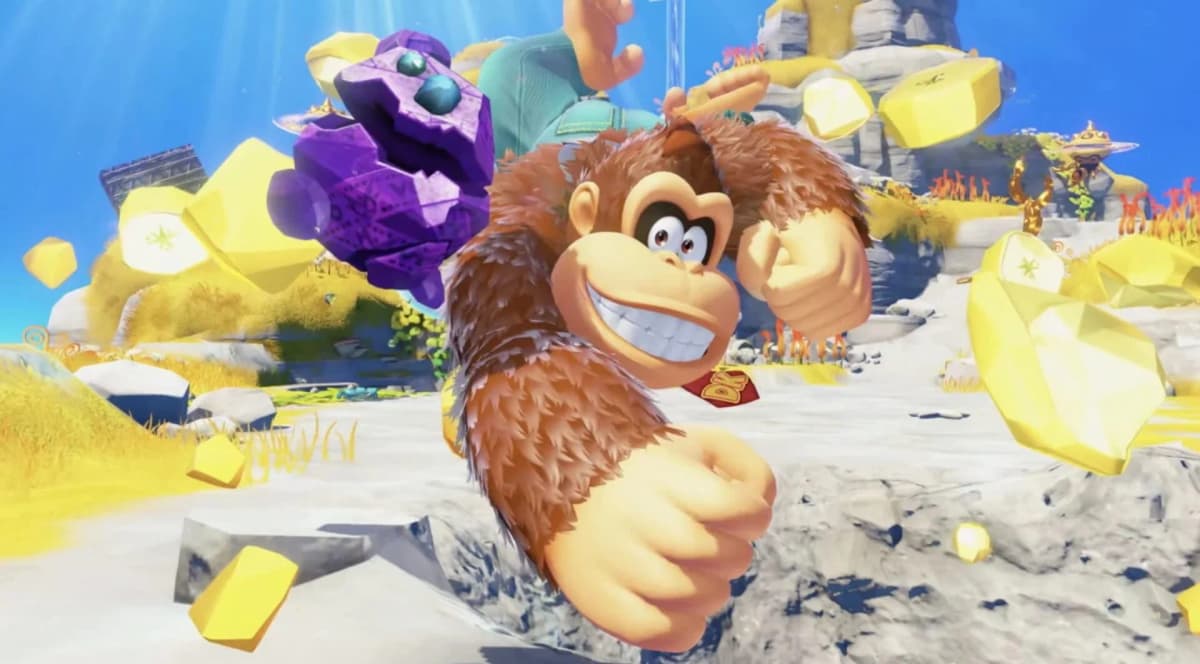
The explosion of community-led “tear-down” challenges demonstrates Bananza’s social appeal. Discord threads buzz with players coordinating timed destruction runs, while YouTube channels host daily build-and-destroy showcases. Speedrunners are already plotting routes that exploit breakable shortcuts—skip entire sections by pulverizing walls in precise sequences. One group even staged a multiplayer “King of the Quarry” event, where competitors had 15 minutes to carve out the most Banandium Gems from a single cavern. These grassroots events reveal just how quickly a small twist on a classic formula can spawn an ecosystem of player-driven contests.
Performance and Optimization
Under the hood, Switch 2’s beefed-up GPU and physics engine juggle hundreds of dynamic object interactions without dropping frames. Bananza consistently holds a smooth 60 FPS in docked mode, even amidst showers of splintered wood and cascading rock debris. In handheld mode, the game dips into the mid-50s during extreme destruction set-pieces, but dynamic resolution scaling keeps the action crisp. This level of stability underscores how Nintendo has fine-tuned its in-house engine to balance flashy physics with steady performance—a critical achievement in an era when sandbox features often tank framerates.
Developer Insights and Future Directions
In post-launch interviews, Nintendo EPD producers emphasized their goal of elevating player agency. By making destruction central—rather than ancillary—they hoped to foster emergent gameplay moments. The result is a platformer that doubles as a creative sandbox, empowering players to discover unplanned shortcuts or invent new challenges. Looking ahead, it’s easy to imagine a full-blown level editor built on Bananza’s physics framework: carve your own terrain, set enemy spawns, then invite friends to tackle or obliterate it. That vision—part Mario Maker, part physics sandbox—could define the next generation of Nintendo design.
Legacy and Evolution
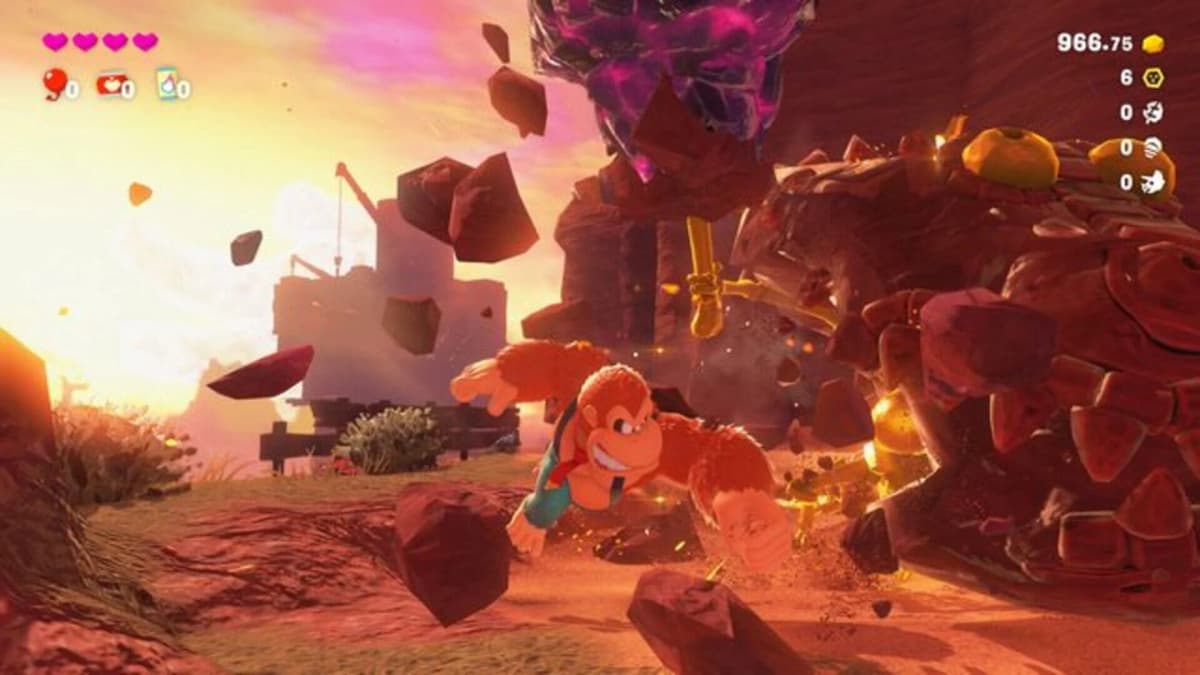
Nintendo has teased freedom before. Super Mario 64 let you chase stars in any order, and Metroid Prime 2 sprinkled environmental destructibles into its corridors. Yet Bananza’s all-out demolition sandbox truly delivers on those early seeds. It conjures the thrill of Geo-Mod’s sheer power from over a decade ago, then blends it with modern platforming finesse and Nintendo’s signature polish. If Bananza is a harbinger, future titles may expand destructible worlds even further—imagine a Zelda game where every ruin can be terraformed or a Mario Kart track you sculpt during the race.
Quick Take
Donkey Kong Bananza isn’t just another banana chase. Its destruction-driven sandbox quietly but decisively redefines platformers, fusing the thrill of linear runs with genuine player authorship. For Switch 2 owners seeking fresh ways to interact with levels—and a new benchmark in environmental physics—Bananza is essential. Just beware: once you start ripping down walls, your weekend might vanish under a tide of shattered crates.