
Massive spoilers for the final chapters of Donkey Kong Bananza. If you haven’t reached the Planet Core descent yet and care about surprises, stop reading, finish the game, then come back. I’m not kidding: this twist deserves to blindside you at least once.
Table of Contents (7)
The night Donkey Kong Bananza reminded me why I still love Nintendo
I’ve been playing Donkey Kong games since the Super Nintendo days, passing the controller with my cousins on Donkey Kong Country and arguing over who got to handle the minecart levels. King K. Rool was our Saturday boss. That ridiculous cape, the stolen banana hoard, the Gangplank Galleon theme that lived in my head for years – that was Donkey Kong to me. Then he basically vanished for almost two decades, reduced to a Smash Bros. fighter and nostalgia trivia answer.
So when I booted up Donkey Kong Bananza on Switch 2 this July, I wasn’t expecting my relationship with K. Rool to be the thing that stuck with me five months later. I expected a polished, safe, Nintendo EPD 3D platformer. Fun, charming, over, onto the next thing. Instead, by the time I hit the Planet Core descent – around 13 hours in – the game pulled off a heel turn so good it felt like someone snuck a good old-fashioned wrestling pop into my living room.
Everyone keeps calling it “the K. Rool twist,” which undersells it. The eye-opening twist transforms a straightforward 3D platformer into an epic confrontation, and it does it without resorting to cheap cameo nonsense. It’s nostalgia, sure, but it’s nostalgia engineered for modern play.
From Void Kong to a giant green fist: when Bananza drops the mask
For most of Bananza, the villain is Void Kong: a corporate-branded mirror of DK running Void Company’s planet-drilling operation alongside Pauline’s reluctant involvement. The whole Banandium Root plot feels like a classic Nintendo setup: evil extractive megacorp, mysterious wish-granting power deep underground, environmental metaphor that doesn’t beat you over the head. You chase Void through 14 chapters of solid, sometimes brilliant platforming.
But there’s this constant reptilian itch the game keeps scratching. Enemies that look a bit too much like Kremlings under their stone armor. Green-toothed treasure chests. Banandium Root veins that somehow evoke crocodile jaws. As someone who’s played Shenmue more times than I should admit, I’m a sucker for long-game foreshadowing. Bananza drops these hints everywhere, and I still half-convinced myself they were just cute Rare-era nods for old heads like me.
Then Chapter 15 hits. Planet Core descent. You finally square up against Void Kong in a proper endgame fight. It’s a legit brawl: pattern-heavy, multi-stage, exactly the sort of boss encounter my fighting game brain loves dissecting. He barks insults. Pauline gets her big heroic moment, mirroring DK saving her at the start. The camera pulls back, the Banandium Root glows off-screen, music swells… it feels like credits are about to roll.
Instead, Void lunges for the Root to claim his wish. The screen floods with light. And then that light narrows down into a single, bloodshot, green eye staring straight into the camera. A colossal scaly fist tears out of the Root and absolutely deletes Void Kong from existence. The camera pans down: giant green feet, that obscene golden belly that was the Banandium Root, and then finally, that face. Crown, cape, manic grin.
King. K. Rool.
I didn’t clap. I didn’t cheer. I just sat there on my sofa, hands on my head, laughing in disbelief. It felt like that famous Stone Cold Steve Austin run-in for Mankind, except the glass shattering was K. Rool’s eye cracking open and the crowd pop was entirely in my skull. K. Rool punching Void Kong, then you smashing his empire — that’s the moment Bananza stops being “new Donkey Kong” and becomes a full-circle reckoning with the older games.
The Layer 16 gauntlet: nostalgia with teeth
Here’s where most modern games would screw it up. They’d give you a quick victory lap with the returning villain, maybe a one-phase fight to sell merch and DLC. Bananza instead pivots into an entire hidden layer — literally. K. Rool drops one level deeper into the planet, and you chase him into Layer 16, a full-blown Kremling gauntlet.
This is where the “nostalgia engineered for modern play” line stops being marketing fluff and starts feeling like design philosophy. The enemies aren’t just reskinned; they’re rebuilt. Classic Kremlings march in with that exact crunchy “awh” sound from the SNES days when you smack them. Zingers buzz around emitting the same irritating static hum I remember from 1994, only now there’s positional audio and they sound like they’re right behind your neck. Neckys swoop across the screen with that shrill, unmistakable squawk, and for a moment I was ten years old again, sitting too close to a CRT.
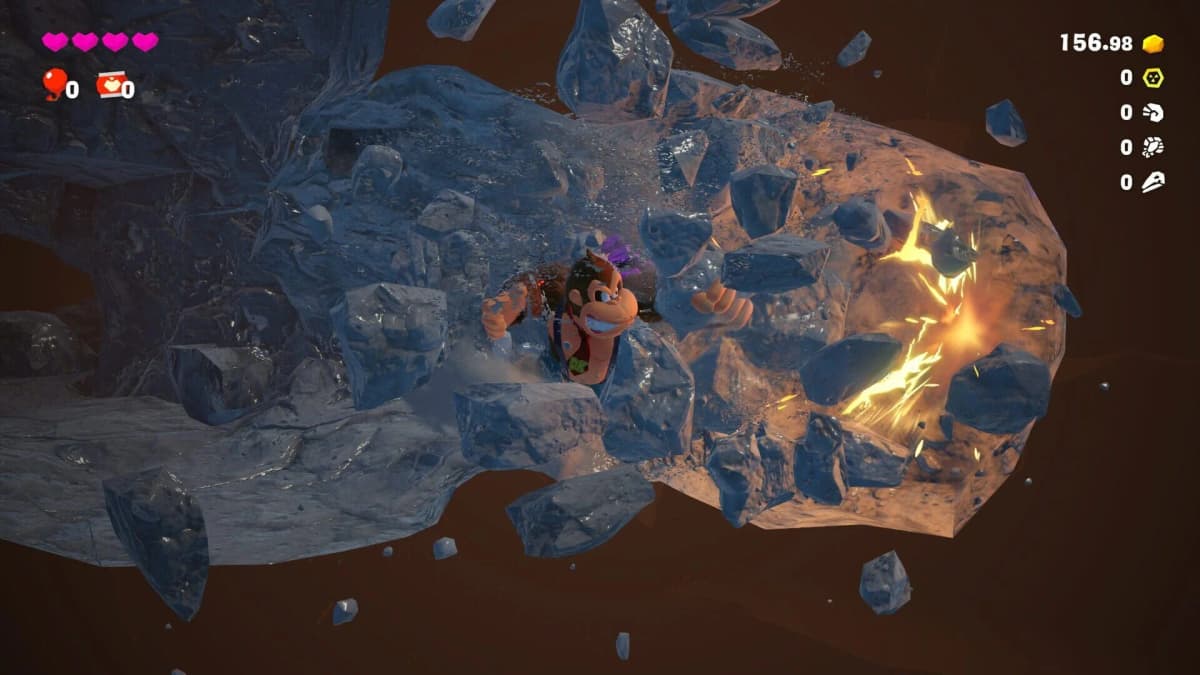
Except this time they’re in a fully 3D, destructible playground. Kremlings belly-flop into platforms, sending shockwaves you have to short-hop or roll through. Zingers coordinate in spiraling patterns that force you to use DK’s new shoulder-charge and Pauline’s aerial spin in ways the earlier game only gently suggested. Neckys dive, but you can now bait them into breaking Banandium stalactites, carving new paths through the core. Bananza isn’t just pointing at your memories and saying “remember this?” It’s asking, “what if those sprites were designed today, with Switch 2 horsepower and three decades of platformer evolution?”
Then there’s Rool himself. The first encounter down in the glowing Banandium chamber is deceptively short, but dense. He pulls out the blunderbuss, firing elemental shots that bounce around the arena. His belly armor now has a visible “Rool Rage” meter etched into it; each time you mistime a hit and bounce off his gut, it ticks up, changing his patterns. Platforms crumble if you overuse ground pounds. It’s a fight built entirely around reading tells and punishing greed — the kind of thing years of learning frame data in fighting games made me deeply appreciate.
You take him down, claim the “Root,” ride a ridiculous banana pillar back toward the surface. Fake-out credits roll, filled with nonsense Kremling names instead of devs. I knew the gag the second “Clump Director” popped up and still grinned like an idiot. Of course K. Rool isn’t beaten that easily.
Phase two kicks off with K. Rool in a jetpack, harassing DK and Pauline on the way up the shaft. This is where Nintendo EPD turns the nostalgia dial all the way up and rips it off the console: a hard rock remix of Gangplank Galleon tears in, powered by Switch 2’s audio muscle. I liked the Smash Ultimate version. This tops it. Guitars, brass, a nasty bassline that syncs with K. Rool’s charges — it’s pure swagger, and the level design matches it beat for beat.
Finally, you burst out onto the surface… in New Donk City. Banana mush floods the streets as K. Rool, jacked up on the true Banandium Root, transforms into “K. Rool, King of Rot.” The name sounds like he’s been binging FromSoftware design docs in his downtime. The fight itself is more Nintendo than Souls, but the spectacle is unreal: rotting banana waves warping the skyline, Kremlings swarming out of alleyways, DK bouncing off taxis, Pauline using construction scaffolding as impromptu stage lighting. It’s a finale that ties together 90s Donkey Kong, 2017 Mario, and 2025 tech in one absurd, sticky crescendo.
Why this twist hits harder than most 2025 nostalgia bait
2025 has been drenched in nostalgia. Remakes, remasters, “reimaginings,” crossover skins, you name it. Most of it feels like someone raiding your childhood closet and selling your own band T-shirts back to you at triple price. There’s been some good stuff, but there’s also been a lot of pure bullshit: lazy cameos, safe re-skins, DLC characters whose only real design effort went into the marketing render.
Donkey Kong Bananza sits on the opposite end of that spectrum. It spends a good 12-15 hours convincing you that Void Kong is the story, building a completely functional 3D platformer around him. If you stripped the K. Rool twist out entirely, Bananza would still be a solid entry. That’s important. Because when the turn comes, it doesn’t just throw K. Rool in your face and expect applause; it reframes everything you’ve already played.
Those stone golems with Kremling bones? Foreshadowing. The Banandium Root’s golden glow echoing the Banana Hoard? Not a coincidence. Void Kong screaming orders at his minions like a Saturday morning cartoon tyrant? A deliberate parallel to K. Rool, priming you to accept the swap. The twist isn’t a bolt-on; it’s the skeleton quietly holding the entire story’s spine together.
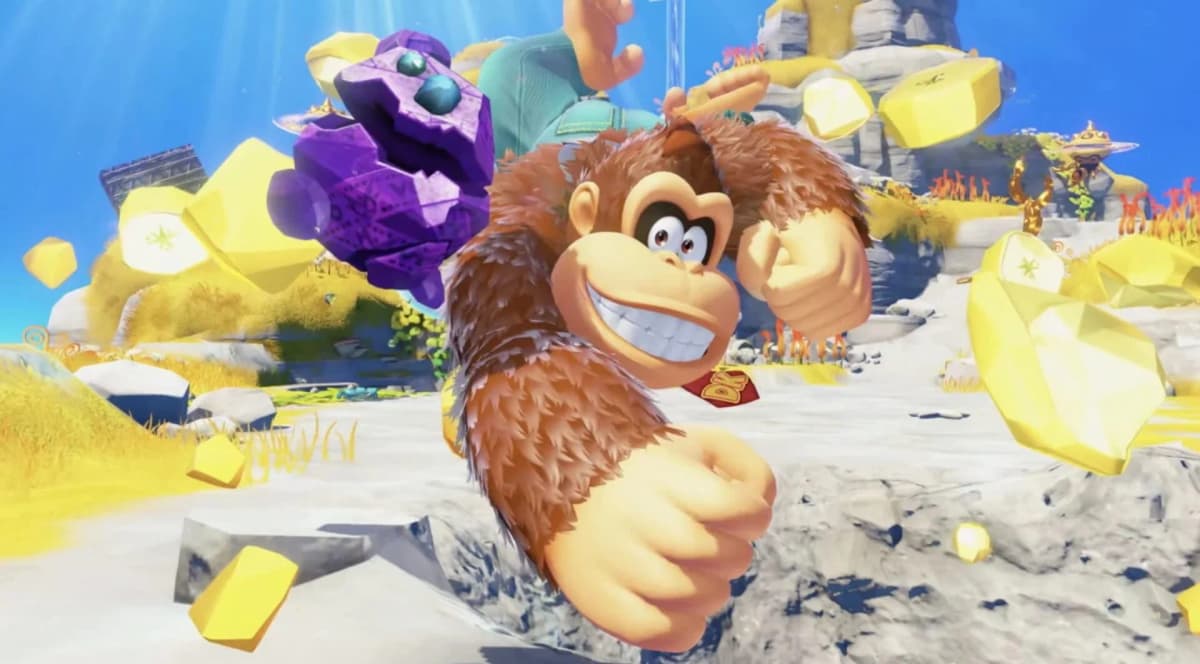
And it clearly works for people who didn’t grow up on the SNES. Nintendo’s own December 2025 stats back that up: over 2 million copies sold, 1.2 million active players, and about 750,000 weekly active. More interesting is what happens around the twist. There was a huge completion spike once players started hitting the Planet Core chapters — an 85% jump in story completions, and roughly 60% of active players are now playing in twist-gated content (post-Void Kong and Layer 16). People don’t just see K. Rool and bounce; they stick around to finish the job.
Patch v1.3.2 smoothed out some of the rough edges in that last act, especially the banana-flood section in New Donk City. Before that, the community stats showed a weird drop-off right at King of Rot. Now, according to Nintendo’s November breakdown, the win rate on the final K. Rool fight sits around 92%. When that many players are wading through three phases of pure fan-service chaos and getting to the end, you’ve done something right.
How to hit the K. Rool twist without burning out (and actually beat him)
If you bounced off Bananza early, or you’re sitting somewhere around Chapter 8 wondering what the fuss is about, here’s the thing: the K. Rool payoff is worth the grind. It’s not even really a grind if you approach it right.
- Stick to the main path until at least Chapter 12. Side content is fun, but you don’t need 100% collectibles to trigger the Planet Core descent. I treated most optional stages as warm-ups, not obligations.
- Invest in DK’s defensive upgrades and Pauline’s crowd control. By the time Void Kong shows up, DK’s extra armor hits and Pauline’s microphone stun become essential.
- Don’t stress about co-op until the late game. Solo works fine early on. Save the two-player chaos for Layer 16 and the final city push; that’s where it really shines.
- Expect to reach Chapter 15 around the 12-15 hour mark. If you’re taking much longer, you’re probably over-collecting. That’s fine, but if you’re hungry for the twist, stop chasing every stray banana medal.
The Void Kong fight that gates the twist is all about pattern discipline. Think classic fighting game fundamentals rather than pure spectacle. He’s got three big tells — a leaping slam, a horizontal charge, and a laser sweep. If you dodge-roll the slam toward him, you get a free combo. Side-hop the charge, punish from behind. The laser sweep is a trap; the hitbox lingers, so you’re better off using Pauline’s aerial strings to stay mobile instead of trying to be greedy with DK.
Once K. Rool arrives, the first underground fight is your reality check. Focus on the blunderbuss shots. The purple smoke pulls you in, the green slows you, and the red explodes after a beat. Don’t smash buttons into his belly unless that Rool Rage meter is low; you’ll bounce off, he’ll power up, and suddenly the arena’s half gone. Use the destructible terrain sparingly to create safe zones from his dive attacks, not as random cover to hide behind.
The jetpack chase is where a lot of players struggled pre-patch. v1.3.2 toned down the cheap hits: the camera pulls back earlier before his charge and the banana-mush wave rises slower. Treat it like an auto-scroller rhythm stage. Keep DK near the front of the platform to telegraph jumps, let Pauline handle airborne threats. If you’re solo, don’t be afraid to intentionally slow down; there’s more leeway than it looks.
New Donk City’s King of Rot phase is Vegas in a blender. The trick is to stop treating it like a traditional final boss and more like a multi-layered arena raid. Phase one: clear adds. Kremlings will body-block your escape routes if you ignore them. Phase two: learn the timing on the banana-tsunami walls; they’re generous, and DK’s roll gives extra invincibility frames if you commit. Phase three: when K. Rool starts using Root-powered beam attacks, hug mid-range. Too close and the splash kills you, too far and you’re stuck platforming while he chains patterns.
In co-op, the fight turns into beautiful chaos. My best runs had DK acting as the point man, spam-rolling through Kremlings and ground-pounding to open space, while Pauline stayed on elevated platforms, using her stage-light attacks to stagger King of Rot during his channel animations. It feels less like “player two” and more like a genuine partner — a rare thing in a modern platformer.
Where Bananza fumbles its own brilliance
For all my gushing, Bananza doesn’t nail everything about this twist. The most obvious casualty is Void Kong himself. He’s a great villain concept — corporate-branded Kong as the face of extraction capitalism — but once K. Rool literally punches him out of the story, his arc just ends. No epilogue, no fallout, no commentary on how he was basically a budget K. Rool stand-in. In a game that’s so smart about parallels, that feels oddly abrupt.
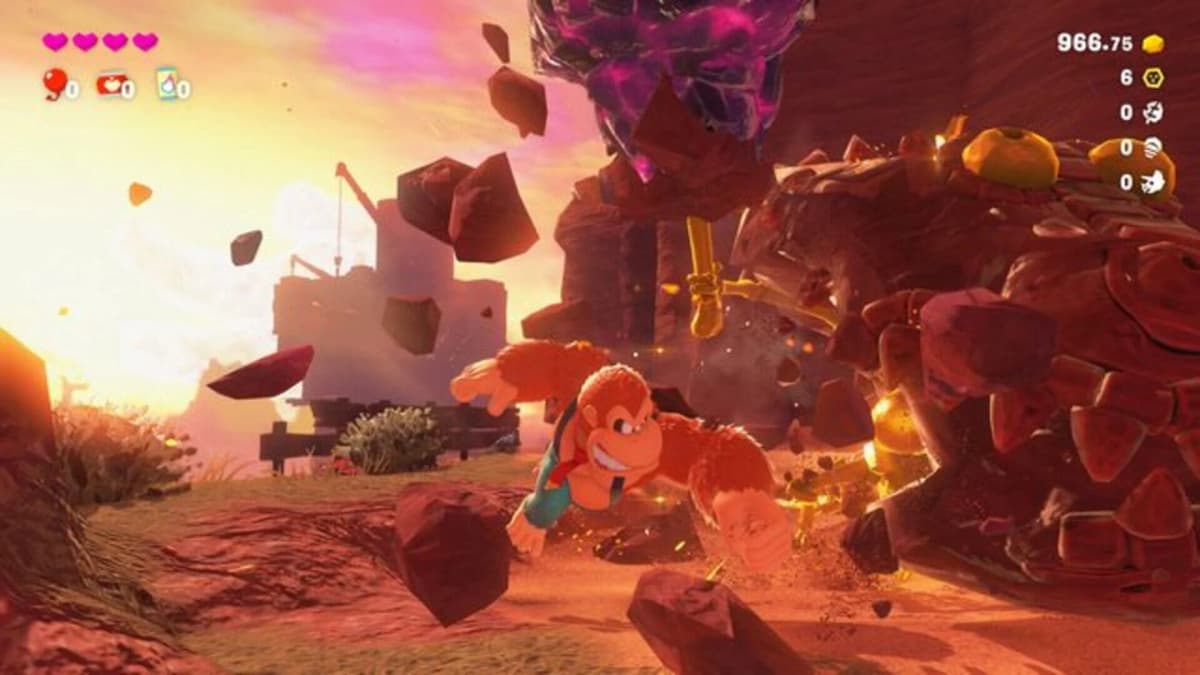
The pacing also gets pretty railroaded once Layer 16 begins. Earlier chapters play with semi-open hubs and playful detours. The endgame slams you into a straight line of boss rush setpieces. They’re incredible setpieces, but a bit more breathing room between “Rool in the core,” “Rool in the air,” and “Rool in New Donk” would have helped the emotional beats land even harder.
And while I love Pauline’s overall arc — stage-frightened kid to confident performer saving DK — she fades into the background narratively once K. Rool, King of Rot takes center stage. Mechanically she’s vital; story-wise, the camera is glued to DK and the big green crocodile. Given how much time the game spends building her up, it’s a shame the finale doesn’t quite give her the coda she deserves.
Still, these are nitpicks in a game that could easily have coasted on brands and didn’t. When the worst I can say is “I wanted more of this,” that’s a very specific kind of complaint.
This should be Nintendo’s new standard for nostalgia
Here’s what Donkey Kong Bananza proves: if you’re going to drag an old favorite out of retirement in 2025, do it with intent. Don’t just slap K. Rool on a character select screen and call it a day. Build an entire late-game around him. Seed the story with his shadow. Make the mechanics, the music, and the level design all pivot once he shows up. Treat your own history as something to play with, not just something to package and resell.
On paper, Bananza is just another Nintendo platformer launched into a crowded year. In practice, it’s sitting at a 4.8/5 rating on the Switch 2 eShop, over 2 million copies sold, and a community that is still trading Layer 16 speedrun times and King of Rot no-damage clips months after release. The first free DLC challenge pack that dropped in October leans into that endgame energy instead of backing away from it. That’s not an accident. The twist didn’t just give fans a moment; it gave Nintendo a foundation.
For me personally, that late-game descent into the planet core, the eye opening, the roar of Gangplank Galleon over New Donk’s skyline — that’s the gaming moment of 2025. It’s the kind of sequence I boot up just to replay on a lazy Sunday, the way I used to revisit final bosses on old cartridges because I liked the music. It reminded me why I still care about this medium enough to be pissed when nostalgia is handled badly.
Bananza shows that Nintendo EPD still knows how to respect its own legacy while pushing forward. K. Rool isn’t just back; he matters again. And if this is the bar for how they’re going to handle their old villains, their old worlds, their old songs on Switch 2, then yeah — sign me up for another 18 years of waiting if it means the payoff is this good.
Welcome back, Your Rotten Majesty. Next time, I hope you’re not just the final challenge. I want a whole game built around you, your Kremling empire, and whatever vile remix of Gangplank Galleon Nintendo cooks up next. After Donkey Kong Bananza, they’ve got no excuse to aim lower.
FinalBoss // Gear
Level up your setup
01Best-selling Switch 2 gameson Amazon→02Switch 2 accessorieson Amazon→038BitDo controllerson Amazon→04Discounted game keyson Kinguin→Affiliate links · As an Amazon Associate, FinalBoss earns from qualifying purchases.
Want to Level Up Your Gaming?
Get access to exclusive strategies, hidden tips, and pro-level insights that we don't share publicly.
Ultimate Gaming Strategy Guide + Weekly Pro Tips