
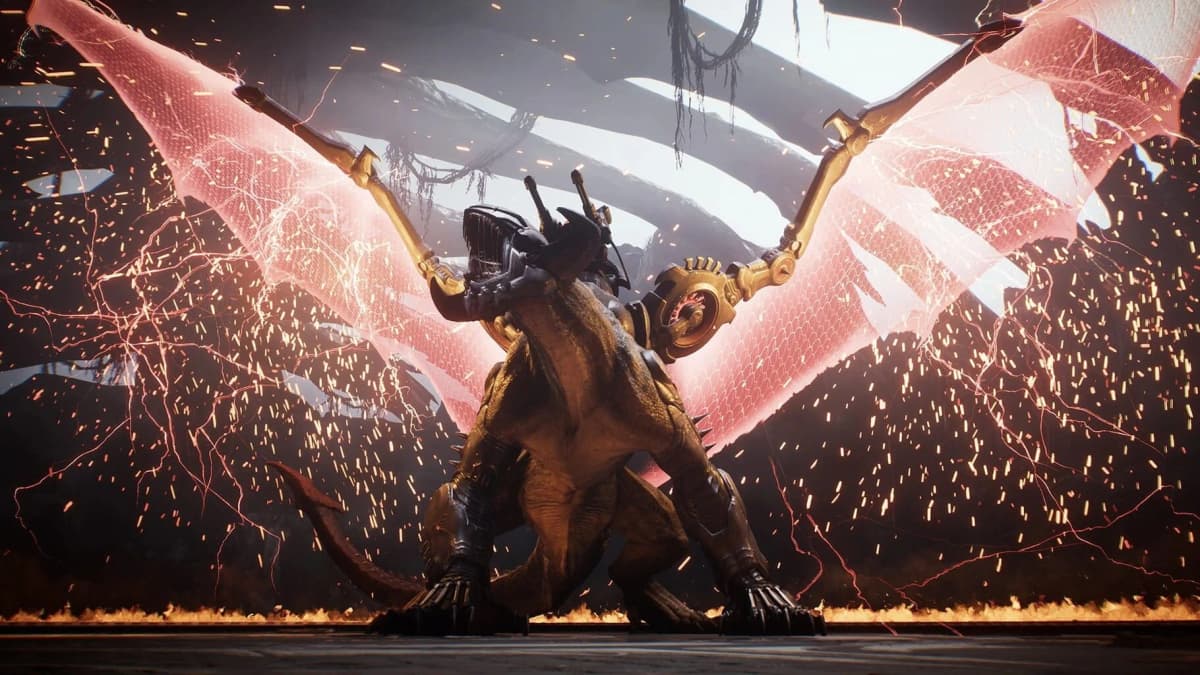
136 jobs disappeared from id Software’s Richardson, Texas organization in July 2026: 96 positions at the office and 40 remote employees attached to it. The cuts arrived during the release window for DOOM: The Dark Ages expansion Revelations, reducing a studio responsible for one of Xbox’s most technically demanding franchises while that franchise was still actively shipping content.
That is why Chris Hays’ criticism of Xbox leadership deserves more attention than the usual layoff outrage cycle. Hays, id Software’s lead services programmer and a 16-year veteran of the studio, said Xbox “fundamentally” does not understand art, games, or the business model required to build them at this scale. The rhetoric is understandably heated. The operational argument underneath it is far more serious: a studio can retain enough staff to remain open while losing the specialized capacity that lets it make DOOM at the standard players expect.
I side with Hays on that point. Xbox’s reassurance that id Software remains viable is a deliberately low bar. A viable id Software can still release patches. It can still staff a future project. It can still carry the famous logo. None of that proves it can preserve the rapid iteration, technical confidence, and accumulated id Tech knowledge that make a modern DOOM release feel finished rather than merely shipped.
Table of Contents (5)
“Almost Unchanged” Is a Headcount Evasion
Xbox CEO Asha Sharma described the company-wide restructuring as the “most significant restructure in Xbox history.” The numbers matched the scale of that language: 1,600 Xbox roles were cut immediately, with another 1,600 planned before the end of the fiscal year, for roughly 3,200 jobs across the division.
At id Software, the 136 confirmed cuts matter more than the corporate total because production studios do not function as interchangeable collections of job titles. A lead programmer with years of engine history cannot be replaced by a generic requisition six months later. A technical artist who understands a proprietary pipeline does not leave behind a complete instruction manual. A services specialist who knows where an old build breaks may save a team days every time a patch risks destabilizing something else.
Hugo Martin has rejected the idea that id Software was gutted or reduced to a support operation. His central rebuttal is straightforward: the remaining core team is roughly the size of the team that built DOOM in 2016. That is the strongest argument on Xbox’s side. id is still operating, and Revelations did release. Declaring the studio dead would be lazy, inaccurate, and theatrically satisfying in a way that helps nobody.
But Martin’s benchmark dodges the actual concern. Hays says the studio now has fewer people than worked on DOOM in 2016, and he compares the current scale to a single-player Xbox 360-era team. The public does not have a verified present-day org chart, so the exact headcount dispute remains unresolved. The 136 eliminated roles are concrete, that said, and so is the fact that a team’s “core” cannot do its best work when the surrounding support structure has been stripped away.
Calling a team “almost” the same size after a major reduction is managerial language crafted to soften a hard number. It asks players to focus on survival rather than capacity. That framing benefits Xbox because “id still exists” sounds reassuring. Players should demand a tougher standard: can id Software still build, test, tune, and support a technical shooter with the consistency that made its name valuable?
DOOM Depends on the Work Players Rarely See
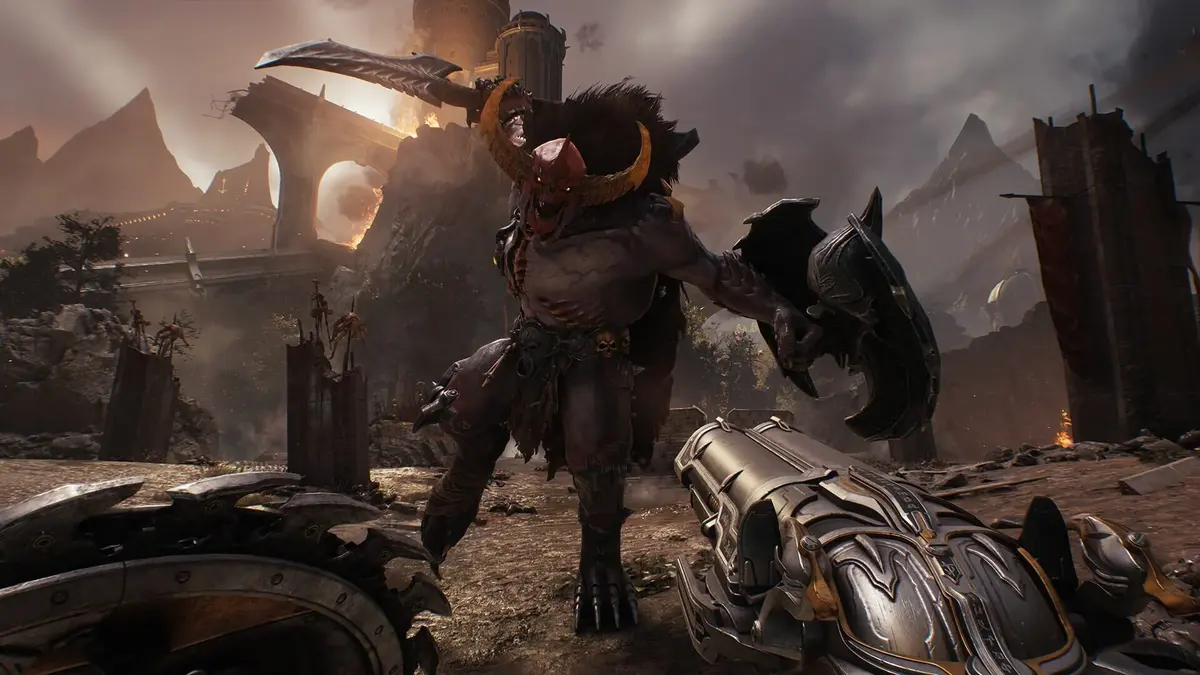
The obvious damage from a reduced studio is slower content production. The deeper problem sits behind the menus and beneath the frame-rate counter. DOOM relies on highly responsive combat, enemies that behave reliably under pressure, dense encounters that hold together when the screen becomes chaos, and technology that can deliver all of it without turning a fast shooter into a stuttering compromise.
That standard is maintained through iteration. Designers change an encounter. Programmers identify a knock-on problem. Technical staff repair a pipeline issue. QA finds a regression across Xbox and PC. The build turns again. The team checks whether the fix created another break somewhere else. Repeat that cycle hundreds of times, under a deadline, and the difference between a deep bench and a skeletal one becomes painfully clear.
The job losses were not confined to a disposable administrative layer. Technical infrastructure specialists connected to id Software’s proprietary technology were among those affected. One laid-off employee described the loss of roughly 90% of the design group responsible for AI and gameplay oversight. The exact department-by-department split has not been made public, but those details explain why raw headcount misses the point. Removing a small number of specialists can damage a production line more severely than cutting a larger number of roles that sit farther from daily development.
Hays’ use of the word “impossible” should be understood in that context. He was not saying that the remaining staff have suddenly forgotten how to make a DOOM game. He was arguing that maintaining AAA-scale output with roughly half the people breaks the production model. That distinction matters. The danger is degraded throughput: longer debugging loops, thinner testing coverage, more reliance on a smaller group of veterans, and less room to absorb a bad build or an unexpected platform issue.
Anyone who has watched a technically ambitious shooter drift after launch knows the pattern. A crash persists because the people who understand it are occupied with a more urgent fire. A patch fixes one problem and introduces another because test coverage is stretched. A major update arrives later than planned because the studio has to choose between new work and keeping the existing game stable. None of those outcomes require incompetence. They are what happens when experienced teams lose the slack that protects quality.
The Timing Makes Xbox’s Reassurance Harder to Accept
Revelations released on July 15, the same day former id producer Andrew Willis learned that his job was being eliminated. That timing matters because an expansion launch should be the moment when a studio is most ready for feedback, balancing problems, technical fixes, and the unpredictable mess of a live audience touching new content all at once.
A completed expansion proves that the team had already done substantial work before the layoffs. It does not prove that the post-layoff studio has the same ability to sustain support afterward. Xbox should not get to use content produced under the old structure as evidence that the new one is safe.
The treatment of affected workers compounds the concern. Staff were informed through brief management video calls in which chat was disabled, microphones remained muted, cameras were switched off, and some calls lasted under a minute. Access to internal Slack and email systems disappeared within 48 hours. That process may be efficient for an organization reducing payroll, but it is hostile to the kind of continuity a specialist studio needs. Knowledge transfer requires time, conversation, documentation, and people who still trust one another enough to explain what is fragile.
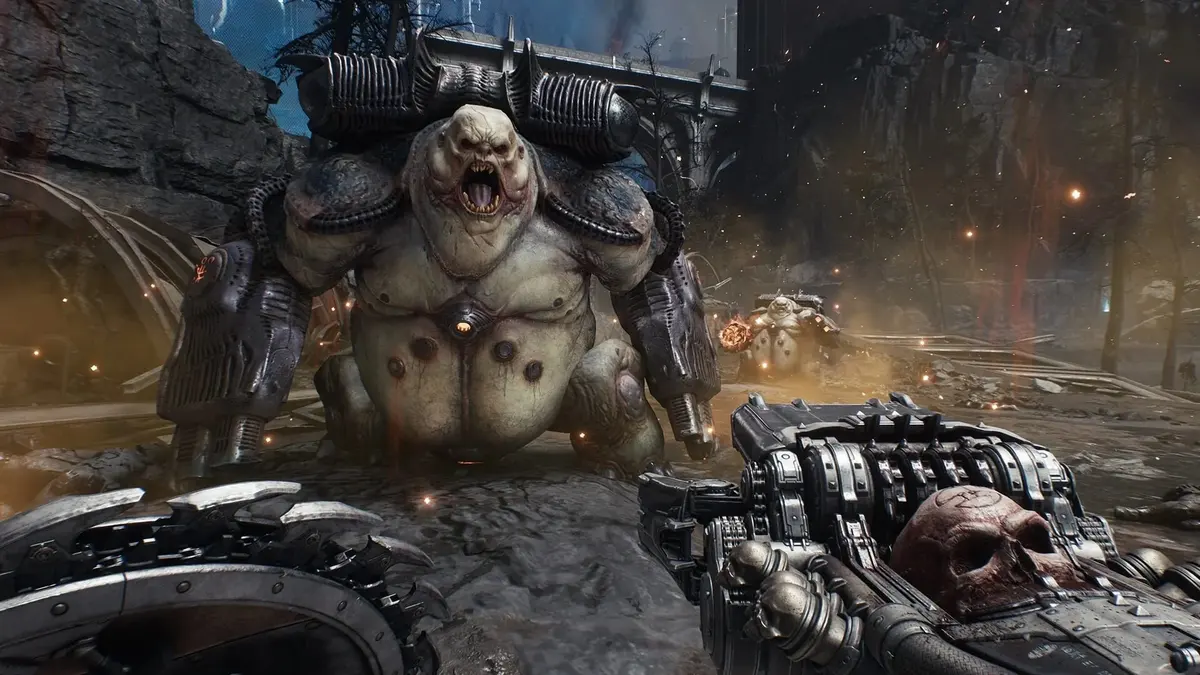
Xbox may have calculated that id Software’s identity is strong enough to survive this shock. That could be true in the narrowest possible sense. The studio has endured upheaval before, and its remaining staff still carry exceptional expertise. Yet DOOM’s appeal has never rested on brand recognition alone. Players return because the games feel engineered with absurd precision. That precision comes from a large network of people whose work becomes visible only when it is missing.
What Will Actually Test Hays’ Warning
The next few milestones for DOOM: The Dark Ages will provide a more useful answer than any executive statement or social-media rebuttal. Players should watch the work, not the reassurance.
| Player-facing signal | What would support id Software’s stability | What would strengthen Hays’ capacity warning |
|---|---|---|
| Patch cadence | Fast, substantial fixes after major issues emerge on Xbox and PC | Long gaps between updates when visible problems remain unresolved |
| Technical quality | Crashes, performance faults, and save issues are corrected without repeat regressions | Platform-specific bugs persist across multiple updates or fixes break previously stable systems |
| Expansion support | Post-Revelations support remains consistent and future content retains its expected scope | Support slows, promised work narrows, or major updates require repeated schedule changes |
| id Tech continuity | Technical notes, tooling work, and engine-facing support remain visible in official updates | Technical communication thins out while recurring engine and build-related problems accumulate |
No single quiet patch cycle proves disaster. A stable game does not need noise for noise’s sake. The pattern matters: unresolved issues, slower turnaround, disappearing technical detail, and reduced post-launch ambition would point to a studio carrying less production bandwidth than Xbox’s public language implies.
On the other hand, consistent maintenance, clean updates across Xbox and PC, and continued expansion-scale work would validate Martin’s confidence that id Software retains a functional core. That would be a genuine achievement after a damaging restructure, not a reason to pretend the 136 losses were painless.
“Still Viable” Is an Insultingly Low Standard for DOOM
The ugliest part of this dispute is how easily Xbox can win the public argument by setting the bar on the floor. If id Software announces another project, leadership will claim the cuts did not break the studio. If DOOM: The Dark Ages receives a patch, the same talking point will return. That is how a company turns a discussion about lost craft into a binary argument over whether the lights are still on.
Hays is arguing for a higher standard, and players should adopt it. id Software needs enough specialized people to make hard problems routine: keeping builds stable, finding regressions before launch, tuning combat without compromise, and preserving the deep technical memory that a proprietary engine accumulates over years. Those jobs are not ornamental overhead. They are the machinery behind every smooth encounter and every patch that fixes a problem without creating two more.
Xbox has placed one of its most valuable creative studios in a position where every future DOOM update will be read as a capacity test. The appropriate measure is full technical throughput: reliable support, durable engine knowledge, and expansion work handled with the care the franchise demands. A studio reduced to “still viable” has already been judged by a standard far too low for DOOM.
FinalBoss // Gear
Level up your setup
01Best-selling Xbox Series X|S gameson Amazon→02Xbox controllerson Amazon→03Top-rated gaming headsetson Amazon→04Discounted game keyson Kinguin→Affiliate links · As an Amazon Associate, FinalBoss earns from qualifying purchases.
Want to Level Up Your Gaming?
Get access to exclusive strategies, hidden tips, and pro-level insights that we don't share publicly.
Ultimate Gaming Strategy Guide + Weekly Pro Tips