
Doom’s Path Tracing Showdown: Nvidia vs AMD’s Challenge
Game intel
Doom: The Dark Ages
DOOM: The Dark Ages is the prequel to the critically acclaimed DOOM (2016) and DOOM Eternal that tells the epic cinematic origin story of the DOOM Slayer’s rag…
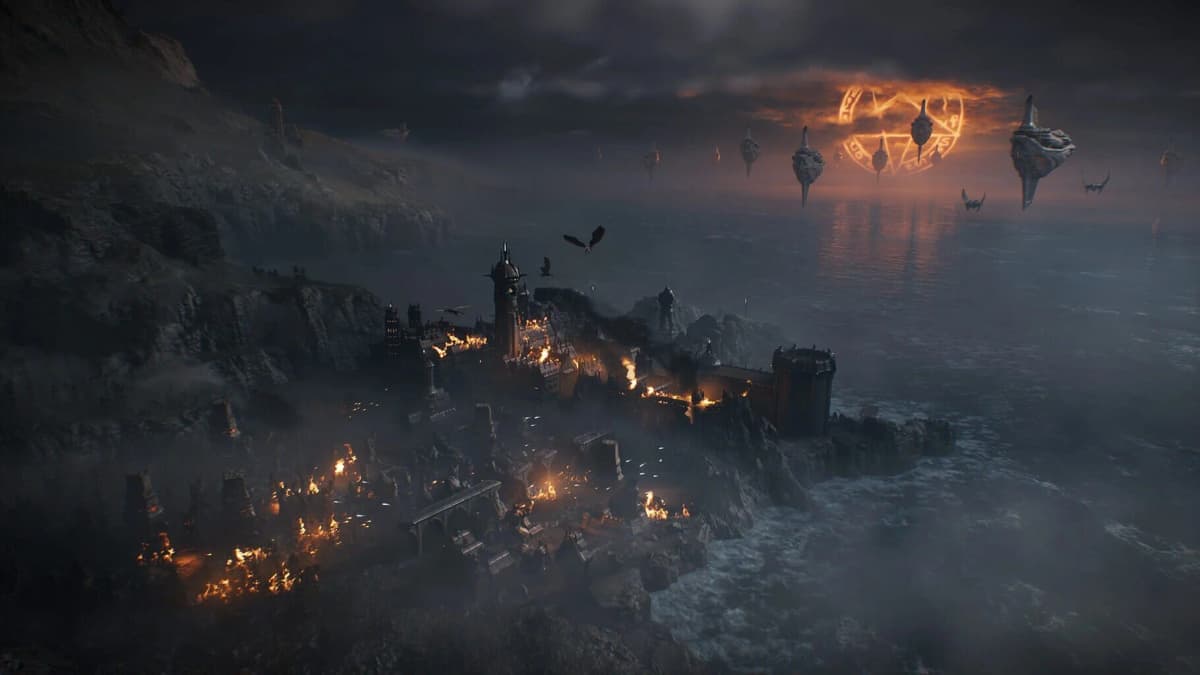
The arrival of full path tracing in Doom The Dark Ages isn’t just a triumph for in-game visuals—it’s also a stark reminder of the GPU rivalry shaping PC gaming. AMD’s Radeon graphics have made significant strides in traditional rendering and basic ray tracing, closing the gap with Nvidia in many scenarios. But when you enable pure path tracing—true-to-life lighting and reflections calculated per pixel in real time—the strengths of each vendor’s hardware and software stack come into sharp relief.
What Is Path Tracing, Anyway?
At its simplest, path tracing is an advanced form of ray tracing. Ray tracing simulates how individual rays of light bounce around a scene to create realistic shadows and reflections. Path tracing takes that a step further by tracing multiple light paths per pixel, delivering cinema-style accuracy at the cost of a huge computational burden. In titles like Doom The Dark Ages, where every surface can cast dynamic shadows or mirror the world around you, path tracing is essentially a brute-force lighting test for your GPU.
Nvidia’s Current Lead in Cinematic Lighting
Early benchmarks from press previews and open tests indicate that Nvidia’s latest RTX cards handle this brute force much more efficiently than current Radeon GPUs. Nvidia’s silicon, combined with its mature Deep Learning Super Sampling (DLSS) and frame generation technologies, keeps frame rates playable at high resolution. Meanwhile, AMD’s top-end Radeon cards often struggle to sustain smooth performance when path tracing is enabled, especially without any form of upscaling.
Upscaling: FSR vs. DLSS
To boost performance, modern games rely on upscaling technologies that render at a lower resolution before intelligently reconstructing a high-res image. Nvidia’s DLSS 4 leverages deep learning to sharpen details and interpolate frames, delivering both fluid motion and clear visuals. AMD offers FidelityFX Super Resolution (FSR), and its upcoming FSR 4 promises AI-driven enhancements closer to DLSS in theory. However, Doom The Dark Ages currently supports only an earlier FSR version that can appear softer and show artifacts under stress. Once Bethesda integrates FSR 4, AMD may close much of the gap—but for launch day, Nvidia users enjoy the sharper, smoother experience.
Frame Generation: Smoother Motion?
Frame generation adds interpolated frames between rendered ones to boost apparent frame rates without taxing hardware as heavily. Nvidia’s solution has been refined over several generations, offering low-latency, consistent results. AMD’s frame generation is still in its infancy—some scenes run well, but others exhibit judder or uneven timing. Future driver updates and game patches will likely improve Radeon’s frame gen, but for now, the crown in AI-powered motion remains with Nvidia.
Want to Level Up Your Gaming?
Get access to exclusive strategies, hidden tips, and pro-level insights that we don't share publicly.
Ultimate Gaming Strategy Guide + Weekly Pro Tips
Don’t Count AMD Out
This isn’t a one-sided story of green triumph. At conventional ray-traced settings or standard “Ultra Nightmare” presets in Doom The Dark Ages, AMD’s Radeon GPUs perform admirably—often matching or even outpacing similarly priced Nvidia cards, especially when VRAM capacity matters in memory-heavy levels. Radeon drivers have grown more stable, and features like Smart Access Memory can give AMD rigs a nice boost in supported titles. For gamers who prioritize value, power efficiency, or broad compatibility across a range of games, Radeon remains a compelling choice.
Looking Toward Future Updates
Both AMD and Nvidia continue investing heavily in driver optimizations, AI algorithms, and developer tools. AMD has confirmed work on integrating FSR 4 into more engines and enhancing its frame generation pipeline. Nvidia is already experimenting with next-generation tensor cores and revised upscaling that could further widen—or narrow—the performance gap. Until these updates arrive, Doom The Dark Ages stands as a snapshot of where each company’s technology shines brightest today.
What Gamers Should Take Away
If you’re chasing the bleeding edge of real-time cinematic lighting, Nvidia’s RTX cards currently offer a more polished path tracing experience. But if your focus is traditional ray tracing quality, VRAM-intensive scenarios, or getting the best bang for your buck, AMD’s Radeon lineup remains a solid winner. Ultimately, the choice comes down to how much you value ultra-realistic visuals versus overall versatility and cost-effectiveness.
So whether you’re decking out a new rig or pondering an upgrade, remember: path tracing is just one piece of a much larger puzzle. AMD has already proven it can compete at every other level, and with upcoming software enhancements, the red team may yet close the cinematic-lighting divide. In the meantime, both camps offer excellent options—gamer victory, no matter which color you choose.
| Feature | Details |
|---|---|
| Game | Doom The Dark Ages |
| Developer | Bethesda Softworks |
| Path Tracing | Enabled via in-engine option |
| Upscaling | DLSS 4 (Nvidia), FSR 1.x (AMD), FSR 4 pending |
| Frame Generation | Available on both platforms; Nvidia more consistent |