
Table of Contents (8)
The Sketch That Stole My Breath
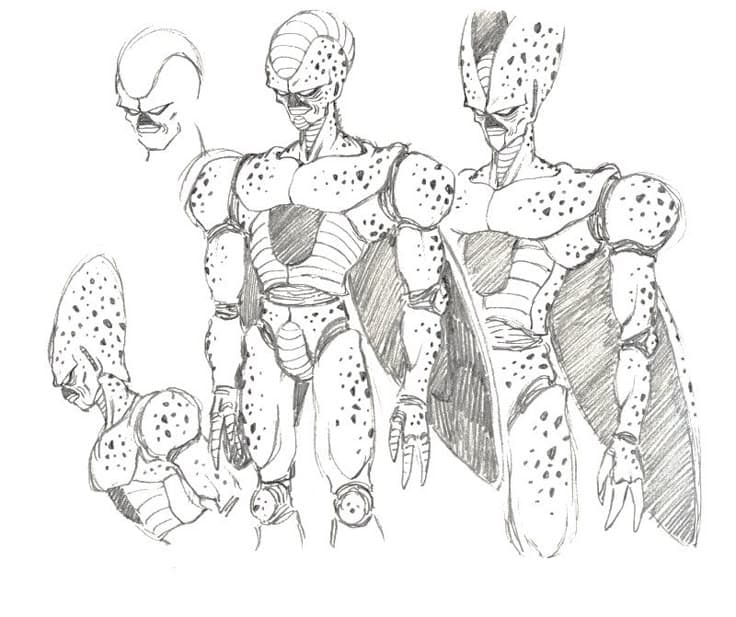
I’ve been hooked on Dragon Ball Z since Goku first powered up, but nothing prepared me for the archival concept art recently unearthed from Akira Toriyama’s private vault. In these sketches, Cell—arguably the series’ creepiest villain—sports a full head of hair and a far softer, almost handsome visage. At first glance, he could pass for a rival Super Saiyan rather than the bio-engineered terror we know. It’s a reminder that behind every legendary design lies countless experiments, and sometimes the margin between iconic and forgettable is thinner than a single pencil stroke.
Iteration and the Art of Unsettling Design
One of the most fascinating aspects of Toriyama’s process is his willingness to tear up what doesn’t serve the story. Early drafts of Cell leaned toward a more human silhouette—complete with a hairline reminiscent of adult Gohan—before he evolved into the insectoid nightmare we associate with “Perfect” Form. These rough sketches reveal Toriyama’s creative push-and-pull: he tested a familiar shape only to abandon it in favor of something truly otherworldly. By stripping Cell of conventional human traits, Toriyama amplified the alien menace at the narrative’s core. In weekly manga, where readers devour new panels in rapid succession, visual shock value is a potent tool—and Toriyama wielded it masterfully.
From “Pretty Boy” to Monstrous Perfect Form
Why did Toriyama reject the “pretty boy” Cell in favor of a grotesque bio-armor? The answer lies in narrative tension. A villain who mirrors our heroes too closely risks diluting the emotional stakes. If Cell had been cast as a pinup prince with green skin and fancy hair, his battles with Goku and Gohan might have felt more like a fashion showdown than a desperate struggle for Earth’s survival. Instead, the buggy carapace, uneven growths, and unsettling grin amplify his inhuman origin—he’s not just another martial artist; he’s a synthetic amalgam of the strongest fighters brought to grotesque life.
Why Final Designs Matter in Shonen
Dragon Ball’s legacy hinges on transformative payoffs. From Frieza’s chilling metamorphoses to Majin Buu’s unexpected reveal, each form shift becomes a narrative crescendo. In the Cell Saga, perfecting the final look was crucial to delivering that spine-tingling “wow” moment when he emerges in full power. These reveal beats rely on a stark contrast between what came before and what appears next. Had Cell’s teased form resembled an upgraded Super Saiyan, the shock of his metamorphosis would have fallen flat. Instead, fans experienced genuine unease—an essential ingredient in keeping weekly suspense alive.
Beyond Nostalgia: Implications for Today’s Shonen
It’s easy to view these concept sketches through a nostalgic lens, but the lesson extends far beyond ’90s anime. Modern shonen series—from My Hero Academia to Jujutsu Kaisen—still bank on striking visuals to punctuate climactic moments. Toriyama’s archival revelations remind us that the most memorable characters aren’t born from playing it safe; they emerge when creators lean into extremes. Today’s artists can take heart: the weird, the unsettling, the downright bizarre can resonate more powerfully than rehashed tropes. When you see a character design that divides fandom, consider it part of a long tradition of risk-taking that fueled Dragon Ball’s ascent.
A Peak Behind the Curtain of Creativity
Digging into Toriyama’s sketches also highlights how even geniuses scrap entire ideas. Those “lost” drawings of a coiffed Cell surface as a testament to how non-linear the creative journey can be. Fans often idolize final forms as if they sprang fully formed from the artist’s mind, but the truth is more humble—and more inspiring. Each abandoned draft, each hasty redraw, plays a role in building the emotional architecture of a story. When you glimpse a misfire in the rough, you appreciate the care taken to shape the final cut.
Lessons for Fans and Creators Alike
For diehard Dragon Ball Z enthusiasts, these concept sketches are pure treasure—a chance to debate “what if” scenarios and marvel at Toriyama’s fearless iterations. But they also serve as a broader creative manifesto: don’t settle for the next cool hairstyle, chase the idea that unsettles and surprises. That unsettling edge is what made Cell and his saga unforgettable. And if today’s fandom grumbles over every new Super form or design tweak, maybe the proper response is gratitude. After all, if Cell’s designers once flirted with a pretty-boy look, it’s proof that the boundaries of what feels “right” can—and should—be tested.
Final Thoughts: Embrace the Road Not Taken
Cell’s near-miss makeover may never replace the perfect, chitin-plated villain we grew up fearing, but it enriches our understanding of Toriyama’s craft. Behind every masterpiece lies an archive of experiments, and in those what-ifs we find the true spark of invention. So next time a concept art leak ignites debate, remember: Dragon Ball’s enduring power comes not only from what made it to the screen, but from the countless alternatives that didn’t. Those ghosts in the sketchbook are the unsung architects of the legend we love.
FinalBoss // Gear
Level up your setup
01Top-rated gaming headsetson Amazon→02High-refresh gaming monitorson Amazon→03Gaming chairson Amazon→04Discounted game keyson Kinguin→Affiliate links · As an Amazon Associate, FinalBoss earns from qualifying purchases.
Want to Level Up Your Gaming?
Get access to exclusive strategies, hidden tips, and pro-level insights that we don't share publicly.
Ultimate Gaming Strategy Guide + Weekly Pro Tips