
Table of Contents (12)
Two Classics, One Weekend: Falling Back into Erdrick’s Shadow
I took the Dragon Quest I & II HD-2D pack for a proper spin on PC (Steam), normal difficulty, Xbox controller, 1440p. Over the course of a long weekend and then a couple of late-night clean-up sessions, I rolled credits on both, poked at optional nooks, and re-learned a few lessons old-school JRPGs love teaching-namely, respect random encounters and pack more Medicinal Herbs than you think you need. If Dragon Quest III HD-2D was the grand reintroduction to Erdrick’s lineage, this pairing feels like the epilogue you shouldn’t skip: one short, surprisingly charming solo run (DQ I), and one fuller, more dramatic road trip (DQ II) with just enough modern polish to keep the nostalgia from creaking.
First Impressions: HD-2D Hooks and “Wait, I Remember This” Moments
Booting DQ I, I immediately did the thing we all do: spun the camera around the throne room to soak in the HD-2D art-the glowing braziers, the soft tilt-shift blur pushing my eye toward the hero’s path. Then the orchestrated opening theme swelled and, yeah, that did it. By the end of the first session (about 3 hours), I’d rescued the princess, face-checked a cave I wasn’t ready for, and remembered exactly why this series got under my skin as a kid: there’s a purity to the loop. Talk to townsfolk, pick a direction, overreach, die, level, try again.
With DQ II, the tone shift is immediate. The attack on Moonbrooke lands harder here, with voice-acted cutscenes (I went with Japanese voices) that aren’t lengthy but add just enough urgency. By hour 10, I had gathered the cousins, snagged the boat, and hit that classic Dragon Quest feeling of the world cracking open-equal parts excitement and “oh no, I am so underleveled for this island.”
Dragon Quest I: A Solo Sprint That Punches Above Its Weight
Dragon Quest I in 2025 shouldn’t work. It’s linear, it’s simple, it’s basically “find artifacts, unlock the road, face the Dragonlord.” But this remake leans into its identity as a solo adventure and makes that intimacy feel intentional, not just a relic of cartridge memory limits. You are a one-person wrecking crew, eventually—swinging swords, throwing out all the available spells, and hoarding scrolls like they’re rare trading cards.
The big change that reshaped how I played: multiple enemies per battle. In original DQ I, you fought monsters one-on-one; here, a pack of Drackies or a trio of Scorpions can put you on the floor if you get greedy. After 5 hours, I had a string of wipes just east of Rimuldar from back-to-back fights where a missed escape and a whiffed attack snowballed into a lost chunk of gold. It’s the good kind of mean. I started planning routes based on herb shops and church benches instead of brute-forcing every fight.
Scrolls and seals are the other new backbone. Scrolls teach you new spells—real, permanent upgrades—so they’re reason enough to thoroughly pace through basements and fairy-haunted detours. Seals, earned through a charming Fairy Village thread, add crunchy, build-defining bonuses. The one that gives you a chance at “critical spells” was my addiction; seeing a spell overperform and turn a dicey fight into a win never got old. None of these systems overcomplicate things. They just give you reasons to explore and a small gambler’s grin in battle.
What I liked most was how the developers expand the connective tissue—more cutscenes, more voiced lines—without turning it into a modern action RPG. Saving via churches is still there (I used them for big milestones), but autosave is quietly doing the heavy lifting. There are new, modest dungeons and some extra flavor that make Alefgard feel just a bit bigger. And the Dragonlord’s offer near the end? Still there. I tried saying “yes” out of curiosity, got the cheeky scolding I deserved, and reloaded like a coward. Some traditions are sacred.
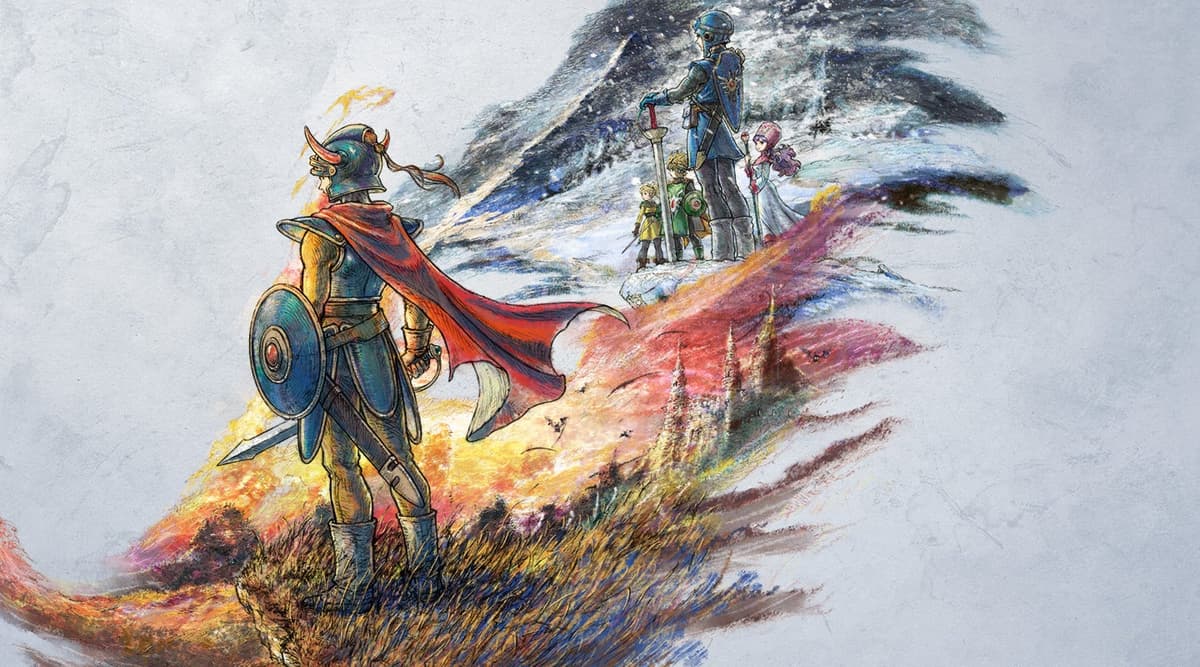
Dragon Quest II: The Real Meal—Three Cousins, One Troubled World
By the time I hit DQ II, I was ready for a proper party. This is where the package really sings. The trio’s composition is old-school balanced: a sturdy sword-first lead, a spell-focused princess, and a hybrid cousin who plugs gaps and saves runs when the wheels come off. The first hour with the princess felt like a blessing in disguise; having stronger early healing and utility spells meant fewer trips back to town and just enough elasticity to push deeper than my levels suggested.
There’s a lightness to the cousins’ chemistry in cutscenes—just enough banter to tell you who they are, plus a few heavier beats that land better than I expected. I won’t spoil it, but the way the final act nods back to the broader Erdrick saga made me itch to boot DQ III again. With the boat acquired around the midgame, the map becomes this series of mysteries you can tackle in the “right wrong order”—you know, the way Dragon Quest loves to nudge rather than shove.
Mechanically, DQ II benefits most from the remake philosophy. The scrolls-and-seals idea returns, and with three bodies to optimize, I actually cared about who held what. A seal that tweaks an attack into a variant or adds elemental pressure changes more than one turn—it shifts your entire rhythm. Optional comforts—like turning up battle speed and dialing difficulty—let me tune the grind to taste. On normal with faster battles, I still had to stop and grind a couple of short bursts (sea encounters in particular), but I never felt stuck on a treadmill.
Combat Feel: Old Bones, Smart New Tendons
The turn-based heart is untouched. Menus are snappy, targeting is clear, and feedback is immediate. But two tweaks affected me moment-to-moment:
- Elemental weakness indicators: there’s a toggle that, once you discover a weakness, marks it visually. It’s convenient, especially if you dip in and out between sessions. Personally, I wish the game asked me to “relearn” weaknesses each encounter instead of making it a permanent sticky note, but I get why it’s here.
- Battle speed options: I bumped speed to the second setting and never looked back. Animation timings feel right; nothing looks janky, just brisk. Bosses still read cleanly at higher speed, which is key.
In DQ I, the solo setup is as tense as it is empowering. When you’re it—healer, nuker, and damage dealer—every hit point is a decision. The remake’s multi-enemy fights demand smart sequencing: topple the high-damage threat first, gamble on a sleep spell, or burn MP now to save a resto herb later. In DQ II, that tension shifts from resource triage to role synergy. My favorite flow: lead opens with a defense debuff or straight damage, hybrid sets the table with a status spell, princess detonates weaknesses. Simple on paper, satisfying in motion.
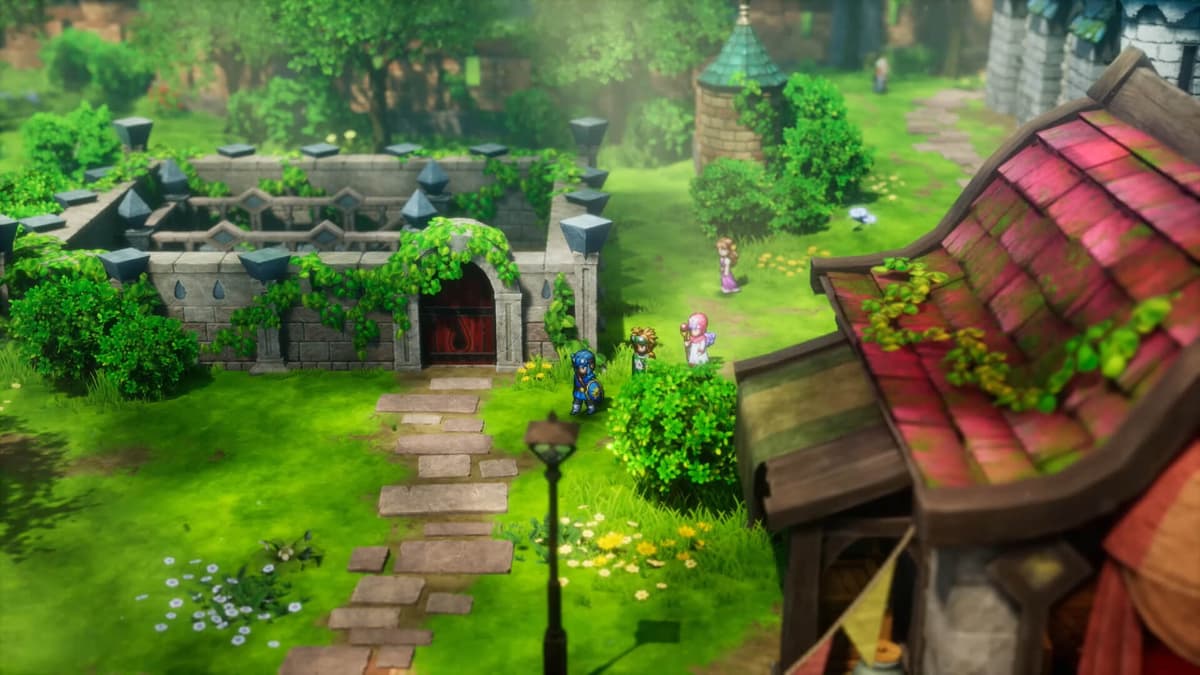
World and Presentation: HD-2D Still Has the Magic
I’m still not over how good HD-2D can look when it fits the material. Alefgard and its neighbors benefit from this treatment more than I expected: torchlit caves glow with volumetric warmth, towns pop with storybook charm, and water has that layered, almost paper-like shimmer. The slightly exaggerated depth of field leads your eye without feeling like a filter. It’s cohesive and cozy, which is a big part of the Dragon Quest vibe.
On the audio side, the orchestrations do the heavy lifting. The Tokyo Metropolitan Symphony’s take on these themes gives them a sweep that elevates even short loops. That said, DQ I, in particular, reminds you these are melodies from the 80s—timeless but limited in variation. By hour 8 of DQ I, I caught myself humming along and also wishing for one more town theme in the rotation. DQ II’s broader palette and story beats help the score breathe more.
Voice work is minimal but well-placed. I toggled between English and Japanese for a couple of scenes; both are solid. The script keeps the series’ gently theatrical tone without drifting into parody, and the occasional lore nods to Erdrick land cleanly.
Specific Moments That Stuck With Me
- DQ I: Getting flattened by a chain of Magidrakees and Scorpions outside Rimuldar after I got cocky with MP. I lost a chunk of gold and had to admit defeat, rerouting to snag a scroll I’d ignored. That scroll changed my next hour.
- DQ I: The Swamp Cave rescue—short, simple, still sweet. Gwaelin’s Love pinging distance to the castle is one of those little relics of design that feels oddly modern when you’re triangulating goals by vibes.
- DQ II: The moment the boat is yours. I spent 30 minutes just tracing coastlines, dropping pins in my head—“Come back when tougher.” Then I ignored my own note and beelined to a new island, met by a flock of enemies that taught me humility in two turns.
- DQ II: A late-game seal combo that turned my hybrid cousin into a status machine. Suddenly, encounters weren’t coin flips; they were routines. That shift—from surviving to dictating—was the most satisfying pivot of my run.
Quality-of-Life: The Right Kind of Help (Mostly)
Beyond battle speed and weakness cues, the remake folds in smart conveniences. Autosave takes the sting out of wipes without erasing risk, and adjustable difficulty lets you decide how grumpy the encounter curve should be. Churches are still around for manual saves, but between autosave and more generous checkpoints, the old save dance matters less unless you’re role-playing a purist. The in-game economy still makes death matter—gold loss stings enough to make banks relevant in theory—but I mostly ignored banking because autosave kept me from catastrophic blunders.
The one comfort I’m torn on: how much information the UI retains. When the interface remembers enemy weaknesses forever after one discovery, experimentation becomes box-ticking. I’d love an option for “discover per encounter” to keep the little eureka moments fresh. Minor quibble, but it’s the kind of toggle that would serve both newcomers and sickos like me who enjoy pain.
Performance and Settings on PC (Steam)
My setup: i7-12700K, RTX 3070, 32GB RAM, Windows 11, Xbox Series controller. At 1440p, I was locked at 60fps with no meaningful drops. Load times were under 5 seconds going town-to-field or into dungeons. I had two minor shader stutters during a weather transition and once entering a crowded town square; nothing repeatable or play-breaking.

There’s basic graphics scaling, windowed/fullscreen options, and a few post-processing toggles. Don’t expect a buffet of sliders—you won’t need them for this art style. Ultrawide support wasn’t native on my 3440×1440 monitor; I played with tasteful pillarboxing. Keyboard controls are serviceable with remapping, but the game clearly prefers a controller. Text readability is strong at 1440p; I bumped the text speed up two notches and never outpaced the voice lines.
What Didn’t Land (and What I Learned to Live With)
- RNG mood swings: DQ I in particular can whiplash from “I am a god” to “I just got stun-locked by bats.” It’s part of the charm, but it will rattle players used to modern safety nets.
- Music repetition in DQ I: Gorgeous orchestrations, narrow playlist. By the end, I loved and lightly resented the overworld theme.
- Info generosity: The weakness tracking and some comfort options risk anesthetizing the discovery loop. Toggle them if you want a spicier ride.
- Light dungeon design in DQ I: The new additions help, but layouts remain short and straightforward. If you’re expecting labyrinthine puzzle gauntlets, temper that.
Who Should Play This
- Series fans who adored DQ III HD-2D: This completes the arc with care and a shared visual identity. The connective lore tissue is absolutely worth seeing.
- JRPG newcomers curious about roots: The QoL toggles make these foundational games way more approachable without sanding off all their character.
- Short-RPG seekers: DQ I is a tight 10-12 hours if you beeline; think of it as a palate cleanser that actually respects your time.
- Mechanics tinkerers: Scrolls and seals add just enough build spice to justify poking every corner, especially in DQ II’s mid-to-late game.
Time Spent and Difficulty Notes
I finished DQ I in just under 11 hours on normal with battle speed up, plus another hour roaming to mop up a couple of scrolls I missed. DQ II took me roughly 32 hours with the same settings, including two short grind pockets around the boat phase and late-game boss prep. If you drop the difficulty a notch and favor the comfort options, I could see shaving 20-25% off those times without losing the thread.
FinalBoss // Gear
Level up your setup
01Top-rated gaming headsetson Amazon→02High-refresh gaming monitorson Amazon→03Gaming chairson Amazon→04Discounted game keyson Kinguin→Affiliate links · As an Amazon Associate, FinalBoss earns from qualifying purchases.
Want to Level Up Your Gaming?
Get access to exclusive strategies, hidden tips, and pro-level insights that we don't share publicly.
Ultimate Reviews Strategy Guide + Weekly Pro Tips