
Table of Contents (8)
The day I discovered “Pokémon” without Pokémon
I didn’t discover monster collecting with Pikachu on the screen. There was no Professor Oak, no starter choice, no Poké Ball tutorial. My “first Pokémon game” didn’t even have the word Pokémon on the box.
Instead, there was this moody kid in a hood, a Dragon Quest logo I barely recognised, and a title that sounded like a bad Batman spin-off: Dragon Quest Monsters: Joker on Nintendo DS. That was my gateway drug.
Like a lot of kids born in the late 90s, I grew up with Pokémon everywhere… except on my console. I watched the anime before school, swapped cards in the playground, could recite the first opening song by heart – but somehow I never owned a mainline Pokémon game. When I finally saved up enough for a DS RPG about catching monsters, I just grabbed the first box that looked vaguely like it.
That “mistake” basically rewired my brain as a gamer.
Because Dragon Quest Monsters: Joker didn’t just introduce me to monster collecting. It set a standard for depth and strategy that, honestly, the actual Pokémon games have never fully hit for me since. And I’m tired of pretending that Pokémon automatically gets the crown just because it’s the one with the billion-dollar marketing machine.
Joker threw me into the deep end – and trusted me to swim
Joker opens with you as a silent protagonist recruited by a shady organisation to infiltrate a monster-scouting tournament across a chain of islands. It’s classic JRPG nonsense: mysterious energy, bad guys in uniforms, a big championship that “totally isn’t rigged, promise.” On paper, it’s nothing revolutionary.
But what hooked me wasn’t the plot. It was how quickly the game basically said: “Here’s your first monster. Here’s a whole 3D island. Now figure it out.”
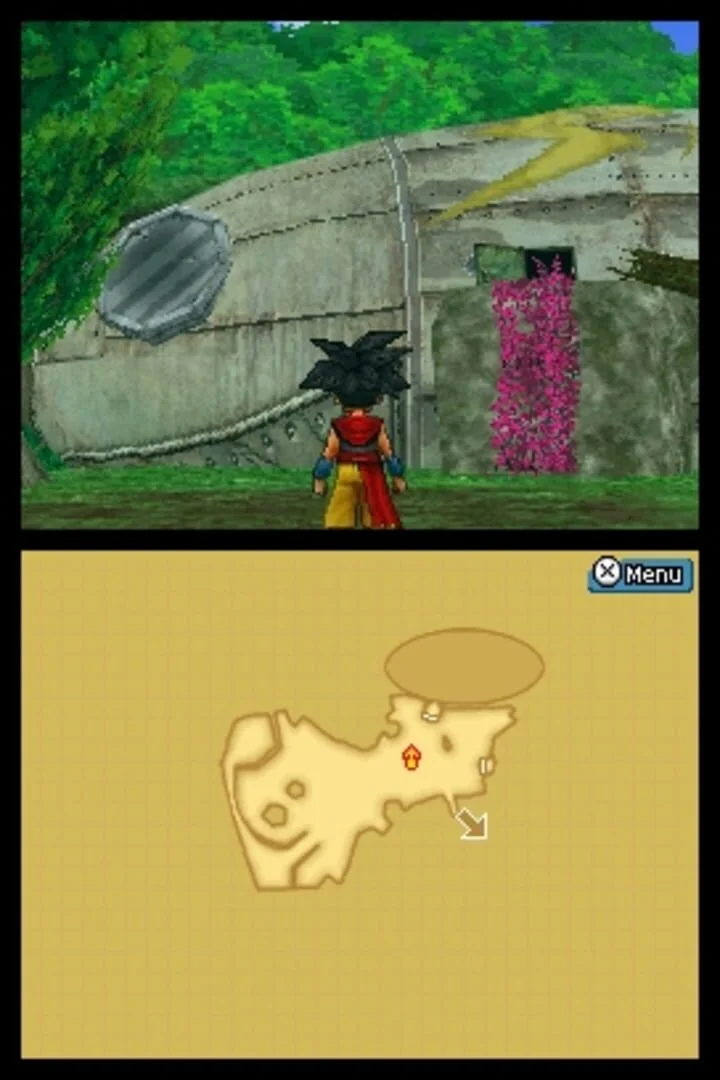
There was no hour-long hand-holding intro. No NPC explaining basic type matchups thirty times. Within minutes I was running around in a world that, for DS standards, was ridiculous: fully 3D environments, day-night cycle, verticality, little monsters visible on the field instead of popping out of tall grass like surprise tax bills. It felt closer to a demake of Dragon Quest VIII than a typical handheld spin-off.
And to catch monsters? No throwing a magic ball. You had to “Scout” them. That meant risking your whole turn on a special command where your team piled on the target. The more damage you did, the higher the percentage chance they’d decide “yeah okay, I’ll join this lunatic.” If you failed, they might just get furious and wreck you.
From the very first hour, Joker taught me something Pokémon still struggles with: monster collecting should feel like a negotiation, not a formality. Every new creature wasn’t just “lower its HP, throw a ball, done.” It was a gamble. A decision. A risk that could blow up in your face.
The fusion system that ruined other monster games for me
The real point of no return, though – the moment Joker permanently broke my brain – was discovering fusion. Or “synthesis”, as the game calls it.
On the surface, you can totally play Joker the “Pokémon way”: catch cool monsters, level them up, slap together a decent team, finish the story. But the game is built around something way more brutal, and way more satisfying: taking the monsters you’ve raised and smashing them together to create something new.
Two monsters of opposite polarity (a “+” and a “–”) at level 10 or higher can be fused into a fresh creature of higher rank. You get to choose which skill trees it inherits. The catch? Your new baby monster starts back at level 1. Every time.
That one design choice changes everything.
Suddenly, a basic little slime isn’t just early-game trash you box and forget. It’s raw genetic material. Food for the synthesis blender. With enough planning, you can take that weak blob and, through a long chain of fusions, turn it into something utterly busted – a towering abomination that will delete late-game bosses like they’re random encounters.
And because each monster has multiple skill trees that you invest points into as they level, choosing what to pass down becomes a game in itself. Do you focus on raw stats? Stack passive resistances? Build a glass cannon mage and pair it with a tank that soaks everything? Every fusion is a fork in the road.
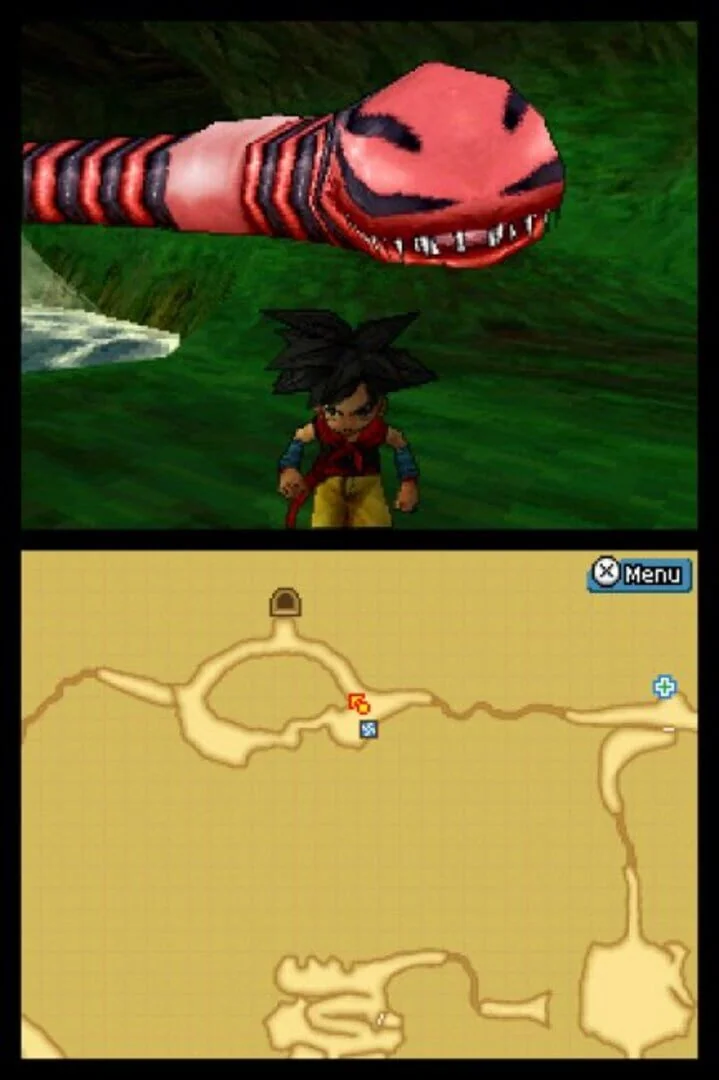
What impressed me most, especially replaying it as an adult, is how honest the game is about it. It doesn’t hide this stuff in obscure menus or post-game breeding spreadsheets. It’s the heartbeat of the experience. The game openly says: “If you want the strongest monsters, you’re going to have to sacrifice, rebuild, and think long-term.”
Compare that to Pokémon, where the “real” depth – IVs, EVs, natures, egg moves – was hidden behind fan-made calculators and wikis for years. Joker made the meta the actual game loop. Pokémon treated the meta like a dirty secret only competitive nerds should care about.
Three-on-three battles that actually feel tactical
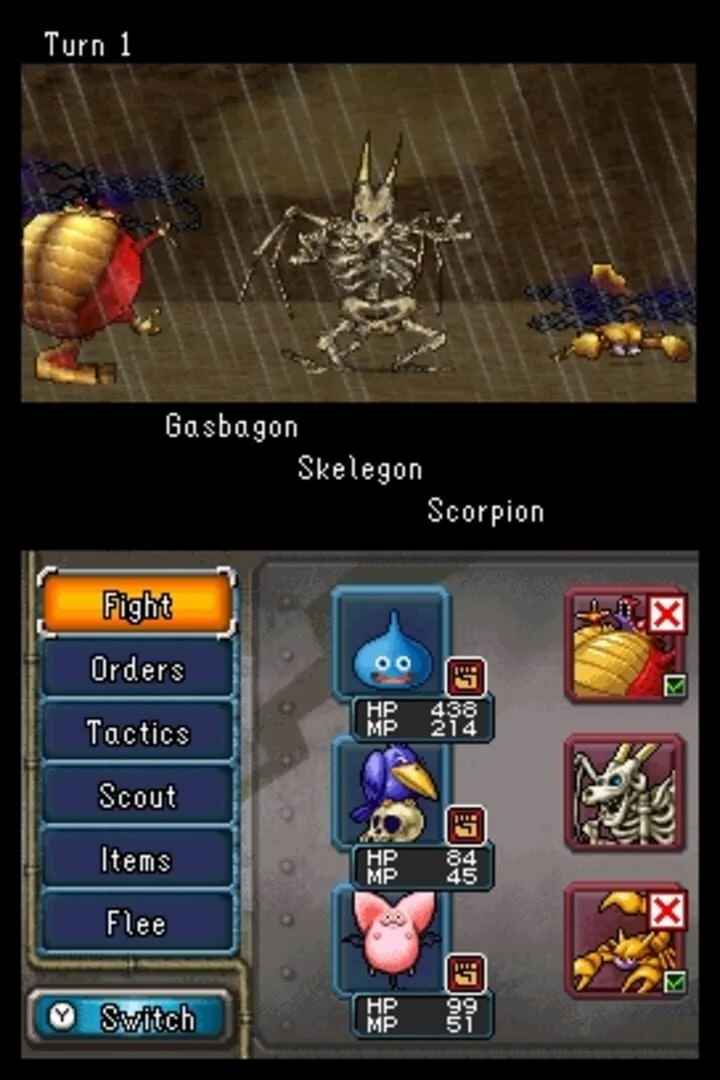
Joker’s combat also quietly embarrassed what I’d been watching in the anime for years. You don’t just throw out one monster at a time like a boxing match. You field a front line of up to three, with three more in reserve that automatically sub in between battles if someone faints.
It turns every fight into a miniature tactics puzzle. You’re not just asking, “What beats fire?” You’re asking:
- Which monster can buff the whole team while another sets up multi-target spells?
- Do I run a dedicated healer or rely on items and hope my DPS ends things faster?
- Is it worth keeping a fragile glass cannon alive just because it has one clutch debuff?
The tension system – literally a “charge up and unleash hell” mechanic – adds another layer. You can have a monster spend turns powering up instead of acting, then drop a nuke at 50 or 100 tension that can swing the entire battle. Again, massive risk, massive reward.
Replay Joker now and what stands out is how much it expects you to respect enemy monsters. Random mobs can and will wipe you if you autopilot. Bosses punish lazy team comps instantly. It’s not a cruel game, but it’s not afraid to smack you for half-assing your strategy.
When people tell me Pokémon is “for kids” and that’s why the main campaigns are still so easy, I think back to my younger self grinding synthesis chains in Joker, planning skill inheritance like a lunatic, and getting bodied because I got greedy on a scout attempt. Kids can handle complexity. Joker proved that to me before I ever touched a Poké Ball.
Then I finally played Pokémon… and something felt hollow
Eventually, of course, I caught up. I played Pokémon. Several of them. I’m not going to sit here and pretend I didn’t enjoy wandering through Sinnoh, or that I didn’t grin like an idiot seeing my starter evolve. There’s a magic to that universe that no other franchise has fully replicated.
But because Joker got to me first, Pokémon always felt weirdly… shallow.
Where Joker made building a monster from scratch its central promise, Pokémon’s campaign was more like a parade of mascots. You catch, you level, you maybe do some basic breeding if you’re curious, but the game never really demands that you engage with its deeper systems. In some entries, you can blow through the Elite Four with whatever half-decent team you picked up along the way.
Yes, competitive Pokémon is insanely deep. But look at what you have to do to get there: browser tabs full of damage calculators, hunting for perfect IV spreads, manipulating breeding odds, grinding for hours to get a nature that isn’t trash. Most players never touch that stuff, because Game Freak buries it under layers of obscurity and repetition.
Joker, on the other hand, puts its system right in your face and says: “This is the point.” It’s honest about the grind. It’s honest about the payoff. It makes the long-term project of team-building feel like a central story, not an optional side hobby.
So when people talk like the monster-collecting genre begins and ends with Pokémon, I’ll be blunt: I call bullshit. For me, the genre’s gold standard was a Dragon Quest spin-off on a chunky little DS cartridge, and nothing I’ve played since has fully dethroned it.
Dragon Quest Monsters should’ve been the rival, not the understudy
The tragedy of Dragon Quest Monsters: Joker is that it should have been Nintendo’s big first-party monster-battling rival in the West… and instead it quietly lived and died in Pokémon’s shadow.
In Japan, Joker was huge. It sold over a million copies, got sequels, and helped keep the Dragon Quest name alive between mainline entries. The whole Monsters sub-series has been ticking along for decades now. As recently as 2023, Square Enix released Dragon Quest Monsters: The Dark Prince on Nintendo Switch, leaning fully back into the breeding and fusion obsession.
But outside Japan? Joker might as well have been an underground cult classic. No anime. No card game. No fast-food toys. Just a dense, brilliant RPG hiding behind confusing cover art and the eternal curse of “But it’s not Pokémon.”
I honestly think a lot of Western players bounced off Joker because it doesn’t care if you’re caught up on Dragon Quest lore. It drops you in with almost no context, expecting you to roll with slimes and golems like you grew up with them. If your only reference point for monster collecting was Pokémon, the vibe was probably confusing as hell.
Add to that the fact that Dragon Quest as a brand has never had the same global punch as Final Fantasy or Pokémon, and Joker never really had a chance. Square Enix didn’t throw the kind of marketing muscle at it that could’ve carved out mindshare against Pikachu’s monopoly.
But from a pure design standpoint? Joker is absolutely a credible alternative. Not a clone, not a knock-off, but a different philosophy of what monster collecting should feel like. Less Saturday morning cartoon, more late-night spreadsheets and “just one more fusion before bed.”
How Joker quietly shaped the way I play RPGs
I didn’t realise how much Joker had warped my expectations until years later, when I started binging through other RPGs: Shin Megami Tensei, Persona, the occasional monster-raising system in otherwise standard JRPGs. Every time a game let me fuse demons, breed familiars, or tinker with inherited skills, my brain lit up in the exact same way it did on that DS screen.
Joker taught me to love the process of building a team, not just the final result. It trained me to ask:
- What hidden potential is sitting in this useless-looking monster?
- How far ahead can I plan my fusion chains?
- Am I willing to make my team weaker now to make it monstrous later?
That mindset followed me into everything. I started approaching party composition in JRPGs like a long-term investment, not a fashion show of whoever looked coolest at the time. Games that didn’t let me break their systems through knowledge and patience started to feel thin, like they were missing an entire layer.
Even when Pokémon finally started experimenting more – regional forms, new breeding mechanics, sprawling semi-open worlds – the core loop still felt weirdly static compared to what Joker pulled off on a underpowered handheld in 2006. Catch, level, evolve, credits. Efficient. Comfortable. But safe.
Joker, by comparison, is messy. It asks you to throw away monsters you’re emotionally attached to for the sake of progress. It forces you into decisions you can’t easily undo. It makes you live with the consequences of a bad fusion or a lazy skill build. That messiness is exactly what makes it feel alive.
Why Joker is still my ultimate monster-hunting game
I went back to Dragon Quest Monsters: Joker recently, half-expecting nostalgia to do the heavy lifting. It didn’t. The game is still just fundamentally solid.
The islands are compact but memorable. The 3D visuals are obviously dated, but they have a clean, bold look that holds up better than a lot of mushy DS-era textures. Akira Toriyama’s monster designs remain iconic; a slime is still a slime no matter how many polygons you strip away.
More importantly, the core loop – scout, raise, fuse, repeat – is still dangerously addictive. That little spike of dopamine when a scout succeeds at 24%. The thrill when a risky fusion spits out a monster way stronger than you expected. The slow, smug satisfaction of watching a team you hand-crafted dismantle an enemy party that wrecked you five hours ago.
Is Joker perfect? Of course not. The story is forgettable, the protagonist looks like he’s trying too hard to be edgy, and there are definitely grindy stretches where you can feel the DS-era padding. A modern remaster with some quality-of-life tweaks – faster battle speed, clearer fusion previews, better online infrastructure – would absolutely be worth doing.
But in terms of what I want from a monster-collecting RPG? Joker nails it more cleanly than anything with “Pokémon” on the box ever has. It respects my time by putting the depth front and centre. It respects my intelligence by not pretending its systems are just for hardcore players. And it respects my choices by letting me break it wide open if I’m willing to put in the effort.
So yeah, when a new monster-catching game drops and everyone starts asking, “Is this the next Pokémon?” my internal benchmark isn’t Paldea or Galar. It’s that DS cartridge with the weird hooded kid and the Toriyama slimes.
Pokémon was my cultural childhood, sure. But Dragon Quest Monsters: Joker was my first real monster game. And until someone gives me a system that beats raising a nobody slime into a world-ending monstrosity through twenty generations of careful fusion, it’s going to keep that crown.
FinalBoss // Gear
Level up your setup
01Best-selling Switch 2 gameson Amazon→02Switch 2 accessorieson Amazon→038BitDo controllerson Amazon→04Discounted game keyson Kinguin→Affiliate links · As an Amazon Associate, FinalBoss earns from qualifying purchases.
Want to Level Up Your Gaming?
Get access to exclusive strategies, hidden tips, and pro-level insights that we don't share publicly.
Ultimate Gaming Strategy Guide + Weekly Pro Tips