
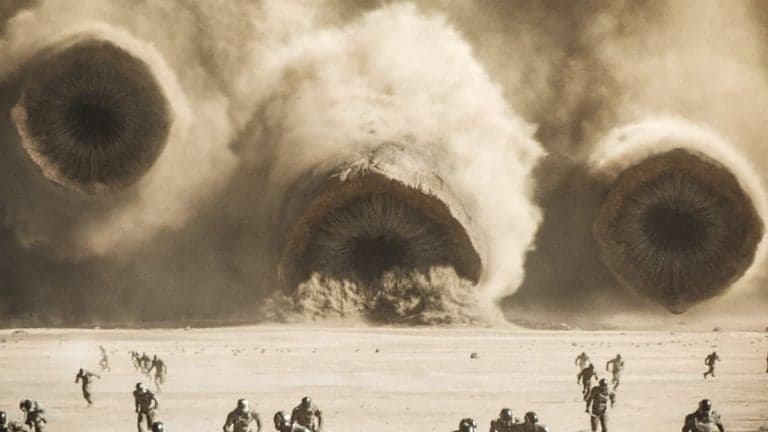

If you’ve ever felt your heart skip a beat at the sight of Arrakis’ monstrous sandworms, you’re in good company. Since Frank Herbert set these desert leviathans loose in 1965, they’ve been gnashing their way into the collective imagination—not just as terrifying beasts, but as the undulating core of Dune’s world-building brilliance. The Fremen call them Shai-Hulud, and for good reason: these aren’t just the universe’s biggest jump scares, but the pulse that keeps Dune’s heart beating across books, films, and video games.
Forget simple movie monsters—Herbert’s sandworms are a masterstroke of ecological storytelling. On Arrakis, they’re the ultimate power behind Spice Melange, the invaluable substance fueling everything from interstellar navigation to galactic bank accounts (and more than a little addiction). No worms, no Spice; and without Spice, the Dune universe would collapse faster than a spice harvester under a worm’s shadow. These creatures are the keystone species of Arrakis—equal parts guardian, destroyer, and myth-maker.

The sandworm’s journey is as strange as it is deadly. Starting out as microscopic larvae in the sand, these creatures feast and grow, seeking water (the one thing that will kill their adult form). Most don’t survive the volatile transformation into sandtrout, but those that do eventually fuse and expand—becoming the colossal worms we all fear and admire. This brutal cycle is the engine behind Spice production, a constant reminder that on Arrakis, survival and annihilation are two sides of the same coin.
For the Fremen, the sandworm isn’t just a hazard—it’s holy. Revered as Shai-Hulud, or “Old Man of the Desert,” these creatures are woven into every aspect of Fremen life. Survival rituals, sacred ceremonies (like the infamous Water of Life), and even coming-of-age milestones all orbit these massive worms. And let’s be honest: nothing says “desert cred” like riding a sandworm across the dunes—one of sci-fi’s ultimate displays of guts and glory.

Few sci-fi creatures have slithered further into pop culture than Dune’s sandworms. David Lynch’s 1984 film gave us rubbery subway-sized beasts, while Denis Villeneuve’s adaptation upped the scale until you could practically taste the sand. In games, sandworms are more than set dressing—they’re game mechanics, hazards, and sometimes even the star attraction. From the classic 1992 “Dune” strategy game (watch out for hungry sand!) to “Dune: Spice Wars,” surviving the worm remains a rite of passage for players and characters alike.

The shadow of the sandworm stretches well beyond Arrakis. These mega-predators inspired monsters like the Sarlacc in “Star Wars,” the burrowing graboids of “Tremors,” and even digital beasts in “Minecraft” and “No Man’s Sky.” As the ur-boss monster, the sandworm set the gold standard for what it means to be both fearsome and unforgettable in science fiction and gaming lore.
So next time you hear the dunes rumble, remember: Shai-Hulud is more than a monster. It’s the soul of Dune, a symbol of power, and proof that true legends always rise from the sand.
Get access to exclusive strategies, hidden tips, and pro-level insights that we don't share publicly.
Ultimate Gaming Strategy Guide + Weekly Pro Tips