
Game intel
Dying Light: The Beast
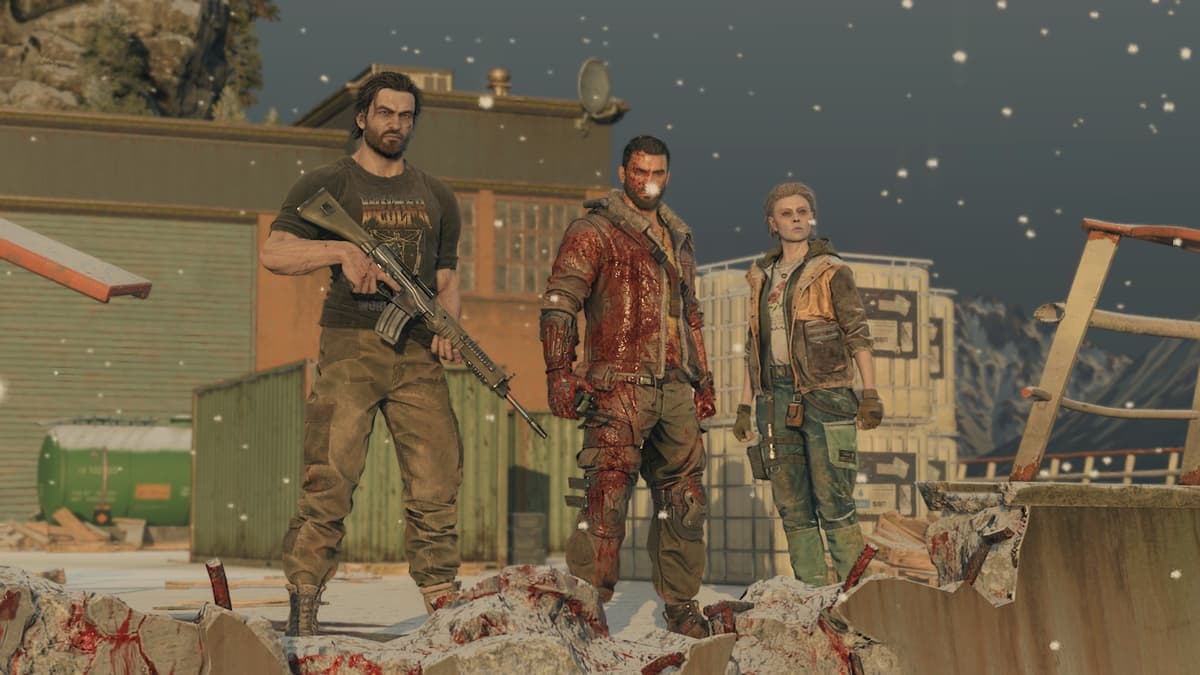
Dying Light is a first-person, action survival horror game set in a vast and dangerous open world. During the day, players traverse an expansive urban environm…
I went into Dying Light: The Beast expecting the familiar cocktail: crunchy melee, sticky parkour, and night terrors that turn your guts to water. What I didn’t expect was how gleefully silly it would be about all of that. The Beast keeps a stone face-revenge, body horror, and a town in tatters-but the moment I superglued a propane burner onto a fire axe and named it “Hothead,” the game let the mask slip. It’s a playground built for decapitations that feel… inventive. And yes, I cackled, a lot.
Context for the PC nerds: I played 30 hours on a desktop with a Ryzen 7 5800X, RTX 3080, and 32GB RAM, at 1440p on a 144Hz display. I used mouse and keyboard for parkour (the precision just feels right) and swapped to a DualSense for driving. Performance hung between 90-120 fps on high settings with occasional asset streaming hitches when blasting into villages. One crash after an alt-tab. Otherwise solid.
By the end of my first two hours, I’d built an entire personality around “hold F to rummage.” If it wasn’t nailed down, it fell into my bottomless pockets: nails, copper wire, screws, a broken watch, three toothbrushes, six batteries, and something labeled “suspicious paste.” I did feel like a burglar-the town’s residents were dead or undead, but still. Then a biter lurched in, and I remembered they had no use for their toolkits anymore. Mine.
The Beast opens with a mean hook: you’re a test subject who spent a decade getting turned into something not quite human. The man in charge—everyone whispers his title like a sour taste, “the Overseer”—runs things from behind fences and satellites. It’s simple revenge at first, then a slow crawl toward the messy people caught in the middle: farmers, scavengers, and a haggard doctor who uses a forklift as a barricade. The tone is somber in cutscenes, but the moment the game gives you back control, it’s like it elbows you in the ribs and goes, “Wanna see how far a skull can travel?”
Dying Light has always been a three-verb series for me, and The Beast doubles down: run, loot, smash. The map splits its personality across two distinct spaces. There’s a compact town of slate roofs and tight alleys that demand precision—vault here, wall-run there, grab that drainpipe while two biters snatch at your boots. And then there’s the sprawl: orchards, wheat fields, gas stations clinging to a dirt road, barns with doors that shriek like the dead. It’s not empty; it’s dense with little stories and cruel toys.
Thirty minutes in, I picked up my first blueprint: “Matchstick Maker,” a hockey stick with a pipe-bomb taped to the blade. The catch? You have to wind up a heavy swing to arm it. My first test run was in a sunlit field by a scarecrow. I whiffed. The bomb popped, the stick flew, and I had that classic “oh no” breath before the delayed blast turned three shamblers into a red mist. It was then I realized The Beast isn’t just asking me to survive; it’s daring me to humiliate the undead in increasingly ridiculous ways.
The melee still has weight. The stagger window after a perfect block opens head-stomp opportunities that never get old, and your stamina becomes a timer for greed. The cleaver that kills in two hits also eats a chunk of your bar, so you start weaving light jabs, dodges, and kicks. Kicks, by the way, are still a religion. The dropkick is back, and it levelled into a two-footed catapult that sent one poor sap into a grain auger. The machine didn’t survive. Neither did the zombie.
After 10 hours, I had what I call “the 5PM feeling.” I’d be marking a supply run on the map and glance at the in-world clock flicking to 17:00, and suddenly every plan got filtered through sunset. The Beast makes night feel like a contractual dispute: “You can go out, but pay the fee.” The fee is anxiety and UV flare consumption.
The special infected—the hulking, nimble brutes you hear before you see—hate UV, love your flashlight, and don’t mind clearing a 10-foot fence if it means getting a bite. One of my favorite little systems happens when they catch sight of your glow: their heads tilt, the growl curdles, and your chase meter ticks up in that horrible way that turns your stomach. I tried a few “lights off, go by moonlight” runs. Stealth is technically possible, but any stumble and the night crew smells you. Twice I found myself cornered, killed the light, and lobbed a UV flare into an open barn, then dove in behind it while three monsters thrashed at the doorframe. That flare hiss buys seconds, not safety.
I learned to plan my dusk runs like heists: pre-place a rope, memorize the line from windmill to pharmacy rooftop, leave a gas can like a breadcrumb. And still, I bailed out of missions at 18:30 because my nerve frayed. The game doesn’t force night content often; it weaponizes your imagination instead. Smart.
The Beast keeps the plot clean: break free, find out what the Overseer did to you, repay it in kind. The structure is a comfortable loop of survivor favors and mainline pushes into facilities that feel part hospital, part butcher shop. The best writing isn’t in the main thread, though; it’s in the countryside’s quiet corners. My favorite discovery was an abandoned picnic spot by a lake, with a snarky note roasting a scout leader for ditching the kids. Follow the trail, and there’s a sun-bleached skeleton slumped at a dock with a final apology scribbled at their feet. That moment hit harder than any speech about “humanity.”
Conversely, a couple of bigger story twists telegraph themselves an hour early. The outpost leader who talks about “hard choices” will of course try to weaponize you. The doctor with a nervous laugh will of course have a connection to your past. It’s not bad—it’s just familiar. The saving grace is the rhythm: the game doesn’t belabor cutscenes, and within minutes you’re back to deciding whether to parkour, improvise, or set something on fire.
Progress in The Beast is the good kind of granular. Leveling breaks into three trees—combat, movement, and survival—with a separate track for driving. The perks push your preferred flavor of chaos. I poured early points into double vaults and longer wall runs, then split into parry windows and a hilarious “Batter Up” heavy attack that turns blunt weapons into launch pads. Survival perks feel small but meaningful: better yield from dismantling, faster heals mid-fight, more fuel efficiency for vehicles.
Blueprints are where the personality shines. “Hothead” (axe with a flame jet), the aforementioned hockey stick mine, a garden fork mod that crackles with electricity and pins enemies to walls like morbid butterflies, and a pipe shotgun taped to a machete’s scabbard for the laziest swap in history. The UI for modding is a clean grid—slot the core, add a trigger, pick an effect—and the game rarely says “no.” If you have scrap, you have options.
The grappling tool returns late, and when it did, I had that “oh, there it is” grin. It’s not Spider-Man; it’s a directional utility that lets you correct a bad jump, yank a crate from a nest of biters, or zip across a courtyard when a night brute sniffs you. I wish I’d unlocked it five hours earlier, but the late arrival does create a second wind for exploration.
I kept bouncing between the town and the fields because they scratch different itches. The built-up zone is pure flow. Rooftop to rooftop, chimney to awning, hop a balcony, roll through a skylight, and the UI gives that subtle blue pulse when you nail a chain of jumps. Mess up and you feel it in your shins. It’s honest and readable—no sticky magnetism, just good collision and momentum.
Out in the sprawl, the toys come out. I cleared a substation by threading an orange cable from a rooftop spool, sprinting between anchor points before the slack snapped back—a clever little puzzle that mixes space awareness with parkour speed. A roadside diner had a back room with a locked safe; the combination was spray-painted on a delivery van around the corner, but a shambler happened to be wearing the van key on a lanyard. I found a farm with a wheezing thresher you could kickstart; I made the mistake of testing its bite with a sack of wheat first. It ate the wheat. Then it ate a zombie. Then it tried to eat me. Got it out of my system.
These environmental one-offs aren’t just distractions; they become mental tools you use later. See a water tower with loose scaffolding, and you start lining up a dropkick. Spot a narrow bridge with a broken guardrail, and you plan a car chase route that funnels biters into a plunge. The Beast quietly teaches you to be a choreographer of dumb violence.
The first time I found a beat-up utility truck behind a barn, the game told me two things: you can upgrade this, and it guzzles. Driving is back in a big way, and it’s the right call given the map’s scale. Early on, I spent more time pushing than cruising, but a few upgrades later—better fuel economy, reinforced bumper, sticky tires for mud—and the truck went from liability to reliable escape hatch.
The handling sits in a grounded sweet spot. It’s not a sim, but the truck has weight; sliding a dirt road corner to smack a biter into a fence feels satisfyingly mean. There’s also a quiet survival layer: siphoning gas from abandoned cars with the UI telling you “Fuel +3” one agonizing tick at a time while groans get closer. At 15 hours, I unlocked a roof rack flamethrower for… reasons. It’s as subtle as a sledgehammer. It also set a field on fire and tanked my frames for ten seconds. Worth it.
Regular infected are fodder until they’re not; three is a joke, nine is a funeral. They lunge, grapple, and sometimes fake a stumble to bait your heavy swing. Human enemies—raiders with duct-taped armor—bring crossbows and Molotovs that force you to think about lines of sight. The night brutes (call them Volatiles, Alphas, whatever name you prefer) are chase designers’ best friends: they’ll flank, they’ll vanish from one window and come through a roof, and their audio is a cruel metronome ticking toward panic.
Weapons all talk in their own register. Hatchets bark, pipes thud, machetes sing, and that garden fork sizzles like a bug zapper at a cookout. One tiny detail I loved: after you break a weapon past repair, the next swing lands like a wet newspaper. The game tells you “this is done” without pop-ups. Nice touch.

The Beast looks the part. Soft alpine sun through dust, slick cobbles during rain, and zombie faces you can practically smell. On PC, I stuck to high settings and never felt penalized. The one consistent hitch is asset streaming when barreling from fields into town at speed—half-second stutters that aren’t dealbreakers but do nibble at immersion. I had one crash after alt-tabbing during a cutscene, and a single quest bug where an NPC wouldn’t open a gate until I reloaded the checkpoint.
Controls are responsive. I nudged the FOV to 100, disabled motion blur, and turned down camera shake—bliss. Subtitles have size options and a readable font; there’s a colorblind filter as well as a toggle for high-contrast UI elements when looting. On controller, the default stick acceleration felt a hair too syrupy for precision jumps, but it’s tweakable.
Three snapshots still replay in my head. In hour 6, I sprinted a cable across rooftops to power a radio mast, the line tugging at my hips as the slack ran out. I dove for the last anchor as a pack closed in and heard the generator chunk to life behind me. In hour 14, a “quiet” night run went loud when my flashlight clipped across a brute’s face; I dove off a balcony, dropkicked a biter through a greenhouse, and slammed a UV flare in a chicken coop while feathers and gore turned into modern art. Hour 22, I helped a farmer repair a windmill by scavenging gears from nearby cars. He paid me with a jar of “homemade jam” that turned out to be a grenade blueprint. That’s The Beast in a jar.
If you bounced off earlier Dying Light games because the tone felt po-faced, this is the same blood type but with a funnier twinkle. If you love systems that let you solve “how do I get from A to B alive” with a trap, a jump, or an improvised weapon held together with glue and bad ideas, you’ll thrive here. Fans of Dead Island’s colorful carnage, Far Cry’s outpost chaos, and, obviously, the original Dying Light and The Following will feel at home.
If you want narrative fireworks or deeply branching choices, temper expectations. The Beast has confident vibes and good performances in key moments, but it’s not here to untangle morality. It’s here to hand you a garden fork and a can of accelerant and whisper, “Make it art.”
After 30 hours with Dying Light: The Beast, my take is simple: this is the most purely enjoyable the series has been. It trims the fat, feeds the toybox, and lets the countryside breathe while the rooftops keep the classic rhythm. The revenge tale won’t linger, but the moments will—the panic sprint at 2AM, the first time you wire a substation by the skin of your teeth, the day you discover a hockey stick can double as an improvised IED.
I kept telling myself “one more run” just to see what dumb invention I could get away with. That’s a good sign. It’s also a sign that, beneath the serious face and spectacular gore, The Beast knows exactly what it is: a silly, smart, vicious sandbox that respects your curiosity and rewards your recklessness.
Score: 8.5/10
Get access to exclusive strategies, hidden tips, and pro-level insights that we don't share publicly.
Ultimate Reviews Strategy Guide + Weekly Pro Tips