
The first meaningful evidence of Saudi PIF-linked ownership changing Electronic Arts will not arrive as a dramatic boardroom decree. It will surface in job listings that stop appearing, teams that are never refilled, projects that quietly vanish, and updates to The Sims that become more cautious about the identities and relationships they allow players to express.
That is the standard players should use after EA’s $55 billion go-private sale closed on August 4, 2026. Saudi Arabia’s Public Investment Fund, Silver Lake, and Jared Kushner’s Affinity Partners now own EA, with PIF holding a supermajority position in the investor group. EA is private, CEO Andrew Wilson remains in charge, and the company has roughly $20 billion in buyout debt financing hanging over every studio decision.
I think the employee fears around this deal are justified. The danger is not a cartoonish scenario where a new owner sends Maxis a memo banning a specific character or relationship. The more plausible, more corrosive outcome is self-censorship: teams internalize which pitches look “risky,” managers avoid fights they do not believe they can win, and projects with anything politically inconvenient fail to reach the stage where players ever see them.
EA employees have described exactly that atmosphere: a workplace where layoffs feel permanently imminent and where creative teams fear that projects will fail approval if leadership expects Saudi-linked owners to object. No documented ownership directive has changed The Sims content as of August 2026. That absence matters. It does not erase the financial and cultural pressure now surrounding the company.
Table of Contents (6)
The $700 million target makes this more than a culture-war argument
The numbers are blunt. EA committed to cutting $700 million in annual costs, including $170 million through “organizational efficiencies.” It also faces a debt structure tied to a roughly $20 billion financing package, with $18 billion expected to be repaid under the buyout arrangement. Private ownership has given EA less reason to explain its decisions in public and every reason to make the balance sheet look leaner.
“Organizational efficiencies” is executive language designed to make job cuts sound like a software update. It means fewer people, slower backfills, merged responsibilities, reduced experimentation, and a harsher standard for any project that does not promise an obvious return. EA staff have already voiced concern that layoffs could come in smaller recurring waves, structured to stay below the thresholds that trigger public notices under the U.S. Worker Adjustment and Retraining Notification Act.
WARN protections require advance written notice for qualifying mass layoffs and plant closures. They do not protect workers from a company choosing a sequence of smaller cuts. That distinction is precisely why players should watch staffing patterns instead of waiting for one giant announcement with a tidy explanation.
The imbalance is hard to ignore. Andrew Wilson earned 305 times more than the average EA employee last year and could receive up to $125 million in severance depending on how the ownership transition unfolds. The people carrying the risk of “efficiency” are the artists, designers, writers, QA staff, and producers whose names eventually appear in the credits. The executive layer gets a financial cushion; development teams get uncertainty.
Why The Sims is the clearest content-policy test
The Sims matters here because its creative identity is visible at the player level. Its relationship systems, identity options, fashion, home design, social interactions, and player-created stories are not background decoration. They are the point. A shift in approval culture would be easier to detect in this series than in EA Sports FC, where a tighter approval process could hide behind licensing, presentation, or routine sports-game conservatism.
Saudi Arabia criminalizes same-sex sexual activity between men and between women, criminalizes transgender people’s gender expression, and retains a maximum penalty of death under its legal framework. That fact makes employee concern over LGBTQ+ inclusion far more serious than a vague fear of foreign investment. Maxis can state that its values of “inclusivity, choice, creativity, community, and play” will continue through 2026 and beyond. That commitment is worth recording. It is not a substitute for watching what survives internal approval under new ownership.
The concern is not that every future Sims update will suddenly erase existing options. That would be too visible, too immediate, and too costly for a company that understands the community’s attachment to expressive freedom. A narrower process would likely appear first in future content: a proposed romance system simplified before announcement, a cosmetic theme softened during review, a customization feature never expanded, or a story idea rejected before it becomes public.
Players cannot inspect a canceled pitch deck. They can still recognize a pattern when a series built on choice begins repeatedly choosing the safest possible version of itself.
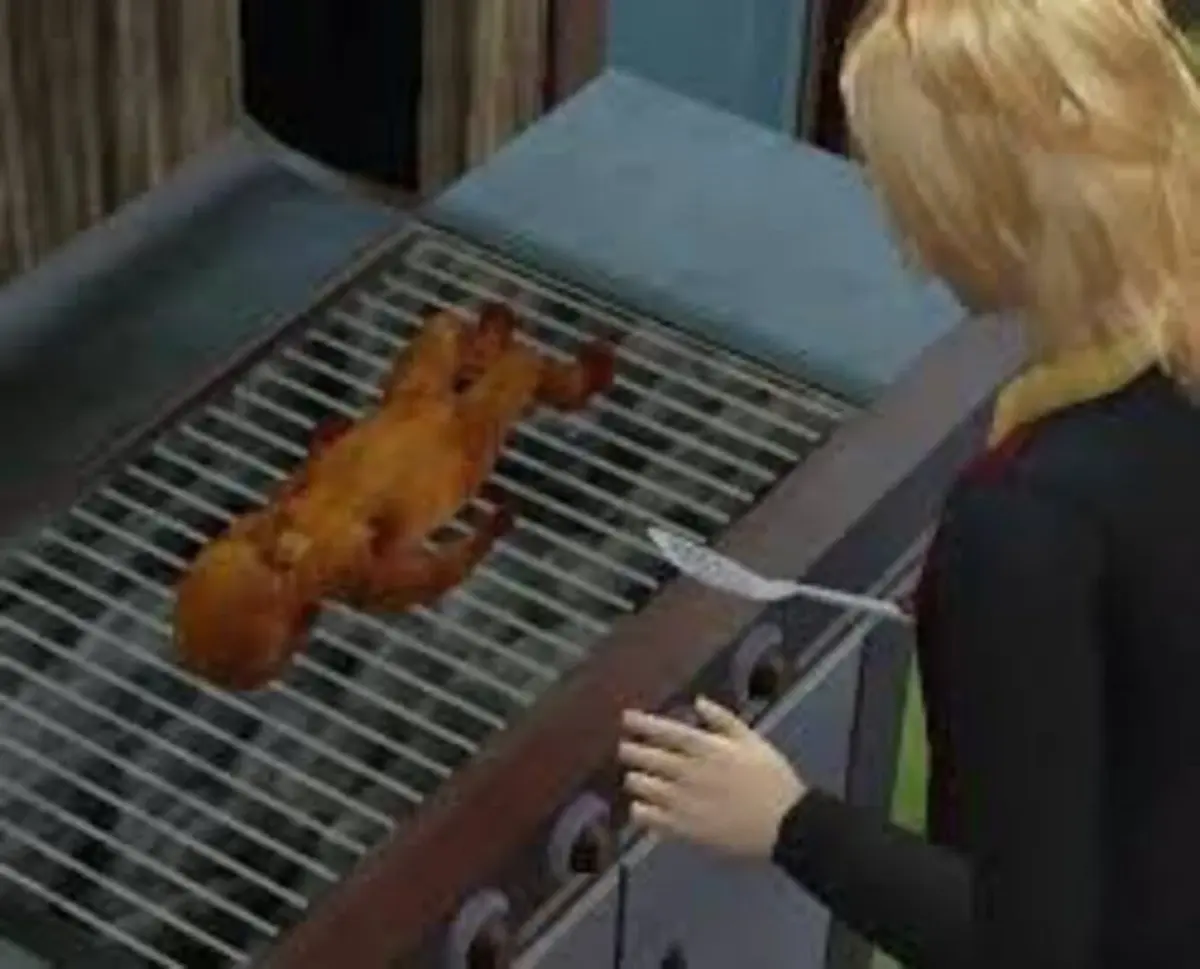
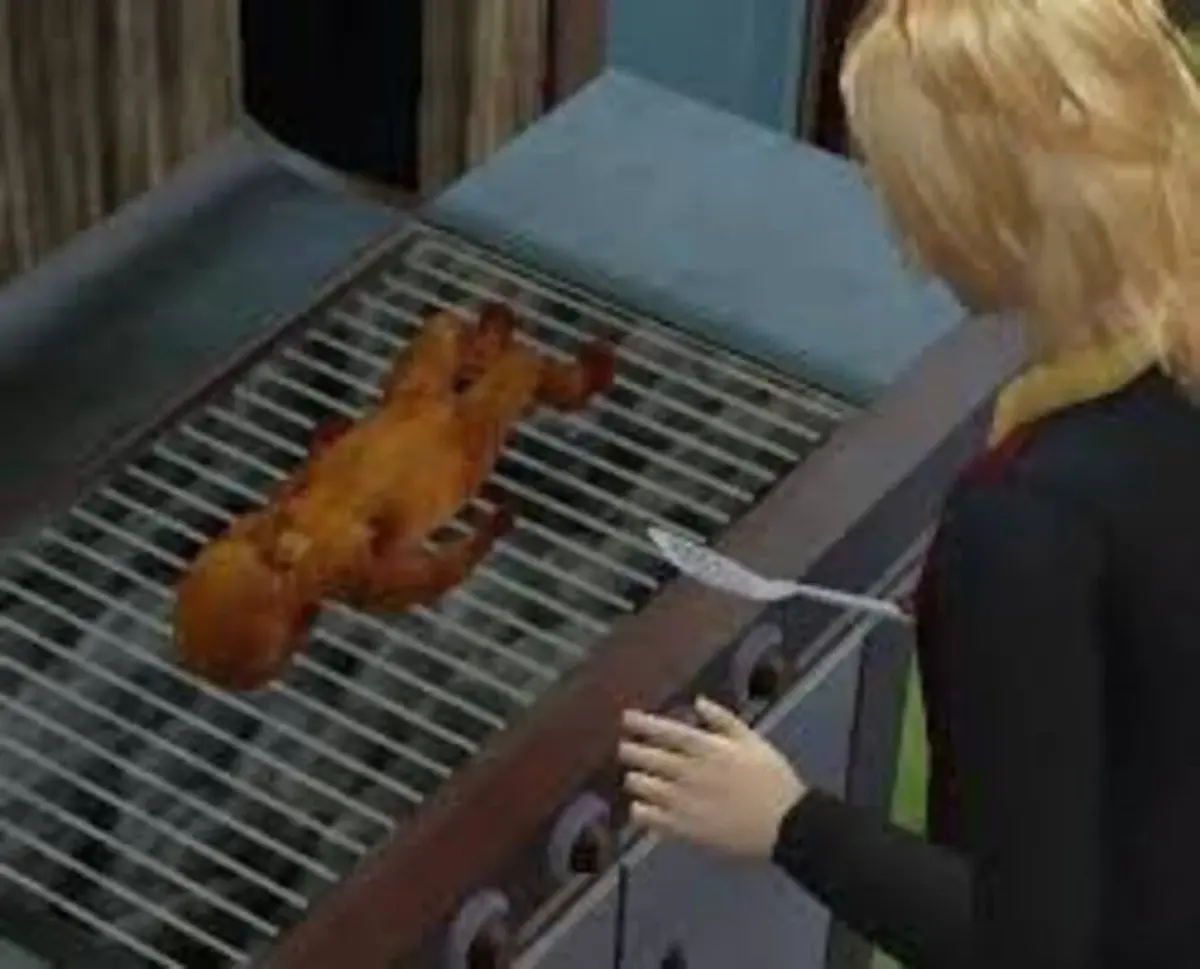
The Sims 2: OMGWTFBBQ is not an official EA release
The “OMGWTFBBQ” label attached to The Sims 2 is a community nickname linked to an unofficial fan-site upload dated September 16, 2013. It was not an EA or Maxis product, patch, expansion, or sanctioned feature. That distinction is necessary because the name can make this story sound like a dispute over an old piece of edgy series content.
It is not. The issue is the future approval environment around EA’s actual games, particularly the parts of The Sims where creativity, identity, and player freedom are inseparable from the product. A decade-old unofficial upload proves nothing about what Saudi PIF-linked ownership will approve or reject in 2026.
The five signs players should verify
| Signal | What would change inside EA | What players can actually see |
|---|---|---|
| 1. Hiring slows or disappears | Open roles remain vacant, departing developers are not replaced, and teams operate with reduced capacity. | Fewer studio job listings, long-unfilled roles, delayed updates, and public confirmation of layoffs or hiring freezes. |
| 2. Projects are quietly canceled or narrowed | Unannounced games and expansions fail internal approval, lose staff, or are re-scoped into safer products. | Extended silence after recruitment pushes, abandoned roadmaps, missing features, and staff departures from teams that had been hiring. |
| 3. Approval standards tighten | Creative work reaches review only after removing material considered politically sensitive or commercially inconvenient. | Future updates and releases that reduce identity, relationship, customization, or narrative choices without a clear design reason. |
| 4. The Sims receives narrower player-facing content | Teams avoid expanding systems involving romance, gender expression, social behavior, or cosmetic variety. | Patch notes, expansion descriptions, localization changes, and feature announcements that repeatedly choose restriction over player expression. |
| 5. Monetization pressure rises | Debt repayment and cost targets push teams toward faster, more predictable spending from existing players. | Heavier premium bundling, more paid-content prompts, thinner updates built around purchases, and a stronger live-service cadence. |
The first item is the most important because staffing determines everything that follows. A studio cannot sustain ambitious relationship systems, broad customization, responsive updates, and meaningful expansion work while quietly losing specialists and leaving positions empty. Players tend to treat layoffs as a business-page story until the next update feels smaller, later, and less imaginative. By that point, the damage has already reached the game.
Cancellation patterns deserve equal scrutiny. One abandoned project proves little. Studios cancel work for ordinary reasons. A repeating pattern across EA — new roles disappearing, teams shrinking after early development, public roadmaps becoming vague, and fewer new projects emerging — would demonstrate that the $700 million target is reshaping what gets made. That is where private ownership becomes visible.
Self-censorship is the risk that leaves the cleanest corporate paper trail
Direct censorship would create a scandal. Self-censorship creates a presentation deck. A producer can call it brand alignment. An executive can call it market sensitivity. A project lead can call it an effort to reduce scope. The final decision can look entirely rational in isolation while the accumulated result strips away the willingness to make work that a new ownership structure might dislike.
That is why employees saying projects could fail to get signed because they do not align with what Saudi leadership may want should be taken seriously. Their concern is about the anticipated veto, not solely an explicit order. A company does not need a written rule against a creative choice if its employees already believe advancing that choice will damage their career prospects or threaten their team’s survival.
The reported fall 2025 town hall, where a director’s open microphone allegedly carried a dismissive “little babies” remark to the entire audience, belongs in this wider picture. The incident did not create the buyout, and it does not prove a content directive. It does demonstrate why workers did not enter this ownership transition with unlimited faith that management would protect them when pressure arrived.
Maxis has to prove its values through released work
Maxis has publicly committed to inclusivity, choice, creativity, community, and play. Those are the correct values for The Sims. They also set a measurable standard. The studio’s future updates, feature plans, staffing stability, and willingness to keep expanding player expression will show whether that statement carries operational weight under PIF-led private ownership.
I do not need to see a bad patch note before treating the risk seriously. EA’s employees are describing a company facing debt, a $700 million annual cost-cutting mandate, and a new ownership group whose political reality directly conflicts with the freedom that makes The Sims matter. The player response should be disciplined: track the hires, the layoffs, the missing projects, the approval language, and the actual content that reaches the game.
If those five signals stay clean, Maxis will have earned trust under a difficult ownership structure. If they begin stacking up, players should call the change what it is: a financial buyout shrinking the creative space of one of gaming’s most personal series.
FinalBoss // Gear
Level up your setup
01Top-rated gaming headsetson Amazon→02High-refresh gaming monitorson Amazon→03Gaming chairson Amazon→04Discounted game keyson Kinguin→Affiliate links · As an Amazon Associate, FinalBoss earns from qualifying purchases.
Want to Level Up Your Gaming?
Get access to exclusive strategies, hidden tips, and pro-level insights that we don't share publicly.
Ultimate Gaming Strategy Guide + Weekly Pro Tips