
Table of Contents (10)
EA Sports FC 26 on Switch 2: a cheap ticket to virtual football, with strings attached
Seeing EA Sports FC 26 pop up on the Nintendo Switch 2 eShop at 34.99€ with a 50% launch discount instantly triggers that “oh no, I’m going to impulse-buy this” feeling. A big-name football sim, day one on Nintendo’s new hybrid, for less than 35€? On paper, that’s a steal.
But the more you dig into what this edition actually does – the split between “Realistic” (offline) and “Competitive” (online) gameplay, a way deeper manager career, a completely rebuilt Clubs mode with archetypes, and then the usual EA obsession with monetized progression – the more it looks like a game with a split personality.
If you mostly want to sit on the couch with a Pro Controller and grind out seasons in Career mode, FC 26 on Switch 2 feels like the first time Nintendo players are getting something that genuinely tries to respect solo play. If you live for online matches and Clubs nights with friends, a lot of old FIFA wounds are still wide open: wild scorelines, fragile AI defending, and a progression system that flirts hard with pay-to-win’s little cousin, pay-to-fast.
So the real question isn’t “is 34.99€ cheap?” – it obviously is. The real question is whether FC 26 is the kind of football you want to spend your evenings with, and whether its strengths line up with how you actually play.
Key takeaways if you’re eyeing that 34.99€ offer
- Offline players win this year: the new “Realistic” gameplay and beefed-up manager career finally feel built for solo fans.
- Online is locked to “Competitive” gameplay: faster, twitchier, and still packed with high-scoring, attacker-friendly chaos.
- Clubs has cool archetypes that give your pro a real identity, but progression can be accelerated with real money.
- Licensing isn’t perfect: both Milan clubs and Atalanta still use generic kits, which really stands out in Serie A.
- You need Nintendo Switch Online to access the most contentious part of the package: all online modes.
- If you mostly care about solo: this looks like a solid 7–8/10 value. If you’re here for online, temper your expectations.
My history with EA football on Nintendo – and why this one matters
I’ve spent enough time with past FIFA and EA Sports FC games on Nintendo hardware to know how rough it’s been. The early “Legacy Editions” on Switch were basically reskinned rosters stapled onto old tech, while the rest of the world got shiny new animations and smarter AI. If you were a Nintendo-only player, you were paying full price for an obviously second-class version.
That’s why FC 26 on Switch 2 is such a big deal conceptually. It’s not pitched as a stripped-back port; it’s coming in with the full dual-gameplay setup, an overhauled Clubs mode, and a career mode that clearly tries to borrow a bit from full-blown management sims. It wants to stand next to the other console versions instead of hiding in their shadow.
And crucially, Nintendo players aren’t being asked to cough up 70€ for the privilege. At 34.99€ during the promo, you’re not stuck playing spot-the-missing-feature quite as bitterly. The value conversation shifts: it’s not “is this as complete as the PS5/Xbox version?” so much as “for under 35€, is this a good football game for how I play?”
Two gameplays, two personalities: “Realistic” vs “Competitive”
The boldest design choice in FC 26 is splitting the game into two distinct gameplay profiles: “Realistic” for solo modes and “Competitive” for online. It’s the first time EA’s football sim has openly admitted it can’t serve both audiences perfectly with one universal ruleset.
In the “Realistic” setup, used for things like Career mode, the whole pace slows down. Animations breathe more. You get those little moments of chesting the ball down, taking a touch under pressure, or recycling play rather than immediately ping-ponging it forward. Build-up is more deliberate, which naturally rewards players who actually want to play football rather than sprint in straight lines until something breaks.
This is where long-time offline fans will probably feel the difference the most. If you like playing a full 15-season save, nurturing youth prospects, and nudging sliders to get a slightly stodgier mid-table scrap in Ligue 1, “Realistic” sounds like it finally wants to respect that fantasy instead of bending you toward arcade chaos.
On the online side you don’t get a choice: “Competitive” gameplay is mandatory in modes like Clubs and Football Ultimate Team. Here, responsiveness and speed take priority. Animations are tightened, player reactions quickened, and the game leans into a snappier, more twitchy flow so input delay and lag don’t completely ruin matches.
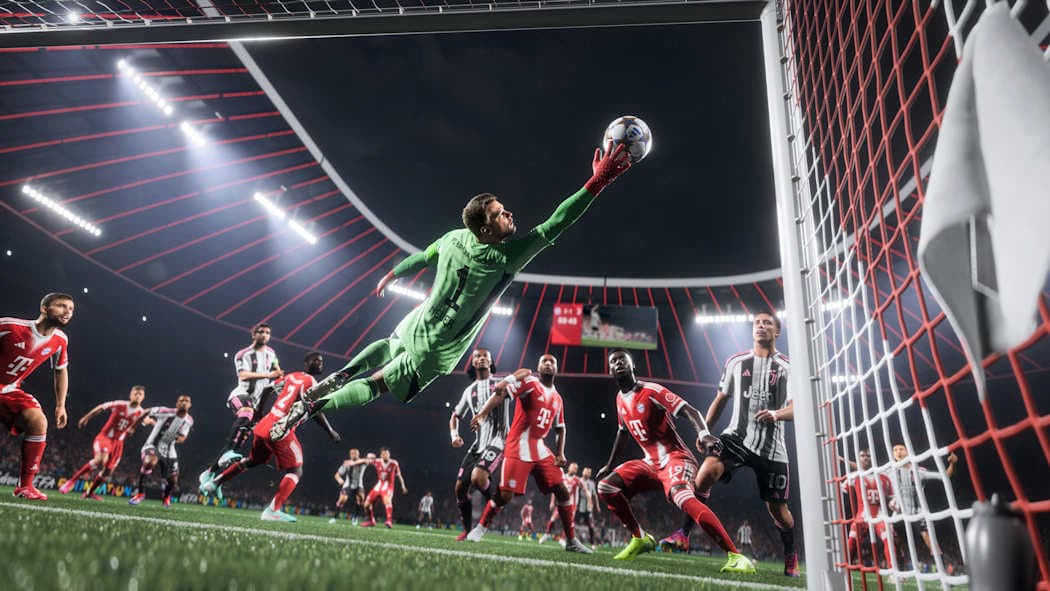
On paper, this split is smart. In practice, according to the impressions baked into this version’s early verdict, the online side still feels unbalanced. The faster tempo and attacker-leaning tuning lead to a lot of high-scoring games and slightly ridiculous scorelines. Defenders and AI goalkeepers often feel like they’re on skates, slow to react compared to the hyper-responsive attackers darting through them.
If you’ve ever sighed your way through a 5–4 loss where every through ball turns into a one-on-one, you know exactly why that’s a problem. FC 26’s split philosophy tries to fix the “one size fits nobody” issue, but on the online side it hasn’t fully escaped the series’ bad habits. The end result: a genuinely promising solo experience, and a multiplayer one that’s still too wild to feel like real football.
Career mode finally edges toward a real management sim
If you’re an offline sicko who loves spreadsheets as much as step-overs, FC 26’s Manager Career is where the game starts to earn its asking price.
The mode adds new tools that push it closer to what you’d expect from dedicated sims. The standout is something called “Manager Live Challenges”: curated scenarios that drop you into a club’s season at a specific point with a set of clear objectives. Think “take over a mid-table side in February and drag them into a European spot” or “inherit a title favourite that’s suddenly fallen apart and turn it around before the board sacks you.”
Stuff like this is perfect for players who don’t always want to commit to a cradle-to-grave save but still crave that narrative hit. Jumping into an existing mess, trying to impose your style, and seeing if you can change the story scratches a different itch than slowly building from the bottom.
Beyond the scenarios, the overall structure of Manager Career this year is simply more rounded. Scout reports, tactical planning, and squad building feel less like thin menus wrapped around the match engine and more like a coherent mode with its own identity. It won’t replace a full-fat Football Manager session on PC, but as something that sits between a pure action game and a hardcore sim, it’s closer to that sweet spot than previous EA football outings on Nintendo ever were.
If your plan is to spend 90% of your time in Career Mode, FC 26 on Switch 2 starts to look like a very good use of 34.99€ – even before you touch online.
Clubs, archetypes, and the creeping pay-to-fast problem
Clubs is where EA clearly wants you to live online with your friends, and to its credit, the structural ideas here are actually interesting this year.
The big change is the introduction of player archetypes, inspired pretty blatantly by what 2K has been doing in NBA for years. Instead of every created pro slowly morphing into the same meta build, you choose an archetype that leans into a specific playstyle – think stocky target man, hyper-mobile winger, destroyer DM – and you build around that package.
On the pitch, that means your club starts to feel like an actual team of specialists rather than eleven generic 82-rated blobs. In theory, it also makes the mode more welcoming: new players can pick an archetype that clearly signals “I want to be this kind of footballer” instead of drowning in granular attribute choices.
The problem is how you progress those pros. According to the breakdown we have, FC 26 lets you use FC Points – the premium currency – to buy boosters that speed up XP gain in Clubs. It’s not quite straight pay-to-win (you’re not buying raw stats outright), but it’s definitely pay-to-fast: spend money, and you simply reach your build’s peak quicker than the guy who grinds naturally.
For a mode that’s supposed to be about your club’s shared journey, that leaves a sour taste. You end up with a class divide inside squads: the people who’ve tossed in extra cash effectively shortcut the grind, while others trudge along. Structurally, it risks turning what should be a long-term, organic progression into yet another monetized treadmill.
If you’re used to sports games from EA or 2K, none of this will shock you. But it’s still frustrating when the underlying design – archetypes, deeper customization, more distinct on-pitch roles – is genuinely good. Clubs could have been the purest expression of that fantasy. Instead, it feels like someone in a meeting asked, “Okay, but where do we put the FC Point offers?”
Online play: still too much chaos, not enough football
Let’s talk about the elephant on the pitch: how FC 26 actually feels online.
Even with the “Competitive” gameplay mode meant to clean things up, the word that keeps coming up is frustrating. Matches skew heavily toward attackers. Goalkeepers controlled by the AI are too easily exposed. Defensive positioning struggles to keep up with the hyper-responsive dribblers slicing through lines.
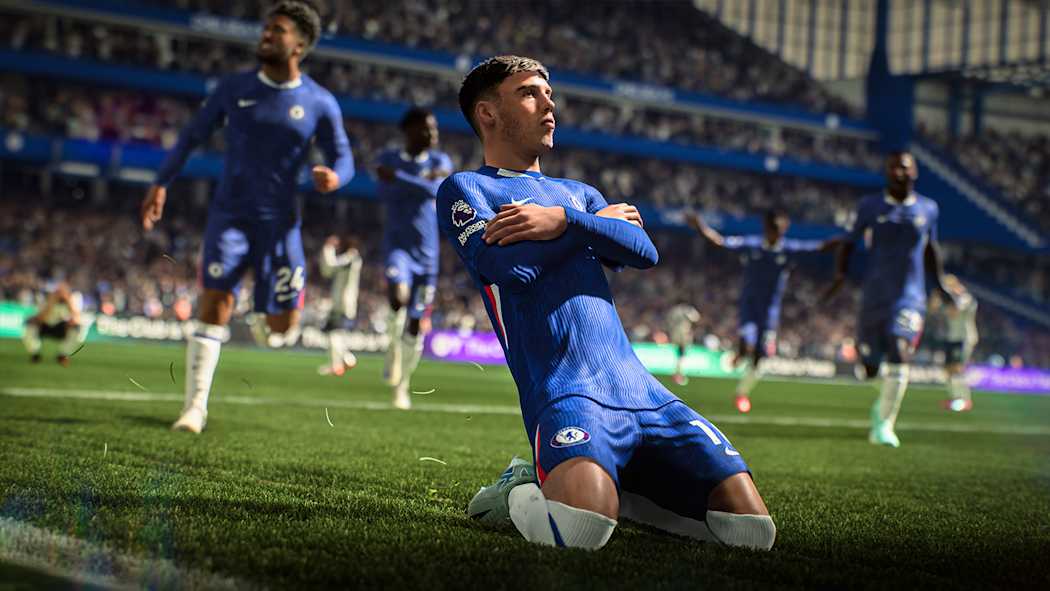
The end result is a lot of those big, silly scorelines that look fun when you’re the one putting six past somebody, and absolutely miserable when you’re on the receiving end. You get less of that nervy 1–0 tension that makes real football sing, and more “well, at least I scored three even though I lost 7–3.”
For some players, this is fine. If you’re here for dopamine hits, skill moves, and highlight reels, FC 26’s online balance will probably scratch the itch. But if you like your competitive football to feel like an actual sport first and a clip factory second, it’s hard not to be disappointed that a new generation of hardware and a new series name still haven’t fully fixed old problems.
Add on top the requirement for a paid Nintendo Switch Online subscription just to access that content, and the online value proposition gets even murkier. You’re paying for the game, then paying for the privilege of playing the weakest part of it.
Licenses, presentation, and the Switch 2 angle
On the licensing front, FC 26 still can’t quite claim the “everything everywhere” feel older FIFA games used to brag about. The most noticeable omission is in Serie A, where both Milan clubs and Atalanta remain unlicensed, running out in generic kits. If you’re a fan of those teams, it’s hard not to feel short-changed seeing your side look like a created team while the Premier League glows with authenticity.
Outside of that, you’re still getting the massive database of clubs, players, and competitions that EA has built over decades – over 20,000 real players and a hefty chunk of global leagues. For most people, the overall illusion of real-world football is intact, but those Italian gaps are a reminder that EA doesn’t own the pitch like it once did.
As for how this all lands on Nintendo Switch 2 specifically, there’s a lot we can’t definitively say without deep technical breakdowns. What we can reasonably expect from a modern hybrid follow-up is a smoother, more visually stable experience than the creaky legacy tech on the first Switch: cleaner image quality in docked mode, more consistent frame rates, and less of that “cloud of pixels” feeling in handheld play.
Given how animation-heavy the new “Realistic” gameplay aims to be, the extra horsepower should help those slower solo matches feel more like a real broadcast and less like a slideshow. Just don’t expect miracles – this is still EA’s multi-platform sports behemoth, not a bespoke Nintendo exclusive built from the ground up for Switch 2’s quirks.
So, is EA Sports FC 26 worth 34.99€ on Switch 2?
Here’s where it all lands for me once you weigh the price, the modes, and the split personality of the gameplay.
If you’re primarily an offline player – the kind of person who will happily sink dozens of evenings into a single career save, experimenting with tactics and transfers – FC 26 at 34.99€ is a very easy sell. The “Realistic” gameplay profile, expanded Manager Career, and curated Live Challenges finally make this feel like a proper toybox for solo football nerds.
If your heart belongs to online play and Clubs, it’s more complicated. There’s genuine fun to be had with the new archetype system and the faster, snappier “Competitive” tuning when everything clicks. But the combination of attacker-heavy balance, chaotic scorelines, XP accelerators purchasable with FC Points, and the need for a paid NSO subscription makes it hard to recommend as your main competitive football home.
The 34.99€ promo price softens a lot of blows. At full price, you’d probably be a lot more annoyed at the missing licenses, the online imbalance, and the monetization design. At half-off, it becomes easier to frame FC 26 as “a great offline football package with a messy online appendage you might dabble in.”
Mapped to a 10-point scale, the overall package lands around a 7/10 for me – closer to an 8 if you treat it as an almost purely offline experience, dropping toward a 6 if you’re buying it mainly for Clubs and competitive play.
TL;DR – Who should buy FC 26 on Switch 2, and who should skip?
- Buy it if: you mostly play solo; you care about long, narrative-rich Career saves; you want a modern football sim on your Switch 2 without paying 70€; you’re okay treating online as a side dish rather than the main course.
- Think twice if: your main goal is competitive online; you hate attacker-biased balance and wild scorelines; you’re allergic to any form of monetized progression.
- Skip it if: you’re a Milan or Atalanta ultra who can’t stand generic kits, or you want a purist, sim-style online football experience without grind, boosts, or meta builds.
FinalBoss // Gear
Level up your setup
01Best-selling Switch 2 gameson Amazon→02Switch 2 accessorieson Amazon→038BitDo controllerson Amazon→04Discounted game keyson Kinguin→Affiliate links · As an Amazon Associate, FinalBoss earns from qualifying purchases.
Want to Level Up Your Gaming?
Get access to exclusive strategies, hidden tips, and pro-level insights that we don't share publicly.
Ultimate Reviews Strategy Guide + Weekly Pro Tips