
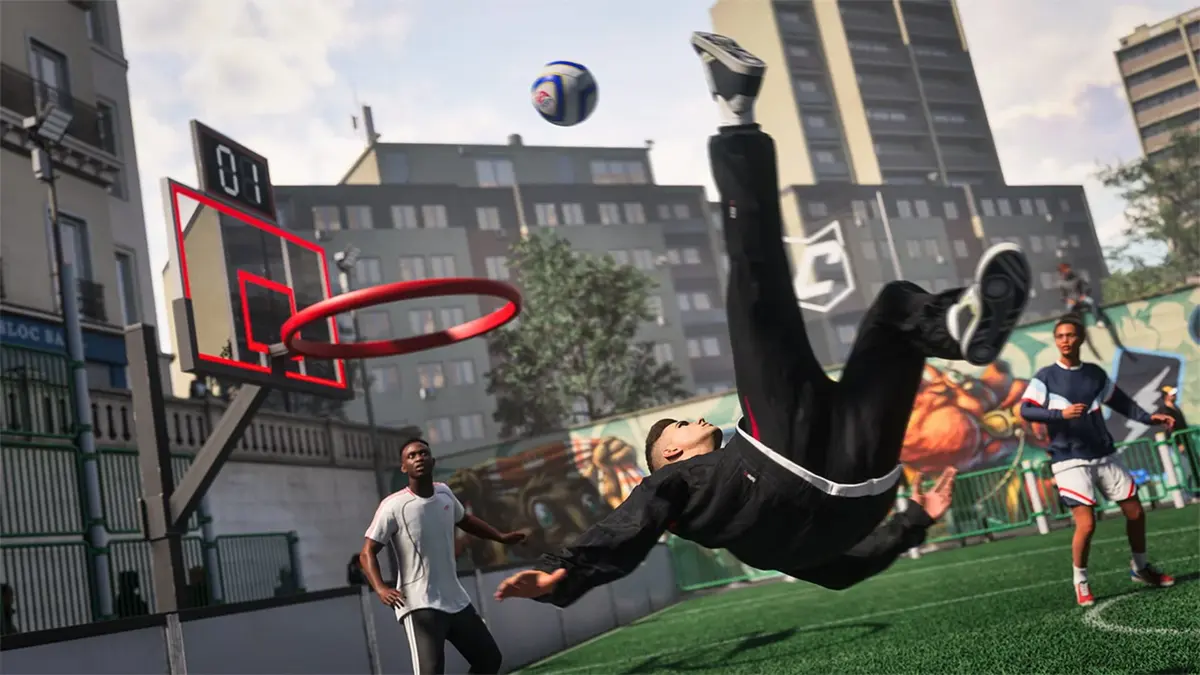
Annual football games earn their upgrade case through the details that change how a familiar match unfolds. EA Sports FC 27 finds its strongest argument in player responsibility: defensive shape matters more, passing demands clearer intent, and a cross or corner can be built around a plan instead of left to a heavily assisted targeting system. The series has always needed its yearly refinements to feel consequential; this time, several of them genuinely do.
That progress has a sharp edge. FC 27 asks players to actively defend, switch early, cover lanes, and make the decisive tackle themselves, yet it still leaves too much at the mercy of computer-controlled teammates whose movement can break down at exactly the wrong moment. The match engine has more tactical ambition than before, but its underlying AI and online reliability have not caught up to that ambition.
Table of Contents (11)
The changes that matter in a match
- The expanded Tactics system gives clearer control over formations, Player Roles, and instructions for different phases of play.
- Competitive Gameplay, the preset built for online modes, removes automatic tackles, cuts AI interception reach, and places greater tackling and interception influence in the hands of manually controlled defenders. Offline modes default to a separate Authentic preset, but Competitive can still be switched on in Career and Kick-Off.
- Passing follows directional input more closely, while crosses target space more often and set pieces offer more control over delivery and positioning.
- Career Mode rebuilds transfers around TransferRoom valuations and replaces training plans with ratings driven by form, morale, and match fitness.
- Ultimate Team adds FUT Gallery, Holographic Items, Role++ on every special card, and a route into FUT Champions through Squad Battles.
- The Grounds adds a 3D social space around Clubs, but its limited activities and repetitive loop make it a weak centrepiece for the annual package.
- Disconnects, lag, errors, and account connection failures remain a serious concern for anyone whose main reason to play is online competition.
- Launch week brought its share of bugs, several carried over from FC 26, and one post-match scene that sends female managers out in their underwear.
Manual defending is FC 27’s real upgrade
The expanded Tactics system is the foundation of FC 27’s best idea: a match should reflect the person holding the controller. Formations and Player Roles have a clearer function, while phase-based instructions let a tactical setup carry meaning beyond a pre-match menu. A team’s shape can be deliberately built around pressing, protecting space, or preparing attacking movement rather than relying on default behaviour to solve every phase of possession.
The context is FC 26. Its most common complaint was that defending could be left to the computer: control one midfielder, block the obvious lane, and let AI teammates press, cover, and intercept around you. EA acknowledged as much in its November 2025 feedback update, noting that user-controlled players could “sit back on defense and let AI teammates do the hard work in some scenarios,” and answered with a small adjustment to how tightly AI defenders marked receivers at the edge of the box. That was a patch. FC 27 treats the same complaint as a design brief.
Defending carries that philosophy into the actual contest. Competitive Gameplay removes automatic tackles, and according to EA’s Gameplay Pitch Notes, a manually controlled defender now reaches further for an interception than an AI-controlled one. Teammate Contain has been dialled back as well: the second defender marks the ball carrier from a slightly longer distance, close enough to cover the pass but no longer close enough to win the ball on its own. Team Press also stops applying once the ball enters the defensive third, limiting its ability to create automatic pressure directly in front of goal. The result is a system that asks for earlier switching, more careful jockeying, and a clearer decision about when to step forward.
There is an important limit on all of this. FC 26 split the match engine into two presets: Competitive Gameplay, locked in online modes such as Ultimate Team and Clubs, and Authentic Gameplay, the default for Career. FC 27 keeps both, and EA’s notes state plainly that the AI defending changes “only apply to Competitive gameplay.” Competitive is locked in online modes, but it stays optional in Career and Kick-Off, so an offline player who wants the new defending only has to change one setting. Leave Career on its default and you get what EA calls Authentic Gameplay 2.0 instead: CPU opponents with more distinct playing styles and a wider range of tactics, and wet or snowy pitches where players can lose their footing on sharp turns. Switch it over, and FC 27’s biggest change is just as much an offline story as an online one.
It is also the most enjoyable change in the game. A winger running at the back four can no longer be stopped by holding the contain button and waiting for the covering midfielder to nick the ball; someone has to step in, and you decide who and when. Reading a pass, stepping into the lane, and coming away with the ball feels earned in a way FC 26 rarely allowed. Anyone used to leaving the back line on autopilot will concede more until their habits change, and plenty of players who were comfortable in FC 26 spent their first week relearning how to keep a clean sheet.
The problem is that reduced assistance exposes weaknesses in the computer-controlled side of the defence. Pathing and recovery runs can still fail, and a computer-controlled centre-back can hang back from a 50/50 ball that any real defender would attack. Higher difficulty makes those moments more costly. A design built around manual responsibility works only when the players outside direct control maintain a trustworthy structure; FC 27 still asks for too much forgiveness when they do not.
Two more things hold the system back. Switching players with the right stick does not always land on the defender you meant, and with less AI cover behind you, one wrong switch is often a goal. Attackers, meanwhile, can still spin on the spot at the edge of the box, left, right, and left again, at almost no stamina cost, until a gap opens. Manual defending should punish lazy attacking as much as lazy defending, and for now the attacker still has the easier job. Many players already expect an early patch to hand some of the AI help back. That would be the wrong fix; slowing down the spinning would be the right one.
Passing, crossing, and set pieces reward intent
FC 27’s passing changes reinforce the defensive overhaul. Ground and lobbed through balls now follow directional input strictly: aim a through ball a few degrees too wide and it travels a few degrees too wide, instead of being steered back into the runner’s path. That creates fairer opportunities for defenders to read a pass, but it also means attacks can feel slower and less forgiving until the new demands become second nature.
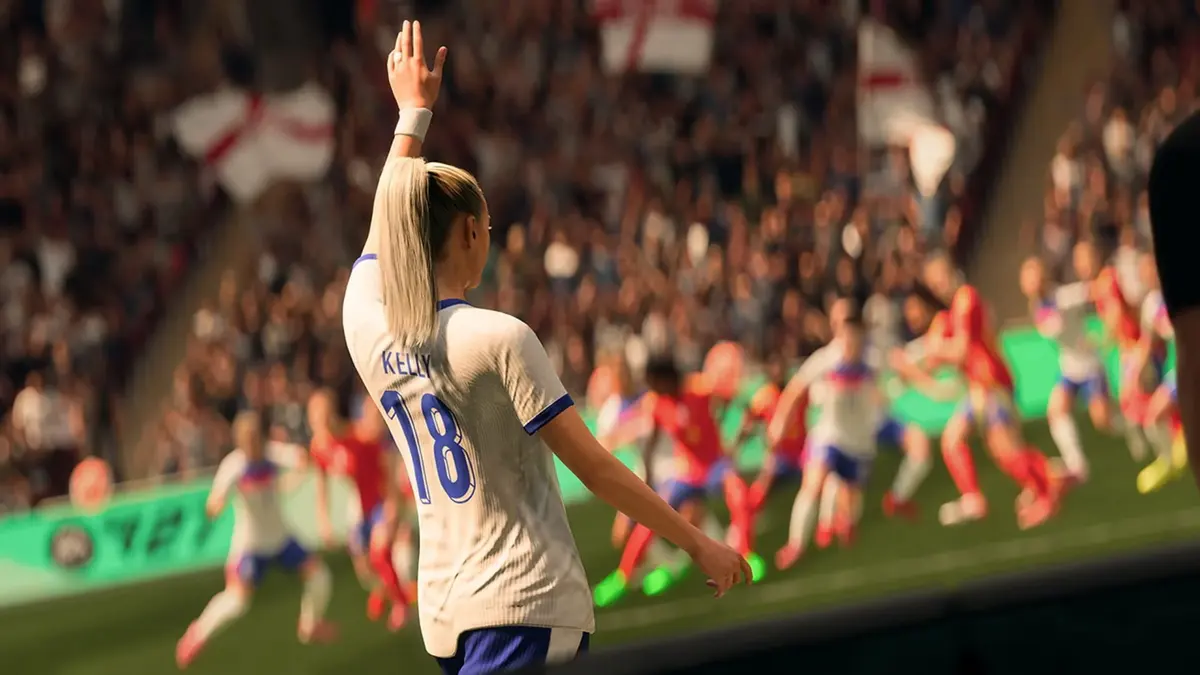
The better payoff comes in the final third. Crosses target space more often, which makes delivery angle, runner movement, and penalty-area positioning matter together. Whip a ball towards the penalty spot and it arrives at the penalty spot; whichever player attacks that space first wins the header, rather than the game choosing a recipient before the ball leaves the boot.
Set pieces benefit from the same approach. On corners, once the delivery area is chosen, the camera moves into the box and hands the user brief control of an attacker, who can make a run or trigger the new Avoidance move to slip through a crowd without being blocked. That turns a corner into a planned routine rather than a delivery followed by hope. These changes will matter most to players who want their football game to reward pattern-building. They matter less to players seeking quick, highly assisted chances, and that divide is central to the buying decision.
FC 27 therefore feels more convincing when the player is directly involved than when the attacking AI is expected to supply the intelligence. The best attacking addition is one the user controls directly: tapping L1 + R1 (LB + RB on Xbox) sends a forward on a curved run that bends around the offside line instead of straight into it. Off-ball movement left to the AI has not received an equally transformative upgrade: a striker set to drop deep as a False 9 still tends to run into the back line, and forwards drift behind their markers just as the pass is about to leave. Problematic targeting can still interrupt possession, with a pass aimed at a free teammate on the flank occasionally diverted to a marked player in the middle. The game’s systems are asking for precision; its supporting logic does not always match that precision.
The Grounds mistakes activity for a lasting destination
The Grounds is FC 27’s most visible attempt to redefine what counts as new in a yearly football release. This 3D social space houses Clubs and stands apart from Ultimate Team, beginning with avatar creation and continuing through character customisation and progression. It also brings familiar faces into the hub: Kylian Mbappé has voiced lines, while Alex Hunter from The Journey returns with Adetomiwa Edun reprising the role.
There is enough here to make the space useful as a social meeting point. The Grounds supports 1v1, 2v2, and 3v3 matches, includes Rush, and offers activities such as Balloon Ball, Goal Control, Bucket Ball, Attacking Scenarios, and Bocce Ball. That menu gives a group options beyond a standard 11v11 fixture, particularly during short sessions when a full match is not the goal.
Progression is more generous than in the old Clubs setup. According to EA’s Grounds and Clubs Pitch Notes, every Archetype is unlocked from the start, individual attributes can be re-tuned without resetting a whole build, and Masteries add permanent bonuses across every build: levelling a Finisher to 10 grants +1 Finishing and +1 Composure to any Archetype used afterwards. The friction is physical rather than numerical. Clubs is reached by walking into a Clubhouse, which turns what used to be a menu selection into a short commute before every session.
Lasting variety is the missing piece. The Grounds quickly reveals a thin loop of minigames and shallow exploration, while framerate issues, unskippable cutscenes, and stiff voice acting make the hub feel more cumbersome than inviting. FC 27 has placed considerable emphasis on a social destination whose best use is still as a route back to the modes that already mattered.
Career Mode has the best new ideas and the roughest launch
Career Mode makes the stronger case for incremental improvement, and it matters more than its place in the marketing suggests, because it is where most offline players will actually judge FC 27. According to EA’s Career Pitch Notes, player valuations now come from a model built with TransferRoom, the transfer-value platform real clubs use to sign players, and they shift across multiple seasons rather than sitting still. Negotiations run in stages, and an agreed deal is no longer final: interest from a rival club can send the selling club or the player back with fresh demands before the transfer is complete.
The deal structures finally resemble modern football. Alongside buyback rights, sell-on percentages, and first-refusal clauses, a transfer can take effect immediately, in the next window, or at the start of the following season. A newly signed player can be loaned back to their old club, fees can be paid in instalments with achievement-based bonuses, and contracts carry squad roles, performance bonuses, and release clauses.
Squad management changes just as much. Dynamic OVR ties a player’s overall rating to form, morale, and match fitness, so the number reflects the current season rather than a fixed ceiling, and it replaces the old training plans entirely. Youth development runs on six Growth Profiles that govern how players develop, peak, and decline, while the staff is now twelve coaches across goalkeeping, defence, midfield, and attack who assess potential rather than directly raising attributes. None of it turns Career Mode into a new experience, but together the changes give each managerial decision more weight than the mode has carried in years.
These are the best ideas Career Mode has had in a long time, and in its first week they also cause most of its problems. Dynamic OVR swings too hard: a starter rested for a single match can come back several points lower, which punishes exactly the rotation the system is supposed to encourage. Stamina drains quickly enough that rotation is close to mandatory anyway. Settled, regular starters hand in transfer requests, the bench can reorder itself between matches, and some wage demands are absurd. The CPU is inconsistent too: some sides press for the full 90 minutes and thread passes around your box like elite teams, while others pass sideways for minutes without ever attacking. Adjusting the gameplay sliders already helps with the CPU; the rest needs patches.
None of this ruins a save, but it makes the first season more work than it should be, and it is the clearest sign that these systems were built separately and not tuned together. Long-time Career players have not welcomed the new menus either, which now borrow Ultimate Team’s card-style look.
Ultimate Team finally keeps its history
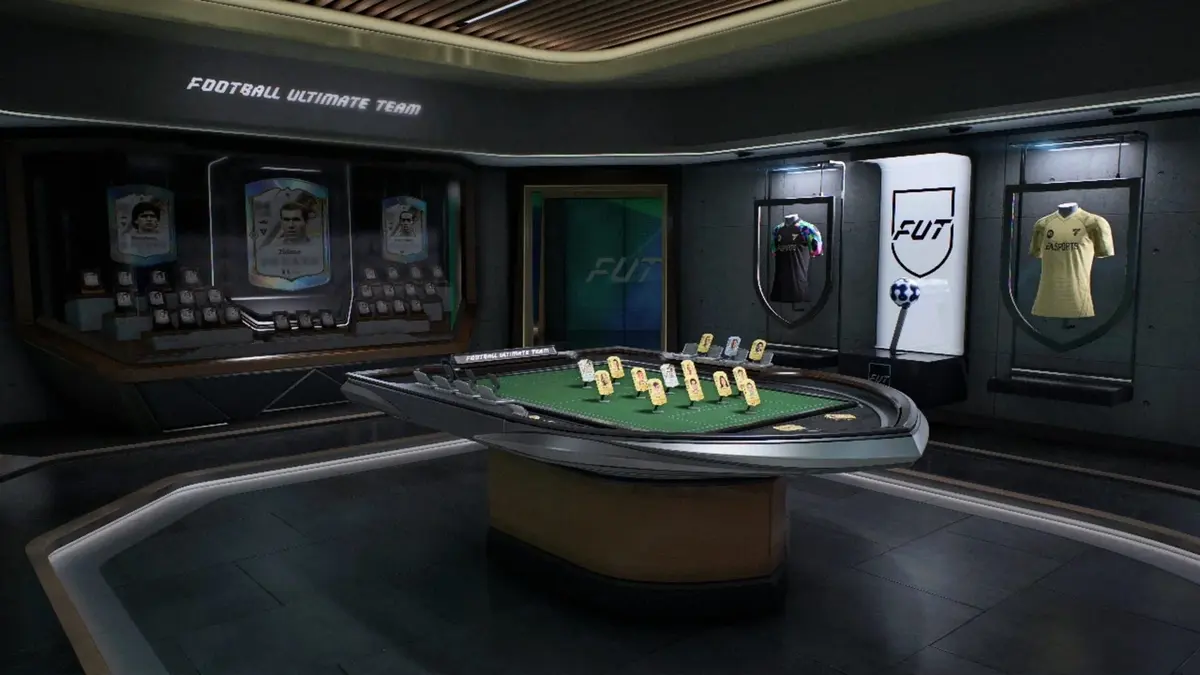
Ultimate Team receives FC 27’s most practical changes outside the match engine. The headline addition is FUT Gallery, a permanent record of every Player Item that has passed through a club. According to EA’s Ultimate Team Pitch Notes, cards sold on the Transfer Market or submitted into a Squad Building Challenge still count, which removes one of the mode’s oldest frustrations: a card sacrificed to an SBC no longer vanishes from the club’s story. Items fill themed Gallery Sets built around nations, leagues, clubs, and campaigns, each Set is graded on the quality of what fills it, and completed Sets raise a Gallery Level. Gallery Tokens then buy kits, badges, and similar club-identity rewards, while collected Player Items can appear as 3D objects inside the mode.
The rarity system has been simplified around it. Bronze, Silver, and Gold base items are no longer split into Common and Rare, and EA says packs that previously guaranteed Rare players keep the same odds for base items rated 82 and below as in FC 26. Scarcity now comes from Holographic Items: from Team of the Week 1, eligible special cards can drop as a Regular Holographic at 87 OVR and below, or as a Pristine Holographic at 88 and above, with a stylised name to mark the rarer version. Every special item released this year also receives Role++ familiarity across all roles in its primary and secondary positions, so a promo card can move into its secondary position without losing its strongest role.
The most significant change concerns FUT Champions. The launch update confirms that Champions Qualification Points can now be earned in Squad Battles as well as Division Rivals, and that the Division 6 requirement has been removed. Higher Rivals divisions still earn points faster, but a player’s division no longer decides whether they can play towards the weekend competition at all. That opens the mode’s top tier to players who could never previously reach it, and it sits comfortably alongside FC 27’s broader push to reward skill over automation.
Launch week showed where the mode still grinds. Players from the top divisions started in Division 7 alongside everyone else, so casual players met some of the most experienced ones in their first matches. Transfer Market prices fell fast, which is good news for anyone building a club on coins and bad news for anyone hoping a big pack would pay for itself. Squad Battles, the new route into Champions, also got noticeably harder, with CPU teams pressing and intercepting far better than last year; that sits oddly beside a change meant to open Champions to more players. The first Evolutions have been thin.
None of this changes the core loop of packs, challenges, and rewards. Ultimate Team is still built around opening packs and chasing promo cards, and its best new ideas are only as dependable as the servers behind them.
What FC 27 asks you to pay for
FC 27’s economy has grown alongside its modes. Up to seven days of early access sat behind the Ultimate Edition, which bundles up to 6,000 FC Points in monthly drops and a Premium Pass for Season 1; the pre-order-only Ultimate Plus Edition raised that to 10,000 FC Points and passes for five seasons. Ultimate Team remains built on packs bought with FC Points or coins, and Holographic Items add a rarer tier to chase, since EA confirms eligible Holographics can appear in Store Packs.
The Grounds raises the sharper question. Its Amps are temporary attribute boosts, and the Signature tiers add PlayStyles and perks on top; players can equip two Standard Amps and one Signature Amp, and they apply to every stadium match as well as to in-world Rush. EA says Amps are earned through objectives, live events, campaigns, and season progression, but also that “additional Amps will also be available from the Store,” and pre-orders of every edition came with a Tier 3 Amp inspired by Kylian Mbappé. EA has not published which currency buys each Amp, but a hub whose centrepiece is competitive Clubs play now sells temporary stat advantages, which sits awkwardly beside a match engine whose whole argument is that skill should decide results.
Players unsure whether any of this is worth the price have an unusual option this year. FC 27 Lite, a free-to-download limited preview with select modes such as Kick-Off, has been available since 25 September. It is the cheapest way to find out whether the new passing and defending suit you before committing to a full edition.
Online reliability undermines the competitive pitch
Online problems are the most serious obstacle to a full recommendation, and the reports are consistent. Disconnects and server lag have followed the game through its first full week, some players have seen the game or their EA account refuse to go online at all, and players who won when an opponent quit have still been handed the disconnection penalty themselves. EA’s own FC 27 technical-issues forum carries player threads about disconnects that end with matches counted as losses. In Ultimate Team and other competitive modes, a connection failure carries a higher cost than an ordinary visual bug: it can waste a match, compromise a record, and turn the result into a question of infrastructure rather than play.
This is especially frustrating because FC 27’s mechanical changes are built for competitive tension. Manual defending, stricter passing, and more deliberate delivery all reward players willing to develop their inputs. Online instability attacks the value of that work. A close match needs reliable responsiveness and a dependable finish; FC 27 cannot treat those conditions as optional.
Platform limitations complicate the picture further. The Switch 2 edition still runs at 30fps, Ultimate Team there has no crossplay with the other versions, and its smaller transfer market makes rare cards harder to obtain for FUT Gallery. The Grounds is online-only on Switch 2, and the smaller player base can make regular matches hard to find. On PC, a share of players report stutter and uneven frame pacing even on high-end graphics cards, while others run the game without trouble. That edition remains a football option for the hardware, but its multiplayer and collection systems carry narrower limits than the rest of the package needs.
The launch bugs, old and new
Some of FC 27’s bugs are inherited. In Clubs, a player joining mid-match can make the clock jump back and wipe out goals already scored, the same fault that ran through FC 26. Career’s launch problems are covered above, and the menus across modes still throw up misplaced text and small visual glitches.
And then there is the bug everyone saw. After some matches, a female manager walks through the post-match scene in her underwear. It became launch week’s running joke, and the best reaction came from the player who suggested EA had to take extreme measures because it is up against GTA 6 this year. It is harmless and genuinely funny, and it is also a fair picture of how much testing the launch build received.
Buy now or wait for the first sale?
If football is your game, the one you play every week of the season, buy it now. Manual defending alone makes FC 27 better to play than FC 26, and if you play offline you get it by switching Career to Competitive. Career’s new systems are worth learning even with their launch-week rough edges.
Everyone else should wait for the first sale. The best parts of FC 27 will still be here in a few weeks, a sale gives the first patches time to land, and the price will better match what is, underneath the new systems, a familiar game. If you are unsure, FC 27 Lite is free and lets you try the new passing and defending first.
Bottom line
EA Sports FC 27 earns its recommendation through the parts of football that reward judgment. The expanded Tactics system gives formations and Player Roles more practical value, manual defending restores responsibility to the player, and the improvements to passing, crosses, and set pieces create a more intentional match flow. Away from the pitch, FUT Gallery and open FUT Champions qualification give Ultimate Team its most sensible changes in years. Those are meaningful steps forward for anyone who wants a more demanding competitive game.
The caveat is substantial: AI positioning and loose-ball logic still undermine that control, attackers can still spin their way past the new defending, Career’s best new systems launched untuned, The Grounds lacks enough depth to justify its prominence, and online failures threaten the modes where FC 27’s sharper mechanics should matter most. The Store’s temporary stat boosts in The Grounds deserve more scrutiny than EA has invited. If football is your game, buy FC 27 now, and if you play offline, switch Career to Competitive: manual defending is the best reason to own it. Everyone else should wait for the first sale.
EA Sports FC 27
FC 27 earns a 7 because its best changes happen where they matter most: on the pitch. Manual defending, stricter through balls, crosses aimed at space, and corners that hand the user a runner make matches more deliberate than in any recent entry, while FUT Gallery and open FUT Champions qualification give Ultimate Team its most sensible changes in years, and Career’s transfer rebuild gives offline players a reason of their own. It stops short of an 8 because teammate AI still breaks down around loose balls, Career’s new systems need tuning, The Grounds is thinner than its prominence suggests, and online instability threatens the competitive modes the new mechanics were built for.
- Manual defending makes positioning and switching matter, offline too
- Through balls follow your aim; crosses target space
- Corners hand you a runner inside the box
- FUT Gallery keeps every card’s history, even after SBCs
- FUT Champions qualification now open through Squad Battles
- Career: TransferRoom valuations and Dynamic OVR
- AI defenders still hesitate on 50/50 balls
- Attackers can still spin on the spot to beat the new defending
- Career: Dynamic OVR and stamina swing too hard at launch
- Passes can still find the covered teammate
- The Grounds is a thin loop with framerate drops
- Disconnects and server lag reported across online modes
- Switch 2: 30fps and no Ultimate Team crossplay
- The Grounds Store sells temporary stat boosts
Buy it now if football is your game and you are ready to relearn defending; if you play offline, switch Career to Competitive to get the new defending too. Everyone else should wait for the first sale, when the price better fits a familiar package and the first patches have had time to land. FC 27 Lite is free if you want to try it first.
FinalBoss // Gear
Level up your setup
01Top-rated gaming headsetson Amazon→02High-refresh gaming monitorson Amazon→03Gaming chairson Amazon→04Discounted game keyson Kinguin→Affiliate links · As an Amazon Associate, FinalBoss earns from qualifying purchases.
Want to Level Up Your Gaming?
Get access to exclusive strategies, hidden tips, and pro-level insights that we don't share publicly.
Ultimate Reviews Strategy Guide + Weekly Pro Tips