
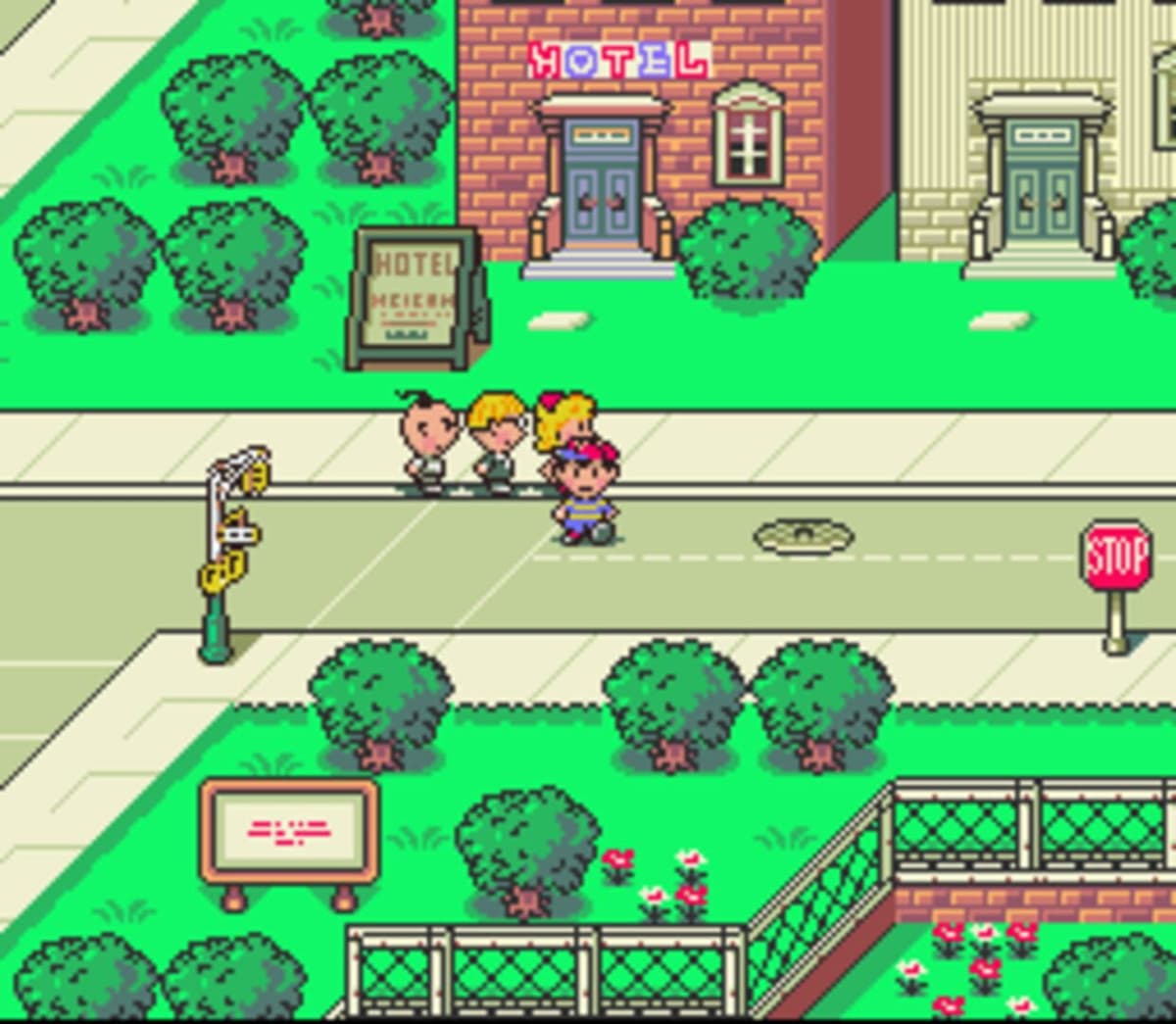
Start with EarthBound, not EarthBound Beginnings. For most players in 2026, the best order is EarthBound → Mother 3 → EarthBound Beginnings. That is not the original release order, but it is the cleanest way to understand why the series matters without bouncing off its oldest, roughest game first. If you only want the essential experience, play EarthBound and then Mother 3. If you fall in love with the series and want its roots, go back to EarthBound Beginnings afterward.
Table of Contents (13)
The best play order for most players in 2026
- First: EarthBound (SNES / Nintendo Switch Online retro library)
- Second: Mother 3 (Japan-only officially; unofficial English fan translation is the common route)
- Third: EarthBound Beginnings (official English version of the original Mother)
This order works because EarthBound is the easiest point of entry. It has the strongest mix of personality, accessibility, and pacing, and it explains the series’ tone better than any summary can. You get the oddball suburban setting, the humor, the emotional undercurrent, and the specific way the series twists classic retro JRPG structure into something stranger and warmer.
Mother 3 makes more sense as your second game because it builds on ideas that hit harder once you already understand what the series is doing. It is also the most awkward game to access in English, so it makes little sense to lead with the title that has the highest barrier. EarthBound Beginnings, meanwhile, is historically important but much less welcoming. It is more grind-heavy, more opaque, and less comfortable for players who are used to modern quality-of-life features.
Why EarthBound should be your first game
If you are trying to get into Nintendo’s EarthBound series in 2026, this is the part that matters most: EarthBound is the game most likely to make you want to continue. It is the center of gravity for the whole series.
Compared with other retro JRPGs from the 16-bit era, EarthBound still feels unusually readable. The setting is modern rather than medieval fantasy. Towns feel distinct. Dialogue carries a lot of the appeal. Even when the combat is simple, the game’s identity stays strong enough that the usual retro friction is easier to tolerate. That matters for a newcomer, because a lot of old RPGs ask you to love the genre before they become rewarding. EarthBound usually wins players over faster.
It is also the safest recommendation because it has an official English release and remains the most straightforward legal access point on modern Nintendo hardware. If you have a Switch, this is the version most people should begin with. If you already own a SNES Classic Mini, that is also still a viable way to play.
What makes it a better starting point than Beginnings
- The pacing is smoother, so the opening hours are less of a test of patience.
- The game communicates its personality immediately instead of asking you to push through a rough early grind.
- Its interface and progression feel less archaic than the NES-era original.
- It represents the series at its most recognizable, which makes it easier to decide whether you want more.
If your tolerance for older RPG design is low, starting with EarthBound Beginnings can give you the wrong impression. It is entirely possible to respect that game and still admit it is not the best ambassador for the series.
How to play EarthBound in 2026
The cleanest official route is on Switch through Nintendo’s retro library. On the system, you are looking for the Super Nintendo app through the Nintendo Switch Online service. If you already use Switch for older Nintendo games, this is by far the easiest way to jump in without hunting down old hardware or cartridges.
If you prefer dedicated retro hardware, the SNES Classic Mini remains a practical option because EarthBound is included there as well. Availability depends on the used market, so this route is less predictable than the Switch version, but it is still relevant if you want an all-in-one plug-and-play setup for retro JRPGs.
When you start, do not judge the whole game by the first stretch alone. Early EarthBound can feel a little clunky if you are coming straight from modern turn-based RPGs, but once the world opens up and the party grows, its rhythm gets much better. The best mindset is to treat it like a character-driven road trip instead of a systems-heavy challenge run.
If you are the type who likes to sample a game for an hour and decide fast, give EarthBound enough time to reach its first real sense of momentum. It is a retro JRPG, and like many games in that lane, its charm lands through accumulation: odd NPC lines, unusual enemy ideas, and the contrast between everyday places and escalating stakes.
Where EarthBound Beginnings actually fits
This is where the naming gets messy. The series has three main games:
- Mother on Famicom/NES, later officially released in English as EarthBound Beginnings
- Mother 2, known in English as EarthBound
- Mother 3 on Game Boy Advance
That numbering is the source of most newcomer confusion. If someone tells you to start with “the first game,” they mean Mother / EarthBound Beginnings. If someone tells you to start with “EarthBound,” they mean the SNES game, which is actually the second main entry.
EarthBound Beginnings is worth playing if you already know you enjoy the series or if you are especially interested in retro JRPG history. It is not worthless, and it is not something fans recommend skipping because it is bad. The problem is that it asks for more patience. Expect less guidance, rougher balance, and older design habits that were already being smoothed out by the time EarthBound arrived.
Because of that, the best way to approach it is as an archival curiosity with real charm, not as the mandatory first step. If you love seeing how later games grew out of earlier ideas, it becomes much more interesting after EarthBound rather than before it.
What to do about Mother 3 in English
As of 2026, there is still no official English localization of Mother 3. That is the biggest accessibility problem in the entire series. It means that anyone trying to experience the full trilogy in English eventually runs into an unofficial route.
The reality is simple: if you want to play Mother 3 in English, you are usually looking at a fan translation. That translation has been part of the conversation around the game for years, and it remains the main reason English-speaking players can meaningfully discuss the game at all. Nintendo does not provide this version, and it is not an official substitute for a localization.
You will often see two common ways people talk about accessing that fan translation:
- Emulation on PC or handheld devices, which many players treat as the practical path but which sits in a legal gray area depending on what files are involved.
- Reproduction carts, which are unofficial cartridges sold by third parties and usually come with major caveats.
If you are considering a reproduction cart for Mother 3, the important thing to know is that it is not an official Nintendo product, and quality varies a lot. Save reliability, battery behavior, shell quality, and general compatibility can all be inconsistent. These carts are often marketed as a neat collectible solution, but they are still unofficial hardware with all the usual risks. If your priority is simply playing the game, treat the reproduction cart as a novelty route, not the default recommendation.
If you can read Japanese, the official route is much cleaner, but for most English-speaking players the lack of localization remains unresolved. That is why any 2026 guide to the series has to separate “best entry point” from “complete official route,” because those are no longer the same thing.
The best order if you want different things from the series
If you want the most accessible route
Play EarthBound first and stop there if it does not click. This is the lowest-friction way to test whether the series works for you at all. If it does, move to Mother 3.
If you want the strongest two-game run
Play EarthBound and then Mother 3. That gives you the most widely praised SNES entry and the most emotionally intense follow-up without asking you to wrestle with the oldest design in the franchise first.
If you care about strict historical order
Go EarthBound Beginnings → EarthBound → Mother 3. This is the release-history route, and it is valid if you enjoy seeing mechanics and storytelling evolve in sequence. Just be aware that it is not the easiest route, and a lot of players stall out on the first game.
If you mainly play on PC
PC is awkward for the series because the official modern route is still centered on Nintendo hardware. Realistically, PC players who want all three games in English usually end up discussing unofficial options for at least Mother 3, and often for the whole trilogy. That is the practical reality, even if it is not the ideal one.
Common mistakes new players make
- Starting with Beginnings because it is “the first one.” Chronology is not the same as best entry point.
- Assuming EarthBound is hard to access. On modern Nintendo hardware, it is the easiest official game in the series to recommend.
- Treating Mother 3 as officially available in English. It still is not.
- Buying a reproduction cart without checking what it actually is. “Repro” means unofficial, and that comes with reliability and authenticity issues.
- Expecting all three games to feel the same. They share DNA, but the tone shifts. Mother 3 is notably heavier, while EarthBound Beginnings is much more old-school.
The short version for 2026
If you are only going to try one game, make it EarthBound. If you want the core series experience, follow it with Mother 3 through an unofficial English fan translation route, understanding that no official localization exists. If you want the full historical picture after that, go back to EarthBound Beginnings. That order gives you the best balance of accessibility, context, and payoff in a series that is still partly locked behind localization problems more than twenty years later.
FinalBoss // Gear
Level up your setup
01Top-rated gaming headsetson Amazon→02High-refresh gaming monitorson Amazon→03Gaming chairson Amazon→04Discounted game keyson Kinguin→
Affiliate links · As an Amazon Associate, FinalBoss earns from qualifying purchases.
Want to Level Up Your Gaming?
Get access to exclusive strategies, hidden tips, and pro-level insights that we don't share publicly.
Ultimate Guide Strategy Guide + Weekly Pro Tips