
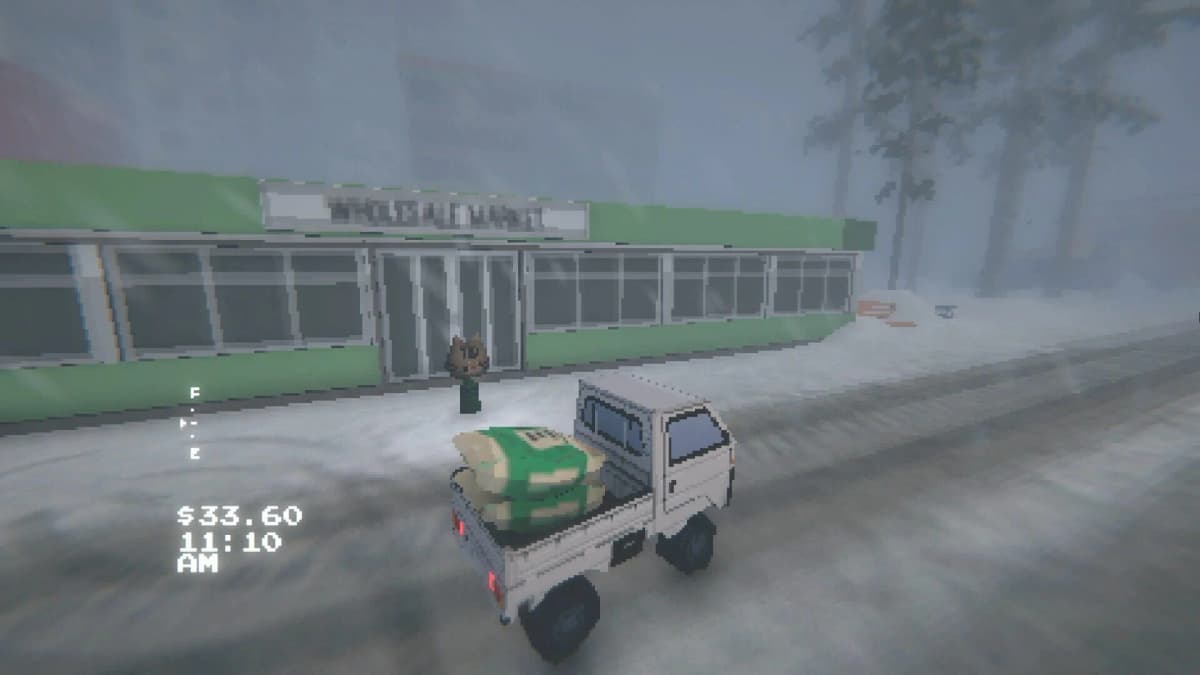
If you came to Easy Delivery Co. expecting survival horror, reset that now. The horror is real, but it is not combat, chase sequences, or constant jump scares. This is a relaxing delivery and driving sim first, with unsettling atmosphere and a layer of hidden, namable secrets stitched on top. You reach the horror by pushing past routine deliveries and into the spaces the game does not advertise: bunkers, radio towers, and collectibles scattered across three regions.
Table of Contents (10)
The short version
- Genre: cozy mystery-horror, not survival horror. The dread is environmental and narrative, built from isolation and discovery, not enemies.
- Where the secrets live: three regions — Mountain Town, Snowy Peaks, and Fishing Town.
- The numbers that matter: 5 bunkers, 4 radio towers, and 13 snowcat bobbleheads are scattered across those three regions. Bunkers break down as 2 in Mountain Town, 2 in Fishing Town, and 1 in Snowy Peaks.
- Use the full game, not the demo: the full release dropped September 18, 2025; the April 2025 demo only covered Mountain Town.
- Prep gates exploration: fuel, snow tires and ice chains, warmth (campfire, tea, fish soup), and energy drinks decide whether you can actually reach the remote secrets.
What kind of horror Easy Delivery Co. actually is
Easy Delivery Co. presents itself as a relaxing driving game set in a snowy town with “strange secrets” and a winkingly suspicious “definitely no secrets” tone. That framing is the key. The unease comes from what feels slightly wrong about the world, not from the game flipping into a traditional horror ruleset.
So the horror-adjacent elements are environmental and narrative. You move through a once-lively place in bad weather, meet residents deliberately framed as odd, and slowly uncover spaces that do not fit the cozy delivery-sim surface. “Cozy horror” or “mystery horror-lite” fits better than survival horror.
- Expect atmospheric dread more than direct threats.
- Expect bunkers, radio towers, and hidden interactions more than enemy encounters.
- Expect the delivery loop to create tension through distance, weather, and preparation.
- Do not expect the game to behave like a combat-heavy horror release.
The three regions and what is hidden in them
The full game spreads its mystery material across three playable regions: Mountain Town, Snowy Peaks, and Fishing Town. The horror is not front-loaded into one obvious “scary chapter.” It develops as the map expands and as you gain reasons to revisit places you thought were finished.
Post-launch knowledge beats early demo impressions here. The Steam release landed on September 18, 2025, while the earlier demo (April 24, 2025) only covered Mountain Town. If you saw the game described as a quirky snowy courier sim based on demo footage, that read is incomplete — the horror tone builds far better once all three areas are in play.
The bunkers, radio towers, and snowcats
This is where vague unease turns into literal hidden places with implied backstory. The complete-game checklist is concrete: 5 bunkers, 4 radio towers, and 13 snowcat bobbleheads across the three regions.
There are five bunkers total, not three. The earlier “three bunkers” figure was wrong — it came from an incomplete run that missed entire regions. The accurate breakdown:
- Mountain Town — 2 bunkers.
- Fishing Town — 2 bunkers (at least one is easy enough to miss that early guides under-counted the total).
- Snowy Peaks — 1 bunker.
The 4 radio towers and 13 snowcats are the other two collectible threads tied to full completion. If your run has stayed on marked delivery paths and obvious streets, you have almost certainly seen only the surface layer — the bunkers, towers, and snowcats are the spine of the secret-hunting side.
How to actually encounter the secrets
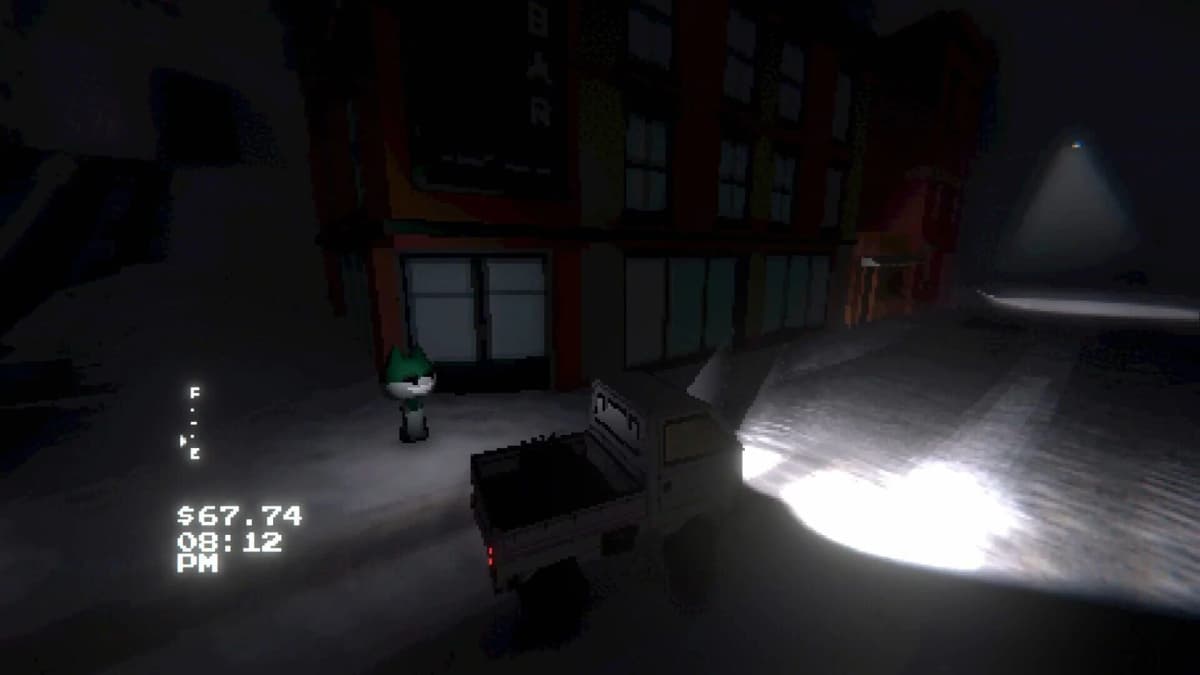
There is no separate horror mode and no menu toggle that flips the genre. You reach the hidden content by doing three things consistently: progressing far enough to open all three regions, keeping your truck and supplies stable so exploration is possible, and checking the spaces that are easy to ignore when you are chasing efficient deliveries.
Treat regular jobs as your map-opening phase and secret hunting as a deliberate second pass. First, use deliveries and upgrades to stabilize your run. Then, once routes are safer, go back through each region looking for bunkers, radio towers, and snowcats rather than rushing the next payout.
- Use the full release as your reference point, not demo-era impressions.
- Open all three regions before deciding how “horror” the game is.
- Revisit regions after progression rather than assuming a first pass was enough.
- Prioritize the 5 bunkers, 4 radio towers, and 13 snowcats over simple route optimization.
- Carry enough fuel and recovery items to stay out when a route turns into an exploration run.
The prep that gates exploration
The logistics layer is what decides whether you reach the remote secrets at all. The meaningful resources are fuel, tires, warmth, and energy drinks — and the specifics matter:
- Snow tires and ice chains. Mountain and lake terrain demand the right tires; ice chains let you cross frozen sections that block specific routes.
- Warmth. Cold is a real freeze mechanic. Brew tea (or eat fish soup, or build a campfire) before climbing to avoid freezing — this is the canonical warmth consumable, not coffee.
- Energy drinks. These restore stamina so you can keep moving on longer expeditions.
- Fuel. Run out far from a station and an exploration run ends early, before the good material starts.
None of these are horror systems in the strict genre sense, but they create vulnerability without ever becoming a survival-horror ruleset. If you head out understocked, the tension you feel comes from basic driving survival rather than discovery — and that cuts exploration short.
What counts as horror in this game
To judge whether something is part of the horror layer, look for a cluster of signals rather than one obvious scare: isolation, suspiciously offbeat residents, abandoned or hidden spaces, and discoveries that make the town feel less ordinary than its cozy presentation suggests. Bunkers are the clearest example — they turn vague unease into a literal hidden place with backstory. Hidden computers and items found in secret spaces serve the same role: they are how the game delivers its darker subtext, not just collectibles for a checklist.
This is why the genre label is still debated. Official and review language leans relaxing, cozy, or mysterious. Players lean harder into horror because the secret content changes the emotional read of the world. Both are right. The game is not lying about being relaxing — it is built so that relaxation starts feeling uneasy once you understand what is hidden under the routine.
How the horror performs in moment-to-moment play
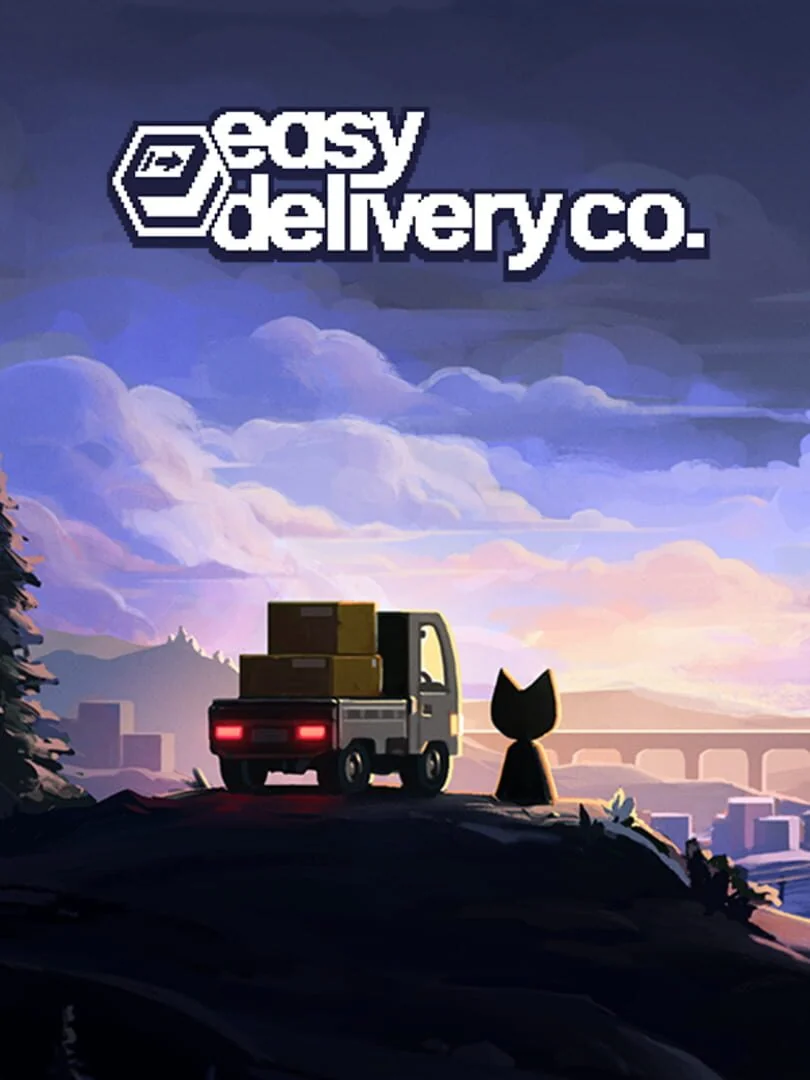
The horror performs less like a separate feature and more like pressure applied to the existing delivery loop. Driving through a snowy, low-visibility space is already tense when resources matter. Add a town with buried bunkers, off-path towers, and mystery-heavy environmental storytelling, and ordinary errands start carrying a faint sense that you are moving through somewhere you do not fully understand.
That is why it reads as horror-adjacent even during mundane work. Every practical system keeps you grounded in routine — fuel, road access, tires, warmth, drinks, cargo — and the secret layer interrupts that routine by making the world feel less trustworthy. The result is not “I am under attack” but “I should not feel this uneasy doing a delivery job.” The effect is strongest when you let the pacing breathe and treat suspicious spaces as part of the main experience.
Common mistakes when hunting Easy Delivery Co.’s secrets
- Expecting the wrong genre. Waiting for jump scares or a combat loop makes the game feel like it is withholding horror; it delivers through mood, absence, and discovery instead.
- Trusting demo-only coverage. The demo was Mountain Town alone and gives an incomplete picture of the secrets.
- Counting three bunkers. There are five — 2 in Mountain Town, 2 in Fishing Town, 1 in Snowy Peaks. Stopping at three means a missed region.
- Ignoring logistics. Running out of fuel or freezing without tea, fish soup, or a campfire cuts off the exploration that reveals the secrets.
- Skipping the towers and snowcats. The 4 radio towers and 13 snowcats are completion threads woven into the same spaces as the bunkers.
Practical takeaway
Play it as a secret-completion run, not a speed-efficient delivery run. Advance until each region opens, keep your truck and supplies stable, and schedule deliberate passes through Mountain Town, Snowy Peaks, and Fishing Town to clear the 5 bunkers, 4 radio towers, and 13 snowcats. Pack snow tires and ice chains, and brew tea or build a campfire before any cold climb. Easy Delivery Co. is not secretly a full horror game — it uses horror texture, mystery structure, and hidden spaces to turn a cozy loop into something stranger. If you want that side of the game, go looking for what the normal jobs never force you to see.
FinalBoss // Gear
Level up your setup
01Top-rated gaming headsetson Amazon→02High-refresh gaming monitorson Amazon→03Gaming chairson Amazon→04Discounted game keyson Kinguin→
Affiliate links · As an Amazon Associate, FinalBoss earns from qualifying purchases.
Want to Level Up Your Gaming?
Get access to exclusive strategies, hidden tips, and pro-level insights that we don't share publicly.
Ultimate Guide Strategy Guide + Weekly Pro Tips