
I booted up The Adventures of Elliot: The Millennium Tales expecting a nostalgia trip wrapped in Square Enix’s signature HD-2D gloss, and for the first six hours, that is exactly what I got. The Kingdom of Huther spilled out beneath me in painterly pixels, all shifting light and crystalline water, and I felt that familiar dopamine hit of a top-down map begging to be uncovered. Then I hit the second Age, and the third, and somewhere between revisiting the same forest path for the fourth time and slotting yet another magicite stone into my sword, I realized I was having two completely different experiences at once. One was a tactile, build-crafting action RPG with some of the most satisfying real-time combat Team Asano has produced. The other was a slow-motion test of my patience, stretched across eras that looked increasingly familiar no matter how many centuries the narrative claimed had passed.
Table of Contents (7)
The HD-2D Spell Works Until You Look Too Closely
My first session was pure comfort food. Elliot moves with a weight I did not expect; there is a subtle inertia to his dodge roll and a crisp snap to his sword swing that immediately separates this from the turn-based Octopath Traveler template. The camera floats lower and more dynamically than in Square Enix’s previous HD-2D projects, and that single choice makes the world feel less like a diorama and more like a place I was actually exploring. I spent twenty minutes just wandering the opening fields, poking at bushes, fishing out hidden caves, and soaking in the particle effects. It is gorgeous. But once the novelty wore off, I started noticing the seams. Dungeons recycle structural ideas more aggressively than I would like, and while the lighting engine paints every era in a distinct color palette-a burnt amber for the past, a sterile blue for the future-the actual geometry of the maps repeats itself. By the time I unlocked the third Age, I could predict where secret walls would hide because I had already seen that same cliff formation two centuries earlier.
Magicite Gave Me the Build-Crafting Fix I Did Not Know I Needed
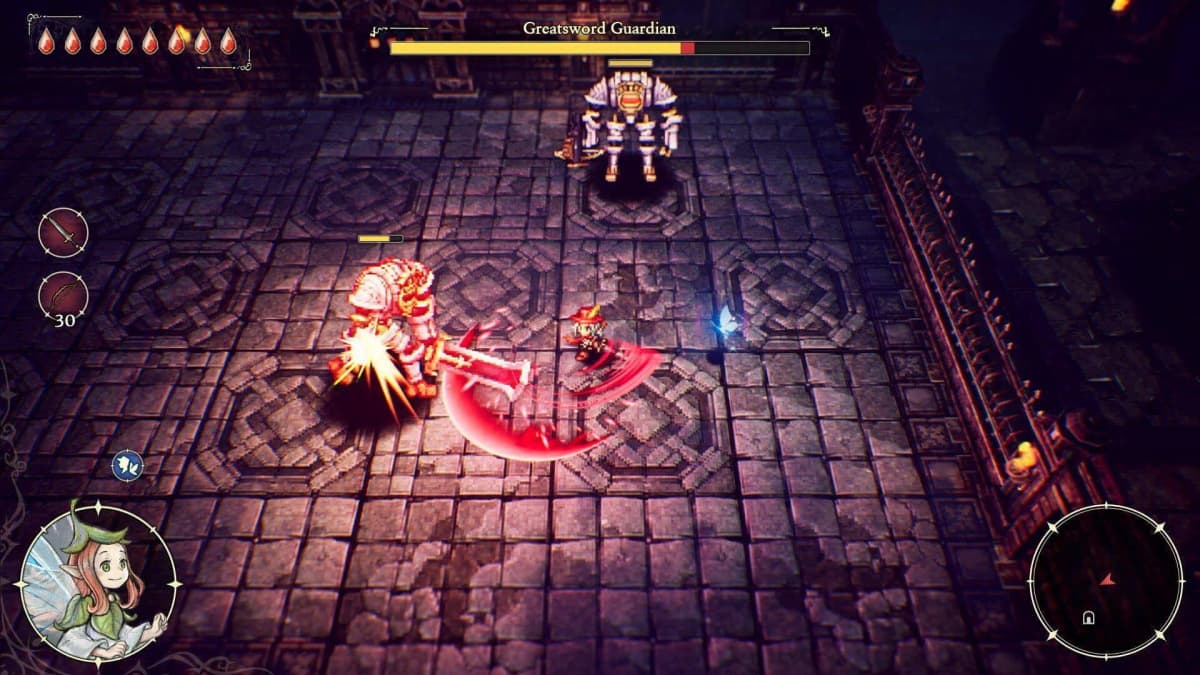
If the exploration loop faltered, the combat kept me glued. On the surface, Elliot’s kit is simple: one button for sword strikes, one for dodge, a fairy companion for support, and two weapon slots you can swap between on the fly. The depth arrives with magicite, collectible stones you socket into weapons and armor to alter everything from elemental damage to skill properties. Early on, I treated magicite like a stat stick, jamming raw attack gems into my longsword and calling it a day. That carried me through the first boss. Then the second Age threw enemies with explicit elemental barriers at me, and I realized the game was quietly demanding I treat magicite like a loadout system. I rebuilt Elliot into a lightning-fast duelist with a wind-aspected dagger for shield-breaking, kept a fire greatsword in reserve for crowd control, and slotted support magicite into my chestpiece that auto-triggered a heal whenever my fairy gauge hit fifty percent. The menu work felt meaningful. Every significant encounter forced me to ask whether my current build was solving the problem or just powering through it, and that question alone places Elliot well above the mindless hack-and-slash tier.
The downside is that the game never fully teaches you to engage with this depth. I stumbled into effective synergies by accident, and for hours I feared I was overthinking a system that did not actually matter. It does matter. Boss fights are tuned with precise timing windows and phase shifts that reward specific elemental bursts or movement-speed thresholds. When I finally faced the Sovereign of Ash-a three-phase monstrosity that floods half the arena with lava—I had to pause mid-fight, open my inventory, and physically reconfigure my entire magicite spread. I died twice doing it. The third attempt was one of the most cathartic victories I have had this year. That kind of mid-combat adaptation is rare in action RPGs this breezy, and I wish the campaign had front-loaded that revelation instead of hiding it behind trial and error.
Four Ages of Déjà Vu
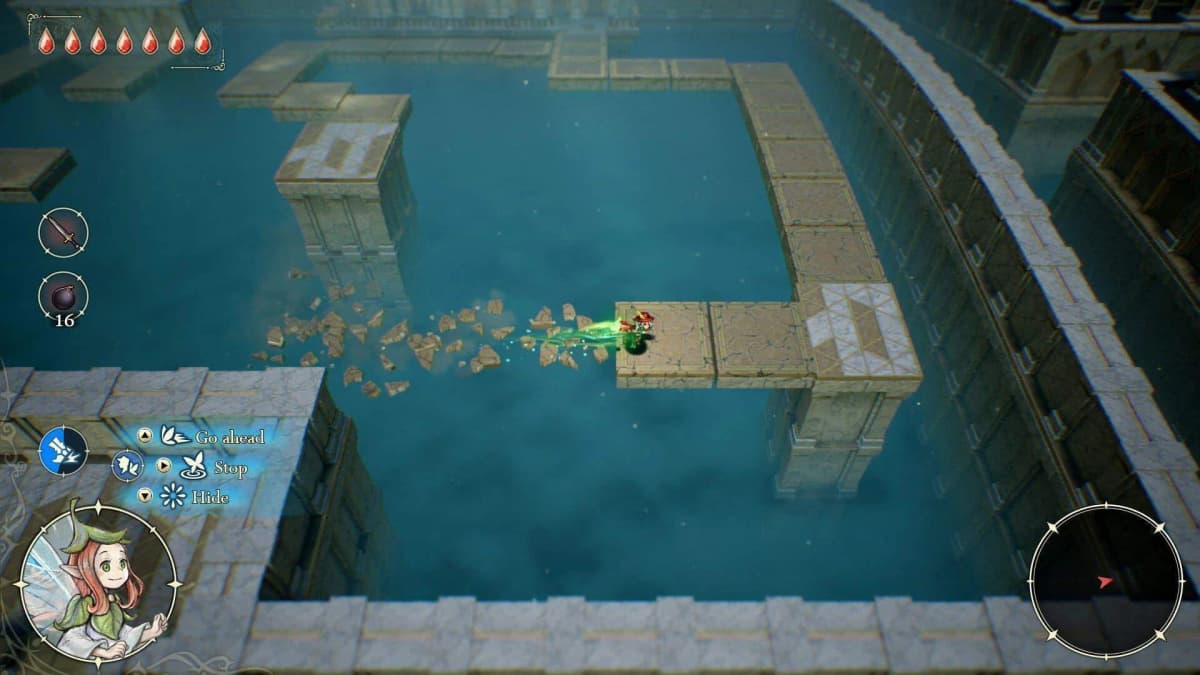
The Millennium Tales sells itself on a Chrono Trigger-inspired structure: Elliot hops between four distinct Ages of Huther, solving problems in the past to unlock paths in the future. In theory, this is the dream. In practice, the connective tissue between eras is less about dramatic environmental transformation and more about light gating. I would reach a flooded ruin in the present, travel to the past to drain the reservoir via a simple switch puzzle, then return to find the same ruin with slightly different enemy placements. The first time this happened, I smiled at the cleverness. The fourth time, I sighed. Zelda-like exploration lives or dies on its secrets, and while Elliot hides plenty of optional caves and heart-piece equivalents, the act of traversing Huther never evolves. You unlock a hookshot equivalent, a dash ability, and a few key items, but the map layout itself becomes muscle memory. I started sprinting past mobs because I knew exactly which fork in the road led to another magicite shard and which one was a dead end. That is the point where an adventure starts feeling like a commute.
There are exceptions. One side quest chains across all four Ages, tracking a blacksmith’s lineage from ambitious apprentice to bitter veteran, and seeing his workshop change with each jump gave me the exact emotional texture I wanted from the time-travel premise. Those moments prove the concept works. They are just too rare. For every cleverly layered quest, there are three fetch requests that ask you to walk the same road twice because an NPC in the future forgot where he left his toolbox in the past. The game wants to be a sprawling action-adventure, but its pacing is closer to a methodical JRPG, and that tension never fully resolves.
The Narrative Lands in the Middle and Stays There
Elliot himself is a fine protagonist in the way that a blank slate is fine: he has a clear motivation, a tragic backstory, and exactly one facial expression for determination. His fairy companion provides banter that is sometimes charming, often grating. The villain is a robed figure with a god complex and a sepia-toned flashback; you have fought this villain before in better games. I did not expect literary brilliance from a title that wears its Super Nintendo inspirations on its sleeve, but I did hope for a twist or character beat that would surprise me. It never really comes. The writing is competent, workmanlike, and oddly hesitant to take big swings despite the fact that its entire premise involves rewriting history.
What complicates my dismissal is the ending structure. Millennium Tales hides three distinct finales behind choices I did not realize were pivotal until I looked at my save files. My first run ended on a note so abrupt I thought I had triggered a bad ending by accident. My second run, armed with a different magicite configuration and some side-quest completions I had skipped, landed on a significantly more resonant conclusion that retroactively gave weight to Elliot’s relationships. I admire the ambition, but gating narrative payoff this aggressively behind easily missable content feels like a relic of a different era. I am still not sure whether the emotional payoff I got on attempt two justifies the shrug I felt on attempt one. That uncertainty feels emblematic of the entire game.
Switch 2 Performance Caught Me Off Guard
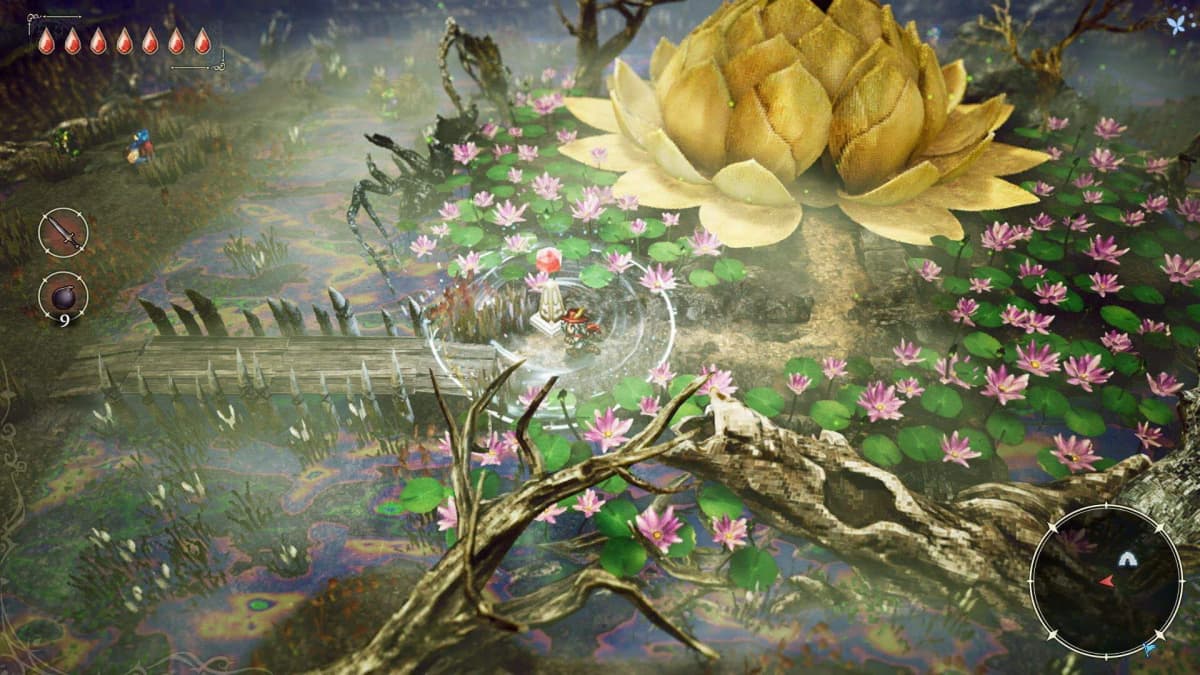
I played the majority of my hours on Switch 2, both docked and handheld, and the experience is a mixed bag for a game that looks like a polished PS2 dream. Handheld mode is where the HD-2D magic shines; the OLED screen makes those light blooms sing, and the reduced resolution actually helps the pixel art cohere into something painterly. Docked mode, however, stutters in ways that caught me off guard. The third Age’s forested overworld drops frames when multiple particle-heavy magicite effects stack on screen, and there is a half-second hitch every time you transition between Ages. It is never game-breaking, but it is noticeable enough to break immersion in a title that otherwise trades on atmosphere. If you own multiple platforms, I would steer toward the PC or PlayStation 5 versions; the Switch 2 port carries enough stutter that it undermines the visual polish Square Enix clearly invested in.
TL;DR
- HD-2D visuals and combat feel are standout elements that rival Square Enix’s best work.
- The magicite build system offers genuine depth, especially during challenging boss fights.
- Time-travel exploration across four Ages of Huther gets repetitive faster than it should.
- The story is adequate but rarely surprises, and the best ending is locked behind missable content.
- The Switch 2 version suffers from frame drops and hitches that break the immersion.
- This is best suited for players who prioritize build-crafting and boss fights over exploration novelty.
A Conflicted Goodbye
So where does that leave me? I have spent roughly twenty-five hours with The Adventures of Elliot: The Millennium Tales, cleared two of its three endings, and built enough magicite loadouts to fill a spreadsheet. I can tell you that the combat is genuinely excellent, that the HD-2D aesthetic is one of the best implementations of the style outside Octopath Traveler, and that the boss encounters deserve to be studied by any developer making action RPGs at this budget tier. I can also tell you that I grew tired of Huther’s geography, that the story rarely rose above function, and that the time-travel hook eventually became a liability instead of a selling point.
I keep coming back to one question: does a game need to master every pillar it borrows, or is one exceptional system enough to carry the rest? If you are the kind of player who can lose ten hours theory-crafting magicite synergies and treating every boss like a puzzle box, Elliot is an easy recommendation. If you need your Zelda-like exploration to constantly surprise you, to make every new screen feel like uncharted territory, this might leave you as conflicted as I am. I want to love The Millennium Tales wholeheartedly. Instead, I respect it with reservations, and I am not sure which of those feelings will win out in the long run.
FinalBoss // Gear
Level up your setup
01Top-rated gaming headsetson Amazon→02High-refresh gaming monitorson Amazon→03Gaming chairson Amazon→04Discounted game keyson Kinguin→
Affiliate links · As an Amazon Associate, FinalBoss earns from qualifying purchases.
Want to Level Up Your Gaming?
Get access to exclusive strategies, hidden tips, and pro-level insights that we don't share publicly.
Ultimate Reviews Strategy Guide + Weekly Pro Tips