
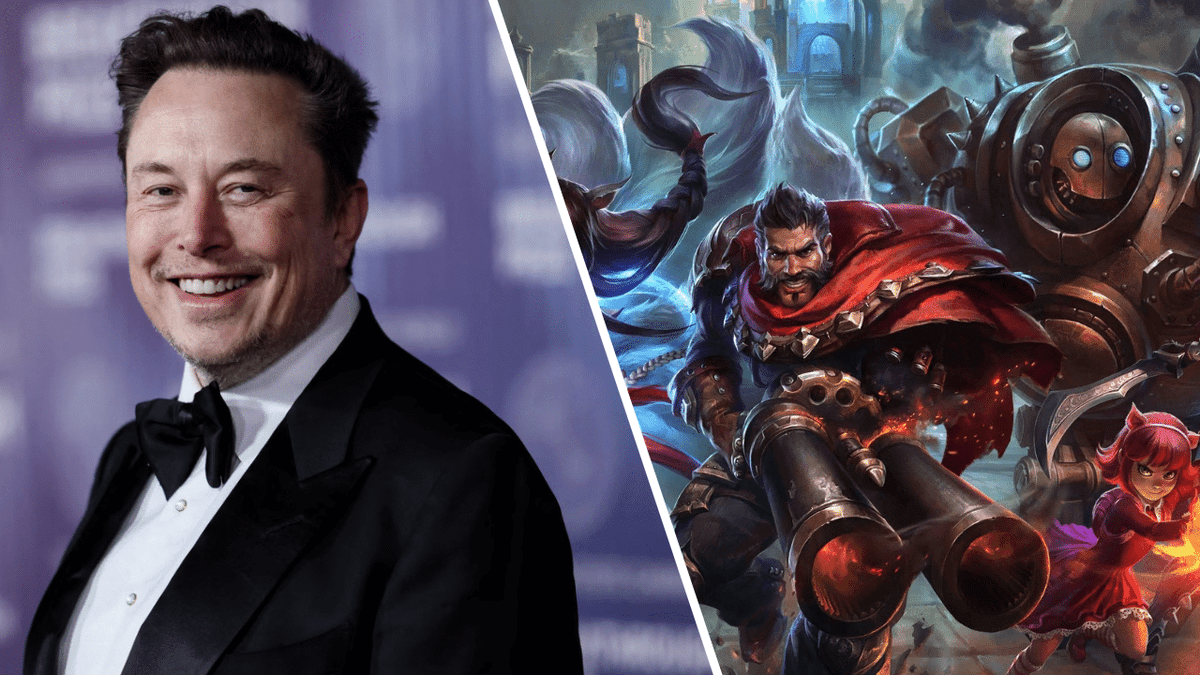
Elon says Grok 5 can beat T1 at League — is he for real?
Game intel
League of Legends
“Legends Never Die” - League of Legends & Against The CurrentPremiered at the opening ceremony of the 2017 World Cup Finals, Against The Current performed this…
Why this challenge actually matters (and why it annoyed me)
Elon Musk posting a Twitter/X dare is hardly headline news anymore – but this one landed differently. He publicly challenged League of Legends royalty to a match, claiming Grok 5 can “play any game just by reading the instructions.” T1 answered with a GIF of Faker, Grok’s account cheekily accepted, and Riot co-founder Marc Merrill said “let’s discuss.” That’s not just PR noise; it’s a direct provocation at the heart of competitive esports.
- Elon’s claim: Grok 5 can learn games from instructions and experiment, and would face pros using only a monitor camera and capped reaction/click rates.
- T1 accepted the taunt; Grok (the X account) accepted; Riot’s Marc Merrill signaled openness. This triangle turns a meme into a potential public test.
- Beyond spectacle, the stunt raises real questions about fairness, broadcast quality, anti-cheat, and the meaning of competitive play.
Breaking down the challenge
Musk specified constraints meant to simulate a human player: Grok could only “see” the game via a camera pointed at a monitor, and its input speed and reaction latency would be limited. On paper that sounds fair – but the devil’s in the details. Can a neural net interpret raw pixels and UI clutter as efficiently as a human who’s trained for years? Can it learn team communication, macro decision-making, and the psychological feints that define pro play? Historically, AI milestones in esports have been messy experiments: DeepMind’s AlphaStar in StarCraft II and OpenAI’s Dota prototypes showed machines could master specific tasks, but under carefully controlled and often altered conditions.
Why this is bigger than a flex
This isn’t just about who wins a match. It tests claims about “AGI” – generalized intelligence — in a public, emotionally charged arena. Esports is a spectator sport built on human stories: clutch plays, tilt, synergy, legend-making. An AI winning under televised conditions would force organizers, leagues, and publishers to confront new realities: Do we let non-human competitors enter official ladders? How do we regulate training environments and anti-cheat when an AI could be trained in ways humans can’t?
There’s also the PR angle. Musk’s timeline and rhetoric smell like a content play: create a headline, get stream views, and feed a narrative of technological inevitability. That’s not inherently bad, but it risks weaponizing esports as a testing ground for corporate AI claims. Riot’s leadership replying to Musk signals they’re taking the idea seriously enough to consider logistics — which, to be frank, is already a form of legitimization.
What gamers should actually be worried about
First, competitive integrity. If a company demonstrates an effective gameplay AI, that tech could be repurposed for coaching, boosting, or cheating — not just for staged exhibition matches. Second, viewing experience. An AI will play optimally in ways that could be fascinating but also boring: optimized, risk-averse, and robotic. Fans tune in for human unpredictability, not a perfect machine.
Third, hype vs. substance. “Reading instructions” is a shorthand headline, not a technical roadmap. Training a model to play League at pro level involves enormous compute, curated data, and iterative human feedback. The camera-only limitation tries to close the gap, but it’s no silver bullet against the massive infrastructure behind modern ML research.
And finally, respect for pro players. T1 and Faker didn’t get to where they are by clicking faster — they built game sense, team synergy, and the ability to perform under pressure. That human element is not something marketing-stunts should casually invalidate.
Want to Level Up Your Gaming?
Get access to exclusive strategies, hidden tips, and pro-level insights that we don't share publicly.
Ultimate Gaming Strategy Guide + Weekly Pro Tips
Where this could go — and what to watch for
If this becomes an actual exhibition match, expect layers of negotiation: exact rule-set, anti-cheat oversight, stream production control, and whether pro teams can practice against the AI beforehand. Watch Riot’s public statements for whether they treat it as stunt content or a legitimate research partnership. And watch for the inevitable follow-ups: “AI coaches” pitched to teams, or companies selling “AI training” using pro data — that’s where the ethical gray zones widen fast.
TL;DR
Elon Musk dared Grok 5 to take on T1 and now Riot’s co-founder is open to a conversation. It’s an attention-grabbing stunt with genuine implications: we’re entering a phase where AI claims collide with esports culture, and that collision will force rules, ethics, and broadcast choices. I want Grok to fail gloriously — not because I’m anti-tech, but because esports is about human stories that an AI can’t replicate. If this turns into a real event, I’ll be watching closely — and calling out the parts that smell like marketing.