
Table of Contents (9)
Next Xbox Console Will Feature Epic Games Store “On Day One” – The PC-ification of Consoles
This caught my attention because it’s a concrete instance where hardware design, platform policy, and marketplace competition converge. Microsoft saying it will welcome the Epic Games Store at launch-and Epic planning to be there “on day one”-isn’t just a new app on a console. It’s a conscious effort to turn a major living-room platform into something that behaves much more like a PC.
Key takeaways
- Microsoft’s next Xbox (Windows 11-based) is being positioned as an open platform that will allow multiple storefronts, including Epic, at launch.
- Epic’s day-one presence changes digital-purchase dynamics: library portability, price competition, and developer choice are likely to increase.
- Technical work remains—Epic is reworking its store and will build an Xbox-optimized client to meet controller/TV requirements.
- Risks include user experience complexity, certification friction, and the potential for platform revenue trade-offs for Microsoft.
{{INFO_TABLE_START}}
Publisher|Epic Games / Microsoft
Release Date|Feb 2026 (Epic confirmation); Console expected 2027
Category|Hardware & Platform Strategy
Platform|Next Xbox (Windows 11-based)
Why this is a meaningful shift — beyond a new app
Consoles historically shipped with a single storefront controlled by the platform holder. Microsoft’s next Xbox purposely runs full Windows 11 with a console-optimized shell. That design makes it feasible — and apparently intentional — for third-party stores to install and operate like they do on PC. Steve Allison of Epic has publicly said Epic plans to be on the new Xbox at launch, and Microsoft has told Epic it’s welcome. That’s an explicit policy choice with big downstream effects.
What Epic wins — and what players get
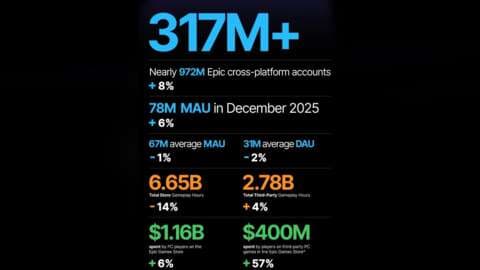
Epic gains instant access to a console audience during the high-attention launch window—no small victory given Epic’s continued investment in its store (it handled roughly $400M in third-party sales in 2025). For players, the immediate, practical wins are:
- Library portability: Epic libraries on PC should appear on the console without repurchase in many cases, thanks to the shared Windows foundation.
- Price and feature competition: Multiple storefronts on the same device make price differences and exclusive store features visible and actionable.
- Developer choice: Indies and mid-size studios can route distribution via Epic, Steam, or Microsoft, changing negotiation leverage and potentially revenue splits.
Technical reality check
Epic isn’t treating this as a trivial port. The company is overhauling the Epic Games Store architecture to fix performance and resource issues, then plans to build whatever Xbox-specific software the platform requires for a console-smooth experience. The handheld-PC experiments (ROG Ally, Xbox Ally X) were useful testing grounds, but a living-room TV experience needs different UI/UX work—controller navigation, full-screen behavior, and certification for console stability.
Broader market implications
If Microsoft’s gamble pays off, Sony and Nintendo will face strategic pressure: either open their systems more or justify why curated, single-store experiences remain superior. We should expect a richer feature race between storefronts (community tools, cross-platform social features) and more aggressive pricing strategies. That said, console simplicity was a selling point for many players; too much storefront complexity could alienate mainstream users.
Risks and open questions
- User experience: Multiple UIs and account systems risk confusion on a device bought for simplicity.
- Certification and security: Microsoft will need robust rules to keep the console-quality bar high; those rules could slow third-party implementations.
- Business trade-offs: Microsoft may sacrifice some store revenue to speed hardware adoption and ecosystem engagement—whether that pays off depends on uptake.
What this means for you
Enthusiasts should be excited: more choice, better cross-buy chances, and potential price benefits. Expect a bit more administrative work (managing multiple storefronts) and a transition period where features and polish improve over months after launch. If you value a unified, curated console experience above all, this shift may feel like a trade-off rather than a pure win.
TL;DR — The bottom line
Epic on day one for the next Xbox is a landmark move. It fast-forwards console-PC convergence, forces real storefront competition, and gives developers and players more options. The upside is greater choice and prices that could work in consumers’ favor; the downside is added complexity and a reliance on Microsoft’s certification to keep the platform stable. For enthusiasts, this is a big, generally positive change — but it will be a multi-year transition before we see the full payoff.
FinalBoss // Gear
Level up your setup
01Best-selling Xbox Series X|S gameson Amazon→02Xbox controllerson Amazon→03Top-rated gaming headsetson Amazon→04Discounted game keyson Kinguin→Affiliate links · As an Amazon Associate, FinalBoss earns from qualifying purchases.