
Epic’s Unreal Engine 6 isn’t a version bump—it’s a merger plan. By pulling UE5 and UEFN toward one ecosystem built around Verse and a new Scene Graph framework, Epic is betting that a more structured, data-oriented gameplay stack can narrow the gap between bedroom creators and AAA studios. Early access is targeted for the end of 2027, with a full release about 12 to 18 months later. The implications for portability, tooling, and massive online worlds are already reshaping how developers should think about their next project.
Table of Contents (13)
The Invisible Wall That Broke Epic’s Creative Ecosystem
For the last three years, Epic has been running two religions from the same church. On one side, you had Unreal Engine 5: Nanite, Lumen, C++, Blueprints, and the full might of a Hollywood-grade toolset that powers everything from Black Myth: Wukong to virtual production stages. On the other, Unreal Editor for Fortnite, better known as UEFN: Verse, creative devices, islands, and a creator economy built entirely inside a battle royale client. They shared a renderer, sure. They shared a parent company. But spiritually? They were distant cousins who only spoke at Thanksgiving, and even then, it was awkward.
If you cut your teeth in UEFN, you learned Verse. You built logic with Fortnite’s native scripting language, wrestled with event-binding devices, and shipped experiences to an audience of millions without ever touching Steamworks, Epic Games Store publishing tools, or a build farm. But you also hit a ceiling hard enough to leave a dent. Your game was a Fortnite island, not a product. You couldn’t export it as a finished standalone game. You couldn’t sell it on itch.io or the Epic Games Store as a standalone executable. The engine underneath belonged to Epic, and your code only ran inside Epic’s executable, tethered to its update cadence and content moderation rules.
Meanwhile, traditional UE5 developers looked at UEFN the same way a film director looks at TikTok: interesting, culturally loud, occasionally lucrative, but not their medium. Blueprints and C++ were the professional stack. Verse was a toy for the Fortnite crowd, and UEFN’s no-code devices were cute but incapable of the systems complexity a real RPG or shooter required. That separation created a bizarre talent gap where skills stubbornly refused to transfer cleanly. A brilliant UEFN creator who understood pacing, monetization, and live-service operations couldn’t easily graduate to indie development on PC or console, because their Verse knowledge did not cleanly escape the island. Conversely, a seasoned UE5 engineer had little incentive to build inside Fortnite’s walled garden, leaving a massive audience of players disconnected from professional-grade content.
Epic watched this fracture grow, and with Unreal Engine 6 it is finally trying to stop pretending the split is healthy.
That matters for more than career prestige. It changes how people learn. Right now, a teenager can get frighteningly good at building loops, quests, round logic, and social spaces inside Fortnite, yet still feel like they are standing outside the real engine with their face pressed against the glass. They know how to ship content. They know how to react to a live audience. They know how to tune progression so players come back tomorrow. But if the underlying systems are trapped inside a Fortnite-only framework, those hard-earned skills become harder to cash in anywhere else. The wall is not just technical. It is educational.
The reverse problem is just as strange. A traditional Unreal team can build beautiful worlds, custom systems, and polished standalone games, yet remain disconnected from the giant experiment happening inside Fortnite. UEFN has been a live lab for creator tools, rapid iteration, audience feedback, and Verse-based scripting at a scale most conventional indie teams would kill for. Instead of one ladder from hobbyist to professional, Epic accidentally built two staircases that rarely met. UE6 is the first pitch that seriously tries to connect them at the framework level instead of papering over the gap with branding.
Unreal Engine 6 Is Not a Version Bump—It Is a Convergence Plan
This isn’t UE5.6 dressed up for a keynote. Unreal Engine 6 is Epic’s roadmap for collapsing the old bifurcated workflow, and the implications go deeper than a shinier Nanite revision or slightly faster Lumen bounces. At its core lies a simple, radical idea: one ecosystem, one broad toolchain direction, and a gameplay model that is meant to travel more cleanly between Fortnite creation and traditional Unreal development than it does today. Epic is targeting early access for the end of 2027, with a full release about 12 to 18 months after that. In other words, if you’re planning a game that has to ship in 2026 or 2027, you can safely stop reading, go optimize your UE5 Blueprints, and let someone else take the arrows first.
The mechanism for this unification is twofold. First, Epic says it wants to pull the “full” Unreal Editor and UEFN toward the same underlying future architecture. That does not mean Fortnite modding and AAA production literally become the exact same workflow overnight, or that every UEFN project pops out as a finished cross-platform game with one click. It means Epic is building toward a world where the creator path and the professional path stop diverging at the language and framework level. Second, and more importantly, the gameplay layer is being rebuilt around a framework called Scene Graph, implemented in Verse.
That second part is the real story. Tim Sweeney has spent years preaching the metaverse, and UE6 is the first Unreal pitch that feels architected for that ambition instead of merely decorated with the vocabulary. Epic is describing a future aimed at massive, persistent online worlds where large creator teams can work in the same ecosystem and where shared state is handled more coherently than today’s spaghetti of Actors, Blueprints, devices, and ad hoc network glue. That does not mean Epic has already proved every gameplay system, every physics interaction, or every multiplayer edge case becomes deterministic by magic. It means Verse and Scene Graph are being positioned as the foundation for a more controlled, transactionally correct model of concurrency than the current split stack allows.
And if that sounds abstract, here’s the plain-English version: Epic wants the logic you write for a Fortnite experience to stop feeling like disposable island lore and start feeling like the first draft of a real game architecture. Think less “clever island trick that dies inside Fortnite” and more “module, prefab, or gameplay component that might have a future outside the island if it stays generic enough.” A round manager, quest tracker, co-op objective system, or inventory rule set written against shared engine concepts is a very different long-term asset from a map held together by Fortnite-only devices and a prayer.
It is also important to keep the roadmap label taped firmly to the box. Public details are still high level. Epic has been very clear about the direction: unify Unreal Engine and UEFN, move more gameplay logic into Verse, build around Scene Graph, and push portability and interoperability through open standards. What Epic has not done yet is publish a finished spec that proves every current distinction between UEFN and mainline Unreal disappears. The honest reading is not “Fortnite modding and AAA dev are now the same thing.” The honest reading is “Epic is finally aiming them at the same destination.” That is still a huge deal.
It is also a rare case where the boring architecture story matters more than the glamorous rendering story. The flashy keynote version of Unreal is usually a prettier cave, a denser jungle, or a more expensive face. UE6’s interesting pitch is subtler: what if Epic rebuilt the underlying gameplay contract so the same creator who learns to make a compelling Fortnite experience is no longer trapped in a parallel economy forever? That is less cinematic than a ray-traced puddle. It is also potentially much more important.
Verse Is Eating the Engine, and That Is the Point
Let’s talk about Verse, because this is where a lot of experienced developers are going to get nervous, and they need to understand why Epic is forcing the issue. When Epic introduced Verse as UEFN’s scripting language, the reaction from traditional UE5 veterans was predictable eye-rolling. Another proprietary language? Why not just use C#, or Lua, or, heaven forbid, double down on visual Blueprints? The answer is that Verse is not merely a syntax choice or a branding exercise. Epic is treating it as the gameplay language for a future where online worlds are bigger, more persistent, and more collaborative than the old C++-plus-Blueprints arrangement was designed to handle.
The careful way to say this is important. Epic has publicly framed Verse around transactionally correct concurrency and the idea that global state should behave more sanely in large online worlds. That is a big deal. It is not the same as proving a blanket determinism guarantee for every gameplay system, every plugin, or all physics behavior in Unreal. If you are a veteran engine programmer, keep your eyebrows lowered: the promise here is a cleaner model for shared state and ordering, not the end of bugs, networking, or human suffering.
Still, the practical upside is easy to see. Imagine two players hitting the same lever at the same moment, or two systems trying to update the same inventory item during the same slice of simulation. In today’s Unreal, a lot of that sanity comes from discipline, conventions, and the engineering equivalent of whispered prayers. In Verse, Epic’s pitch is that the language and runtime shoulder more of that burden. Another concrete example: when developers need repeatable results today, they often reach for seeded randomness—using a Random Stream or a fixed seed so a loot roll, enemy spawn pattern, or procedural layout can be reproduced during testing. Verse’s appeal is that it fits the same desire for repeatability at the gameplay-model level, where ordering and state updates are supposed to be more structured instead of being scattered across arbitrary Actor ticks.
There is a day-to-day workflow consequence hiding inside that sentence. A designer building a co-op survival map in UEFN today might write one Verse module that rolls storm timings from a seed, another that assigns loot tables, and another that handles round transitions. If those modules are written against generic entities and components instead of Fortnite-specific gadgets, they become easier to reason about and, in Epic’s long-term pitch, easier to carry into future UE work. The same logic applies to something more mundane, like a reusable interaction component for doors, terminals, or capture points. Once your code stops assuming “this is a Fortnite device chain” and starts assuming “this is gameplay logic acting on structured world state,” you are already thinking closer to Epic’s UE6 target.
That portability story becomes even clearer when you look at what not to do. If your island logic depends on a web of unique device settings, special-case event binders, and Fortnite-only service hooks in every direction, you are building a brilliant theme park ride that is bolted to the ground. If your logic lives in a small number of cleaner Verse modules—match state, objective state, scoring, inventory flow, interaction rules, spawn logic—you are at least building pieces that can be imagined somewhere else. The former is a stunt. The latter is architecture.
In UE6, Verse is being positioned to break out of Fortnite jail. Epic is moving more of the core gameplay stack toward Verse, which means the language graduates from “island scripting tool” to “engine backbone.” That has immediate, practical implications for portability, but this is where a lot of marketing copy needs a cold shower. Today, if you build a brilliant cooperative horror experience or a tactical shooter twist inside UEFN, that code is still marooned inside Fortnite’s ecosystem. If you want to move content between tools right now, the workflow is usually far more mundane: export a static mesh as an FBX, export textures separately, copy them over, then re-import and rebuild material hookups on the other side. If it is a skeletal mesh, you are still thinking in terms of FBX export settings and asset-by-asset cleanup, not magic one-button emancipation.
That is why UE6 matters. Epic’s portability story is not that every game suddenly becomes a universal binary for every ecosystem. The story is that if your gameplay logic lives in Verse against generic Scene Graph-style systems instead of a pile of Fortnite-only devices, you have a much better shot at carrying that work forward into future standalone Unreal projects. A generic quest system, a co-op extraction loop, a round manager, or a reusable combat component written against shared engine concepts is meaningfully closer to portable than a UEFN map held together by device chains and Fortnite-specific assumptions. That is the graduation path the creator economy has been missing.
There is also a practical strategy creators can use now, even before UE6 exists as a product. Keep Fortnite-specific logic in thin wrappers. If your project needs a Fortnite-only matchmaking flow, a particular island service, or a device you cannot avoid, isolate that dependency instead of baking it into every system. Let your broader gameplay rules—health, scoring, objectives, interactions, quest state, inventory flow—live in modules that are as engine-like as possible. The less your logic assumes “I only exist inside this one walled garden,” the more valuable it becomes if Epic’s convergence plan lands the way it says it will.
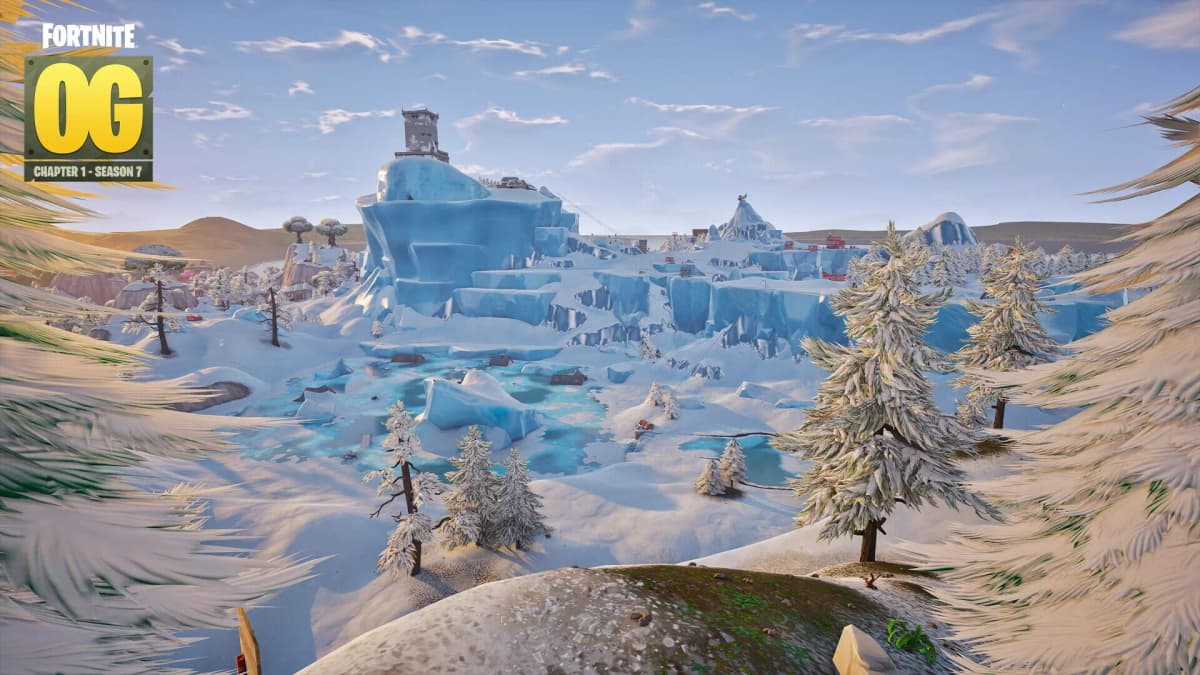
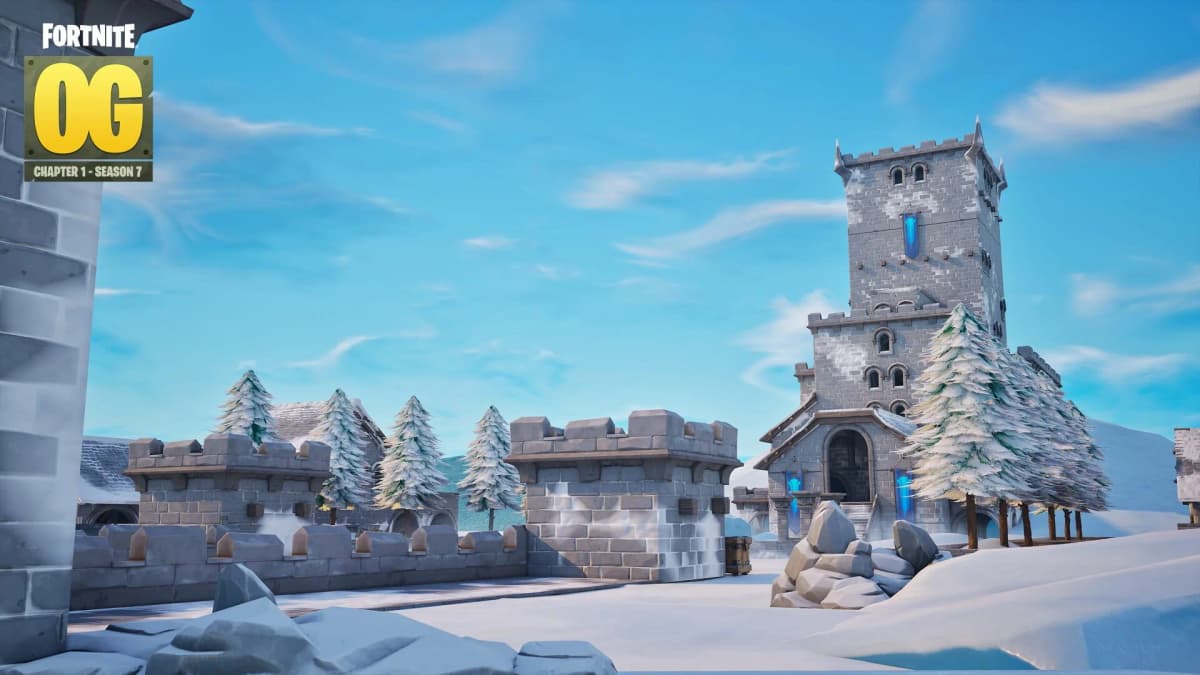
That wrapper habit sounds dry, but it is exactly the kind of dry discipline that pays off later. Suppose you are building a Fortnite OG: Chapter 1 Season 7-inspired island with round-based respawns, a shrinking zone, captureable objectives, and nostalgic props everywhere. The OG art and Fortnite-specific services are allowed to be Fortnite-specific. Nobody is asking a driftboard to pretend it is spiritually generic. But your respawn rules, objective timers, point scoring, round transitions, and interaction states do not need to know that. If those systems can accept data instead of hardcoded assumptions, they become far less disposable.
And yes, there is a cost. C++ gives you raw access to engine internals, memory, threading decisions, and the kind of low-level chaos that expert programmers can turn into miracles or wreckage depending on caffeine levels. Verse, by design, moves the gameplay layer toward a more constrained model. You trade some freedom for safety, some improvisation for structure, and some “I can do anything” swagger for “the runtime would like a word.” For programmers who live to hand-tune systems at the lowest level, that can feel like a straitjacket. For designers, technical artists, scripters, and creators who mostly want multiplayer logic to stop exploding because one event fired before another, it feels like finally getting seatbelts in a car that previously had no doors.
That does not mean C++ disappears or Blueprints become decorative wallpaper. It means the center of gravity shifts. High-level gameplay logic increasingly wants a home that is shareable across creator tools, persistent online worlds, and future Unreal workflows. C++ still makes sense for lower-level systems, engine work, and all the dangerous things engine programmers enjoy doing before breakfast. Blueprints still make sense as a visual layer and orchestration tool. But if Epic is serious about convergence, Verse becomes the common tongue at the gameplay layer. That is the part veteran Unreal developers need to hear, even if they do so while grinding their teeth.
Scene Graph Is the New Gameplay Operating System
Scene Graph is the piece of this puzzle that makes non-programmers’ eyes glaze over, so let’s demystify it with something more useful than keynote fog. In current Unreal Engine, the world is built from Actors. An Actor has components, many of those components can tick every frame, they broadcast events into the ether, they cast to each other through hard references or interface queries, and eventually you have a spaghetti web of overlap events, Blueprint interfaces, and delegates that somehow, miraculously, runs your game. It works. Millions of games have shipped on it. It is also a lousy mental model for the kind of scale and order Epic keeps talking about.
Scene Graph, as Epic has described it in the UEFN side of this transition, is a more unified entity-and-component framework. If you prefer concrete examples to ideology, here are several. A door can be an entity with a transform component, a mesh component, a collision component, and a Verse-authored piece of gameplay logic that tracks whether it is open. A loot chest can be a prefab—a saved hierarchy of entities and components—that you instance across an island or a level instead of rebuilding from scratch fifty times. A capture point can be one reusable Verse component attached to multiple entities, with the team rules and scoring data swapped out as parameters rather than duplicated in different Blueprint tangles. A small outpost for a Fortnite OG-style throwback map can be one prefab with lights, props, trigger volumes, and interaction logic that updates in every placed instance when you change the source asset. That is the appeal: fewer bespoke snowflakes, more reusable world logic.
Think of it less as a scripting gadget and more as the operating system for your simulation. The graph represents structured world state. Systems operate on that state in more explicit ways than the old “everything ticks and may God sort it out” approach. If you want to know whether a door is open, the question is no longer “which Actor owns this truth and which event most recently fired?” It becomes “what does the current world state say?” If you want to modify a player’s health or inventory, the ideal is not six unrelated Blueprints poking the same variable from different directions. The ideal is a more deliberate update path where the runtime understands what changed, when, and under which rules.
That matters for authoring as much as it matters for runtime behavior. In a graph-centered workflow, you are encouraged to build pieces that compose cleanly: one component handles interaction, one handles visuals, one handles state, one handles whatever game-specific rule makes the object interesting. If you later want ten variants of a chest, a terminal, or a trap, you are not rebuilding ten fragile one-offs. You are swapping meshes, tuning parameters, or adding a component. That is the kind of boring, healthy architecture that quietly saves weeks of work. It also happens to be the kind of architecture that can survive the jump from “cool island prototype” to “larger game with a future.”
The clearest public version of this story today lives on the UEFN side, where Scene Graph has been presented as a Verse-native way to author and manipulate world structure. That is worth stressing because it keeps expectations honest. Scene Graph is the bridge story, not proof that every corner of old Unreal has already been replaced. What it does show is Epic’s preferred direction: entity hierarchies, components, prefabs, and Verse-authored behavior becoming the shared mental model instead of a Fortnite-specific detour.
If you want a practical mental picture, think about how many current projects duplicate the same object logic over and over. A security terminal, a vault switch, a quest kiosk, and a race checkpoint might all share the same skeleton: an interactable object with a visual state, a cooldown, a success condition, and a bit of UI feedback. In a healthier architecture, that common shape lives in reusable components, while the distinctive flavor lives in data and art. Scene Graph nudges teams toward exactly that sort of separation. It is less romantic than handcrafted chaos. It is also how projects stop drowning in their own cleverness.
Performance and Ordering Finally Make More Sense
This architectural shift matters for performance in ways that don’t always survive the trip from a technical talk to a Discord argument. Modern CPUs are not in love with pointer-chasing through deep object hierarchies. They prefer tighter, more predictable access patterns. A data-oriented framework exists to exploit that reality rather than fight it. The renderer already moved in that direction years ago. Epic is now trying to drag the gameplay layer along too.
For a large online world, that matters. If you have thousands of entities, AI agents, interactables, pickups, projectiles, and replicated state changes all happening in the same session, structure is not academic. Structure is what keeps your server from turning into a bonfire. But the more immediate benefit for ordinary developers is ordering. Ask any UE5 multiplayer programmer about event timing, replicated variables arriving one frame later than expected, or an innocent Blueprint chain that only breaks under real latency, and you will watch their soul leave their body. The existing model can absolutely ship games. It can also make cause and effect feel like forensic science.
A graph-first model promises a more legible answer. Imagine a bug where a storm phase updates, a spawn system rolls loot, and a player respawn routine all touch shared state during the same moment. In today’s workflow, reproducing that can mean combing through logs, sprinkling Print String nodes everywhere, and relying on a seeded random value just to get the same sequence twice. In a more explicit, phase-driven system, the question becomes cleaner: which system mutated the state first, which update followed it, and why? That doesn’t mean every outcome is automatically deterministic forever. Epic’s public messaging supports a narrower claim: Verse is meant to help with transactionally correct concurrency and persistent world state. That is already a huge improvement without pretending physics suddenly becomes a Swiss watch.
You can feel the difference in smaller examples too. A scoreboard that updates before a round-end state flips can create phantom winners. A pickup despawn that fires before inventory confirmation can make a player feel robbed. A co-op objective that reads stale team progress can mis-trigger the next phase and send the whole match into the weeds. These are not glamorous bugs. They are the bugs that eat evenings. A more structured ordering model will not delete them from history, but it gives developers a clearer map of when state changed and which system had its hands on the controls.
There is also a useful caution here: not all determinism is the same thing. Unreal already has narrower, well-understood cases like deterministic cooking, where building the same content under the same conditions should produce the same cooked result. That is a very different claim from saying all gameplay, all networking, and all physics will always resolve identically across every situation. UE6’s pitch lives in the former spirit of structure and repeatability, not in a magical promise that causality has been solved by a keynote slide.
Even the humble seeded-random example tells the story well. Today, a developer may use a fixed seed to make sure a loot pattern or enemy wave sequence repeats during tests. That gives them one kind of repeatability. It does not automatically solve what happens when three different systems all mutate shared state in a different order across clients. UE6’s Verse-and-Scene-Graph pitch targets that broader organizational problem. Not every bug becomes impossible; the simulation simply stops behaving like a bar fight with particle effects.
And yes, this is where the old Actor loyalists start muttering about flexibility. Fair point. The freedom to do anything is intoxicating right up until fifty unrelated things do anything at once.
Tooling and the Possible Death of Print String Archaeology
For tooling, this shift could be seismic precisely because it makes the simulation more inspectable. Debugging a Blueprint mess often means littering code with Print String nodes, setting breakpoints that fire in a different order than you expected, and hunting race-condition-adjacent behavior that only appears on a busy server. A structured graph invites a different style of debugging. Instead of asking, “Which event graph yelled last?” you can ask, “What did this entity look like at this moment, and which system changed it?”
That is not just theory; it maps to real day-to-day pain. Picture a disappearing pickup. In the current world, you might chase overlap events, inventory checks, and replicated destruction messages across multiple Blueprints and devices. In a graph-centered world, the useful debug question is simpler: did the pickup entity lose its inventory component, get flagged as consumed, or get removed by a cleanup system? Or take a double-open door bug, where two players interact within the same heartbeat and the door closes immediately after opening. A transaction-aware model at least gives the runtime a cleaner place to resolve that shared-state nonsense. Even something as mundane as a round-start timer misfiring becomes easier to reason about when state changes live in a coherent structure instead of ricocheting through seven event binders and one desperate macro library.
You can push that one step further into author-time tooling too. If a prefab instance is missing a required component, if a Verse-authored interaction system expects a tag that is absent, or if two systems are trying to mutate the same state in an invalid order, a more structured model gives the editor a fighting chance to point a finger before runtime chaos begins. That is the practical promise of a graph. Not glamour. Not magic. Just fewer nights spent wondering why the fourth trigger volume in your chain thinks the match ended three seconds ago.
A good prefab example makes this concrete. Say you build a reusable outpost asset for a Chapter 1 Season 7-style island: walls, props, light sources, interactable ammo crates, and a Verse component that controls whether the structure is neutral, contested, or captured. In today’s sloppier workflows, one placed outpost ends up missing a trigger, another has an old value exposed in a buried Blueprint, and a third quietly drifts out of sync after someone duplicates it at 2 a.m. In a graph-and-prefab workflow, the engine has a cleaner chance to tell you that this instance is missing its capture-state component or that the interaction tag the Verse script expects does not exist. That is not a miracle cure. It is simply better bookkeeping, and better bookkeeping is how large projects avoid becoming crime scenes.
It is worth not overselling the tooling here, because Epic has not published a full shopping list of finalized UE6 debug features. But a graph-based gameplay model naturally points toward better inspectors, state diffs, and author-time validation than today’s improvised archaeology. When mutation rules are narrower and world state is more explicit, the engine has a fighting chance of warning you earlier that your logic is dubious. That is not the same as promising the editor becomes an all-seeing correctness oracle. It is simply the difference between debugging a ledger and debugging a food fight.
Portable Assets, Open Standards, and the Verification Trap
Epic’s ecosystem pitch doesn’t stop at code portability. The long-term goal is portable assets and interoperable content through open standards. That sounds like marketing perfume until you compare it with today’s reality. Right now, “portability” often means export the mesh, export the textures, re-import them elsewhere, then spend the afternoon reconnecting materials, checking pivots, fixing collision, and discovering that the thing you thought would take five minutes has stolen your lunch break. If the asset is skeletal, you are in for even more housekeeping. So when Epic talks about build once, deploy broadly, read it as an ecosystem goal, not a completed checkbox sitting in a shipping product.
That distinction matters because creators hear “portable” and imagine teleportation. The current reality is still boxes, tape, and a sore back. Export the prop. Export the textures. Rebuild the material hookups. Recheck scale. Recheck collision. Recheck the pivot that somehow wandered off to another zip code. Maybe the mesh survives the trip cleanly. Maybe it doesn’t. Either way, that is not the same thing as proving an entire Fortnite-born project can be deployed unchanged across engines, stores, and platforms. Epic’s public direction supports interoperability as a goal. It does not yet hand developers a finished universal pipeline.

There is a reason this qualification matters so much. “Portable content” can mean several very different things. It can mean a static prop survives export and re-import with manageable cleanup. It can mean a character rig crosses tools with most of its data intact. It can mean a prefab concept survives because the underlying structure is similar on both sides. Or, in the most ambitious reading, it can mean code, content, and economic systems eventually interoperate across experiences more cleanly than they do now. Those are not the same promise. UE6 is exciting precisely because Epic is talking about the bigger version. It is risky editorial malpractice to pretend that bigger version is already done.
Still, the direction matters. In the best-case version of UE6’s plan, the prop, character rig, prefab, or Verse gameplay module you author for a Fortnite-adjacent workflow is not doomed to die there. A generic door system should be a generic door system. A quest progression tree should be a quest progression tree. A reusable inventory component should not have to be spiritually reborn every time you cross from UEFN into a broader Unreal project. That is the part of the pitch that should make creators sit up straight.
The smartest way to prepare for that future is painfully unsexy: build cleaner abstractions now. Keep art assets organized. Avoid hardwiring gameplay rules to one-off devices if a reusable component can do the job. Treat Fortnite-specific content as data flowing through generic systems whenever possible. A Chapter 1 Season 7 throwback island, for example, may have very Fortnite-flavored art, pacing, and nostalgia baked into it, but the systems underneath—storm logic, objective flow, spawn control, inventory behavior, quest progression, interaction rules—do not need to be spiritually chained to one specific ecosystem forever. That is where future portability lives.
A simple example is a reusable interaction stack. Suppose you build a bunker door, a radar console, a loot vault switch, and a holiday event crate. In a device-heavy workflow, each one might become its own miniature religion. In a cleaner component workflow, all four can share the same interaction contract: validate the player, confirm the game state, play a visual state change, and emit a result. The object-specific flavor—open the door, give the loot, trigger the alarm, start the event—can be data or a thin special-case module on top. That is exactly the kind of structure that makes future portability feel plausible instead of theatrical.
This is also where the industry’s current AI panic collides with actual engine design. Epic has made it clear that AI assistance is part of the future toolchain story, but the concrete framing so far is productivity, not magic verification. Think AI helpers that draft code, answer documentation questions, or accelerate repetitive content work. Think faster iteration on a sci-fi prop set, a boilerplate Verse snippet, a reusable component shell, or a dungeon layout pass. Do not think “the AI proves my gameplay is correct” or “the model can validate my whole project so I don’t need engineering discipline anymore.” That is fantasy, not tooling.
And this is the verification trap people keep missing. Even if an AI writes half your Verse, the engine still needs to decide whether that logic fits the runtime’s rules. Even if a generative tool spits out twenty asset variants before breakfast, those assets still have to fit the project’s schemas, components, and gameplay expectations. If your script tries to update shared world state in a reckless way, or your asset pipeline produces content that doesn’t cleanly fit the structured system around it, faster generation does not save you. It only lets you fail at industrial speed. In that sense, the boring part of UE6 may be the most important part: the rules underneath the content do not disappear just because the content gets easier to make.
That is why the lazy version of the AI story does not hold up. The interesting future is not “AI replaces developers.” The interesting future is “AI makes more people productive inside a stricter architecture that still demands coherent game logic.” One accelerates output. The other prevents output from becoming radioactive sludge.
There is a nice symmetry here, actually. Open standards, portable assets, Verse modules, prefab hierarchies, and AI helpers all sound like different topics, but they point at the same design philosophy: more structured inputs, more reusable building blocks, fewer one-off miracles, and a better chance that work survives the trip from prototype to product. The AI piece is only useful if the architecture underneath it can tell the difference between a helpful shortcut and a faster route into the ditch.
What This Means for Fortnite Creators Right Now
If you make Fortnite islands today, the temptation is to read all of this and either panic or shrug. Neither reaction is useful. The practical takeaway is not “throw away your current workflow until UE6 ships.” The practical takeaway is “start building like your good ideas deserve to escape Fortnite someday, even if the escape tunnel is still under construction.”
That means favoring Verse modules over device spaghetti when you can. It means building systems that act on generic gameplay concepts—health, interaction, objectives, inventory state, scoring state, round flow—rather than chaining every behavior to a Fortnite-only gadget. It means treating props, map themes, and event dressing as content, while keeping the actual rule set as clean and transferable as you can manage.
Take a Fortnite OG: Chapter 1 Season 7-inspired project. The nostalgia layer is obvious: snow, cabins, airfield vibes, icy landmarks, and all the “remember when Fortnite felt like this?” energy you can pack into an island. But under the hood, the systems that make that island fun are not uniquely nostalgic. Spawn waves, objective states, zone pressure, team scoring, quest progression, interactable doors, loot timing, and co-op triggers are all generic game design problems. If those systems live in reusable Verse modules and component-style logic, the island stops being pure throwback cosplay and starts becoming a training ground for the exact habits Epic says UE6 will reward.
That is why the most valuable thing a Fortnite creator can build in 2025 or 2026 may not be a specific island. It may be a personal library of reusable logic. A smart round manager. A clean quest-state module. A flexible inventory flow. A robust interaction component. A prefabbed encounter structure that can be restyled without rewriting the rules. Even if those assets remain Fortnite-bound for now, the design discipline behind them is not wasted. It is practice for a future where those abstractions matter more.
And if you are the kind of creator who has been avoiding Verse because devices felt easier, Epic’s roadmap is a polite but unmistakable warning shot. The toy is becoming the language of record. Device-heavy work may still ship perfectly good islands in the near term, just like messy Blueprints still ship perfectly good games today. But the center of gravity is moving. Teams that learn to think in Verse and structured components earlier will be better positioned if and when Epic’s convergence plan turns from slide deck to actual toolchain.
The 2027 Waiting Game: Who Should Care Right Now
Let’s be brutally honest about the timeline. Early access at the end of 2027 means we are still a long way from a production-adjacent reality, and a full release about 12 to 18 months later puts stable adoption even farther out. UE6 is not the right answer for a game that needs to ship next year. If you are a studio locking technology choices today for a near-term project, UE6 is a non-factor. Use UE5. Ship the game. Stop auditioning future architecture for a job it cannot take yet.
But if you are a creator, a student, or a studio planning a persistent-world project for the back half of the decade, the roadmap absolutely deserves your attention. A Fortnite creator wondering whether to start an ambitious UEFN project today should start it—especially if that project teaches Verse, modular systems design, and the kind of entity/component thinking Scene Graph is meant to reward. If you are building a Fortnite OG-style throwback island, a survival mode, or a co-op event map, the specific content may stay in Fortnite for now, but the mental model is no longer a dead end.
Similarly, if you are an indie developer who has avoided UEFN because you refuse to have your game trapped inside someone else’s executable, UE6 is the most credible signal yet that Epic knows the trap exists. The door is opening. Not today, not next year, and not with a fully documented one-click export utopia. But the architecture is being aimed at a world where starting in Fortnite’s accessible ecosystem no longer means throwing your future standalone ambitions into the sea.
There is a middle category of developer who should probably pay the closest attention: teams that are not shipping immediately, but are prototyping systems they hope to grow for years. If that is you, the key lesson is not “bet the company on UE6 now.” It is “practice the habits UE6 seems to reward.” Write cleaner gameplay modules. Separate engine-level logic from platform-specific services. Favor reusable components over bespoke event spaghetti. Learn Verse not because it replaces every tool tomorrow, but because Epic is very clearly telling you where it wants the gameplay stack to live.
This unification also says a lot about Epic’s broader corporate bet. The company does not want to be merely the engine beneath blockbuster games and glossy tech demos. It wants to be the infrastructure layer underneath multiplayer creation itself, from a teenager’s first deathmatch to a vast persistent world with professional teams and live economies. That vision is either exciting or mildly dystopian depending on your tolerance for one company owning the editor, the language, the platform relationships, and the rules of the garden. There is no neutral stance on that concentration of power. But as a piece of engine strategy, at least, the pitch is coherent.
There is also a simple emotional reason people should care now: for years, the bridge out of Fortnite creation has felt imaginary. UEFN could make you skilled, fast, and audience-aware, but it could not make you portable. UE6 does not solve that problem yet. It does, however, make the problem legible. Epic is finally saying the quiet part out loud: the creator path and the professional path should not be different species forever. Once a company admits that, it becomes much easier to judge whether the next few years of tooling actually live up to the pitch.
Specs and Timeline
| Engine | Unreal Engine 6 |
| Core Gameplay Framework | Scene Graph, implemented in Verse |
| Unification Target | UE5 and UEFN converging into one ecosystem |
| Primary Gameplay Language Direction | Verse taking a larger role in gameplay systems |
| Early Access Target | End of 2027 |
| Estimated Full Release | About 12–18 months after early access |
| Primary Use Case | Massive persistent online worlds and creator ecosystems |
| Key Technical Pillars | Verse, Scene Graph, portability goals through open standards, AI-assisted tooling |
| Current Predecessor | UE5 and UEFN today |
The Tradeoffs at a Glance
What Works
- A shared Verse and Scene Graph direction could finally narrow the gap between UEFN islands and standalone Unreal projects
- Transactionally correct concurrency is a cleaner target for big online worlds than today’s device-heavy patchwork
- Data-oriented world structure should scale better than ad hoc Actor and device sprawl
- Unified tooling could make creator skills more transferable instead of Fortnite-only
- AI assistance can speed production without replacing the engine’s underlying rules
What Holds It Back
- Early access is not targeted until late 2027, and full release comes later still
- Verse will be a steep cultural shift for traditional C++ and Blueprint developers
- Gameplay programmers lose some low-level freedom in exchange for a more managed model
- Scene Graph constraints may feel restrictive to experienced engine tinkerers
- Ecosystem lock-in concerns do not vanish just because the architecture gets smarter
FinalBoss // Gear
Level up your setup
01Top-rated gaming headsetson Amazon→02High-refresh gaming monitorson Amazon→03Gaming chairson Amazon→04Discounted game keyson Kinguin→
Affiliate links · As an Amazon Associate, FinalBoss earns from qualifying purchases.
Want to Level Up Your Gaming?
Get access to exclusive strategies, hidden tips, and pro-level insights that we don't share publicly.
Ultimate Tech Strategy Guide + Weekly Pro Tips