
Epic Games is doing three things at once: firing more than a thousand people, shutting down entire Fortnite modes, and charging players more for V-Bucks. All of it traces back to one uncomfortable fact: Fortnite is no longer generating enough money or playtime to sustain the scale of the company built on its peak years.
Table of Contents (10)
Key takeaways
- Epic is laying off over 1,000 employees – around 20% of its staff – after a sustained drop in Fortnite engagement since 2025, on top of 830 layoffs in 2023.
- The company is tightening the screws everywhere: V-Bucks prices are up, several Fortnite modes are being retired, and smaller studio bets like Aquiris are being cut back.
- Epic says it’s identified more than $500 million in additional cost savings across hiring, marketing and unfilled roles, while trying to keep core Fortnite and Unreal Engine work intact.
- This isn’t just “industry headwinds” – it’s what happens when a live‑service giant builds for perpetual growth that never actually materializes.
Fortnite is still huge – and that’s not enough anymore
Epic’s own messaging makes the situation clear, even if it tries to soften the edges. In a note to staff echoed across GamesHub, AnaitGames, IGN Brasil and Eurogamer, CEO Tim Sweeney says bluntly: “We’re spending significantly more than we’re making, and we have to make major cuts to keep the company funded.”
The core problem isn’t that Fortnite suddenly collapsed. Multiple outlets note it still sits near the top of the US console charts for monthly active users. The issue is the trajectory and the cost base Epic wrapped around it. GamesHub highlights one concrete data point: average monthly hours spent on Fortnite on PlayStation dropped from 21 hours in February 2025 to 16 in February 2026, with similar declines on Xbox. That’s a roughly 25% fall in time spent in a single year.
On a normal live‑service game, that kind of slide hurts. On a game that has effectively become a platform, with thousands of staff and entire studios orbiting it, it becomes existential. Sweeney calls the current climate “the most extreme we’ve seen,” pointing to slower industry growth, weaker spending, current‑gen consoles selling less than last gen, and players’ time being pulled toward other entertainment.
Epic insists this isn’t a classic “rightsizing” after over‑hiring. But if you’re cutting one in five employees after a year‑long decline in your flagship game – after already cutting hundreds in 2023 – it’s hard to frame this as anything but a hard correction from the assumption that Fortnite’s peak was the new normal.
One problem, three levers: people, content, prices
The layoffs are the headline, but they’re only one piece of the pivot. Epic is pulling every main lever a live‑service company has when revenues drop: reduce headcount, trim content that doesn’t carry its weight, and squeeze more money per active player.
On the workforce side, more than 1,000 roles are being eliminated across Epic and its studios – roughly 20% of the company. Eurogamer notes this comes with at least four months of base salary, six months of company‑paid healthcare in the US, accelerated vesting and a longer window to exercise equity. That’s better than the bare minimum, but it doesn’t change the underlying fact: Epic gambled on endless Fortnite growth, and the people paying for that miscalculation are the staff being shown the door.
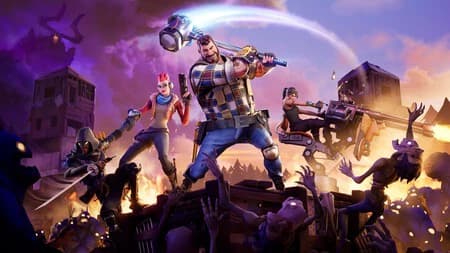
On the player side, the pressure is showing up in wallets. As IGN Brasil points out, Epic raised V-Bucks prices roughly two weeks before this layoff wave, a move that already sparked backlash in the community. In parallel, the long‑running PvE mode Save the World will become free on April 16. The logic is transparent: lower the barrier to entry for one part of the ecosystem to try to pull people back in, while increasing the ARPU on those who stay and spend.
Then there’s the content axe. Several Fortnite modes are being retired outright because, in Epic’s own words, they weren’t “impressive enough to attract and retain a large player base.” Ballistic and Festival Battle Stage shut down on April 16. Rocket Racing hangs on until October, but its missions disappear as soon as next week and ranked rewards are being phased out, even as the creation tools for user‑made race islands remain.
This is not just creative re‑focusing. It’s Epic quietly acknowledging that the sprawling Fortnite metaverse pitch – battle royale plus racing plus rhythm plus everything else – did not generate the durable engagement needed to justify the cost of maintaining those side modes at a premium level of polish and support.
Side bets are being cut loose, starting with Aquiris
The cuts aren’t stopping at core Fortnite content. Aquiris, the Brazilian studio Epic acquired and folded into Epic Games Brasil, is also taking damage. As part of the layoffs and restructuring, the studio is losing people, and its legacy racers are being pulled from sale.
Horizon Chase and Horizon Chase Turbo will be delisted on June 1. Anyone who already owns them can keep playing and re‑download them, but new players are out of luck. Horizon Chase 2 survives for now, presumably because it fits more cleanly into Epic’s current strategy. For a company that once used Fortnite profits to go on a spending spree – store wars, studio acquisitions, experimental modes – this is the other side of that arc: consolidation back to the properties that can directly justify their costs.
Horizon Chase and Horizon Chase Turbo will be delisted on June 1. Anyone who already owns them can keep playing and re‑download them, but new players are out of luck. Horizon Chase 2 survives for now, presumably because it fits more cleanly into Epic’s current strategy. For a company that once used Fortnite profits to go on a spending spree – store wars, studio acquisitions, experimental modes – this is the other side of that arc: consolidation back to the properties that can directly justify their costs.
🎮 Get This Game at the Best Price
Compare prices instantly and save up to 80% on Steam keys with Kinguin — trusted by 15+ million gamers worldwide.
*Affiliate link — supports our independent coverage at no extra cost to you

The question you would want to put to Epic’s PR team is simple: how many of these “side projects” were greenlit on the assumption that Fortnite’s cash flow would always outpace any reasonable expense line?
Live‑service bloat has finally met the bill
Strip away the corporate framing and this looks like a textbook case of live‑service bloat meeting a realistic player ceiling. For years, Fortnite growth justified an everything‑everywhere approach: constant seasons, big‑ticket collaborations, engine R&D, experimental modes, aggressive store subsidies, acquisition of external studios, and a workforce scaled to keep that machine turning.
The downturn that began in 2025 didn’t turn Fortnite into a failure. It turned it back into what it actually is: a highly successful game inside a finite market, with a finite number of hours players are willing to give it each month. Sweeney himself admits Epic has “had challenges delivering consistent Fortnite magic with every season” and that they’re only at the “early stages” of properly returning to mobile and optimizing the game for “billions of smartphones.”
At the same time, Epic is still pushing forward with Unreal Engine evolution. AnaitGames highlights that part of the internal roadmap is to move from Unreal Engine 5 to Unreal Engine 6, while improving developer tools. That R&D is expensive and strategically non‑negotiable for Epic; Unreal licensing is the other pillar of the business that can outlast any individual game’s lifecycle.
So something had to give, and the choices tell you how Epic is prioritizing. The engine lives. Core battle royale lives. Experiments that didn’t quickly prove they could hold huge audiences die. Smaller catalog titles get delisted. Staff numbers reset to something closer to a pre‑Fortnite‑explosion scale, with Epic openly saying they hope to rehire “as soon as the situation recovers.”
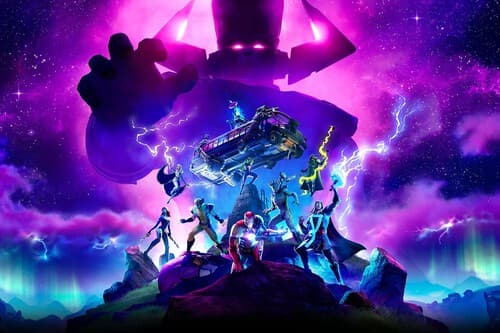
In other words: the platform fantasy contracts back into a game plus an engine business. Anyone still betting their studio on “becoming the next Fortnite” should be taking notes on how even Fortnite itself is struggling to be the next Fortnite.
AI isn’t the culprit – but that doesn’t make this cleaner
Sweeney goes out of his way to say generative AI is not behind these layoffs. Roles aren’t being cut to hand work to machine‑generated tools, and Epic frames its long‑term plan as rehiring human developers once finances stabilize. Given how often “AI efficiencies” have quietly sat behind other tech layoffs, that clarification matters.
It doesn’t make the situation meaningfully better for the people losing their jobs, or for the broader signal it sends. This is a company that has already shown it will shed hundreds of staff when the numbers demand it, even while fighting high‑profile legal battles, bankrolling an aggressive PC store strategy, and investing in future engine versions. It confirms what most developers already know but players don’t always see: in a live‑service model, the runway can look endless right up until the moment it isn’t.
What this means if you’re still playing Fortnite
For active Fortnite players, the impact will land in a few clear ways over the coming months:
- Higher costs: V-Bucks are more expensive, and there’s no sign Epic plans to reverse that. Expect the in‑game economy to keep leaning on cosmetics and battle passes to close the revenue gap.
- Fewer official modes: Ballistic and Festival Battle Stage shut down on April 16; Rocket Racing follows in October, with support winding down before then. The sandbox will still exist, but with fewer Epic‑maintained experiences.
- Save the World goes free: From April 16, the PvE mode drops its price. That’s a genuine win for anyone curious about it, but also a reminder that its previous monetization did not justify its upkeep.
- More pressure on community content: As Epic trims its own modes, user‑generated islands and experiences become even more central. That can be good for creativity, but it’s also a cost‑saving move.
None of this means Fortnite is dying tomorrow. It does mean the version of Fortnite Epic built its company around – as an endlessly expanding, all‑things‑to‑everyone platform that could bankroll everything else – is being quietly retired.
What to watch next
- April 16, 2026: Save the World goes free, Ballistic and Festival Battle Stage shut down. This will be the first visible test of whether Epic’s “fewer, better modes” approach lands with players.
- Rocket Racing’s wind‑down through October: If engagement spikes during its final months, but the mode still dies, that will say a lot about how rigid Epic’s new cost thresholds are.
- Unreal Engine 6 announcements: As Epic talks more about UE6, watch how prominently Fortnite features as the showcase. If the game becomes more of a tech demo than a growth engine, that’s a major shift in role.
- Future pricing and collabs: Any further V-Buck hikes or a slowdown in expensive crossover events will be another signal of how aggressively Epic is trying to shore up margins.
- Hiring trends in 2027 and beyond: If Epic actually resumes significant hiring once this correction is “done,” it will validate Sweeney’s pitch. If not, this was less a reset and more a permanent downsizing to post‑Fortnite‑peak reality.
TL;DR
Epic is laying off over 1,000 people, killing multiple Fortnite modes, delisting older racing games and raising V-Bucks prices because Fortnite engagement has fallen enough that the game can no longer support the company at its current size. This matters because it exposes how fragile the live‑service gold rush really is, even for one of the genre’s biggest success stories, and how quickly “platform” ambitions get cut back when the revenue graph bends the wrong way. The key thing to watch now is whether Epic can stabilize Fortnite and push Unreal Engine 6 forward without another round of cuts – or whether this is just the first visible stage of a longer contraction.
FinalBoss // Gear
Level up your setup
01Top-rated gaming headsetson Amazon→02High-refresh gaming monitorson Amazon→03Gaming chairson Amazon→04Discounted game keyson Kinguin→Affiliate links · As an Amazon Associate, FinalBoss earns from qualifying purchases.
Want to Level Up Your Gaming?
Get access to exclusive strategies, hidden tips, and pro-level insights that we don't share publicly.
Ultimate Gaming Strategy Guide + Weekly Pro Tips