
Can Tarkov’s 1.0 Finally Crush Cheaters and Win Back Players?
Game intel
Escape from Tarkov
Escape from Tarkov is a hardcore and realistic online first-person action RPG/Simulator with MMO features and story-driven walkthrough.
Can Tarkov’s 1.0 Finally Crush Cheaters and Win Back Players?
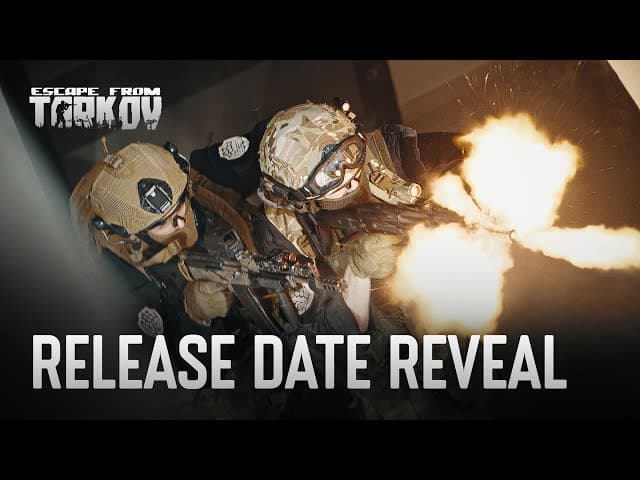
Escape From Tarkov’s long-awaited jump to version 1.0—coupled with its Steam debut on November 15, 2025—marks one of the most critical inflection points in the game’s history. I’ve been here since the sketchy netcode days when early wipes felt like wild west showdowns. Now, Battlestate Games is putting anti-cheat front and center, promising expanded “security systems aimed at protecting honest players” and teasing they’ve got “a few tricks up our sleeve” at launch. That’s the right tone—but talk is cheap. What really matters is whether those measures can withstand the initial tsunami of both new players and cheater attempts that Steam will surely unleash.
Key Takeaways
- 1.0 and Steam on Nov 15 will instantly spike concurrency—and cheater interest.
- Battlestate pledges robust anti-cheat upgrades plus undisclosed “tricks.”
- The update adds an official narrative ending, fresh optimization passes, and quality-of-life tweaks.
- Player trust depends on swift ban waves, intuitive reporting tools, and transparent communication.
- Performance and onboarding must match anti-cheat so newcomers don’t blame hacks for lag.
Breaking Down the Announcement
At its core, Battlestate Games knows exactly what prospective Steam buyers will demand: fairness. In a developer update on October 28, 2025, game director Nikita Buyanov admitted that years of community criticism over cheats and exploits have been “upsetting.” He explained, “We have a huge department working on this, banning players day and night and coming up with new methods. The anti-cheat arms race never ends.” That frankness is refreshing—it acknowledges that anti-cheat isn’t a set-and-forget affair but a constant battle of measure and countermeasure.
Beyond the security pitch, 1.0 finally closes Tarkov’s decade-long early access chapter with a proper narrative campaign ending, console versions on PS5 and Xbox Series X, and sweeping optimization work. Performance improvements—especially on hot maps like Streets, Customs, and Shoreline—are crucial. After all, bad netcode and stutters can look a lot like hacks to a jittery player. If your client drops frames around a firefight, your first reaction might be to assume someone is wall-hacking you, not that your GPU driver just hiccupped.
The Real Story: Cheaters, Wipes, and Player Trust
Escape From Tarkov’s hardcore extraction loop—loot, fight, extract—thrives on tension. But that tension collapses the moment you suspect your opponent isn’t playing fair. We’ve seen recurring cycles in Tarkov’s history: community investigations surface unusual headshot compilations, Battlestate drops a massive wave of bans, things quiet down for a month or two, and then the cycle restarts. In late 2019, for example, a ban wave that reportedly removed thousands of accounts over 48 hours silenced many cheat vendors—temporarily. But every time player counts climbed, the cheat makers returned, tweaking their tools.
Historically, Battlestate has layered third-party anti-cheat (like Easy Anti-Cheat) over in-house heuristics and manual reviews. They wave bans in bulk to avoid tipping off cheat developers. What’s new this time is the timing: bundling these undisclosed “tricks” with the Steam launch means cheaters will be in for a surprise on day one. If those methods include advanced server-side heuristics, behavior profiling, and quicker shadow-flagging, we could see the initial surge of cheating attempts blunted before they spread.
Anti-Cheat Deep Dive: What “A Few Tricks” Might Mean
We don’t know the full list, but here’s a plausible breakdown of the tools Battlestate could deploy:
- Server-Side Heuristics: Running integrity checks and movement/aim analyses on the server to detect anomalies—like instantly rotating to a 180-degree headshot or improbably consistent recoil compensation.
- Behavior Profiling with Machine Learning: Flagging accounts whose kill-death patterns, movement smoothness, or reaction times fall well outside human norms. Over time, the system refines its model to reduce false positives.
- Shadow-Flagging: Quietly tagging suspected cheaters in a soft-ban state for extra monitoring rather than an immediate ban, to gather full behavior logs without alerting cheat coders.
- Improved Packet Filtering: Identifying and blocking malformed or tampered data packets that many wallhacks and aimbots rely on to leak position and hit registration information.
- Enhanced In-Raid Reporting UX: Allowing players to tag specific kill clips for review, auto-attach timestamps, and get follow-up notifications when action is taken.
Combined, these systems could catch cheaters faster and more reliably than before. The real test will be the cadence: are bans handed down within hours of suspicious activity, or does it still take days for manual review queues to clear?
Lessons from Other Competitive Shooters
Anti-cheat is a universal headache. Valve’s VAC system in Counter-Strike: Global Offensive banned over half a million accounts in a single day back in 2020—but cheaters kept popping right back up, often on new accounts. Ubisoft’s R6 Siege in 2021 saw more than 200,000 bans in a coordinated wave, yet community trust only rebounded when bans became regular and transparent. Destiny 2’s Bungie reported that after introducing server-verified weapon handling in 2019, they cut reported cheat incidents by roughly 60% in the first month.
FinalBoss // Gear
Level up your setup
01Graphics cardson Amazon→02Gaming laptopson Amazon→03High-refresh gaming monitorson Amazon→04Discounted game keyson Kinguin→Affiliate links · As an Amazon Associate, FinalBoss earns from qualifying purchases.
The takeaway: one massive ban wave is a statement, but consistency cements credibility. If Battlestate can maintain ban rates proportional to activity spikes—say, every 24-48 hours during peak concurrency—players will feel the difference. And with Steam exposing Tarkov to potentially millions of new buyers, that consistency becomes mission-critical.
Why the Steam Launch Raises the Stakes
For nearly a decade, Tarkov relied on its own launcher, community forums, and word-of-mouth, keeping feedback loops relatively small. On Steam, every hiccup is amplified: queue times, rubber banding, unregistered hits—they’ll all land in hundreds or thousands of negative reviews within hours. Discoverability can skyrocket, but so can review bombing if the first weekend feels like a free cheat fest.
On the technical side, I’ll be tracking three key metrics in the first two weeks:
- Server Health & Matchmaking Stability: Are queues handling 100k+ concurrent users without desync spikes?
- Ban Wave Cadence: Do we get official ban-count updates within 24-72 hours of a surge in reports?
- Performance Targets: Are frame-times on high-action maps like Customs and Interchange consistent on mid-range rigs?
If Battlestate nails those three, they’ll buy goodwill. If not, cheater outrage and performance complaints will drown out even their best narrative set-pieces.
What Gamers Should Watch For at Launch
- Ban Wave Timing: Check official Battlestate channels for ban-count announcements within the first 48 hours.
- Reporting Feedback: Test the in-raid report tool—do you get confirmation when a flagged player is banned?
- Server Stability: Monitor rubber-banding and packet loss during peak Steam hours (10 AM–4 PM UTC).
- New Player Drop-Off: Track Steam concurrent user graphs—does retention hold beyond the first two days?
- Optimization Claims: Use frame-time overlays on key maps to verify promised improvements.
- Community Comms: Expect daily developer blogs or social updates on anti-cheat effectiveness metrics.
Smooth Onboarding Matters Too
Steam newcomers will arrive seeing big-streamer clips of crazy clutch plays, not tutorials on gear selection or sound-propagation basics. Poor onboarding can make legitimate players rage-quit and chalk their deaths up to cheaters. Battlestate should consider boosting starter kits, simplifying early quests, or adding a “beginner safe zone” for the first five raids. That way, newcomers learn the fundamentals without immediately diving into max-gear shoot-outs where a misstep feels like a glitch rather than a learning curve.
Final Verdict: Trust, But Verify
Nikita Buyanov’s candid admission of “waves of hatred” makes sense—devs shoulder the blame even when the battle is invisible. But in a PvP extraction shooter, trust is earned through action, not promises. If Battlestate delivers on swift, visible ban waves, robust performance, and clear, frequent communication, 1.0 won’t just be a version number. It could be the moment Tarkov finally cleans house, proves it can scale, and turns the Steam spotlight into a long-term community boon rather than a flashpoint for cheating outrage.
TL;DR
Escape From Tarkov hits 1.0 on Steam Nov 15 with big anti-cheat claims, a narrative ending, and optimization overhauls. The launch’s success will hinge on rapid ban waves, stable servers, and transparent comms. If Battlestate nails those, this could be the cleanest wipe—and the one that finally brings a broader PC crowd into Tarkov’s unforgiving world for good.