
Table of Contents (7)
Why Rossbach matters: EU5’s first major update targets the game’s biggest frustrations
This caught my attention because EU5 shipped with many of the sharp, elegant systems Paradox fans want-yet players quickly flagged the same kinds of friction that can short-circuit long campaigns: nested windows, repetitive micromanagement, and thin post-launch tooling compared to EU4. Rossbach (patch 1.1) looks like Paradox Tinto’s direct response: a practical, quality-of-life-heavy update that prioritizes playability over flash.
Key takeaways
- Pinned filters, muteable alerts and a cleaned-up UI aim to reduce window spam and help you find data fast.
- Automation and mass actions (formation toggles, mass building upgrades, move-all-unit commands) cut repetitive clicks.
- EU4’s Army/Navy macro-builder returns, plus easier mercenary recruitment – big wins for later-game logistics.
- New map modes and the complacency mechanic change strategic planning and make peace/stasis meaningfully risky.
{{INFO_TABLE_START}}
Publisher|Paradox Tinto
Release Date|TBA
Category|Grand Strategy
Platform|PC (Windows/macOS/Linux)
{{INFO_TABLE_END}}
What’s actually changing (the useful bits)
Patch 1.1, Rossbach, is clearly focused on two problems: information overload and tedious repetition. You get pinned filters per screen so your common queries persist, and alerts you can permanently mute (with a recovery menu if you change your mind). Small touches like collapsible unit screens, a second “detach and select” option, and a more prominent call-to-war notice help reduce moments where the UI actually fights you.
On the automation front, mass building upgrades and formation automation mean you can spend less time babysitting provinces and armies. For players who still enjoy the micromanagement, the update adds move-all commands by category/sub-category so detailed control remains possible without endless clicks.
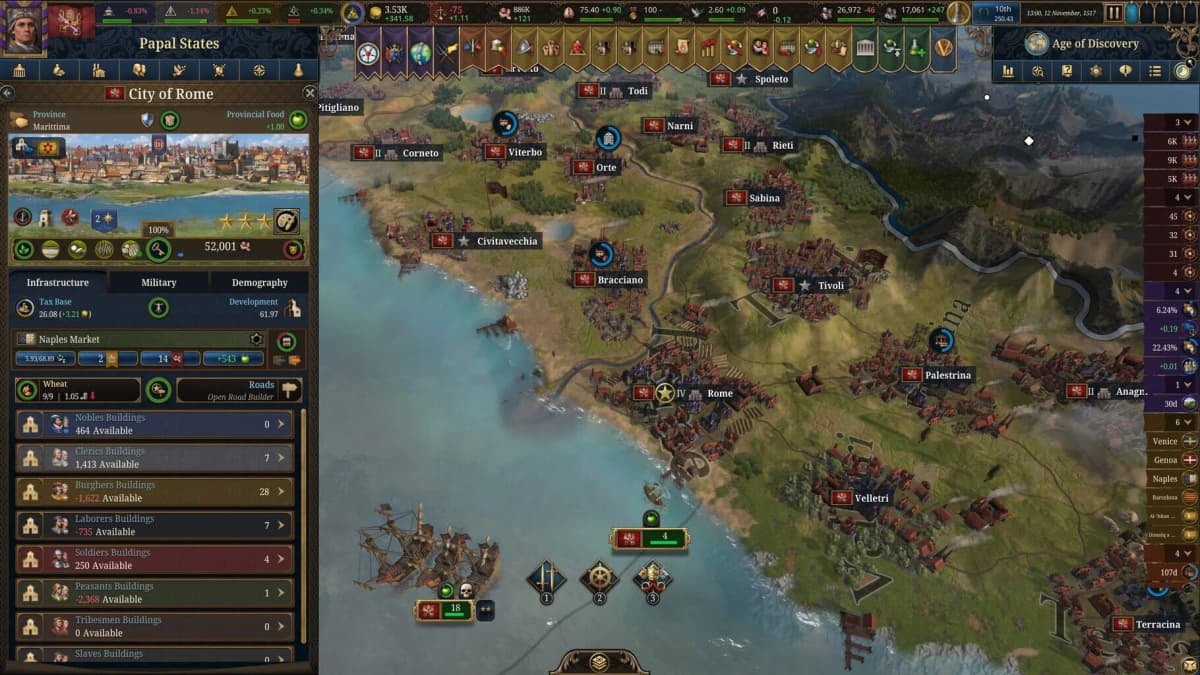
The return of the Army and Navy macro-builder from EU4’s Art of War is a notable concession to player expectations. Paradox Tinto explicitly acknowledged this tool had become something “you expected from an EU game”-and for good reason. Saveable templates, multi-location recruitment and automatic rendezvous behavior will streamline force composition, making late-game mobilization far less of a chore.
Systems and strategic implications
Several mechanical tweaks change how you plan campaigns. Privateering now can earn area-specific gold beyond raiding—this nudges naval conflict into more deliberate economic play rather than purely attritional warfare. Topography bonuses for nations like Austria should help historically mountain-bound powers feel meaningfully distinct without being overpowered.
Rebellions also behave differently: weak uprisings that lack popular support won’t spawn endless tiny wars but instead apply localized debuffs, preventing the irritating cascade of micro-revolts while still creating strategic headaches. The new complacency stat is the headline design experiment here: empires with no threats will slowly accrue penalties. It’s a blunt instrument to simulate decline, but it addresses a long-standing gripe—why do stable, unchallenged empires never rot?
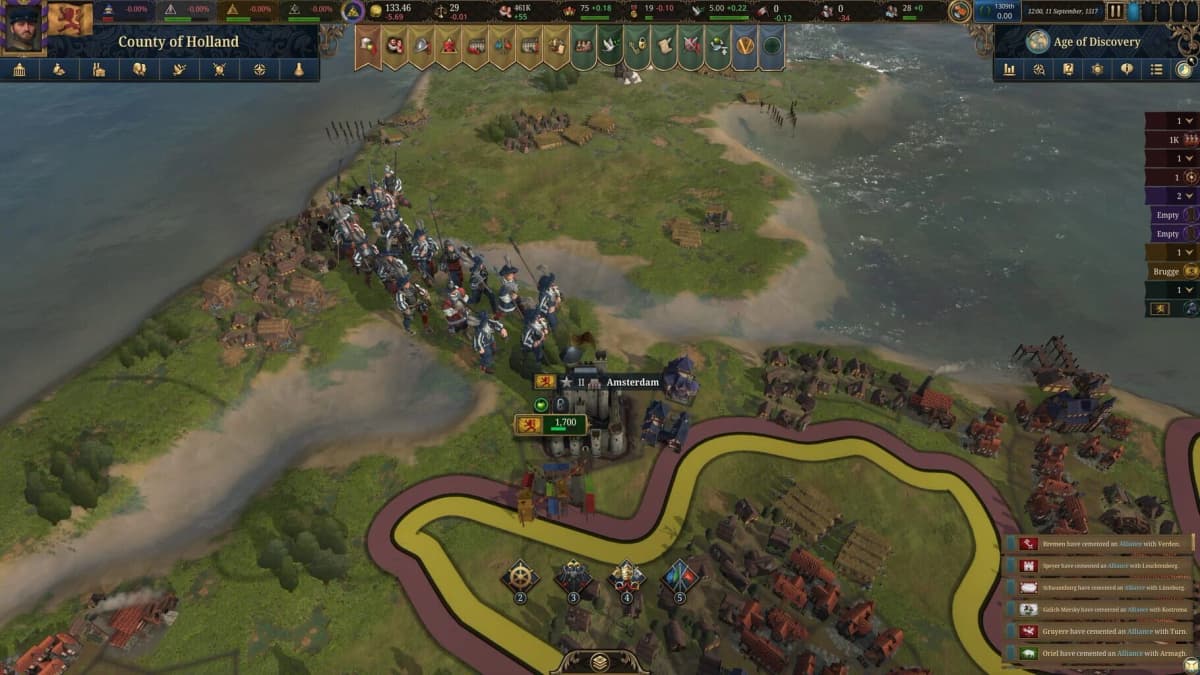
That last mechanic will need careful tuning. Complacency could incentivize aggressive play (not necessarily a bad thing), but it also risks punishing legitimately well-run states or forcing artificial conflicts if thresholds and recovery are poorly balanced.
UI, economy and the data you actually need
Map modes expand significantly: economy base, market food balance, rivers, coalitions, plus AI “conquer desire” and “threat” overlays give you fast insight into geopolitical intent—handy for predicting conflict before the casus belli appears. Market screens now show supply/demand impacts and historical pricing; estate economy screens are reworked to display influencing factors clearly. Those are the sorts of readability investments that separate a game you play for 20 hours from one you play for hundreds.
What this means for players
If you stopped playing EU5 because it felt fiddly, Rossbach is the patch most likely to pull you back in. It shaves repetitive tasks, restores a beloved macro tool, and surfaces data that should have been obvious. For long-term fans, the complacency mechanic and tweaks to privateering and rebellions show that Paradox Tinto is willing to experiment with empire-level behavior, not just add more UI polish.
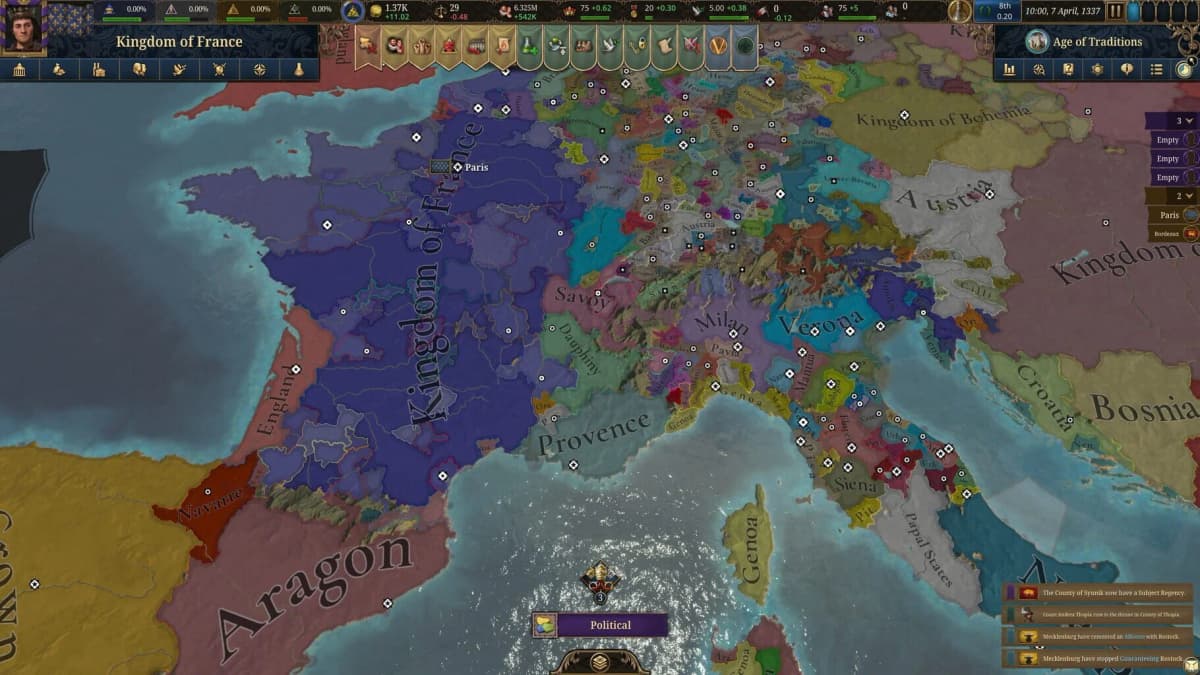
That said, the proof will be in the tuning: automation and new penalties are only good if they respect player agency and don’t force artificial solutions. I’m especially keen to see how complacency plays out in multiplayer campaigns and tall vs wide playstyles.
TL;DR
Rossbach (EU5 patch 1.1) is a pragmatic, welcome update: major UI cleanups, automation and the return of the macro-builder address the franchise’s usability shortfalls, while new map modes and mechanics (privateering changes, rebellion debuffs, complacency) shift strategic incentives. It doesn’t solve every problem, but it shows Paradox Tinto is listening—and moving EU5 toward the long-term support model players expect.
FinalBoss // Gear
Level up your setup
01Top-rated gaming headsetson Amazon→02High-refresh gaming monitorson Amazon→03Gaming chairson Amazon→04Discounted game keyson Kinguin→Affiliate links · As an Amazon Associate, FinalBoss earns from qualifying purchases.
Want to Level Up Your Gaming?
Get access to exclusive strategies, hidden tips, and pro-level insights that we don't share publicly.
Ultimate Gaming Strategy Guide + Weekly Pro Tips