
Table of Contents (7)
Europa Universalis 5 update 1.1 “Rossbach”: fixing AI, economies and the early game
This patch caught my attention because EU5 launched with brilliant systems but a handful of pain points that shape the whole campaign – AI aggression, tax flows, and how the Holy Roman Empire behaves. Rossbach looks like the first serious attempt to turn those rough edges into a more durable grand-strategy experience.
Key takeaways
- AI aggression scaled back by default to a 24‑month peace cooldown; a high‑aggression 6‑month rule remains optional.
- Economic systems reworked: “Potential Tax Base” renamed to “Wealth,” lost tax goes to estates, and a new Peasant Enfranchisement mechanic changes who actually gets taxed.
- Diplomacy and estate interactions expanded – transfer subjects, move subject holdings, provoke rebels, appease estates, new treaty options.
- Army formation/autobalance gets templates and a combined‑arms incentive; HRE protections and Golden Bull tweaks slow early collapse.
{{INFO_TABLE_START}}
Publisher|Paradox Tinto
Release Date|Patch 1.1 “Rossbach” (coming soon)
Category|Grand Strategy
Platform|PC (Windows/Mac/Linux)
{{INFO_TABLE_END}}
What’s changing and why it matters
Paradox Tinto is tackling problems that aren’t just bugs – they’re framing issues that decide whether whole campaigns feel satisfying or arbitrary. The most visible change is the AI aggression tuning. The studio admitted the earlier ramp-up made many matches unpleasant: players felt constantly pushed into wars or steamrolled. The new default follows the popular community mod and enforces a 24‑month minimum between wars, while keeping a 6‑month high‑aggression game rule for players who want a bloodier map.
That feels smart and pragmatic: give the broad audience a calmer baseline while letting veterans opt into the faster, chaotic play they love. It’s a clear example of listening to telemetry and the mod scene rather than doubling down on a single vision.
The economic changes are the patch’s second pillar. Renaming Potential Tax Base to “Wealth” is small but clarifying. More importantly, tax income lost through lack of control now flows to estates — and the Peasant Enfranchisement system models how serfdom, estate privileges, and settlement rank siphon wealth to nobles. In practice this means you can’t just tweak a slider and keep the same fiscal engine; political choices and estate management actually rewire who gets paid.
Other systemic changes — adjustments to bailiffs, river bonuses, mini‑capital buildings and limits on road reach — are designed to decentralize power and blunt the “one big capital rules everything” effect. Doubling population growth from food, but allowing decay influenced by climate and war, makes population a more strategic resource rather than a passive number.
Militarily, auto‑balancing now suggests templates and rewards combined‑arms armies (most common unit <50% gives a bonus), which should nudge players away from single‑unit spam. There’s a Steppe Horde exception (70%) to respect their historical composition. On the HRE front, the emperor avoids declaring offensive wars on fellow members and the Golden Bull becomes progressively cheaper — a clear attempt to prevent early unravelling by expansionist neighbors.
New diplomatic toys (and the AI limits)
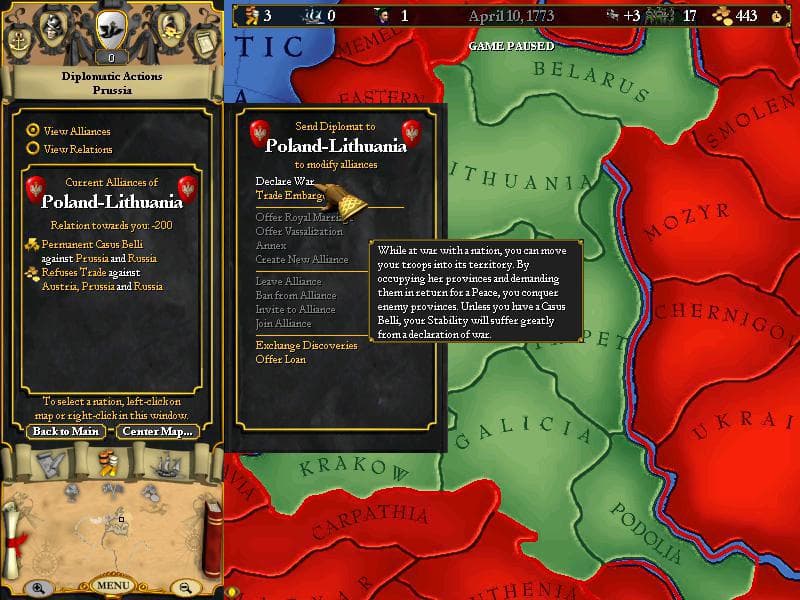
Rossbach adds several neat diplomatic actions: transfer a subject to another power, move lands between subjects (AI won’t do this), lock production methods to stop automation, and richer peace terms (including taking maps). You can provoke rebels in a rival to time their internal collapse, or use an appeasement cabinet action to slowly pacify an unhappy estate. There’s also a toggle so fleets automatically flee to friendly ports in war. These aren’t flashy — they’re tools that let you engineer outcomes instead of reacting to RNG.
My perspective — cautious optimism
I like that Paradox Tinto is prioritizing quality‑of‑campaign fixes over novelty. The defaults feel aimed at reducing frustration without flattening choice. Renaming, estate income routing, and peasant enfranchisement show a willingness to tie mechanical clarity to political storytelling — essential for a grand‑strategy title that wants player decisions to feel meaningful.
That said, the proof will be in the long campaigns. Balancing AI aggression is fiddly; a 24‑month peace rule may produce a slower, more deliberate pace, but it could also make alliances calcified if not paired with diplomatic incentives to shift politics over time. Similarly, estate systems add depth but raise the risk of opaque bookkeeping unless UI clarity follows.
What this means for players
If you found EU5 a little too swingy at launch, Rossbach is aimed squarely at you: calmer AI, fewer early HRE collapses, and deeper fiscal mechanics that reward long‑term statecraft. If you loved the early chaos, the high‑aggression rule keeps that option. Either way, diplomacy and army composition now feel like areas where player skill and planning will matter more than they did in early 1.0 builds.
TL;DR
Rossbach is a thoughtful first major patch: it tones down default AI aggression, reworks tax and estate flows (Wealth & Peasant Enfranchisement), adds meaningful diplomatic actions, improves army templates and protects the HRE’s early lifespan. It prioritizes campaign quality and player tooling — exact effects will depend on long campaigns, but this is the kind of iteration EU5 needed.
FinalBoss // Gear
Level up your setup
01Top-rated gaming headsetson Amazon→02High-refresh gaming monitorson Amazon→03Gaming chairson Amazon→04Discounted game keyson Kinguin→Affiliate links · As an Amazon Associate, FinalBoss earns from qualifying purchases.
Want to Level Up Your Gaming?
Get access to exclusive strategies, hidden tips, and pro-level insights that we don't share publicly.
Ultimate Gaming Strategy Guide + Weekly Pro Tips