
Table of Contents (10)
The day German games stopped feeling like a bad joke
I remember the exact one-two punch that made me rethink the future of German games. First, the gut punch: Piranha Bytes – the Gothic and Risen studio that basically defined “janky but soulful” AA RPGs – shut down in 2024. It felt like the universe confirming every cynical take about Germany being great at making cars and regulations, but not actual video games.
Then, almost whiplash-fast, came the second hit: Rockfish Games, a 30-person indie studio from Hamburg, scored a record €8 million non-repayable federal grant for Everspace 3. Same country, same industry, wildly different energy. On one side, a cult studio quietly fades out. On the other, a small, independent team basically gets told by the German state: “Here, go make your next big space game, we’ve got nearly half your budget.”
I’ve been playing PC games long enough to remember when “made in Germany” mostly meant Anno, Gothic, The Settlers and a bunch of shovelware CDs that came free with cereal. I’ve watched this country’s games scene get mocked, ignored, hyped as “the next big hub”, then quietly sidelined again. So when I see a plus kolumne: Everspace moment like this – a mid-budget, unapologetically nerdy space shooter getting serious state money – I pay attention.
Because under all the dry funding numbers and ministry names there’s a pretty simple question lurking: are we finally going to take games seriously in this country, or are we going to keep pretending it’s all just a quirky side hustle until the next studio closure headline drops?
Eight million sounds massive… until you’ve seen AAA math
Let’s get the facts straight before drowning in feelings. Rockfish got €8 million from the Bundesministerium für Forschung, Technologie und Raumfahrt – roughly, the Federal Ministry for Research, Technology and Spaceflight. That money is non-repayable. It’s a grant, not a loan. And it covers up to 45% of the total development costs for Everspace 3.
Do the math: that puts the project budget somewhere around €20 million. For a fully independent studio with no publisher, that’s huge. For comparison, earlier record holders like Ubisoft Mainz got around €5.7 million for Anno 117: Pax Romana (plus more for DLC). Rockfish just blew past that – and they’re not backed by Ubisoft, Embracer or some faceless mega-publisher. This is an indie operation that built Everspace on Kickstarter and grit.
Now zoom out to the global scale and that 20 million suddenly looks tiny. Big-budget “AAA” games are quietly creeping into the €150–300 million territory when you factor in development and marketing. That’s why you get live-service bloat, season passes and battle passes stapled to everything that moves: those budgets have to be justified to shareholders somehow.
Everspace 3 is not trying to be that. Rockfish isn’t building the next Starfield with 1,000 planets, a content treadmill, and a decade-long monetisation roadmap. This is a focused, space-action RPG made in Unreal Engine 5, by a team that already showed with Everspace 2 that they know exactly how far they can stretch a “AA” budget without everything collapsing into jank.
So no, €8 million won’t suddenly catapult Germany into the same league as Montreal or Tokyo. But it’s actually better than that: it makes the mid-tier viable. The space that used to be filled by games like Freelancer, X-Wing, or the older X-series from Egosoft. The kind of games where a smallish team can still swing for the fences creatively without a boardroom demanding a battle royale mode.
Why this specific grant actually matters
Germany has finally started putting real money behind speeches about “games as culture and economic factor”. The annual federal games funding budget has grown from around €88 million to over €120 million, with €125 million earmarked for 2026 alone. On paper, that’s nice. In practice, those numbers only mean something once they turn into actual projects – and actual jobs.
That’s where Everspace 3 becomes more than just “cool, I get another space shooter”. Rockfish currently has roughly 30 employees. With this grant, they’ve explicitly talked about expanding the team and creating new positions. Their sales are global, but their taxes land in Germany. That’s basically the ideal case politicians always claim to want: high-skill, exportable digital products built at home.
And it’s not some random gamble either. Everspace 2 didn’t just sell well; it won Best German Game at the 2024 Deutscher Computerspielpreis. That matters. It shows this isn’t the state throwing darts at a board and hoping something sticks. Rockfish has already shipped, supported and grown a complex single-player game over years – exactly the kind of long-tail, premium title that quietly outperforms a lot of doomed live-service experiments.
Federal research minister Dorothee Bär even called the €8 million grant a “milestone” for making German studios competitive globally. Yeah, politicians love that word. But for once, it’s not totally empty spin. Because this is actually the largest single grant ever awarded to a German game under this programme, and it’s going to a studio that spent the last decade building something from scratch instead of being a local outpost of a multinational.
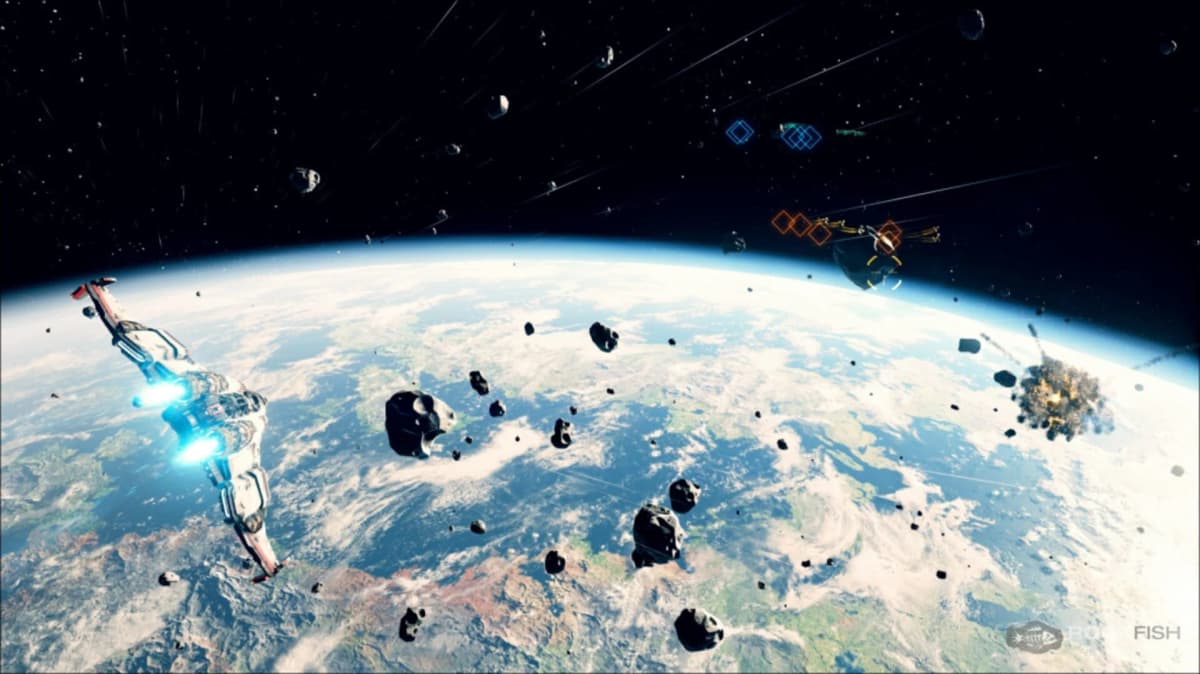
This is also not Rockfish’s first rodeo with funding. They previously received about €1.65 million for the Everspace 2: Wrath of the Ancients expansion and another ~€520k for a prototype. In other words, the state bet small on them before, saw that bet pay off, and is now doubling down. That’s exactly how public funding should work: reward proven execution, not just glossy pitch decks.
The usual “subsidies for nerds” arguments are lazy as hell
Every time game funding comes up, the same tired complaints crawl out of the woodwork. “Why are we paying for nerd toys?” “Shouldn’t the market decide?” “If the game is good, a publisher will fund it.”
I’ve got news: the market already decided. It decided to chase massive, low-risk franchises, mobile gacha, and whatever keeps engagement metrics upward for quarterly reports. It decided Piranha Bytes wasn’t worth keeping around. It decided single-player mid-budget games are a luxury unless they’re attached to an IP with a Disney lawyer squad on standby.
Meanwhile, the German games market is massive – billions in revenue – but only a small slice of that money actually lands with German developers. A PC Games report recently pointed out that from 2018 to 2024, the number of German games companies almost doubled (from 524 to 948) and employees increased by around 20% to roughly 14,800 people. But the domestic share of game sales? Still depressingly low. Most of the cash flows straight to studios in North America and Asia.
So yeah, I’m absolutely fine with some of that tax money looping back into our own dev scene, especially through non-repayable grants that don’t chain studios to predatory publisher deals. The alternative isn’t some pure, free-market utopia where the best ideas rise to the top. The alternative is more consolidation, more layoffs, and more studios here turning into work-for-hire ghost kitchens for other people’s IP.
And honestly, complaining about €8 million going to a proven mid-size studio while we spray subsidies at other industries like a busted hose is straight-up bullshit. Games are culture, yes, but they’re also one of the few digital exports where a 30-person team can still punch above its weight. That leverage is exactly where smart public money should live.
Everspace is exactly the kind of game we should be backing
There’s another reason I’m so on board with this particular funding story: it’s going to a type of game that is weirdly endangered right now.
I grew up mainlining space sims – X-Wing Alliance, Tie Fighter, Freelancer, later Egosoft’s X-series. That blend of cockpit action, light RPG systems and exploration is my comfort food. But the genre slowly got squeezed between two extremes: bloated “forever games” like Star Citizen or Starfield, and tiny indie roguelites made by three people in a basement.
I grew up mainlining space sims – X-Wing Alliance, Tie Fighter, Freelancer, later Egosoft’s X-series. That blend of cockpit action, light RPG systems and exploration is my comfort food. But the genre slowly got squeezed between two extremes: bloated “forever games” like Star Citizen or Starfield, and tiny indie roguelites made by three people in a basement.
🎮 Get This Game at the Best Price
Compare prices instantly and save up to 80% on Steam keys with Kinguin — trusted by 15+ million gamers worldwide.
*Affiliate link — supports our independent coverage at no extra cost to you
Everspace 2 hit this beautiful sweet spot. It wasn’t pretending to be a living galaxy you’d inhabit for the rest of your life, but it also wasn’t a throwaway “one run and done” roguelike anymore. It built on the first game’s arcade roots and grew into a proper single-player looter-shooter in space, with handcrafted locations, solid writing, and crunchy ship builds. It felt ambitious without trying to swallow the entire genre.
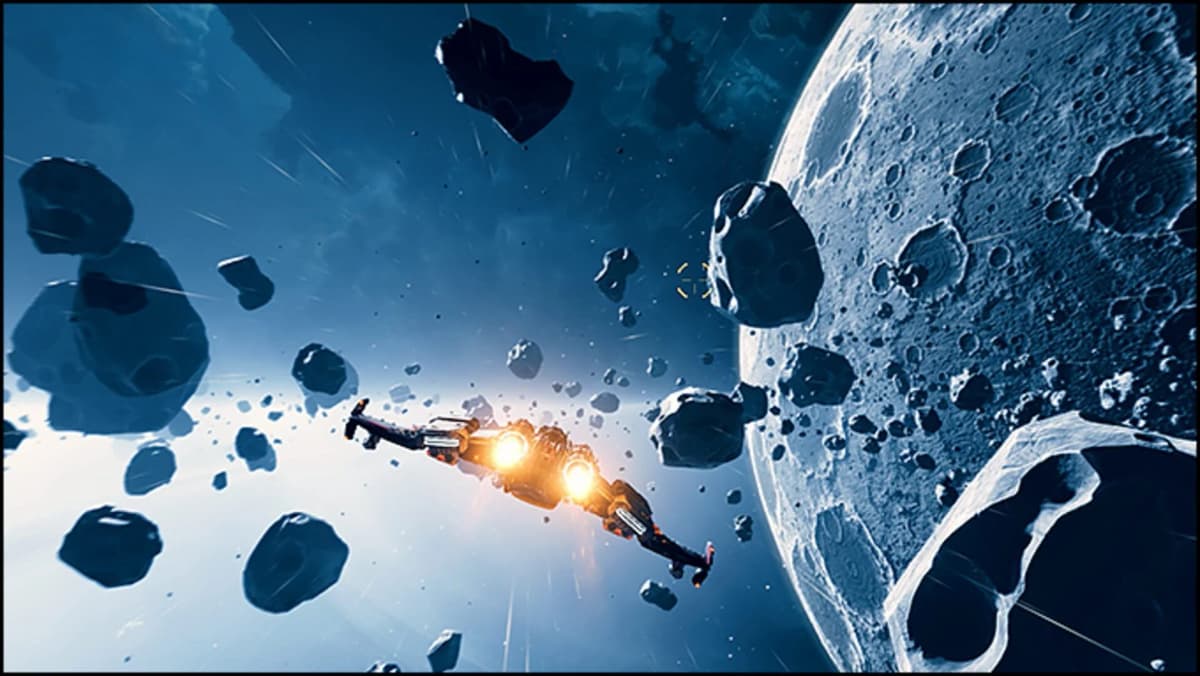
And crucially, Rockfish treated it like what a lot of modern “service games” should be: a premium title with long-term support, meaty updates and targeted DLCs, not a casino in disguise. That whole debate about story-driven games secretly being the best service games? Everspace 2 is a textbook example. If I had to file a plus kolumne: Everspace game under that emerging trend, it’d sit right next to stuff like Baldur’s Gate 3 and Elden Ring on the “do it right” shelf.
So when I hear Everspace 3 is coming, powered by Unreal Engine 5 and backed by enough budget to grow the team and polish the hell out of it, I’m not just thinking “cool, more lasers”. I’m thinking: this is exactly the scale of project that can keep mid-budget, PC-first, creatively interesting games alive between the extremes of live-service fatigue and $70 blockbuster bloat.
Grants alone won’t save German games – but they can buy us time
I don’t want to pretend this one funding decision magically fixes everything. It doesn’t. We’re still dealing with a skills shortage, bureaucratic nightmares around visas, and a public perception that treats games as either dangerous toys or weird art projects, depending on who you ask.
Even with €120–125 million per year in federal funding, the pie is not infinite. When one studio gets €8 million, others won’t. There’s a very real risk that political winds shift, budgets get slashed in the next austerity wave, and we’re back to scrapping over crumbs while pointing at this one record grant like a golden age that never quite arrived.
But here’s where I think the Everspace 3 deal genuinely matters: it signals what kind of projects we value. Small, independent, tech-savvy studios that ship. Teams that use modern engines like Unreal 5 efficiently instead of trying to reinvent proprietary tech for ego points. Developers that can hit a sustainable “AA” scope instead of chasing mythical AAA glory.
Look at something like Arc Raiders from Embark. Whatever you think of that game, their whole approach – smaller team, heavy use of photogrammetry, procedural tools, smart pipelines, even using AI as a development tool rather than a talent replacement – shows how much you can squeeze out of a lean, modern setup. That’s the direction mid-sized German studios need to move in, and Rockfish is already broadly there.
Public funding can’t fix shit pipelines, creative paralysis or bad management. What it can do is keep developers alive long enough to get their tech, teams and IPs into a place where they can compete – not by size, but by focus. It can mean the difference between “we had to cancel the sequel” and “we shipped Everspace 3 and now we can hire ten more people for the next one.”
My selfish reason for caring: I want more games like this
On a personal level, this isn’t just about national pride or industry charts. It’s about the kind of games I actually sink hundreds of hours into.
I don’t want every space game to be a forever-MMO with battle passes and FOMO timers. I don’t want every single-player title to be a 200-hour checklist with Ubisoft towers and busywork. I want tightly scoped, skill-based, replayable experiences with enough depth to matter and enough restraint to respect my time.
Everspace 2 scratched that itch in a way few recent games have. Tight combat. Meaningful builds. A proper campaign that doesn’t forget to be fun. A tone that doesn’t drown in irony or empty grimdark. The idea that Everspace 3 can now push that formula further – more systems, more handcrafted spaces, more freedom to experiment without a publisher breathing down their neck – genuinely excites me in a way most AAA announcements don’t anymore.
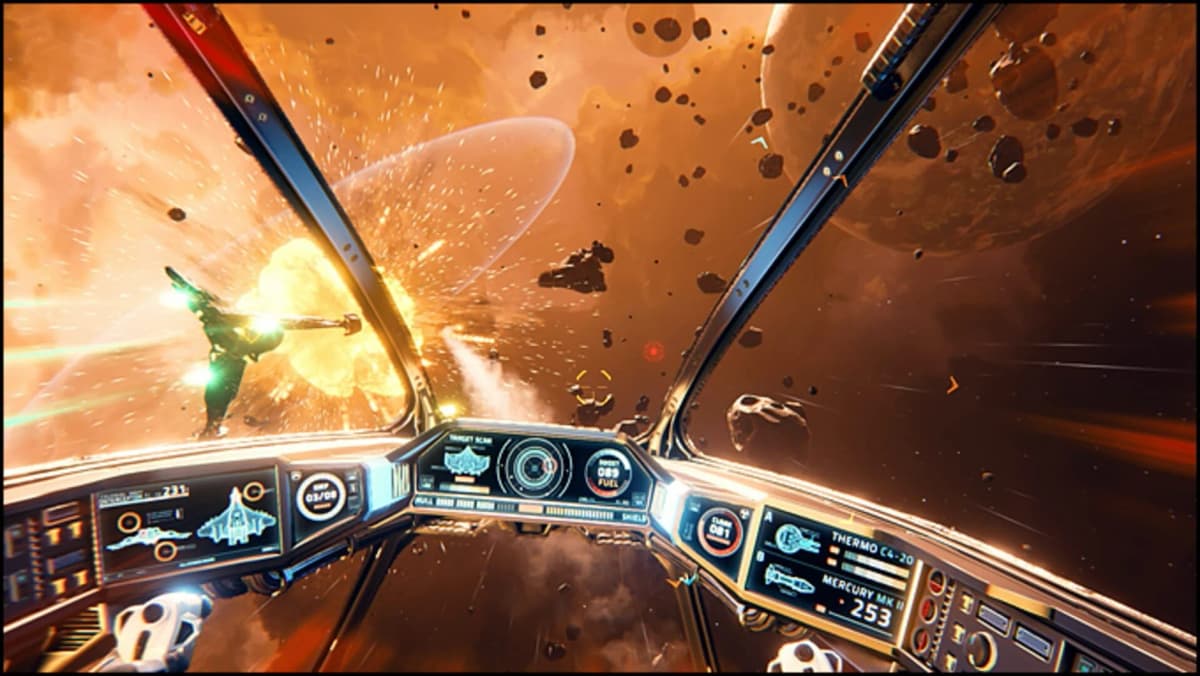
And yeah, knowing that my tax money is helping that happen? I’m fine with that. Thrilled, even. I’d rather bankroll a mid-budget space RPG from Hamburg than yet another generic road expansion or some doomed vanity AI initiative that gets memory-holed in a year.
Where I draw the line – and what I expect from Rockfish now
Of course, with public money comes expectations. And this is where I get a bit demanding as a player.
If you take €8 million of federal funding, you don’t get to turn around and ship half a game wrapped in “we’ll fix it later” patch notes. You don’t get to launch with predatory monetisation and then claim your hands were tied by investors. You don’t get to disappear for two years and then blame “the market” when things go sideways.
The good news is: Rockfish’s track record suggests they know this. They’ve been absurdly transparent with their community in the past, especially around Everspace 2’s Early Access phase. They shipped updates, listened to feedback, and resisted the urge to bloat the game into something it couldn’t be. That discipline is exactly what they need again now – just with a bigger war chest and a shinier engine.
So my line is simple: if Everspace 3 comes out as a polished, content-complete, fairly monetised, deeply replayable space action RPG that builds on what 2 did right, then this record grant will have been worth every cent. Not just for me as a fan, but as proof that German public funding can actually nurture sustainable, independent studios instead of just producing powerpoint decks and press releases.
If it doesn’t? Then the next time politicians talk about “milestones” and “global competitiveness”, they’re going to have a much harder sell. And frankly, they’ll deserve the backlash.
The hopeful part: this doesn’t have to be a one-off
Despite all my hard-earned cynicism, I’m choosing to see the Everspace 3 grant as more than just a lucky break. It’s a template.
A template for how mid-sized German studios can survive and grow without selling their souls to mega-publishers. A template for how public funding can back specific, focused projects instead of just throwing money at vague “innovation clusters”. A template for how a game that started as a scrappy Kickstarter roguelike can, in under a decade, evolve into a flagship, state-backed AA space RPG.
I don’t expect every indie to suddenly get €8 million. Nor should they. But if this record grant becomes the first chapter in a longer story – more Rockfish-style successes, more mid-budget bets, more recognition for studios that quietly deliver – then maybe, just maybe, “made in Germany” will stop being a punchline in gaming circles.
And if the price of that future is that a chunk of my taxes goes toward a studio in Hamburg making Everspace 3 in Unreal Engine 5 instead of another grim austerity chart, I’ll pay it gladly – day one purchase included.
FinalBoss // Gear
Level up your setup
01Top-rated gaming headsetson Amazon→02High-refresh gaming monitorson Amazon→03Gaming chairson Amazon→04Discounted game keyson Kinguin→Affiliate links · As an Amazon Associate, FinalBoss earns from qualifying purchases.
Want to Level Up Your Gaming?
Get access to exclusive strategies, hidden tips, and pro-level insights that we don't share publicly.
Ultimate Gaming Strategy Guide + Weekly Pro Tips