
Table of Contents (11)
Quick Overview: From Tower to First Working Airship
The early game in Everwind doesn’t spell out how all the airship pieces actually fit together. In practice, your first 60-90 minutes are about doing three things efficiently: looting the starting tower for blueprints and materials, salvaging the wrecked ship for parts and pipes, then claiming the abandoned starter vessel and powering it up. After that, upgrading the ship core is what unlocks more engines, balloons and generators so you can go faster, higher and bigger.
This walkthrough sticks to that path and cuts out the time-wasting detours I hit on my first run, like overbuilding a heavy deck before I had enough lift, or trying to resurrect the destroyed starter hull.
Step 1 – Strip the Tutorial Tower Properly
When you spawn in the tower, treat it as your starter warehouse and blueprint library. The game lets you leave quickly, but it’s worth methodically clearing it before you step outside.
- Break every breakable object – crates, damaged barrels, furniture, railings. Use your axe or main harvesting tool to speed this up.
- Watch for copper nails from damaged barrels – you’ll need them soon for crafting structural blocks and early ship parts.
- Grab all the wood and fiber-type materials you see; don’t worry about overfilling your inventory yet, you’ll use almost all of it.
- Check for portable crafting stations (basic workbench-type items) and pick them up if they’re loose. Having a station you can drop anywhere saves a lot of running later.
As you smash things, you’ll see new blueprints unlock in the crafting menu. This is how you learn basic recipes like planks, rope, simple structural blocks and sometimes early ship components. Before leaving the tower:
- Open your crafting menu.
- Queue up a batch of planks from raw wood.
- Craft rope from grass/fiber once you have enough.
You’ll need planks and rope for almost every airship component, so having a decent stock before you even see the destroyed ship cuts down on backtracking. Once you’ve cleared everything you reasonably can and precrafted the basics, step outside.
Step 2 – Scan and Salvage the Destroyed Ship
Outside the tower there’s a wrecked airship on the starting island. This one is beyond saving; its main job is to teach you how airship parts work and to feed you blueprints and materials.
Approach the wreck and use your scan ability or interaction prompt on the highlighted components. You’re looking for three key types of parts:
- Balloon – provides lift.
- Engine – provides horizontal thrust.
li>Generator – powers engines and other devices.
For each of these, do the following:
- Scan the part when prompted to unlock its blueprint.
- Dismantle or destroy the part afterwards to harvest materials.
The important detail: once you’ve got the blueprints, you do not need to rebuild this wreck. The game doesn’t expect you to make it fly; you’ll be claiming another hull soon. Think of this as a training dummy and scrap pile.
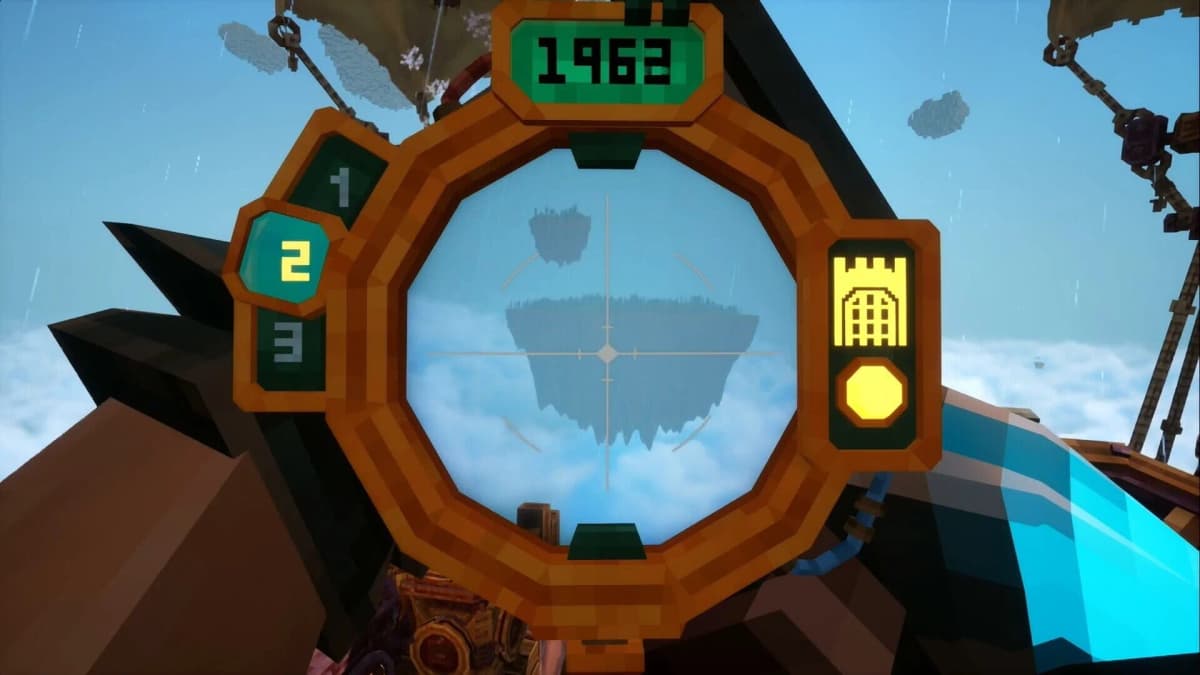
Before you leave the wreck, take time to remove every wooden pipe you can find. These are the conduits that connect generators to engines and other devices. Pipes are cheap later, but early on they save you a trip back to the island.
If you see intact structural blocks that come off easily, you can salvage some of those too, but don’t lose a ton of time chasing every last plank here. The pipes and the part blueprints are what matter most.
Step 3 – Pre-Craft Your Airship Parts on the Island
Before you sail out to the abandoned starter ship, it helps to have most of your first airship already sitting in your inventory. That way, you’re placing parts instead of crafting under pressure on a tiny deck.
First, gather some extra raw resources around the island:
- Chop down a few more trees for wood.
- Cut a good amount of grass/fiber to replenish your rope supply.
- Mine any obvious stone or ore nodes near the shore for backup materials.
Drop your portable crafting station (or place a new one) on flat ground, then craft:
- 1× Cockpit – this is what lets you claim and pilot a ship.
- 1–2× Engines – one is enough to fly, two feels much better for early travel.
- 1–2× Balloons – one balloon with a light hull can lift you, but having a spare gives you more margin for cargo and extra blocks.
- 1× Generator – your first power source.
- Several wooden pipes if you did not salvage enough from the wreck.
Check the weight values in the crafting descriptions. Engines and generators are relatively heavy; balloons are lighter but bulky. Keeping this in mind now will help when you’re placing things to avoid a lopsided or underpowered ship.
Finally, make sure you’ve got a stack of wood for fuel. The generator will happily chew through it, and running out at altitude is one of the fastest ways to turn your maiden voyage into a crash landing.
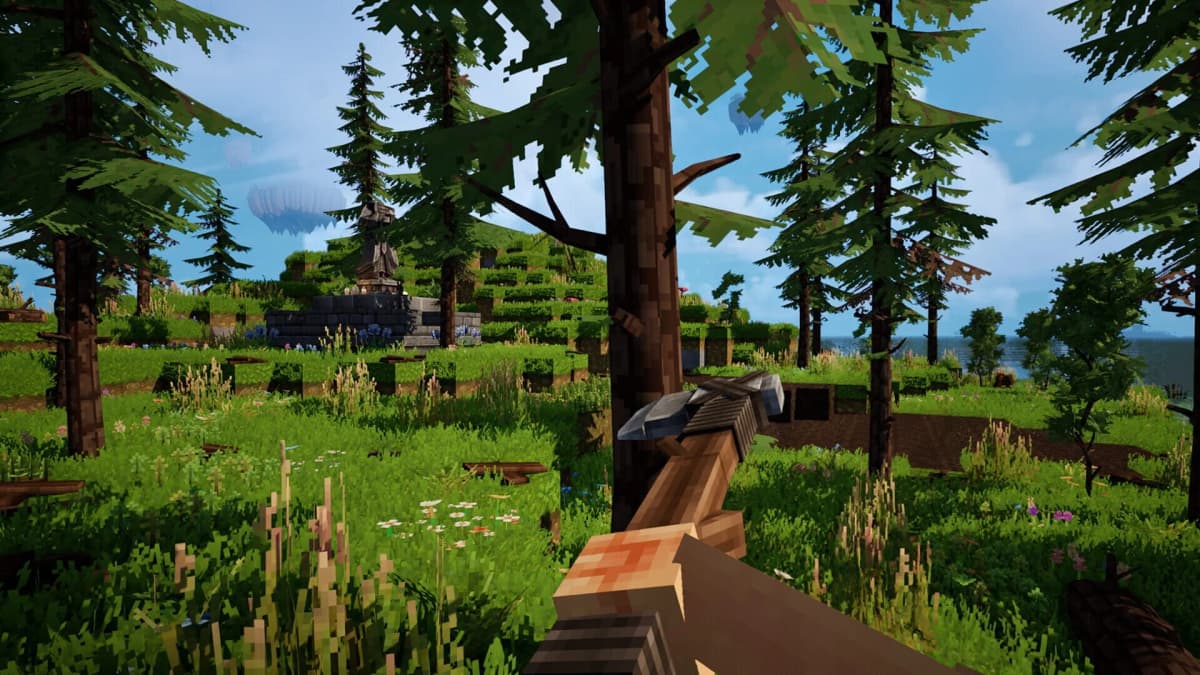
Step 4 – Reach and Claim the Abandoned Starter Ship
When your parts are ready, it’s time to go claim your real base. There’s a small boat outside the tower you can use to reach the map marker for the abandoned ship, which is floating alone out at sea.
Step 4 – Reach and Claim the Abandoned Starter Ship
When your parts are ready, it’s time to go claim your real base. There’s a small boat outside the tower you can use to reach the map marker for the abandoned ship, which is floating alone out at sea.
🎮 Get This Game at the Best Price
Compare prices instantly and save up to 80% on Steam keys with Kinguin — trusted by 15+ million gamers worldwide.
*Affiliate link — supports our independent coverage at no extra cost to you
- Board the rowboat and sail toward the quest marker in the distance.
- When you reach the abandoned hull, climb aboard via ladders or low edges.
- Find a clear flat section of deck near the center of the ship.
To claim the ship:
- Open your build/placement menu.
- Select the Cockpit and place it firmly on the deck.
Once the cockpit is down, the game treats this hull as your ship. You can now start turning it into a functional airship instead of just a floating platform.
Place the rest of your key components:
- Generator – put this somewhere accessible but not right on the ship’s nose. Mid-deck or slightly aft works well.
- Engines – mount these along the sides or rear, either symmetrically or in a way that keeps the center of mass balanced.
- Balloons – place these above the deck, roughly aligned with the ship’s center. If using two, spread them slightly apart but keep them centered front-to-back.
Now connect your power network. Depending on the current version, engines can either draw power when placed directly adjacent to a generator or via wooden pipes linking them:
- Run pipes from the generator outward to each engine if the game shows they are not powered when placed.
- Watch for any on-screen cable/pipe indicators that confirm a connection.
Because the piping behavior has changed in patches, it’s worth doing a quick test: fuel the generator with a small amount of wood, flip it on, and see whether the engines spin up. If they don’t, adjust your pipe layout until they do.
Don’t forget the fuel step: interact with the generator, place some wood in its fuel slot, and turn it on. Without this, the engines won’t respond even if everything is wired correctly.
Step 5 – Balance, Lift-Off and Troubleshooting
Before you sail off into the sunset, take a minute to make sure the ship behaves properly.
- Check balance – Stand near the cockpit and look along the length of the ship. If you’ve loaded one side with heavy engines and the other is mostly empty, consider moving pieces to even it out.
- Check lift – Try a gentle takeoff. If the ship struggles to leave the water or sinks back down quickly, either your balloons are too few or you’re carrying too much weight. Add another balloon or strip some decorative blocks until you can climb smoothly.
- Check power draw – If engines cut in and out, your generator may be underpowered for how many engines you’ve installed. Early on, stick to one or two engines per generator.
The biggest mistake at this stage is overbuilding. A wide deck, tall walls and heavy crafting stations all eat into your lift capacity. Keep the first version of your ship lean: cockpit, generator, engines, balloons, a crafting station and a small storage area are enough to start exploring.
Step 6 – Upgrading the Ship Core for Speed, Altitude and Size
Your default starter ship works, but it’s limited. If you just keep tacking more engines and balloons onto the base core, you’ll hit hard limits on how many you can place and how big your build grid is. That’s where ship core upgrades come in.
Find the glowing Ship Core block on your vessel (usually near the center or below deck) and interact with it. You’ll see upgrade options tied to three main stats:
- Speed – increases how many engines you can attach effectively.
- Altitude – raises your maximum flying height and the number of balloons you can support.
- Size – expands the build area so you can extend decks, add rooms and generally make the ship larger.
Each upgrade tier requires specific items. These come from exploring the nearby sea-level islands: ruins, small camps and natural deposits around your starting region. You do not need to reach any high floating islands for the first few upgrades.
A practical early priority order that worked well:
- Size 1–2 – gives you just enough extra room to place a second engine, extra balloon and a slightly safer deck layout.
- Altitude 1 – lets you clear higher cliffs and reach more interesting islands without scraping the bottom of your balloons.
- Speed 1–2 – makes long hops between islands faster and supports adding that second engine without overstressing the core.
After each upgrade, you’ll see new placement limits: more engines, more balloons, and a larger build radius. Use these new allowances to carefully expand your ship rather than slapping on everything at once. Add:
- An extra engine when you want noticeably faster travel.
- An extra balloon or two when you plan to add a lot of structure or cargo.
- A second generator once your engine count starts to push what a single generator can reliably power.
Common Early Mistakes to Avoid
To keep your first airship from turning into a frustrating rebuild, watch out for these pitfalls:
- Leaving the tower half-looted – skipping barrels and furniture slows your blueprint progression and leaves you short on nails and wood.
- Trying to repair the destroyed starting wreck – it’s scripted junk. Salvage it for parts and move on to the real starter ship.
- Building a sprawling deck before upgrading the core – you’ll hit size and weight limits fast, then have to demolish half your work.
- Forgetting generator fuel – always keep a stack of wood near the generator; check fuel before long flights.
- Assuming engines are “broken” when it’s just wiring – if they don’t spin, check that the generator is turned on, has fuel, and is actually connected via pipes or adjacency.
- Crafting heavy extras mid-flight – dropping a new crafting station or big structure while airborne can change your balance; land first if you’re unsure.
Where to Go After Your First Airship
Once your first airship is stable, fueled and the core has a couple of upgrades, you’re in a good spot to start real exploration. From here, focus on a loop of:
- Hopping between nearby islands to loot ruins and chests for core upgrade materials.
- Gradually expanding your ship’s size and comfort without overloading its lift.
- Adding quality-of-life stations (smelters, better crafting benches, storage) only after you’ve increased altitude and speed enough to handle the weight.
If you treat this first ship as a functional, lean base instead of a final masterpiece, you’ll progress through Everwind’s early game much faster and unlock the resources to build the huge flying fortress you actually want later.
FinalBoss // Gear
Level up your setup
01Top-rated gaming headsetson Amazon→02High-refresh gaming monitorson Amazon→03Gaming chairson Amazon→04Discounted game keyson Kinguin→Affiliate links · As an Amazon Associate, FinalBoss earns from qualifying purchases.
Want to Level Up Your Gaming?
Get access to exclusive strategies, hidden tips, and pro-level insights that we don't share publicly.
Ultimate Guide Strategy Guide + Weekly Pro Tips