
Table of Contents (12)
Everwind’s Cozy Minecraft Look Hides a Surprisingly Cruel First Hour
Booting up Everwind for the first time, my guard was completely down. Voxels, chunky trees, bright skies… I mentally filed it under “another chill Minecraft-like to poke at after work.” Within an hour, the game had hard-locked my progress, forced me to delete my save, and made me seriously debate uninstalling it on the spot.
That’s the tone-setter for Everwind right now in Early Access: a game that constantly clashes with its own appearance. It looks like a laid-back sandbox, but it actually plays like a dungeon crawler with RPG progression, punishing early mistakes, and a big central gimmick – a flying ship you build and expand, which doubles as your mobile base between floating islands.
I’ve spent my time with the Early Access PC build on a mid-range rig (RTX 3060, Ryzen 5, 16 GB RAM), pushing through that rough opening, exploring its floating archipelagos, and slowly turning a pathetic wooden raft into something that’s starting to resemble an airship. And the wild thing is: after that disastrous first session, I came back… and I’m glad I did.
Not Really a Minecraft Clone: It’s a Dungeon Crawler Wearing Blocky Skin
Visually, Everwind invites comparisons with Minecraft and the long-promised Hytale. It’s all destructible voxel terrain, block building, and low-fi charm. But the more I played, the more obvious it became that it doesn’t want to be your next endless sandbox. It wants to be an action-RPG dungeon crawler that just happens to be made of cubes.
The basic loop is very different from the “walk in any direction and vibe” structure those other games lean on. Instead of a big continuous map, Everwind is a sky full of separate floating islands. Down low, near sea level, you get easier enemies and basic resources. As your gear improves and your flying ship gets beefier, you push higher into the sky, where the islands become deadlier, the dungeons more complex, and the materials rarer.
Moment to moment, it feels more like a lightweight Skyrim dungeon run stitched together with some survival-crafting DNA. You’re clearing enemy camps, descending into caves, grabbing loot, and then running back to your ship to craft, upgrade, and plot your next jump. The Minecraft part is mostly in the way the world is built and the fact that you can reshape it – not in how the game actually asks you to play.
That’s the key mental shift Everwind expects from you. If you go in thinking “cozy sandbox,” the game will smack you in the face. If you treat it like an RPG with a base-building wrapper, it clicks much faster.
The Flying Ship: A Mobile Home, Workshop, and Endgame Dream
The real star here isn’t the islands, though. It’s your ship.
Very early on, the game has you construct a small airship – and I do mean small. My first build was basically a wooden bathtub with a balloon taped to it. But even that janky starter boat sets the tone: this is your home, your hub, your workshop, and your trophy cabinet.
Progression in Everwind is tightly tied to your ship. You unlock new engines, sails, structural pieces, and workstations over time, and you can expand the hull up to a frankly ridiculous 100×100 blocks. When the developers told me, “Yes, you really can build a full-on flying cruise ship if you’re committed enough,” my brain immediately shifted into long-term project mode.
In practice, upgrading the ship becomes the glue that holds the rest of the game together. Looting a dungeon isn’t just about getting stronger gear; it’s about grabbing the rare ore you need to reinforce your deck or the obscure component that unlocks a new crafting station. Every time I warp back onto my creaky vessel and bolt on a new room or tweak the layout of my forges, it scratches the same itch as improving your base in a survival game – except the base moves with you.
It’s also just cool, in a very childish way, to walk around your custom ship mid-flight. I’ve had a couple of silly moments where I forgot to put up proper railings, clipped a tree, and watched as a big chunk of my outer deck vanished into the clouds, taking a storage chest full of materials with it. Everwind loves reminding you that your flying home is made out of the same breakable blocks as everything else.
Where It Nearly Lost Me: The Punishing Tutorial and a Brutal Softlock
For as much as I like the core idea, I can’t gloss over how rough my first couple of hours were. The opening tutorial takes place in a tower where the game introduces key systems: cooking, smelting, basic crafting. It walks you through setting up workstations, then sends you outside with a clear goal: craft five specific parts needed to assemble your first ship.
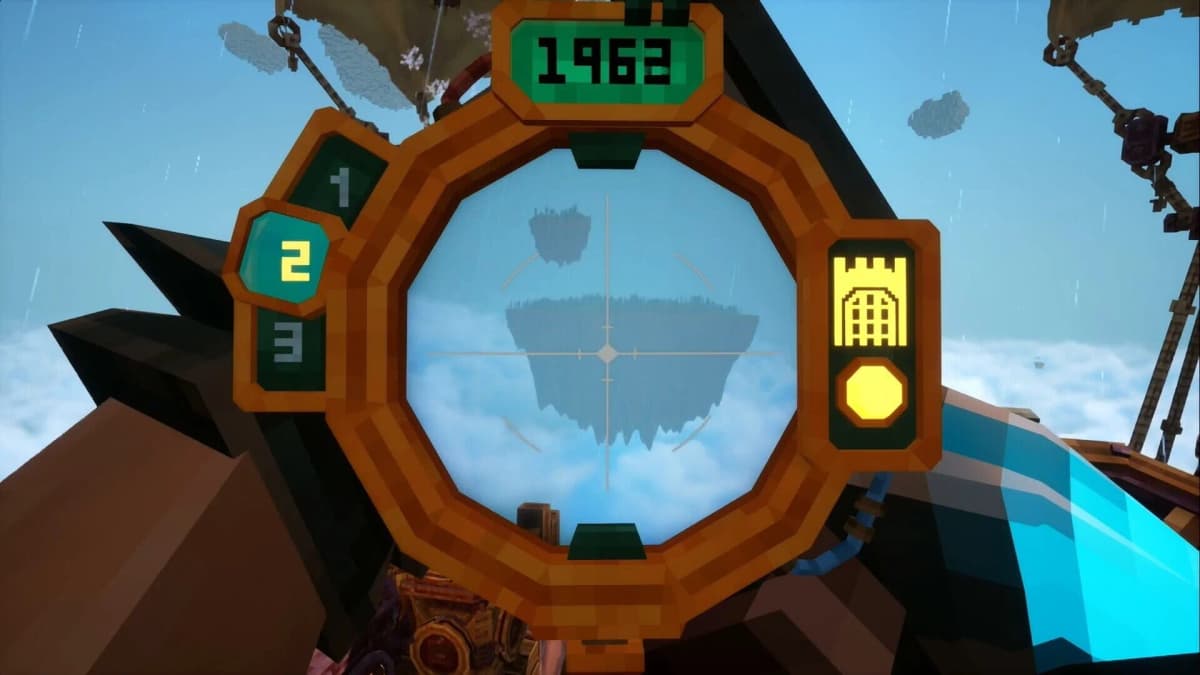
Here’s the catch: four of those parts are main components and one is optional. The resources you’re given at that moment are barely enough to build all four critical pieces if you craft in the right order. I didn’t. I built the optional part first, because the game didn’t actually warn me that it was optional, and I’m the kind of goblin who sees “new thing” and immediately hits craft.
That one decision bricked my save.
I figured, “Okay, I’ll just farm more of that resource, no big deal.” The problem is that at that exact stage of the tutorial, the mat I needed either wasn’t spawning or was restricted in some way the game never explained. I spent almost two hours combing the nearby islands at sea level, chopping and mining anything that looked remotely promising, trying to brute-force my way out of what felt like a self-inflicted mistake.
Nothing. No progress. No hint that I’d messed up. No “you can reset this step” option. The only way out was the nuclear one: delete the save and start over.
That’s the kind of Early Access bug that doesn’t just annoy you; it murders any trust you had in the game. I stepped away from the PC fuming, thinking, “If the first hour is this brittle, what’s the rest going to be like?”
To Everwind’s credit, once I cooled off and gave it another shot, the second run went smoothly. I avoided the optional part until the very end, got my ship built, and suddenly a lot of the design started to make sense. But I can’t pretend that first failure didn’t happen. If the devs don’t patch that out quickly, a lot of players are going to bounce off before the game shows its strengths.
Once It Opens Up: A Satisfying RPG-Lite Loop Hiding Under the Jank
After the tutorial drama, Everwind finally lets you breathe. With a functional ship, I could start hopping between low-level islands, poking my nose into caves, and picking fights with the local wildlife and bandits.
Once It Opens Up: A Satisfying RPG-Lite Loop Hiding Under the Jank
After the tutorial drama, Everwind finally lets you breathe. With a functional ship, I could start hopping between low-level islands, poking my nose into caves, and picking fights with the local wildlife and bandits.
🎮 Get This Game at the Best Price
Compare prices instantly and save up to 80% on Steam keys with Kinguin — trusted by 15+ million gamers worldwide.
*Affiliate link — supports our independent coverage at no extra cost to you
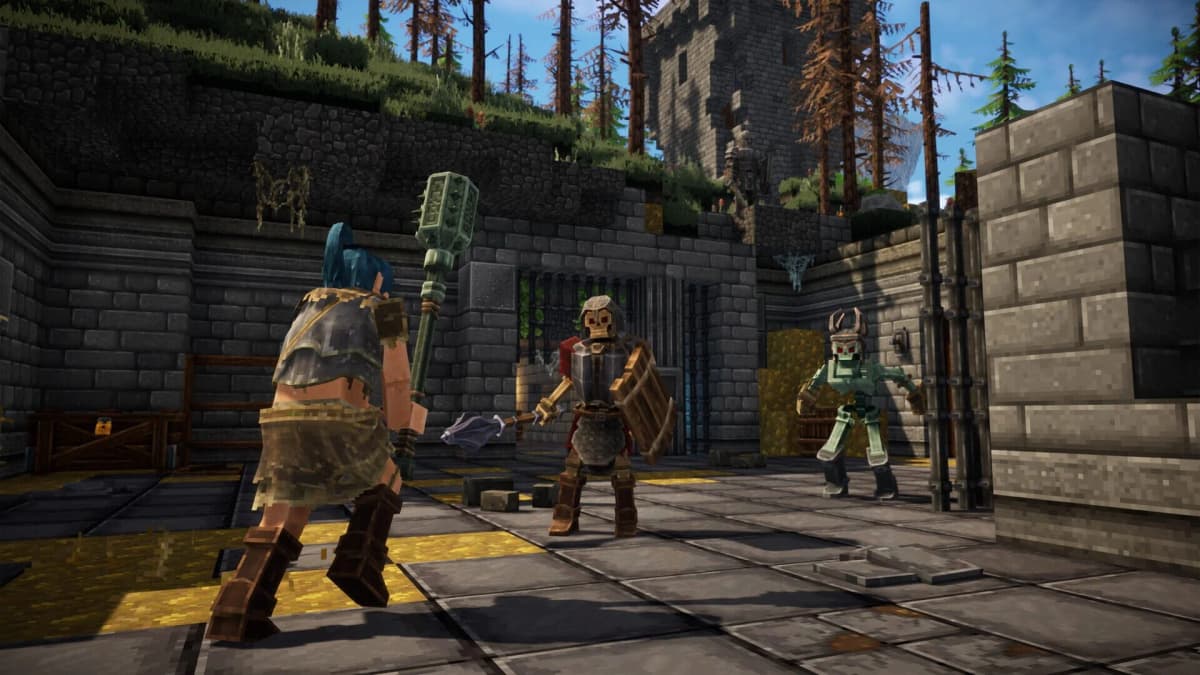
Combat right now is very simple. You’ve got basic melee swings, some ranged options, and a light sprinkling of magic. The early fights are almost insultingly easy – more about positioning and not getting swarmed than about reflexes. Enemies have straightforward attack patterns, and the hit feedback is still on the floaty side. It’s serviceable, but it won’t blow anyone away.
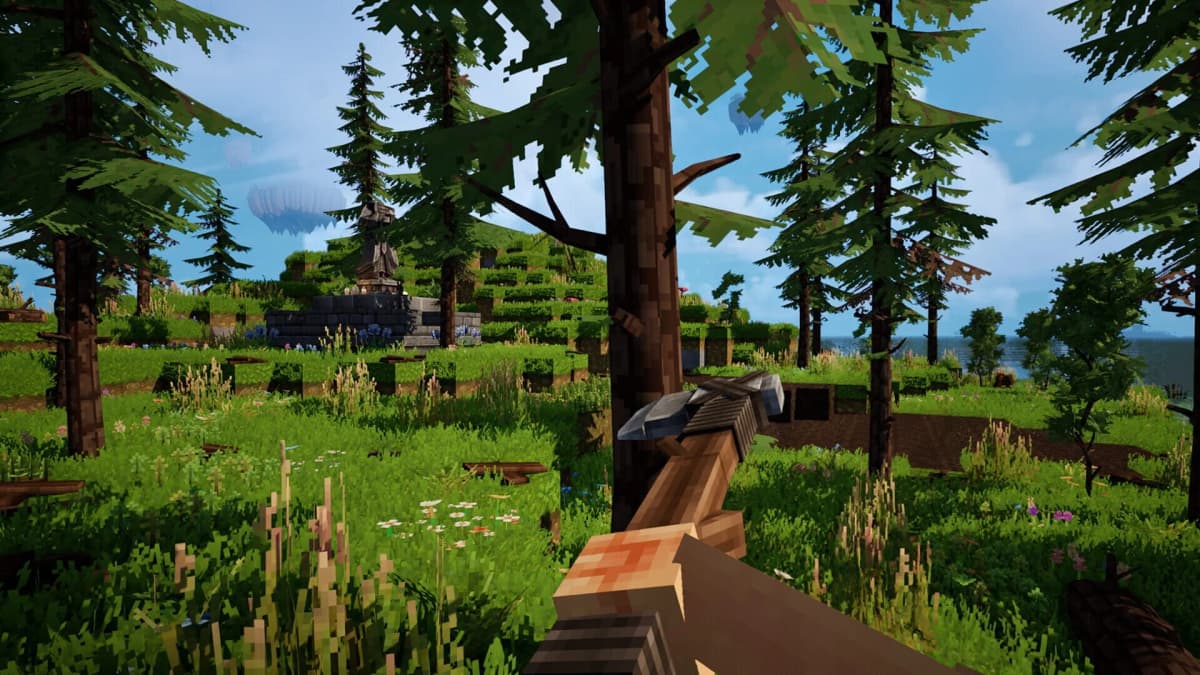
Where it gets more interesting is in the RPG-style progression layered on top of it. Clearing dungeons, finishing small objectives, and exploring rewards you with experience and upgrade points. You can invest those into improving your combat abilities, movement, or crafting efficiency. It’s not the deepest skill system I’ve ever seen, but it did a lot to keep me engaged once the basic hacking and slashing started to blur together.
There’s a nice long-term rhythm to it: venture out, push slightly higher into the sky, get your teeth kicked in by something tougher than you expected, then retreat to the ship to craft better gear and tweak your build. A couple of times I got greedy, dove into a dungeon a tier above my current comfort zone, and paid the price with an embarrassing death and a long flight back.
It’s not as sharply tuned as, say, a dedicated ARPG, but as a backbone for exploring a sky full of floating islands, it works. The skill tree and gear upgrades are just deep enough that I started thinking in terms of builds – do I want to be tankier and slower, or lean into mobility and ranged options? – which is not something I expected going in from the cheery voxel screenshots.
Building, Crafting, and the Joy of a Janky Airborne Home
On the building side, Everwind sits in a comfortable middle ground. If you’ve played any voxel game in the last decade, you’ll pick up the basics fast: gather wood, stone, ore; refine them into processed materials; then plop down blocks and furniture to shape your space.
What changes the feel is the fact that your main “base” isn’t some sprawling fortress on the ground – it’s your limited real estate on a flying hull. That natural constraint pushed me to be more intentional than I usually am in these games. Instead of mindlessly expanding in all directions, I found myself planning compact layouts: a tiny forge corner tucked under the main deck, a cramped row of storage chests against the inner wall, a ladder leading up to a rooftop garden I’m absolutely not supposed to call a “balcony” because it has no railings yet.
Crafting stations, storage, and decorative pieces all feed into that fantasy of having a fully equipped sky-ship. I really like the way your upgrades slowly turn the ship from a fragile starting raft into something with presence. After a handful of sessions, my vessel still looks more like Tom Hanks’ pathetic boat in Cast Away than the grand airship I’m aiming for, but the direction of travel is clear.
Outside the ship, you can absolutely dig into the islands themselves, carving out tunnels or building little outposts. So far I’ve mostly treated them as disposable resource pits rather than permanent homes, but the tools are there if you want to get more creative. Personally, I’m content turning the sky into a junkyard while I funnel all my inspiration into the ship.
Technical State: Surprisingly Smooth Performance, Rough Audio and Bugs
On the technical side, Everwind is in better shape than I expected for a fresh Early Access release, but it definitely has rough edges.
Performance on my mid-range PC has been solid. I’m running at 1080p with high-ish settings, and frame rates have stayed comfortably high even when I’m buzzing between islands and blowing up chunks of terrain. For a fully destructible voxel world, that’s no small feat. I also haven’t hit any major crashes outside of that brutal tutorial softlock.
Audio, on the other hand, feels like it’s still in early prototype land. Sound effects are functional but flat – hits lack satisfying impact, environmental ambience is minimal, and there are stretches of exploration where the world feels weirdly quiet. It’s not game-breaking, but it does sap some of the atmosphere from what should be awe-inspiring sky vistas and dangerous caverns.
Interface and UX are another “you can tell it’s Early Access” area. Tooltips are inconsistent, some systems are explained once and never referenced again, and the crafting menus could really use a second pass to cut down on the number of clicks it takes to do basic tasks. None of this is unusual for a game at this stage, but coupled with that tutorial bug, it reinforces the feeling that you’re playing something still under active construction.
Early Access Expectations, Bohemia’s Backing, and Who This Is For
One thing that gives me a bit more confidence in Everwind’s future is the scope it already has and the people backing it. The world is already fairly rich in different biomes and enemy types, there’s a clear progression ladder, and the roadmap hints at expansions like more activities and systems to flesh out the islands. Publisher Bohemia Interactive – the folks behind DayZ – aren’t strangers to evolving a game over time, for better and for worse.
Right now, I’d put Everwind in that interesting category of Early Access game that’s genuinely worth watching, but not necessarily worth buying today for everyone. If you’re the kind of player who loves being in early, providing feedback, and watching systems evolve, there’s already a lot here to sink your teeth into. The core loop of “raid dungeons, upgrade ship, climb higher into the sky” is solid, and the flying base concept is strong enough to carry the experience.
If, on the other hand, you’re more of a cozy-builder fan who expected a low-stress Minecraft alternative, or you have a very low tolerance for bugs that can ruin a save, I’d honestly hold off. The tutorial snafu I ran into is the kind of thing that will absolutely sour a first impression, and the combat and audio both need more time in the oven.
I haven’t dipped into co-op yet, which is another big selling point on the store page, mainly because I wanted to see how the game held up solo first. If the devs can stabilize the early game and tighten combat, I can see Everwind being a fantastic “let’s build a ridiculous sky-ship together” experience with friends.
Bottom Line: A Rough But Promising Sky-Ship Adventure
After my first evening with Everwind, my notes were mostly swears and “why would you ship a tutorial like this.” After a few more sessions, they’re full of ship layout sketches, upgrade ideas, and lists of materials I want to farm on my next run.
Everwind is messy, occasionally infuriating, and absolutely not the relaxed block-builder its visuals suggest. But beneath the rough edges is a genuinely intriguing hybrid: a dungeon crawler with RPG progression wrapped around a wonderfully silly fantasy of sailing your own custom flying fortress between islands in the sky.
If the developers fix the early softlocks, tighten the tutorial, and keep layering depth onto combat and progression, this could easily grow into one of the more interesting voxel games on PC. For now, it’s a flawed but fascinating project that I’m rooting for from the deck of my barely-airworthy wooden brick.
Score for Early Access version (as of now): 7/10
TL;DR – Should You Play Everwind Right Now?
- Looks like Minecraft, plays like a dungeon crawler with a strong focus on dungeons, combat, and RPG progression rather than pure sandbox building.
- Your flying ship is the real hook: a fully customizable mobile base that can grow up to 100×100 blocks and ties directly into your character’s progression.
- Early game can be brutal – a tutorial bug hard-locked my first save and forced a restart, and explanations for some systems are too thin.
- Combat starts basic but improves with RPG upgrades; still needs more weight and variety to really sing.
- Performance is good on mid-range PCs, but audio and UI are clearly still in early development and lack polish.
- Best suited for Early Access explorers who enjoy watching a promising idea grow and don’t mind rough edges; more cautious players may want to wait for a few major updates.
FinalBoss // Gear
Level up your setup
01Top-rated gaming headsetson Amazon→02High-refresh gaming monitorson Amazon→03Gaming chairson Amazon→04Discounted game keyson Kinguin→Affiliate links · As an Amazon Associate, FinalBoss earns from qualifying purchases.
Want to Level Up Your Gaming?
Get access to exclusive strategies, hidden tips, and pro-level insights that we don't share publicly.
Ultimate Reviews Strategy Guide + Weekly Pro Tips