
Table of Contents (8)
The moment a skybox made me drop my gun
The last time I genuinely lost a multiplayer match, and didn’t even care, it wasn’t because someone out-aimed me. It was because I spawned, looked up, and just stood there like an idiot staring at the sky.
It was an arena shooter map, the kind that lives and dies on split-second decisions and muscle memory. I’d played it dozens of times. But this time, I actually stopped to clock the distant mountain range curving away, the weird alien clouds bending around an impossible sun, the barely-audible rumble of some huge structure way beyond the play space. By the time I came back to my senses, I’d been railgunned twice, and my team was pinging the objective like I’d gone AFK.
What grabbed me wasn’t some ray-traced puddle or subsurface-scattered skin. It was the thing most players never think about: the skybox. The fake world that sits just past the bits you’re allowed to touch. The part of the level that exists only to trick your brain into believing this little killbox is part of something bigger.
And honestly, I’m tired of pretending the skybox is some incidental piece of tech art. Skyboxes are deliberate, authored, and borderline sacred in good FPS design. They shape mood, storytelling, immersion – all the buzzwords studios love to slap on their trailers – far more than whatever slightly-more-correct shadowing model we’re supposed to bow down to this year.
Meanwhile, AAA studios keep sprinting toward “realistic” dynamic weather systems that look impressive in a Digital Foundry zoom-in but absolutely butcher vibe and composition. We’ve somehow ended up in a place where a 2012 Xbox 360 skybox can wipe the floor with its 2026 photoreal remake. And nobody at the big publishers seems embarrassed enough about that.
Skyboxes aren’t background – they’re the frame
When people talk about FPS art, they obsess over guns and hands. Maybe a hero prop or two. If they’re really paying attention, they’ll mention lighting. But the skybox? That’s treated like the wallpaper you slap on 10 minutes before guests arrive.
That’s bullshit. A skybox is the frame around every single screenshot, every firefight, every movement decision. It’s everything that’s too far away to be interactable: mountains, skyscrapers, far-off ships, alien moons, desert heat haze. Technically speaking, it started as a simple cube with painted textures. Modern engines go wild with sky domes, shader-driven cloud layers, and 3D miniatures projected outside the map. But the core idea never changed: this is the illusion of a world beyond the map.
Back in the pre-2000 era, skyboxes were basically fancy matte paintings. Quake’s rotating nebulae, early Halo’s ring arcing across the horizon – just static textures plastered on geometry your camera could never reach. Then engines like Valve’s Source started playing with 3D skyboxes: tiny versions of buildings or the Citadel in Half-Life 2 sitting way off in the distance, scaled up by the engine to feel colossal. It was a cheap trick to sell massive scale without actually rendering a city’s worth of polygons, but it worked.
Now? Most big engines default to massive dynamic sky systems, with volumetric clouds, real-time time-of-day, and enough sliders to make a weather channel intern blush. And yeah, from a tech standpoint, it’s wild. But somewhere along the line we quietly swapped “carefully composed sky art” for “accurate atmosphere simulation” and pretended those were the same thing.
They’re not. Skyboxes are not just backdrops; they’re a form of environmental storytelling. And the games that get that right stick with me way longer than whatever flagship shooter just added 12 kinds of drizzle.
Halo, Doom, and the art of making you feel tiny
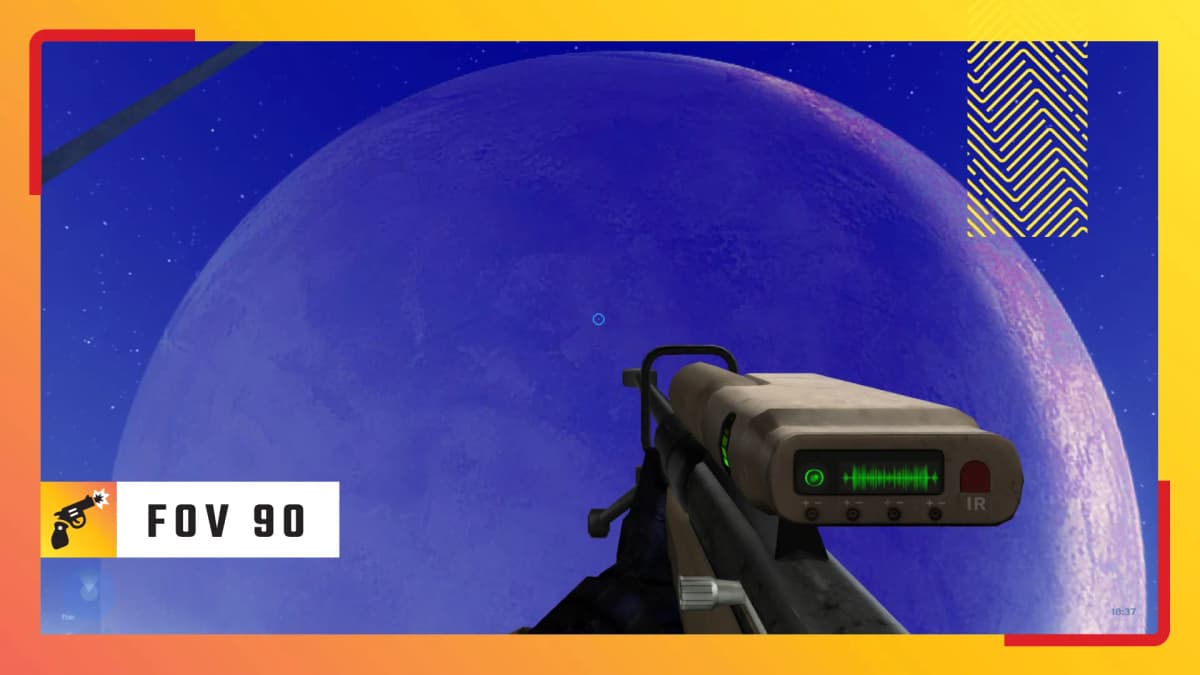
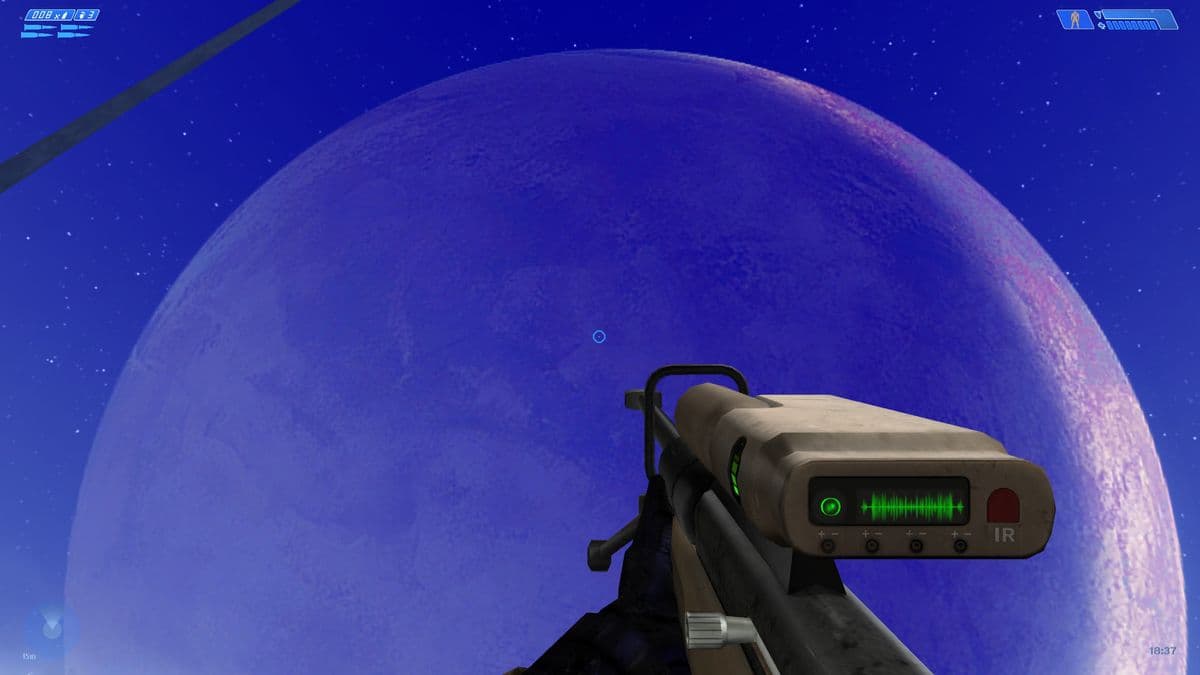
I cut my FPS teeth on Halo LAN nights, and I still remember the first time someone pointed out, “Look up.” Blood Gulch, everyone’s nostalgia map, isn’t just two bases and a canyon. It’s a masterclass in skybox design. The ring curving overhead isn’t interactable, it doesn’t change the objective, it won’t show up in a gunfight montage. But it makes the whole map feel like a tiny scar on the skin of something impossibly vast.
That ring tells you more about the lore and scale of Halo than any exposition dump. Every time you spawn, that curved horizon is screaming, “You are an ant on a god’s bracelet.” That’s a skybox doing narrative heavy lifting.
Doom Eternal goes in the opposite direction: maximalist, heavy-metal album cover skies. Demonic citadels shoving their way through shattered planets, religious architecture fused with cosmic horror, swirling portals vomiting hellfire into the upper atmosphere. If you actually stop to pan the camera, the skyboxes are obscene in the best way. They make every arena feel like a battle in a much bigger war, not just another room full of demons.
What ties Halo and Doom Eternal together isn’t realism; it’s intentionality. Those skies are painted and sculpted for composition. They have focal points. They pick color palettes to contrast the play space. They don’t just answer “what would the weather realistically be?” – they answer “what should the player feel the second they see this?”
Battlefield kept the faith while Call of Duty chased the weather channel
The recent Call of Duty remake saga might be the most perfect case study for how badly the mainstream has lost the plot here.
Take a classic 2012 multiplayer map with a bold, punchy skybox – bright sunrays blasting through stylized cloud shapes, warm light wrapping the whole scene, hard silhouettes framing the action. Then look at the 2026 remake: overcast, simulated cloud layers, everything washed in this flat “yeah, I guess that’s what April looks like if you’re sad” lighting. Technically, the remake is closer to reality. Artistically, it has all the energy of a tax office parking lot.
Meanwhile, DICE has spent years quietly making sure every Battlefield map launches with a sky that means something. Battlefield 6’s better maps still understand that a skybox is part of the level art, not a physics demo. You get storm fronts that roll in like ominous stage curtains, late-afternoon haze over desert cities, auroras draped over frozen battlefields. The weather can still be dynamic, but it’s clearly been art-directored, not just tossed to some algorithm.
And that’s the difference: Battlefield uses tech to enhance composition. Call of Duty’s remake uses tech instead of composition.
Retro shooters and weird indies are schooling AAA on skyboxes
If you want to see what happens when artists treat the skybox like an actual canvas again, you don’t look to the yearly blockbuster. You look to the weirdos.
Warhammer 40,000: Boltgun is a perfect example. It’s deliberately retro, chunky pixels and all, but its skyboxes are gorgeous. Heavy, saturated colors; towering gothic silhouettes stabbed into alien horizons; distant war machines frozen mid-siege. None of it is “realistic” in the slightest, and that’s exactly why it works. It understands Warhammer’s universe is about exaggerated, operatic excess, and the skyboxes lean all the way in.

Then you’ve got arena shooters like Straftat going completely off the rails – skyboxes full of surreal shapes, bizarre color gradients, abstract geometry that makes you feel like you’re fragging people inside a vaporwave fever dream. Half the maps feel like some underground demo scene artist snuck into the build and went, “What if the sky is the level?”
These aren’t just backdrops. They’re statements. Straftat’s skies tell you straight away: this isn’t trying to be a training sim. It’s an arena designed for pure movement and chaos. Boltgun’s skies scream religious war opera. You know the vibe before you fire a shot.
Indie devs, especially in Unity, have also been quietly ignoring the “one size fits all” sky systems. I’ve seen teams layer multiple spheres with different textures at different speeds just to fake parallax in stylized clouds. Others ditch the concept of a traditional skybox altogether, surrounding the map with abstract gradients or low-poly shapes that shift with the soundtrack. Minimal tech, maximum intent.
When the sky tells the story better than the script
Some of my favorite skybox tricks aren’t even about vistas. They’re about narrative sleight of hand.
Classic example: Half-Life: Opposing Force using mismatched skybox faces through a doorway to fake instant teleportation from Earth to Xen without loading. On one side, a normal desert sky; step through, and suddenly the stars are wrong, the colors are alien, everything feels subtly off. It’s not a cutscene. It’s not a tooltip. It’s just the sky quietly informing your lizard brain: “You’re somewhere else now.”
Or look at what Bungie’s doing again with Marathon. The new extraction shooter’s skies over Tau Ceti IV aren’t showy in the Halo sense. They’re blurred, distant, slightly diffuse – almost like a dream of space, not a postcard. It matches the whole corporate-sci-fi, graphic-design-heavy aesthetic perfectly. You’re not supposed to feel like a grounded soldier; you’re a contractor in someone else’s glossy brochure for violence.
Even Source games, whose skyboxes often look painfully flat by modern standards, occasionally nail it. A city map in Left 4 Dead 2 where the smoke plumes in the distance line up with your route, suggesting chaos you’ll never actually walk through. That’s environmental storytelling via skybox: hinting at a world beyond the funnel without wasting polygons on fully modeled districts.
And if you’ve ever messed with photo mode in modern games, you know how much the sky can make or break a shot. The Verge recently spotlighted a photo mode consultant teaching studios to think like real photographers – grids, focal points, aperture, the whole deal. Here’s the uncomfortable truth: a lot of photo mode shots look bland not because the tools are bad, but because the background sky has no composition. It’s just “generic overcast 03.” You can’t frame something interesting if the heavens themselves are phoning it in.
Realism is overrated when the art direction is spineless
This is where I draw the line: I don’t care how realistic your sky scattering model is if the end result looks less interesting than what a 360-era game hacked together with a painted cube map.
There’s a strain of thinking in AAA right now that says: if the atmosphere is physically accurate, the art will follow. You crank the sliders, get your volumetrics, add a real-time sun, tie it all to a global time-of-day system, and boom, job done. The problem is, “real” skies are often boring. Grey mush for eight hours. Slight color shift at magic hour. Random cloud noise with no structure.
A good skybox designer cheats. They exaggerate. They angle the sun so it rakes light across the geometry just right, even if it’s “wrong” for that latitude. They arrange clouds to naturally frame the player’s eyeline toward interesting vistas. They use color theory so the horizon doesn’t visually merge with the building silhouettes you’re supposed to navigate by.
When you hand that responsibility to an atmospheric simulation and call it a day, you’re basically outsourcing your taste to a physics approximation. No wonder we keep ending up with shooters where every screenshot looks like it was taken from the same drab military documentary.
And don’t even get me started on performance. Wrapping entire levels in heavy, dynamic volumetric systems tanks compile times and melts lower-end hardware, all for skies players barely remember. Old-school 3D skyboxes and painted domes could give you scale and drama for a fraction of the cost. More tech isn’t the problem; misusing it is. If your sky system is stealing cycles from AI or destruction or anything players actually interact with, and it still looks dull? That’s a design failure, not just an optimization issue.
So what do we actually do about it?
I’m not anti-technology. I like a good volumetric god ray as much as anyone else. I’m not asking studios to go back to N64 fog cubes. But this whole “skybox underappreciated, let’s game” moment needs to be more than a passing YouTube thumbnail sentiment.
Here’s what I want to see – as someone who’s been living inside FPS games since the days of CRTs and split-screen, and who’s frankly bored of seeing the same lifeless overcast mush in every “gritty” sequel:
- Treat skyboxes as authored art, not a settings menu. Start them in concept art, not as a late-stage tech task. What does this sky say about the world? About the faction controlling this space? About the time of day you want players to feel?
- Use stylization aggressively. Push colors, silhouettes, and celestial bodies. If your world is alien, let the sky scream it. If it’s grounded, you can still exaggerate clouds, sun position, and haze to support gameplay readability.
- Limit the dynamic stuff to where it matters. You don’t need full-blown real-time weather on every map. Sometimes a locked, perfect composition does more for mood than a cloudy-sunny-cloudy cycle that never feels quite right.
- Remember performance is part of art direction. Don’t blow 20% of your budget on a sky system just because the engine demo looked cool. Use cheaper techniques – 3D miniatures, layered domes, animated textures – where you can get 90% of the effect with 10% of the cost.
- Design with photographers and spectators in mind. If you’re shipping a photo mode, or a game you hope people will clip and share, your skybox is literally the backdrop for your marketing. Give it anchor points, shapes, and gradients that frame your characters and maps.
And for players: the next time you boot up your favorite shooter, actually give yourself permission to lose a life to the sky. Stop on a ridge in a campaign level or the pre-round warmup and just pan the camera. Look for the cheats: the off-kilter sun, the mountains that never quite line up, the ship that’s always frozen at the same point in its patrol route.
Once you see how much of your emotional reaction to a level comes from that painted illusion beyond the playable space, it gets a lot harder to be impressed by yet another “look how realistic the cumulonimbus scattering is” tech reel. You start craving intent again – the bold, slightly unrealistic skies that Halo, Doom Eternal, Battlefield’s best maps, Straftat’s fever dreams, and Boltgun’s cathedral horizons all share.
Because at the end of the day, I don’t boot up an FPS to admire accurate humidity. I boot it up to be dropped into a world that feels bigger than me, that tells a story before anyone speaks, that hits me in the gut the second I look up. And if your skybox can’t do that, I don’t care how next-gen your clouds are. You’ve already lost.
FinalBoss // Gear
Level up your setup
01Graphics cardson Amazon→02Gaming laptopson Amazon→03High-refresh gaming monitorson Amazon→04Discounted game keyson Kinguin→Affiliate links · As an Amazon Associate, FinalBoss earns from qualifying purchases.
Want to Level Up Your Gaming?
Get access to exclusive strategies, hidden tips, and pro-level insights that we don't share publicly.
Ultimate Gaming Strategy Guide + Weekly Pro Tips