
Table of Contents (9)
The Moment I Realised I Actually Care About This Weird Spin-Off
I rolled my eyes when I first saw “Solo Leveling: Arise Overdrive” pop up in an Xbox showcase sizzle reel. Licensed anime tie-in? Check. Recycled assets from a mobile gacha? Double check. I mentally filed it next to the dozens of forgettable adaptations that quietly die on Steam after a month and went back to labbing combos in my fighter of the week.
Then I saw the details: $40 price tag. No microtransactions. All weapons, gear, and cosmetics unlocked through crafting and progression. Full offline-capable action RPG with proper co-op raids for up to four players. Cross-play on PC, Xbox Series X|S, and PlayStation 5. A Steam demo. Three-day early access for preorders. And all of this built on top of a live, still-profitable gacha, Solo Leveling: Arise.
That was the moment I stopped snarking and started paying attention. Because if Overdrive works, it’s not just “another anime game.” It’s a live experiment in something this industry desperately needs and usually avoids like the plague: a way to escape gacha hell without throwing everything in the bin.
I’m Done Pretending Gacha Isn’t Completely Broken
I’ve put stupid hours into gacha games. Genshin Impact, Honkai: Star Rail, Fate/Grand Order, a couple of obscure mobile games that have already had their servers quietly euthanised. I’ve seen the full playbook: pity systems that feel generous until you do the maths, FOMO events that demand daily logins like a second job, banners that weaponise your favourite characters against your wallet.
As someone who grew up on games like Shenmue, who still replays Dreamcast and PS2 titles because they actually exist as complete works, the current gacha model feels fundamentally hostile. Not just to players, but to the idea that games should be preserved, revisited, and respected as cultural artefacts instead of seasonal content drops on a spreadsheet.
And the worst part? When the plug gets pulled, it’s over. Years of art, music, writing, and systems design – gone. If you weren’t there when the servers were up, tough luck. Want to show someone what made a game like Dragalia Lost or Magia Record special? Hope you recorded a YouTube video, because you’re never actually playing them again.
So when a publisher like Netmarble looks at a successful gacha like Solo Leveling: Arise – launched in 2024 and still doing numbers – and says, “You know what, let’s build a premium ARPG out of this, no gacha, no microtransactions, full game for a flat price,” yeah, I’m going to sit up. Because that’s not the normal play. The normal play is milk whales until the curve flattens, then quietly sunset the game and pivot to the next extraction machine.
What Overdrive Actually Is, Beneath the Marketing Buzz
Let’s strip this down to what’s really happening with Solo Leveling: Arise Overdrive.
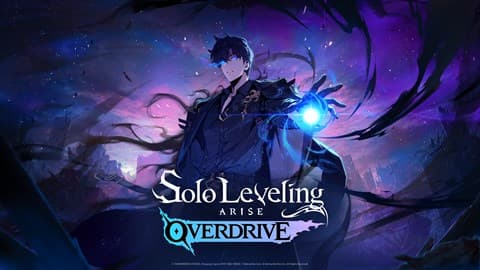
Netmarble is taking the assets, combat DNA, and world of the free-to-play Solo Leveling: Arise and rebuilding it as a third-person action RPG designed from the ground up as a premium game. You pay around $40, you get the game. That’s it. No stamina bars, no banners, no battle pass, no “limited-time collab” that forces you to log in at 3am to click through dailies you don’t care about.
The structure is simple and, frankly, refreshing: you relive Sung Jin-Woo’s story through bespoke missions and raids, solo or with up to three other players. Your power doesn’t come from rolling a 0.6% chance SSR; it comes from actually playing the game, investing into a skill tree, crafting better gear, and mastering a modern action combat system built around dodges, parries, combos, and synergies between party builds.
On paper at least, Overdrive is doing all the things gacha games pretend they care about – build variety, co-op strategy, cool cosmetics – without the slot machine glued underneath. Weapons, artefacts, and cosmetics are earned via gameplay and crafting. You’re encouraged to grind because you enjoy the combat and progression, not because some timer or limited banner is about to slam the door in your face.
Add in cross-play between PC, Xbox Series X|S, and PS5, a full-featured solo mode for people who don’t want to touch co-op, and a Steam demo that lets you actually feel the combat before you spend a cent, and Overdrive suddenly looks less like a lazy asset flip and more like a pointed experiment. It’s Netmarble asking: “What if we took all this expensive content we built for the gacha and turned it into a real, lasting game?”
This Isn’t Just a One-Off – It’s a Potential Blueprint
Overdrive isn’t the absolute first attempt at this kind of thing. Octopath Traveler 0 is basically Square Enix taking pieces of their mobile gacha Champions of the Continent and reworking them into a “complete” PC and console experience. That’s cool, but it’s also a bit of a post-mortem clean-up job.
What makes Overdrive different is the timing and the scale. Solo Leveling: Arise isn’t a relic; it’s one of the bigger gachas in its lane, based on a mega-popular manhwa, webtoon, and anime franchise. This isn’t scraping leftovers off the floor – it’s Netmarble saying, both versions can coexist. One for people comfortable with F2P gacha, one for people (like me) who won’t touch that model anymore on principle.
If this works, you can absolutely see the boardroom slides writing themselves. Imagine:
- A $70 “offline definitive edition” of Genshin Impact years from now: all regions, self-contained story arcs, no gacha, no resin, just a giant premium JRPG-style package you can replay without logging into anything.
- Honkai: Star Rail turned into a full single-player strategy-RPG with all the cool combat mechanics preserved, characters unlocked via quests instead of banners.
- Zenless Zone Zero reissued as a co-op action game with handcrafted missions and raids instead of daily commissions and rotating shops.
Sound unrealistic? Not really. Tower of Fantasy already blinked first: they’ve announced a “Warp Server” that removes gacha entirely and lets you get everything in-game through MMO-style progression. That’s a direct acknowledgement that the wind is shifting. Players are tired, regulators are circling, and big publishers are at least testing what a post-gacha future might look like.
The Preservation Angle Nobody Talks About (Until It’s Too Late)
This is the part that really hits me as an old-school nerd who still has the original Shenmue discs on a shelf: live-service games are a preservation disaster.
When a single-player game dies, it doesn’t actually die. People still speedrun PS1 Resident Evil. Retro PCs still run Baldur’s Gate II. Emulation exists. Mods exist. You can argue about legal grey areas, but the games themselves are at least there to be rescued.
When a gacha shuts its servers, it doesn’t become “hard” to play. It becomes impossible. The art, models, music, levels, voice acting, combat systems – all of it locked forever behind “sorry, service has ended.” That’s not just a loss for players; it’s a black hole in gaming history. Imagine if every PS2 JRPG just self-destructed after five years. We’d call that absurd.
Overdrive isn’t full preservation – there will always be events, banners, or story beats from the original Arise that don’t make the cut. But it’s a hell of a lot better than nothing. It turns a disposable live-service into something that can be installed, archived, and revisited in ten years without praying for private servers or museum exhibitions.
And if Netmarble can do this now, while the original gacha is still alive, what excuse does anyone else have when they just flip the kill switch and walk away? “It wasn’t profitable enough” is going to sound a lot weaker when there’s a working template for repackaging that content into a stand-alone game that can keep selling on Steam, Xbox, PlayStation, and Epic for years.

“But It’s Just Another Anime Game” – Why You Should Still Care
Here’s the part where I lose some of you: I’m not even a huge Solo Leveling fan. I’ve read some of the webtoon, I know the basic beats – weakest hunter becomes overpowered shadow necromancer, lots of smug faces and boss kills – but I’m not personally invested in Sung Jin-Woo’s journey.
And that’s exactly why this matters. Because if a game I’m barely attached to is still forcing me to sit here and think, “Damn, if this model works, it could change things for everybody,” then we’re talking about something bigger than just one adaptation.
I’ve already shifted my own habits. I almost never buy day-one AAA games anymore because I’m sick of patch notes doubling as apologies. I straight-up refuse to spend on gacha banners now, because I know how it ends: sunk-cost fallacy, burnout, and eventually a shutdown notice. But a $40, no-microtransaction ARPG that uses gacha assets while explicitly rejecting gacha design? That’s the kind of thing I’m willing to support if the game holds up.
The question isn’t “Do you care about Solo Leveling?” It’s “Do you care about not being treated like a mark every time you boot a game?” Overdrive is one of the first high-profile tests of whether players will actually put their money where their mouths are when a publisher offers a genuinely cleaner deal.
The Red Flags and How This Could Still Go Horribly Wrong
Let’s be clear: this could still blow up in our faces.
Reusing assets from a mobile game always carries the risk of a cheap-feeling, uneven experience. If the level design is just barely-dressed-up dungeon tiles from the gacha, if the story is a soulless recap of the anime, if the combat looks flashy but feels floaty and weightless, then none of the economic goodwill is going to save it. I’ve played enough half-baked anime ARPGs to know “premium price” doesn’t guarantee “premium quality.”
There’s also the cynical angle: you could argue Overdrive is just double-dipping. Same brand, same characters, same enemies, now monetised twice – once through the gacha whales, once through the $40 crowd. And yeah, the three-day early access for preorders is absolutely another little hit of FOMO dressed up as a “reward.” Let’s not pretend it’s out of the goodness of anyone’s heart.
What I’m watching like a hawk is the slippery slope. Today it’s “no microtransactions.” Tomorrow it could be, “Well, we just added some optional cosmetic DLC, no big deal.” Then it’s a battle pass. Then it’s an “Overdrive+” expansion with premium-only raids. If that happens, the whole experiment collapses back into the same gross hybrid monster we’re trying to get away from.
But here’s the uncomfortable comparison: is that really worse than the standard gacha status quo we live with right now? Even a flawed premium conversion is still miles better than “all of this disappears in five years and you own absolutely nothing.” That doesn’t mean we give Overdrive a free pass – it means we hold it to a high standard while admitting that at least it’s moving in the right direction.
Where I Draw the Line – And Why This Might Actually Change My Wallet
I’ve spent hundreds of hours in fighting games obsessing over frame data, and just as many in RPGs where my progress comes from smart decisions, not lucky pulls. That’s my baseline. When a game asks me to tie my enjoyment to a loot box, I’m out. When a game says, “No, your build is about skill trees, gear choices, and execution,” then we’re speaking the same language.

So yeah, I’m seriously considering putting my own money into Solo Leveling: Arise Overdrive once the reviews and demo impressions are in. Not because I’m dying to simp for Sung Jin-Woo, but because I want to reward the attempt. I want publishers to look at their slide decks and see a line item that says, “Hey, when we sold a complete game for $40 with no gacha, people actually bought it.”
If this flops, the lesson the industry will take is depressingly predictable: “See? Players say they hate gacha, but they won’t pay for premium spin-offs either. Keep the banners rolling.” If it works, suddenly every exec sitting on a decaying live-service catalogue has a new option besides “turn it off and let the assets rot.”
As someone who still boots up ancient consoles just to revisit games that actually exist, I want that option. I want future-me to be able to show someone, “Hey, this is what the Solo Leveling game was like,” without having to follow it up with “…well, you can’t actually play it anymore.” Overdrive might not be perfect, but it’s a crack in the wall that’s been locking entire genres behind shutdown notices.
So No, You Don’t Have to Care About Solo Leveling – But You Should Watch This Very Closely
I’m not here to tell you to preorder. Frankly, don’t. We’ve all been burned by shiny trailers and big promises. Play the demo. Wait for people you trust to get their hands on it. If the combat is mid and the story’s a mess, call it what it is.
But even if you never touch it, pay attention to how Solo Leveling: Arise Overdrive performs and how players respond. Because buried under the anime gloss and recycled assets is a question that genuinely matters:
Can we turn disposable gacha worlds into lasting, honest games – and will players actually show up for them?
If the answer’s yes, this might be the start of something we’ve needed for a long time: an exit strategy from live-service purgatory that doesn’t involve losing everything. If the answer’s no, well… enjoy your banners while they last. When the servers go dark, there might be nothing left but trailers and regret.
I know which future I’m rooting for. And that’s why, even if you don’t give a damn about Solo Leveling, you should absolutely care about what Overdrive represents.
FinalBoss // Gear
Level up your setup
01Mobile gaming controllerson Amazon→02Top-rated gaming headsetson Amazon→038BitDo controllerson Amazon→Affiliate links · As an Amazon Associate, FinalBoss earns from qualifying purchases.
Want to Level Up Your Gaming?
Get access to exclusive strategies, hidden tips, and pro-level insights that we don't share publicly.
Ultimate Gaming Strategy Guide + Weekly Pro Tips