
Table of Contents (10)
When “listening to the players” started to feel like a threat
I’m tired of hearing “studios just need to listen to the players” like it’s some magic solution to everything wrong with games. Lately, that phrase doesn’t sound like advice to me. It sounds like a warning.
The moment it really clicked was watching Moon Studios get dogpiled over No Rest for the Wicked. This is the team that gave us Ori and the Blind Forest and Ori and the Will of the Wisps, two of the most beloved Metroidvania games of the last decade. They could have played it safe and just made Ori 3: The Ori-ening. Instead, they swung hard into an action-RPG with demanding systems, deliberate friction, and a very specific vision.
The reaction? A wave of review bombing, endless complaints that it was “too punishing” or “too weird” or “not what I expected from the Ori devs”. Thomas Mahler, studio head, went on X and basically said: here’s the uncomfortable truth – « voici vérité dérange : les joueurs excellent dans l’optimisation de la satisfaction à court terme, mais ils sont incroyablement mauvais pour préserver le plaisir à long terme. » “Here’s the disturbing truth: players are great at optimizing short-term satisfaction, but incredibly bad at preserving long-term enjoyment.”
And he’s right. We say we want innovation. Then we punish anyone who dares give it to us in a form we didn’t pre-approve on Reddit. We tell publishers to “stop releasing the same open-world action game”, then melt down the second a studio steps outside the box we locked them into.
The result? Risk-averse publishers, terrified studios, and an industry slowly sliding into genre specialization where everyone finds one safe niche and never leaves it. And we, the players, are absolutely part of why that’s happening.
We trained big studios to stay in their lane
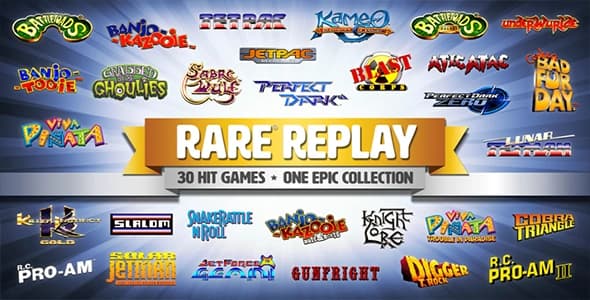
There was a time when big-name studios could jump genres like it was nothing. Rare did brawlers, 2D platformers, 3D platformers, shooters, weird management stuff, then a live-service pirate sandbox with Sea of Thieves. Double Fine has bounced from adventure games to 3D platformers to complete oddballs like their upcoming Kiln. They still feel like “free radicals” – studios whose identity is experimentation.
But they’re the exception now, not the rule.
Look at Naughty Dog. Once upon a time they were doing mascot platformers and even goofy kart racers – Crash Team Racing, Jak X: Combat Racing. Now? They’re effectively locked into prestige third-person narrative action. Uncharted, The Last of Us, and the new sci-fi project Intergalactic: The Heretic Prophet. Incredible games, sure. But it’s one lane, over and over.
Insomniac is the same story. These are the folks who used to throw games like Resistance (FPS), Song of the Deep (Metroidvania), Outernauts (RPG), Bad Dinos (tower defense) at the wall. Now they’re the Marvel Spider-Man factory. Very good factory, but still.
This isn’t just “creative evolution”. It’s economic survival. Once a studio becomes known as “the cinematic third-person people” or “the superhero people”, every deviation is treated as a mistake. Fans of those studios don’t say, “Oh cool, they’re trying something else.” They say, “Why aren’t you making the one thing I like you for?”
And the numbers back that reaction up. Every time a studio steps away from its “expected genre”, it’s playing with fire – even when the game is good.
When courage doesn’t pay: great experiments, cold audiences
The depressing thing is that creative risk can work. Blizzard is the poster child there. For years it was just Warcraft, Diablo, StarCraft. Then they jumped into a digital card game (Hearthstone), a MOBA (Heroes of the Storm), and a hero shooter (Overwatch) – and for a while, every one of those felt like it rewrote a genre.
But for every Blizzard success, there’s a graveyard of ambitious pivots that basically got punished for daring to exist.
Creative Assembly built its name on Total War. For strategy fans, that series is sacred. Then they surprised everyone with Alien: Isolation, a first-person survival horror masterclass that nailed the license so hard it’s still being held up as the Alien game. Critics praised it. Players who actually played it mostly loved it.
But “mostly loved” doesn’t keep shareholders warm at night. It apparently didn’t hit Sega’s sales expectations. The follow-up big swing, the extraction shooter Hyenas, didn’t even make it to release. It was cancelled outright in 2023 after failing to attract enough interest, despite years of work. That’s a message carved into stone: stick to Total War or else.
Dontnod is another one. They carved their place with narrative adventures like Life is Strange, Tell Me Why, and now Lost Records. The second they stepped sideways – into a moody action-RPG with Vampyr, a climbing-focused meditative experience with Jusant, or more traditional action-adventure with Banishers – the reception turned icy compared to their story-driven hits. Not disasters, but nowhere near the resonance of their comfort zone.
BioWare tried to break out of pure RPGs with Anthem, and burned themselves so badly they’re still trying to scrub the smell off. Valve, the studio that basically defined modern FPS with Half-Life, couldn’t get players to care about their digital card game Artifact no matter how solid the design was. Both games weren’t just judged; they were turned into punchlines.
None of these projects were flawless. That’s the point. You can’t ask teams to innovate and then punish them for not delivering perfection on their first try outside their home turf. But that’s exactly what the market – and the player base – keeps doing.
The live-service gold rush that feels more like a minefield
Here’s where it gets even uglier. Not only are studios scared of new genres, they’re being shoved toward one of the riskiest spaces in the industry: live-service and multiplayer.
On paper, it makes sense. A successful service game is a money printer. So you get single-player specialists forced to build forever-games, chasing trends they don’t really understand, in a market that’s already overflowing.
Remedy – a studio loved for weird, tightly authored single-player experiences (Control, Alan Wake) – tried to step into the multiplayer arena with FBC Firebreak. Recently they basically admitted it hadn’t met expectations. This isn’t some random no-name dev; this is one of the most respected creative studios in the business, and even they couldn’t force their way into player headspace.
Quantic Dream, famous for interactive dramas, went for a 3v3 MOBA with Spellcasters Chronicles. Two closed betas, then an early access launch that landed with all the impact of a wet tissue. Steam user score hovering in the red, concurrency numbers in the gutter. One review summed up the fatigue perfectly: “At least it’s free, but aren’t devs tired of making this kind of game and failing every time?” Brutal, but not wrong about the pattern.
Even games built by teams with multiplayer pedigree are struggling to break through in this mess. New service shooters and competitive titles like Highguard or 2XKO are already feeling the weight of a saturated market where only a handful of mega-hits really thrive. There are only so many hours in the day, and most of them are already swallowed by the giants players are deeply invested in.
I saw an industry analysis recently claiming that only around 6–7% of players’ annual game time goes into new releases. Whether that exact number is perfect or not, the vibe tracks. We’re drowning in new launches – especially on PC – and we barely make room for them. Being free-to-play doesn’t save you if nobody wants to leave their current comfort grind.
So when a single-player studio is told, “Hey, make a live-service multiplayer thing, that’s where the money is”, they’re not just taking a risk. They’re walking into a gunfight where most of the bullets are already spoken for.
The “voici vérité dérange” no one wants to hear
That Thomas Mahler quote has been rattling around my head: voici vérité dérange. “Here’s the disturbing truth.” Players are excellent at optimizing short-term satisfaction. They’re terrible at defending long-term joy.
What does that look like in practice?
What does that look like in practice?
🎮 Get This Game at the Best Price
Compare prices instantly and save up to 80% on Steam keys with Kinguin — trusted by 15+ million gamers worldwide.
*Affiliate link — supports our independent coverage at no extra cost to you
It looks like review bombing a game because it’s demanding on purpose. It looks like instantly dismissing a game from a narrative studio because it’s not a visual-novel-with-quick-time-events. It looks like torching an early access build for being rough around the edges when the whole point of early access is to let it be rough while it evolves.
And no, this isn’t about shutting players up. We absolutely should call out broken launches, predatory monetisation, or games that hide behind “creative vision” to justify wasting people’s time. But right now, the loudest tools we have – social media dogpiles, Steam user scores, Metacritic bombs – don’t distinguish between “this game is technically a mess” and “this game doesn’t immediately flatter me”.
To a publisher, those two things look exactly the same on a sales graph.
If you’re a studio head watching No Rest for the Wicked almost get killed by a wave of angry, short-term-focused backlash, what lesson do you take? You don’t go, “Let’s push even harder into weird, demanding games next time.” You go, “Alright, back to safe territory, or maybe layoffs.”
That’s the “voici vérité dérange game devs live in: player feedback is essential, but in its current weaponized, knee-jerk form, it doesn’t just guide design. It polices it.
Backlash has a body count, and it’s killing the weird stuff first
Zoom out and the pattern gets even more depressing. The industry is already in a brutal spot – layoffs everywhere, mid-size publishers like Nacon wobbling so hard whole clusters of studios are facing bankruptcy. In that climate, risk isn’t just scary, it’s existential.
So imagine you’re pitching a new project to a cautious publisher. You can either say:
- “We want to make a slightly different third-person action game that looks like the last one but with a hookshot,” or
- “We want to make a table tennis sim” or “a music-mixing game from the creators of a mega-franchise.”
In a healthy industry, both of those should have a shot. Right now, the second kind of pitch might as well be a dare to get your studio shut down.
Players talk a big game about wanting variety, but the second a big IP or big-name studio shows up doing something offbeat, the reaction is often harsh: “Why are you wasting time on this instead of the next sequel?” You see it any time an established brand does a spin-off in a different genre – the suspicion, the entitlement, the assumption that it’s some kind of betrayal.
And publishers are watching. They see risky experiments getting buried under mediocre user scores while the safest possible sequels quietly print money. Of course they pivot to “genre specialization”. Of course they double down on “franchises and proven formats only”. That’s literally the rational thing to do in a hostile environment.
The tragedy is that the first things to die are exactly the games that make this medium exciting – the strange little side projects from big studios, the genre pivots, the AA-scale “we’re not sure who this is for but it’s cool” titles. The industry doesn’t flatline overnight. It just slowly bleeds out everything that isn’t obviously safe.
This isn’t just “blame the players” – the suits screwed this up too
To be clear: publishers and platform holders created a lot of this mess.
They chased live-service trends without understanding that not every game has to be a second job. They greenlit endless clones of whatever was hot – battle royales, hero shooters, extraction shooters – then hung studios out to dry when they inevitably couldn’t crack a market already dominated by a few giants.
They conditioned us to expect “infinite content” for the price of a subscription or a one-time box purchase. They’re the ones who turned MTX, FOMO passes, and engagement metrics into sacred pillars. When players look at a new multiplayer title and immediately go, “No thanks, I’ve seen this cynical playbook already,” they’re not wrong.
So yeah, when a game like FBC Firebreak or Spellcasters Chronicles launches into a field full of corpses and doesn’t offer anything compelling enough to justify its existence, players rejecting it is fair. Not every flop is a misunderstood masterpiece; some are just bad bets.
But here’s where I land: both sides are reacting to each other in the worst possible way. Publishers respond to volatility by cutting risk. Players respond to repetitive products by demanding change – then blowtorching anything that doesn’t immediately comfort them. It’s a feedback loop, and it’s not leading us anywhere good.
What I actually want from studios – and from us
As someone who loves this medium enough to actually care what it looks like in ten years, here’s what I want.
I want Creative Assembly to be able to make another Alien: Isolation-scale horror project without having to bet the farm on selling like a Total War. I want Naughty Dog to be allowed to drop a wild arcade racer again if they feel like it. I want Quantic Dream’s weird experiments to be judged on their own design merits, not just on how closely they resemble Heavy Rain.
For publishers, that means accepting that not every game in your portfolio needs to be a tentpole. Ring-fence some budget – and, more importantly, some expectations – for projects that are explicitly allowed to “just” be interesting without uplifting your quarterly report. Stop forcing every creative team into the same safe genre box because it makes internal pitches easier.
For players, it means resisting the urge to nuke anything that doesn’t instantly serve our exact tastes. It means being able to say, “This isn’t for me, but I’m glad it exists.” It means differentiating between genuine exploitation and design choices that simply challenge us or inconvenience us a little.
And for both sides, it means treating early access and iterative development as what they are: processes, not final verdicts. If we’re going to demand that studios experiment, we can’t simultaneously insist that every experiment arrive perfectly tailored, fully polished, and completely familiar on day one.
If we punish risk, we deserve the boring future we get
Here’s my verdict.
Right now, the dominant message our behavior sends is simple: “Stay in your lane. Don’t surprise us. Don’t challenge us. Give us more of the thing we already liked, ideally cheaper, longer, and with fewer rough edges.”
If we keep doing that, the industry will absolutely oblige. We’ll get fewer misfires like Artifact or Anthem or No Rest for the Wicked’s rocky start. We’ll also lose the conditions that made something like Hearthstone, Overwatch, or even Alien: Isolation possible in the first place.
I don’t want a future where the only “acceptable” project from a studio is the safest, most optimized version of whatever they did five years ago. I want a future where a dev can say, “We know you love our narrative adventures, but this time we’re making a 3v3 sports brawler,” and the reaction isn’t immediate outrage, but curiosity.
So no, “just listen to the players” isn’t enough. Here’s the uncomfortable truth: if all we listen to is our own short-term comfort, we’ll squeeze every last drop of risk and surprise out of this medium. And when we’re left with a wall of interchangeable games carefully engineered not to upset anyone, that won’t be an accident. It’ll be exactly what we asked for.
I’d rather live with some glorious failures than watch that happen.
FinalBoss // Gear
Level up your setup
01Top-rated gaming headsetson Amazon→02High-refresh gaming monitorson Amazon→03Gaming chairson Amazon→04Discounted game keyson Kinguin→Affiliate links · As an Amazon Associate, FinalBoss earns from qualifying purchases.
Want to Level Up Your Gaming?
Get access to exclusive strategies, hidden tips, and pro-level insights that we don't share publicly.
Ultimate Gaming Strategy Guide + Weekly Pro Tips