
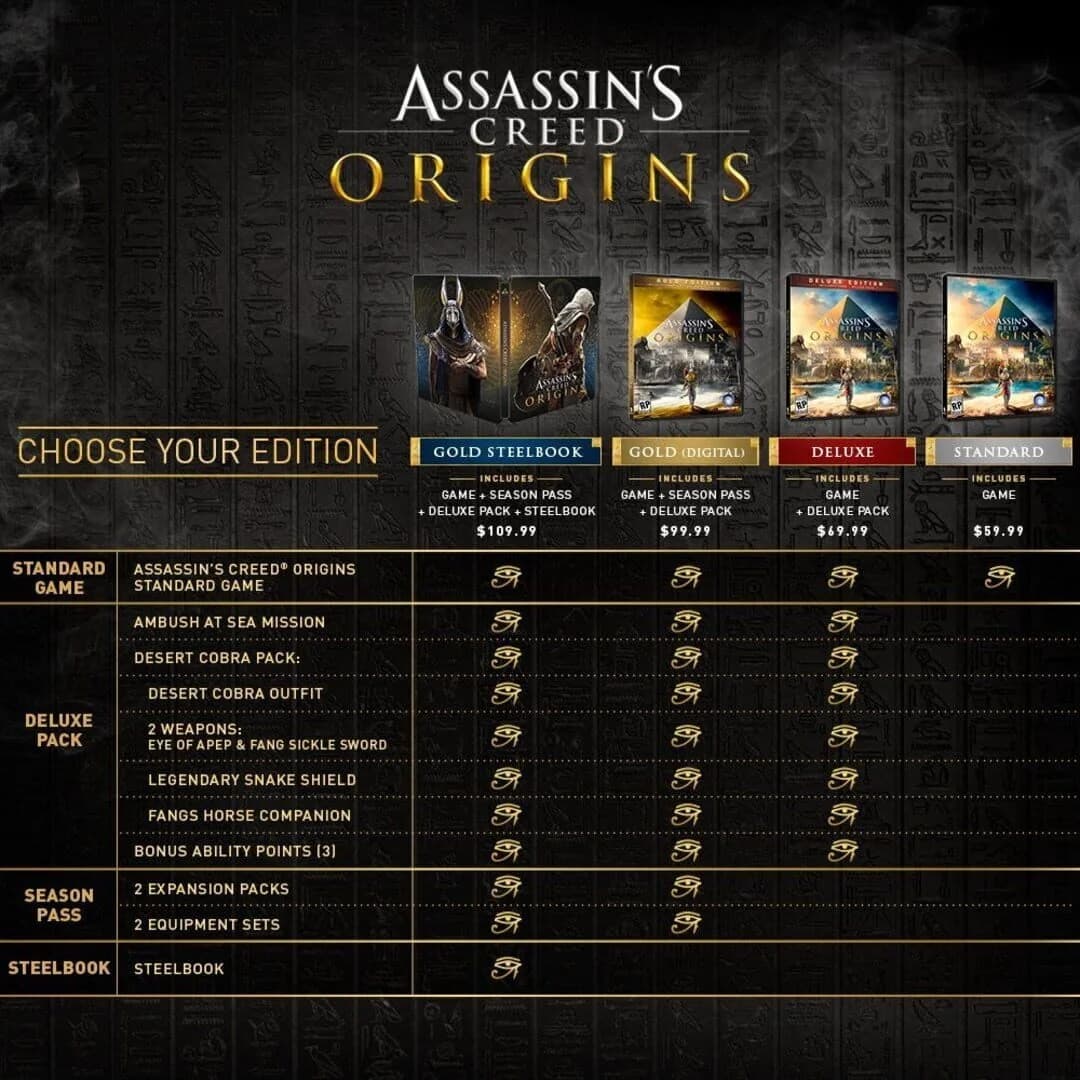
I’ve seen enough video game adaptations to recognize the exact moment a studio decides the source material is just a costume rack. It’s the press cycle where they talk about “honoring the spirit of the franchise” while quietly filing off the structural bones that made the thing actually work. So when Abubakar Salim-Bayek himself, the voice that carried Assassin’s Creed Origins-came out and basically pleaded with Netflix not to throw away the franchise’s modern-day storyline, I felt that familiar heat behind my eyes. He’s right, and I have a sinking feeling nobody with a greenlight button is actually listening.
Netflix is currently filming its live-action Assassin’s Creed series set in 64 AD Rome. On paper, that sounds like a dream: the burning of Rome under Nero, the early Assassin Brotherhood finding its footing in the belly of a dying empire, hidden blades flashing through marble corridors. But here’s the thing-if the showrunners treat that historical setting as the entire meal rather than the flashback framework, they’ve already failed. They won’t be making Assassin’s Creed. They’ll be making a very expensive, very pretty historical drama that happens to have hoods.
Table of Contents (5)
The Modern-Day Story Isn’t Baggage—It’s the Engine
Here’s the part that too many adaptation writers don’t grasp: Assassin’s Creed is not a historical fiction franchise. It is a science fiction franchise that uses historical fiction as its primary interface. The modern-day storyline isn’t an interruption to the “real” story set in the past. It is the convergence point for every theme the series has ever explored. The Templar-Assassin conflict only carries weight across multiple entries because we see it mutating and surviving into the present. Strip that away, and the Rome narrative becomes a self-contained tale of some guys in togas who don’t like each other very much. The ideology becomes costume jewelry instead of a living war.
More importantly, the modern day is the meta-mystery engine. The Pieces of Eden, the First Civilization, the underlying question of free will versus control—these aren’t historical curiosities. They’re sci-fi artifacts that only matter because a modern corporation is hunting them. Abstergo isn’t a footnote; it’s the entire reason the Animus exists. Without the present-day frame, you lose the conspiracy. You lose the sense that the history being excavated is loaded, dangerous, and urgently relevant to someone alive right now. You’re left with tourism.
And then there’s stakes. Why should anyone care about 64 AD? Because in the logic of the franchise, the genetic memories being mined in the Animus are raw intelligence. They’re blueprints for weapons, maps to hidden artifacts, and evidence of an ancient truth that could unravel the modern power structure. Every leap from a Roman rooftop should feel like it matters to a protagonist trapped in a lab in 2026. The past isn’t past. It’s ammunition. If Netflix doesn’t understand that transaction, they’ve built a $100 million diorama.
What “Gameplay Faithfulness” Means When Nobody’s Holding a Controller
People assume that because games are interactive and television is passive, the Animus becomes a dispensable framing device. That thinking is backwards. The Animus doesn’t exist to justify gameplay loops—though it does that elegantly. It exists to give the narrative permission to be structurally bold. In a passive medium, that permission is even more valuable. The Animus justifies hard cuts between millennia. It allows for memory glitches, temporal bleed, and the unreliable narrator effect of genetic recollection. It lets a show cut from a blood-soaked Roman alley to a sterile corporate lab without either scene feeling like a non-sequitur, because the cut is the premise.
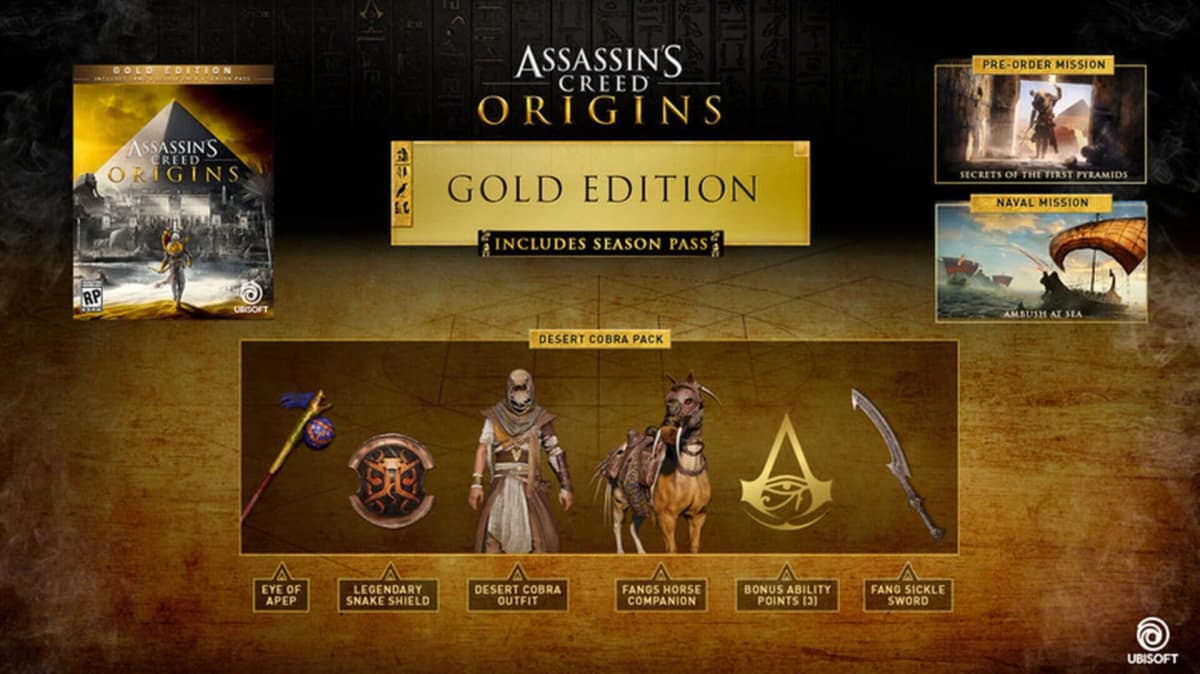
Without that modern-day pressure valve, the show is trapped in antiquity. No matter how immaculate the production design, 64 AD Rome is still a place the audience knows is dead and buried. The modern timeline provides the oxygen that keeps the historical segments from suffocating under their own dust. It creates a dialogue between eras. When Bayek confronts the corruption of the Ptolemaic court in Origins, the emotional echo lands because we understand that same corruption has persisted into Layla’s present. That echo is the franchise’s heartbeat. Remove it, and you’re not adapting Assassin’s Creed. You’re adapting a Wikipedia article about stabbing.
This is where we need to get specific about what “gameplay faithfulness” means when the audience can’t pick up a controller. It doesn’t mean recreating leap-of-faith camera angles or stitching together combat animations that look like button combos. It means preserving the structural relationship between the two timelines. It means letting the Animus be a source of tension, not just exposition. A faithful adaptation understands that the interface between player and game—genetic memory as playable history—is the soul of the property. Translate that interface honestly, and the show earns the right to use the name.
The 64 AD Rome Problem
Let’s talk about Rome. 64 AD is a powder keg: the Great Fire, the collapse of the Julio-Claudian dynasty’s moral authority, the raw paranoia of Nero’s inner circle. It’s fertile ground for an origin story about the Hidden Ones. But who is watching this history unfold from the Animus? Is it a captive in an Abstergo facility? A rogue Assassin bleeding into the machine to find a Piece of Eden before the Templars do? If Netflix can’t answer that question with the same urgency it devotes to the Senate’s backstabbing, then the Rome sequences are just expensive set dressing. Spectacle without syntax.
The modern day also provides the only plausible mechanism for moral commentary. A character in the present reacting to the brutality of ancient Rome—slavery, imperial collapse, religious persecution—can actually process those horrors with a contemporary ethical lens. Without that frame, the show risks uncritically luxuriating in the violence and aesthetics of antiquity. The modern-day protagonist is the audience’s proxy, the person who gets to say, “This is messed up,” and mean it in a way that resonates across centuries. That function isn’t baggage. It’s the show’s conscience.
Yes, the Modern Day Has Always Been Divisive. So What?
I know the counterargument. I’ve lived in the forums. The modern-day segments have always been divisive. Desmond Miles’s arc ended with a wet thud. Layla Hassan was treated like an afterthought in her own saga. Valhalla tried to tie a bow on years of loose mythological threads and mostly gave everyone a migraine. So I understand the reflex to say, “Just give us the historical hoods and leave the sci-fi conspiracy in the bin.” But that’s a confession of creative cowardice, not a solution. The modern day wasn’t bad because the concept was broken. It was bad because Ubisoft repeatedly fumbled the execution—rushing conclusions, changing direction mid-saga, and treating the present-day protagonist like a contractual obligation.
You don’t fix a fumbled ball by deciding football is the problem. Salim understands this because Origins itself had to walk that tightrope. The game reduced modern-day interruptions to a bare minimum, and while that choice placated the “skip it” crowd, it also made Layla’s sections feel like concessions rather than integral storytelling. Origins worked despite that reduction, not because of it. Its power came from Bayek’s humanity, not from the absence of Abstergo. Netflix should learn from that restraint without copying its compromises. The modern day needs to be central, not coy. It needs writers who actually believe in the premise.
The Adaptation Rubric
Salim’s warning gives us a testable rubric for judging this adaptation before a single frame airs. First, does the modern timeline provide thematic convergence? If the Rome story is about brotherhood tested by empire, the present-day frame should echo that dynamic in corporate boardrooms or Assassin safe houses. Second, does it drive the meta-mystery? We should finish an episode of Roman political intrigue wanting to know what Abstergo plans to do with the data. Third, does it frame the stakes? Every death in antiquity should feel like it matters to someone staring at a monitor under fluorescent lights. If the answer to any of these is no, you’re not watching Assassin’s Creed. You’re watching a brand exercise.
Salim also cautioned against over-innovating—against trying to “modernize” ideas that already function. That critique stings because we’ve seen it before. There’s a specific kind of television writer who looks at video game logic and thinks, “This is silly genre material. We need to ground it.” They did it with Halo. They did it with Resident Evil. They take something that operates on its own rigorous internal logic and sand down the edges until it fits a grim, prestige-drama mold. Assassin’s Creed doesn’t need grounding. The Animus is insane. The First Civilization is insane. A secret war between free will and control that has survived millennia is insane. That’s the entire appeal. Respect the creed. Respect the history. And respect the modern-day scaffolding that holds the whole cathedral up, or watch it collapse.
Netflix has the budget, the platform, and a 64 AD Rome setting that could be genuinely extraordinary. But if the showrunners look at the modern-day storyline and see dead weight instead of the engine, they’ll deliver exactly what every bad adaptation delivers: a beautiful, expensive, utterly hollow costume drama. And Salim will be left watching another studio learn the hard way that you can’t adapt the skin without the skeleton.
FinalBoss // Gear
Level up your setup
01Top-rated gaming headsetson Amazon→02High-refresh gaming monitorson Amazon→03Gaming chairson Amazon→04Discounted game keyson Kinguin→
Affiliate links · As an Amazon Associate, FinalBoss earns from qualifying purchases.
Want to Level Up Your Gaming?
Get access to exclusive strategies, hidden tips, and pro-level insights that we don't share publicly.
Ultimate Gaming Strategy Guide + Weekly Pro Tips