
Table of Contents (11)
The Fallout that made my skin crawl instead of just my XP bar rise
When I think about Fallout 3, I don’t remember my build, my crit chance, or the exact route I took through the main quest. I remember the feeling of my stomach tightening every time I had to cross a ruined overpass with two bullets and a half-broken hunting rifle. I remember that sickly green sky that made me feel like the air itself hated me. Fallout 3 isn’t the best Fallout mechanically, narratively, or even in terms of quest design – New Vegas wipes the floor with it there. But it’s still the Fallout that feels the most like the end of the world actually happened.
I’ve been playing RPGs since the days of isometric weirdness on PC and Dreamcast fever dreams like Shenmue. I care about systems, choices, builds, the whole crunchy RPG toolkit. But Fallout 3 is the rare game where I genuinely don’t care that the shooting is janky or the balance is busted. Its real power lives in something most big-budget open worlds still whiff: it weaponises atmosphere. The Capital Wasteland doesn’t just exist for you to clear icons off a map; it’s an emotionally oppressive space that constantly reminds you that you shouldn’t be here – and it might kill you for trying.
Leaving Vault 101 felt less like freedom and more like getting punched in the lungs
That first moment stepping out of Vault 101 is burned into my brain more vividly than half the finales I’ve played since. The game straight-up blinds you. The light blows out the screen, your eyes adjust, and suddenly you’re looking at a dead, colourless valley that used to be home. No triumphant orchestral swell. No clean UI tutorial pop-up telling you about fast travel. Just silence, a Geiger counter, and the realisation that the safest place you’ll ever know is now locked behind you forever.
Plenty of games since have tried the “dramatic first step into the open world” trick. Skyrim’s canyon, Breath of the Wild’s plateau, you name it. They’re about awe. Fallout 3’s moment is about loss. It doesn’t feel like an open world invitation, it feels like exile. And that’s the core of why its atmosphere hits so hard: you’re not a chosen hero surveying your kingdom, you’re another piece of meat trying not to rot too quickly in a world that already did.
Washington D.C. as a weapon, not a backdrop
Turning Washington D.C. into a wasteland wasn’t just a cool pitch for the box art; it’s the smartest decision Bethesda made. I’d never set foot in D.C. the first time I played, but I’d seen its monuments a thousand times in films, textbooks, propaganda pieces masquerading as history videos. When you finally drag yourself through the Metro and see the broken Washington Monument jutting up through irradiated fog, it isn’t just “oh wow, big tower” – it’s the symbolic centre of a superpower, gutted and useless.
Tim Cain, one of the creators of the original Fallout, has talked about how striking it was to recognise that Metro system and those landmarks during early demos of Fallout 3. That’s exactly the point. Fallout 1 and 2 were about a post-apocalypse built on implication and suggestion. Fallout 3’s move to 3D let Bethesda shove your face directly into the ruins of a recognisable empire. It’s not subtle, and it’s absolutely not elegant, but it’s emotionally effective in a way very few open worlds dare to be.
Those Metro tunnels themselves are genius in their own nasty way. They aren’t fun mazes; they’re miserable, claustrophobic detours that exist to make you feel trapped and disoriented. Bethesda has said they originally played with the idea of a much more realistic, fully connected underground network, but cut back because it simply wasn’t fun to get lost in endless samey tunnels. So what you get instead is curated misery: enough confusion and danger to make every trip into the city feel like a gamble, but not so much that you uninstall the game. That’s the tightrope Fallout 3 walks constantly — an illusion of unending horror built on carefully placed pain points.
Bethesda’s “ugly on purpose” masterstroke
Coming off The Elder Scrolls IV: Oblivion — a bright, lush fantasy world full of rolling green hills and shiny armour — Bethesda deliberately swung the pendulum the other way. Fallout 3’s art director, Istvan Pely, has talked about how they stripped colour out, dirtied everything up, and leaned hard into harsh lighting to make a statement: this wasn’t a quirky retro parody of nuclear war, this was a world that had been chewed up and spat out.
And yes, by modern standards, Fallout 3 is ugly. Faces are wax mannequins, animations are stiff, textures look like they were painted with a mop. But that technical roughness accidentally amplifies the mood. The uncanny, dead-eyed NPC stares don’t break immersion, they enhance the creeping sense that whatever “society” is left is just people playing at being human in a place where humanity has already failed.
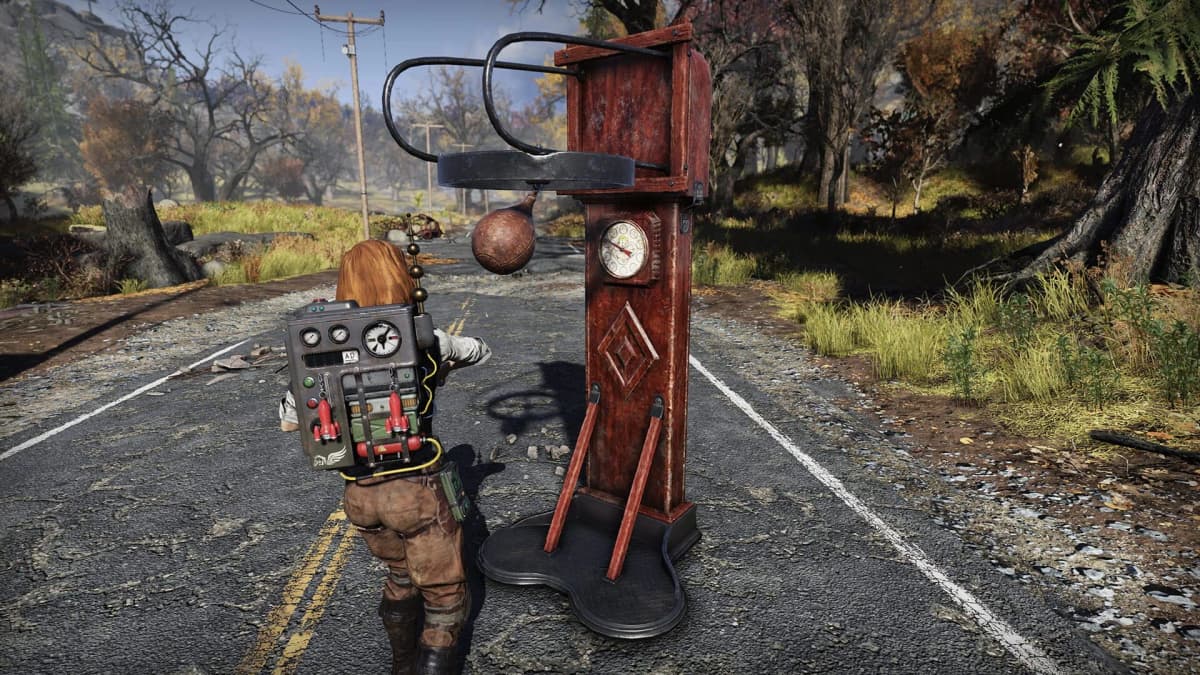
Crucially, the game doesn’t just tell you the world is exhausted — the skybox, the lighting, the ruined highways, the crumbled suburbs all make you feel it. There’s almost never a pure blue sky in Fallout 3; everything is filtered through that radioactive haze. In a lot of modern open worlds, the sun is a reward. In Fallout 3, daylight just means you can more clearly see how screwed everything is.
When exploration feels like trespassing, not tourism
The biggest compliment I can give Fallout 3 is this: I never once felt like I was “doing content”. Every time I crept into a derelict office block or a ruined townhouse, it felt like I was breaking into someone else’s tragedy. Bethesda’s designers scattered little environmental micro-stories everywhere — skeletons in bathtubs, desperate notes on terminals, medical supplies hoarded in a kid’s bedroom — and framed them with level layouts that constantly put you on edge.
Modern open worlds love their checklists. Go here, clear this outpost, fill this bar, watch this XP number spike. Fallout 3 technically has a ton of locations to tick off, but it rarely treats them like chores. There’s enough randomness in enemy placement, enough variance in loot, and enough nastiness in the encounter design that you can’t just switch your brain off and enter “Ubisoft autopilot” mode. Half the time, the game’s environmental storytelling hits harder because you’re scared, low on ammo, and one bad pull away from getting your head taken off by a Super Mutant with a nail board.
There’s a reason the game’s director, Todd Howard, has admitted they intentionally leaned into survival horror. Fallout 3 “needed to be scary sometimes”, as he put it back around launch. That fear is the glue that binds the exploration together. You’re not just poking around to clear fog off your map; you’re intruding on the ruins of other people’s lives, knowing that something hungry might be doing the exact same thing to you from the next room over.
Radio, irony, and the one human voice that keeps you going
Here’s where Fallout 3 becomes properly vicious: just when the grey, rusted misery starts to become overwhelming, it hands you a radio station and says, “Here, have some warmth.” Not warmth as in hope — warmth as in dark humour and melancholy dressed up as nostalgia.
Radio, irony, and the one human voice that keeps you going
Here’s where Fallout 3 becomes properly vicious: just when the grey, rusted misery starts to become overwhelming, it hands you a radio station and says, “Here, have some warmth.” Not warmth as in hope — warmth as in dark humour and melancholy dressed up as nostalgia.
🎮 Get This Game at the Best Price
Compare prices instantly and save up to 80% on Steam keys with Kinguin — trusted by 15+ million gamers worldwide.
*Affiliate link — supports our independent coverage at no extra cost to you
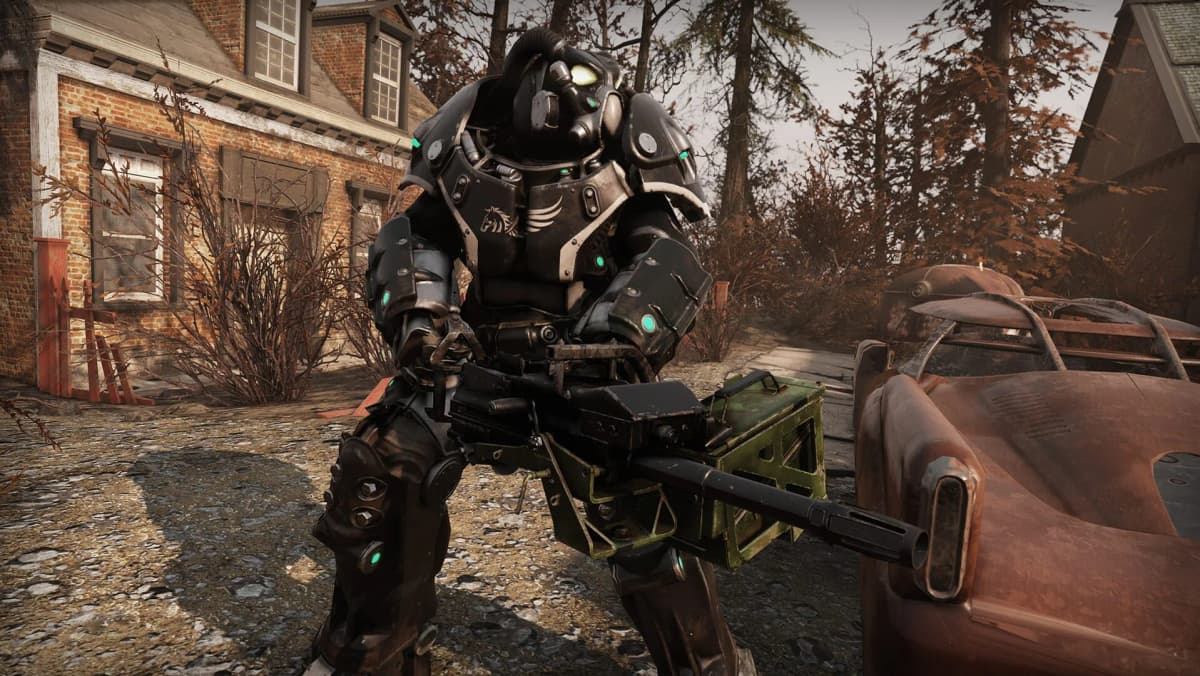
Howard has talked about how, after seeing how relentlessly grey the early build looked, he pushed the team to find “another mood” to layer on top. That “other mood” is Galaxy News Radio: cheerful, often patriotic oldies playing over the sound of gunfire and feral ghouls, DJ Three Dog cracking jokes about a wasteland where people are still trying, still failing, still laughing anyway.
Emil Pagliarulo, one of the leads on Fallout 3, has described how they specifically wanted that music to walk a line between patriotic cheese and grotesque irony. You’re listening to songs about American optimism while stepping over the charred skeleton of American reality. It’s not subtle, but subtlety is overrated when the whole point is to rub your face in the disconnect between what this world promised and what it actually delivered.
More than once, I found myself stopping on a ruined overpass just to stare at the horizon while “I Don’t Want to Set the World on Fire” played. It’s corny. It’s on the nose. It’s also one of the few times a AAA game has made me fully feel the joke of human ambition rubbing shoulders with total collapse. The radio isn’t just background noise; it’s the last fragile thread tying you to the idea that someone, somewhere, is still alive enough to comment on the disaster with a wink.
The immersive sim DNA nobody gives it credit for
Fallout 3 tends to get filed under “Bethesda open world RPG” and left there, but under the hood there’s a lot of Looking Glass-style immersive sim thinking going on. Pagliarulo has spoken about trying to cram in as much Deus Ex influence as humanly possible: stealth that actually matters, enemies reacting to sound, limbs that can be crippled to change how fights play, multiple vectors into and out of spaces.
I’ve sunk an embarrassing amount of time into Thief, Deus Ex, System Shock — the whole immersive sim family tree. Fallout 3 doesn’t reach those heights in systemic depth, not even close, but you can feel the ambition. Sneaking through a Raider camp, sniping mines, luring enemies into bottlenecks, or hacking a turret to do your dirty work — all of that meshes perfectly with the tone. You’re not a superhero; you’re a rat picking at the wiring of a corpse of a world, trying to twist its leftover systems in your favour.
That’s why, for all the jokes about V.A.T.S. and bullet sponges, I cut Fallout 3 a lot of slack. It’s reaching for something most big RPGs don’t even attempt: letting the environment, the systems, and the fiction all point in the same direction — toward a feeling of being dangerously, uncomfortably small.
Why later Fallouts feel safer — and smaller
Fallout: New Vegas is a better RPG. Fallout 4 feels better to play. I’m not arguing otherwise. But both, in their own ways, are less oppressive. New Vegas has more wry distance — you’re navigating factions, politics, philosophy. Fallout 4 leans more into power fantasy; before long you’re in power armour with a pocket full of mini-nukes, fast travelling between settlements like a wasteland Uber driver.
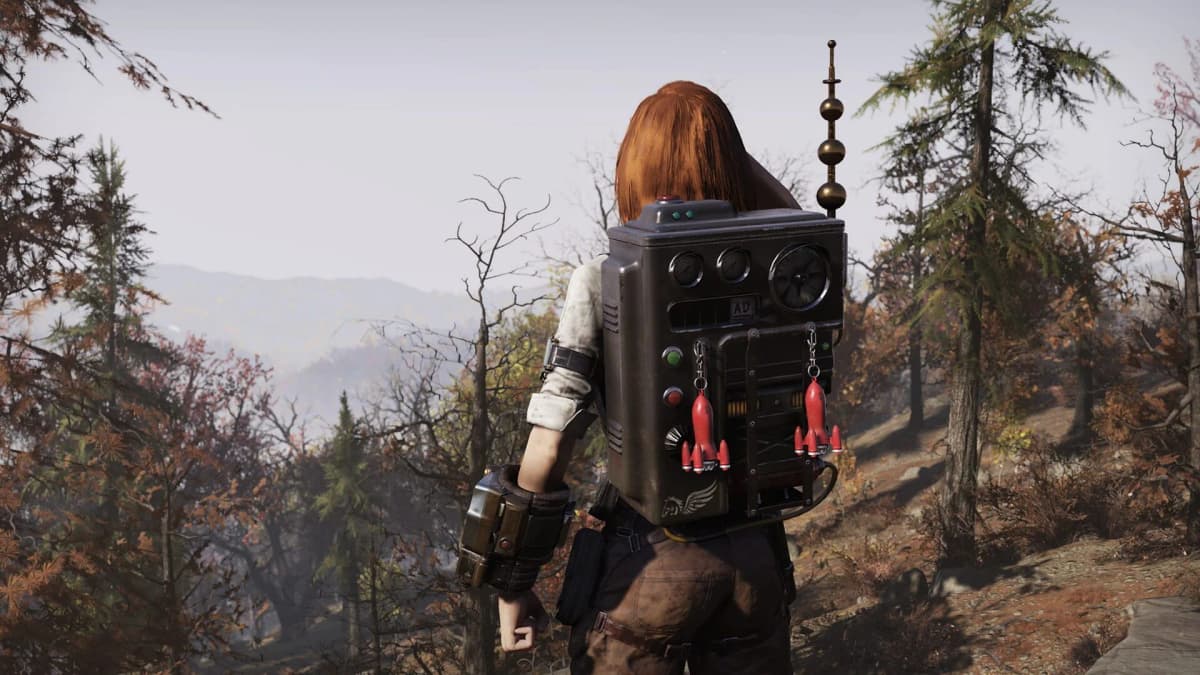
Fallout 3, especially in its early and mid-game, is far more willing to make you feel like you’re not supposed to be out here. Ammo is scarce. Health is precious. Rad poisoning is a constant threat. It’s clunky survival, sure, but it feeds straight into the atmosphere. Later games sand down those edges in the name of “accessibility” and “flow”, and you can feel the cost. The worlds become more coherent on paper, but less hostile in practice.
That’s probably part of why Fallout 3 hit so hard commercially and critically when it dropped in 2008. Bethesda has boasted about it raking in hundreds of millions of dollars in its first week and shipping millions of copies. Reviewers called it an instant classic, Metacritic slapped it with the kind of score publishers dream about, and it scooped up Game of the Year awards like bottle caps. People weren’t just impressed by the quest count; they were obsessed with the way it felt to live in that world for 80, 100, 200 hours.
What Fallout 3 still teaches open worlds about the end of the world
Replaying Fallout 3 now, after a decade-plus of bigger, prettier, “smarter” open worlds, is weirdly depressing — not because the game aged poorly, but because so many modern games have learned the wrong lessons. They copied the scale and the bullet points: branching quests, moral choices, flexible builds, big maps. What they almost never copy is the willingness to make the world itself feel like an antagonist.
Fallout 3 understands something most post-apocalyptic games completely miss: the end of the world shouldn’t just be a lore blurb or an aesthetic filter, it should be an ongoing emotional condition. Every subsystem, every visual choice, every audio cue should be working to make you feel like you’re surviving despite the game, not comfortably inside it.
That’s why, for all its broken quests, bugged companions, and stiff animations, Fallout 3 still lives rent-free in my head. It’s not just an open map to conquer; it’s a place that never stops pushing back. The Capital Wasteland is ugly, unfair, inconsistent, and occasionally downright cruel — and that’s exactly why it’s the most convincing end of the world I’ve ever stumbled through in a game.
In a medium obsessed with making players feel powerful, Fallout 3’s greatest achievement is that it made me feel small, tired, and out of my depth, and somehow I kept walking anyway.
FinalBoss // Gear
Level up your setup
01Top-rated gaming headsetson Amazon→02High-refresh gaming monitorson Amazon→03Gaming chairson Amazon→04Discounted game keyson Kinguin→Affiliate links · As an Amazon Associate, FinalBoss earns from qualifying purchases.
Want to Level Up Your Gaming?
Get access to exclusive strategies, hidden tips, and pro-level insights that we don't share publicly.
Ultimate Gaming Strategy Guide + Weekly Pro Tips