
Table of Contents (8)
The moment Sea of Remnants made me stop caring about a Black Flag remake
I’ve lost count of how many times I’ve replayed Assassin’s Creed IV: Black Flag. I know the sea shanties by heart. I can practically navigate the Caribbean blindfolded. For years, I was one of those people spamming “just remake Black Flag” under every Ubisoft tweet like it was a personality trait.
Then I watched the latest gameplay for Sea of Remnants, this so-called “ocean-fantasy open-world RPG” from Joker Studio and NetEase, and something in my brain clicked. For the first time in a decade, I looked at a pirate game and didn’t immediately compare it to Black Flag.
Instead, I caught myself thinking: okay, this is actually doing something different. Puppetfolk sailors instead of slightly-re-skinned historical white dudes. A city called Orbtopia that evolves based on your choices, instead of yet another sprawling Ubisoft map where settlements only “change” when they swap icon color. Turn-based combat with over 300+ companions to bond with, instead of the usual “hold trigger, broadside, repeat.”
I’m not pretending Sea of Remnants is guaranteed to be great. It’s free-to-play, it’s NetEase, and there’s enough potential bullshit baked into that combo to sink a fleet. But after years of watching AAA publishers either ignore pirates or regurgitate the same safe formula, this is the first project that actually feels like it understands why Black Flag hit so hard-and then chooses to sail in the opposite direction.
Black Flag nostalgia is starting to feel like a creative prison
Here’s the uncomfortable truth I had to admit to myself: my obsession with a Black Flag remake isn’t really about “needing” that game again. It’s about not trusting anyone to do anything new with pirates without screwing it up.
We’ve seen what happens when studios try to siphon Black Flag’s magic without understanding it. Skull and Bones turned naval combat into a live-service treadmill where the most interesting thing about being a pirate-actually being a person in that world-was stripped out in favor of crafting menus and PvE loot grind. It felt like the skeleton of Black Flag without the soul.
On the other side, Sea of Thieves does its own thing admirably, and I respect Rare for committing to that social, emergent chaos. But it’s also a very specific kind of sandbox. If you want story, progression depth, or a real sense of long-term character identity, it’s not built for you. It’s a vibes-first, session-based toy box.
Black Flag nostalgia has become a huge anchor on pirate games. Every new project gets measured against it—hell, publishers literally pitch games as “like Black Flag, but…” to investors. So we get safe ideas. We get checklists. We get more of the same ocean with marginally shinier waves.
Sea of Remnants, by contrast, doesn’t even pretend to be historical. It leans into being an “ocean-fantasy” game with puppetfolk, weird gods of the deep, and a world that feels closer to a fever-dream JRPG than another Ubisoft tourism package. And that’s exactly why I’m paying attention.
Puppetfolk and wish-granting oceans: pirate weirdness with actual teeth
The moment that sold me on Sea of Remnants wasn’t a big explosion, a boss fight, or a flashy cutscene. It was the premise: you’re a puppetfolk sailor who wakes up in Orbtopia with your memories wiped, in a world where legends say the Sea of Remnants can grant any wish… if you pay with your memories.
That’s not just a cute hook. That’s a built-in excuse to interrogate player identity, progression, and choice in a way most pirate games don’t even try. Every Black Flag copycat wants you to “be a pirate.” Sea of Remnants is asking, “what kind of person willingly sacrifices their past for a wish?” That’s way more interesting to me than “collect 20 shanties so the bar fills up.”
Visually, the puppet aesthetic is a huge part of why it works. The closest shorthand is We Happy Few meets Borderlands shoved into a twisted storybook, but that doesn’t quite cover it. The cast looks like toys with strings cut, slightly uncanny but still expressive. It’s the first pirate game in years where I looked at a screenshot and didn’t immediately think, “oh, so it’s trying to be Black Flag but more cartoony.”
And then there’s Orbtopia itself. Instead of yet another static hub town where NPCs repeat the same three lines for a hundred hours, Joker Studio is pitching it as “the evolving city of Orbtopia”—a place that actually changes based on how you sail, who you recruit, and what kind of trouble you drag back to port.
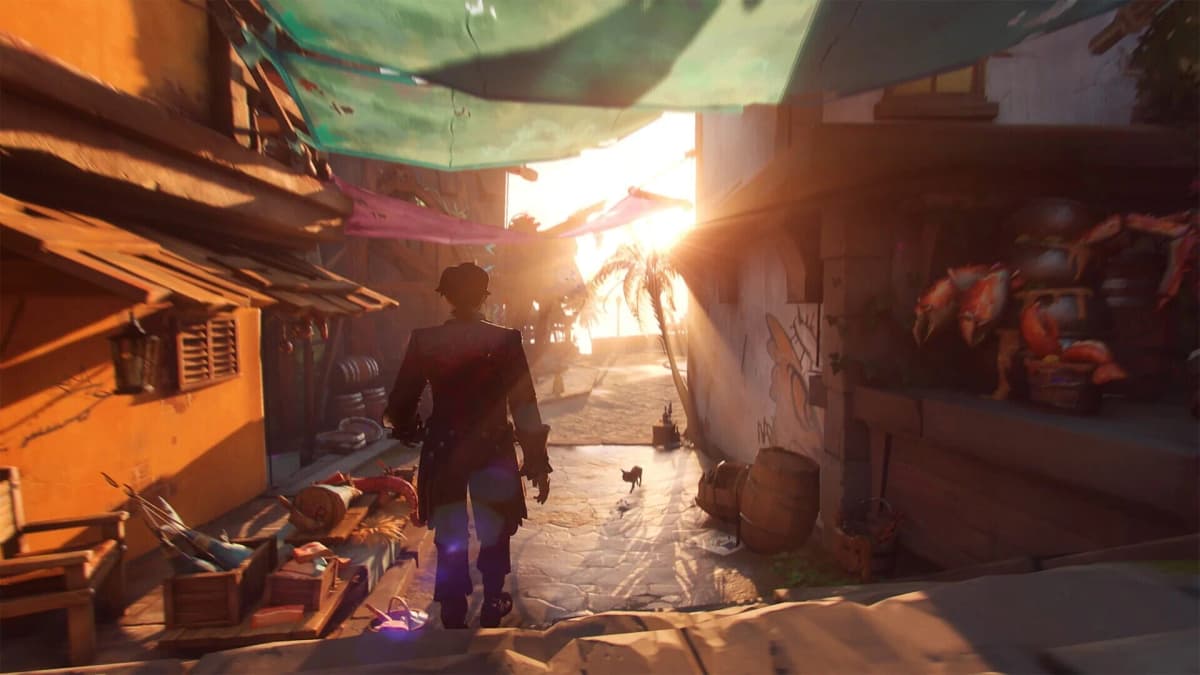
That hits a very specific nerve for me. I grew up on games like Shenmue, where the joy wasn’t just in the fights, but in seeing the town slowly change, learning every alley, every shopkeeper’s schedule. Later, series like Yakuza and Like a Dragon turned that into an art form. Those games proved something a lot of big-budget open worlds seem to forget: it’s not about size, it’s about density and memory. Your memory of a place—and how it remembers you.
If Sea of Remnants really lets Orbtopia morph based on your piracy—factions rising, neighborhoods shifting, minigames unlocking or vanishing—that’s the kind of design that sticks. That’s how you make a hub feel like home, not just a glorified menu for vendors and quest boards.
Turn-based pirate combat with 300+ companions is a wild, risky swing
Here’s where Sea of Remnants stops being “oh, cool art direction” and turns into “okay, I might lose months of my life to this if they don’t screw it up.” The core combat isn’t twitchy naval aim-assist or Assassin’s Creed counter-spam—it’s turn-based.
As someone who splits their time between fighting games and deep JRPGs, that immediately gets my attention. I love labbing out optimal routes in a combo trial, and I love theorycrafting the perfect party comp that breaks a boss over its knee. Black Flag never gave me that. It was fun, stylish, but its systems were shallow by design. You were roleplaying a pirate fantasy more than solving a mechanical puzzle.
Sea of Remnants leans hard in the other direction. Joker Studio is openly selling the fact that you can “bond with 300+ companions”. That’s not just a flavor thing; that’s announcing, “this game is about long-term team-building.” Instantly, my brain goes to synergy grids, elemental setups, buff/debuff chains, weird off-meta support builds that only work with specific crews.
In the trailer, you can already see hints of this: characters with clearly defined roles, flashy ultimates, status effects, and environmental interactions during encounters. Combine that with puzzle-based dungeons and traps, and you’re looking at something a lot closer to a gacha-style JRPG or Final Fantasy-inspired tactics hybrid than a traditional open-world action game.
That’s exciting and terrifying at the same time. Exciting, because pirate games almost never let you really go deep on crew-building in a mechanical sense. You usually collect crew as glorified stat boosts or background dressing. Terrifying, because with that many companions, the monetization alarm bells start ringing so loud you can hear them over a hurricane.
Free-to-play pirates: where I fully expect NetEase to try and screw me
Let’s not kid ourselves: this is a free-to-play game from NetEase launching across PC, PS5, iOS, and Android. That combination doesn’t happen out of pure artistic charity. There’s going to be a monetization strategy, and it’s not going to be subtle.
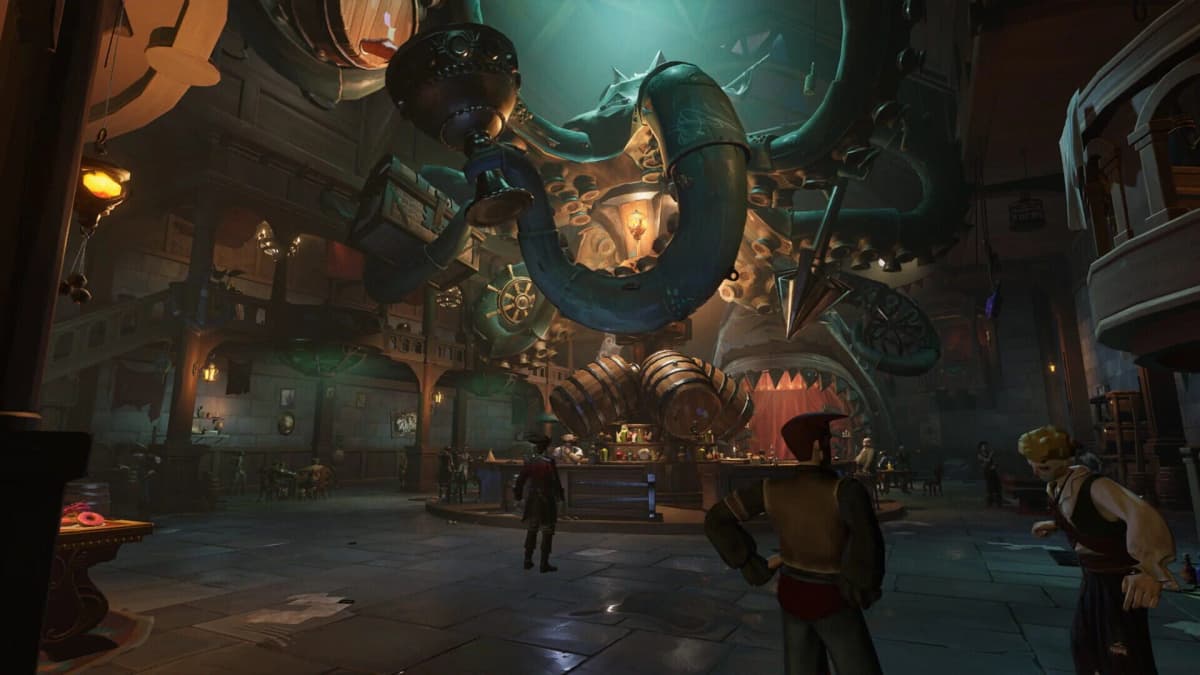
I’ve been around long enough to see this story play out a dozen times. A promising, gorgeous RPG shows up with a cool hook and tons of characters. The early game feels generous. Then you hit the mid-game wall, and suddenly “300+ companions” translates to “good luck unless you pay or no-life the grind.” I’ve deleted more gacha clients from my phone than I care to admit after falling into that trap.
So yeah, when I hear “over 300 NPCs you can add to your crew” in a F2P game, I don’t just clap. I squint. I start looking for stamina systems, for limited-time banners, for “exclusive legendary captains” with slightly better multipliers that trivialize content if you get them and make everything feel like a slog if you don’t.
And this is where I’m drawing a hard line with Sea of Remnants. I’m not anti-free-to-play by default. I’m fine with cosmetic monetization and even a well-designed battle pass if the core game respects my time and doesn’t mess with the balance. But there are a few design decisions that will instantly turn this from “pirate obsession” to “uninstall and move on.”
- If the strongest companions are locked behind gacha-style pulls with no reasonable pity or in-game path, I’m out.
- If there’s energy/stamina limiting how much meaningful combat or exploration I can do in a session, I’m out.
- If difficulty is clearly tuned around having premium units or paid gear, I’m out.
- If co-op or competitive modes lean pay-to-win, I’m out faster than a schooner in a tailwind.
NetEase has the live-service infrastructure to keep a game like this running for years. That’s both a blessing and a curse. On one hand, regular content updates could keep the ocean feeling dangerous and alive—new sea monsters, evolving city events in Orbtopia, new story arcs that actually justify the “live” in live-service. On the other, it’s a perfect platform to slowly crank up the monetization screws once players are invested.
So I’m going in eyes wide open. I’m excited about Sea of Remnants, but I’m also fully prepared to call it a gorgeous trap if that’s what it turns into. You don’t get to dangle a genuinely fresh pirate RPG in front of me and then bury it under cynical systems without catching heat.
Orbtopia vs. Ubisoft checklists: why hubs matter more than map size
The other reason I’m ready to let go of the Black Flag remake fantasy is simple: I’m done with gigantic, empty-feeling maps full of icons pretending to be meaningful content. Ubisoft used to be a pioneer at open-world design. Now, their worlds feel like project management software with better lighting.
Sea of Remnants is obviously still an open-world game—there’s a big ocean, there are dungeons, there’s ship combat. But the focus on Orbtopia as an evolving, reactive hub is exactly the kind of design shift I’ve been starving for.
In the footage we’ve seen, you’re not just walking through Orbtopia to click on mission markers. You’re playing oddball minigames: domino-like tabletop games, tense “roulette”-style gambles, timed drinking contests that apparently influence your stats. Those are the kind of side activities that, if done well, build real attachment to a place.
More importantly, Joker Studio keeps hinting that the city itself grows and changes based on your exploits. Bring back more loot, recruit crew from certain factions, stir up trouble on particular trade routes—Orbtopia shifts. Power balances change. That’s the sort of systemic interplay I want from a modern RPG, pirate-themed or not.
Compare that to the Assassin’s Creed formula: you clear outposts, the map looks a bit cleaner, and maybe you get a cutscene where a rebel leader says “thanks” before disappearing into the generic NPC soup. The world advances, but it doesn’t evolve. You don’t feel like you’ve bent anything to your will; you’ve just checked off what the designers expected you to do anyway.
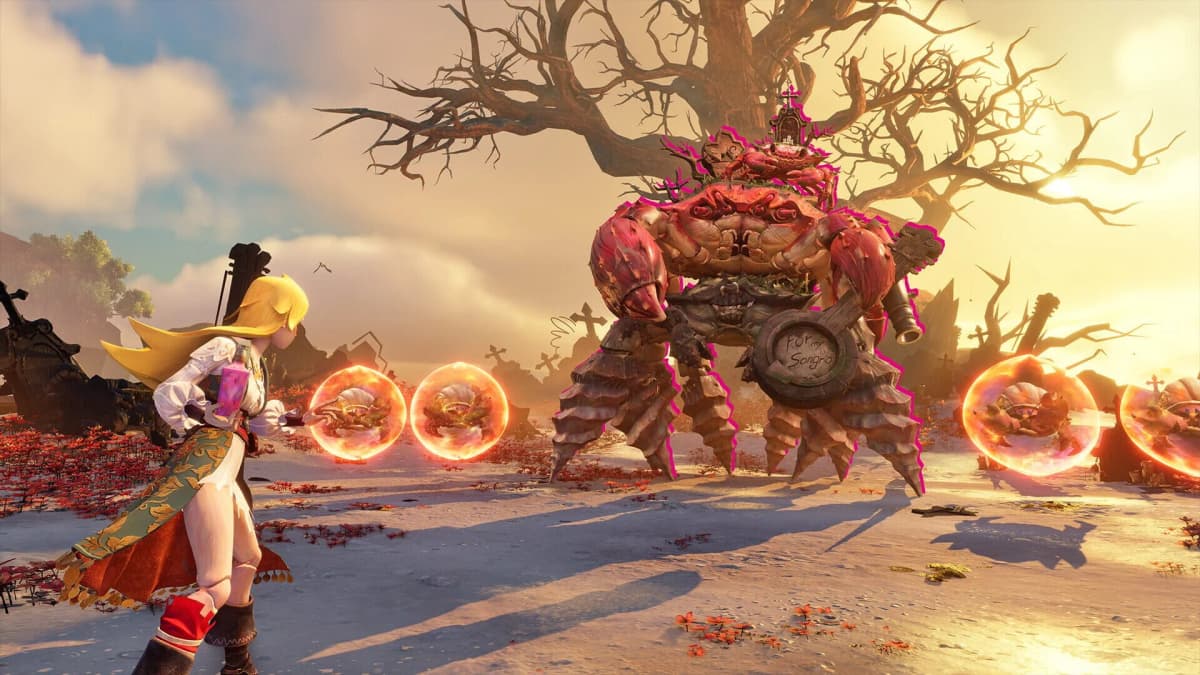
If Sea of Remnants can nail the feeling that Orbtopia is your city-shaped-by-the-sea—one playthrough ending with a militarized, authoritarian harbor and another with a chaotic den of smugglers and gamblers—that alone would make it more interesting than a “faithful” Black Flag remake in 4K. I don’t need sharper cannons. I need better consequences.
Why I’m more hyped for this weird puppet-pirate RPG than a safe Black Flag remake
Rumors of a Black Flag remake are basically a seasonal event at this point. Every few months, someone swears they’ve heard from a friend of a friend that Ubisoft is doing it. Ten years ago, that would’ve had me refreshing news feeds like a maniac. Now? I shrug.
Because even if it happens, I know exactly what I’m getting. Sharper textures. Maybe some combat tweaks. Maybe a few extra side quests. Maybe a more aggressive microtransaction store if they really can’t help themselves. But it will still be the same game I already know inside out.
Sea of Remnants, on the other hand, is unpredictable. It could absolutely crash and burn under the weight of its own systems and monetization plan. Or it could become the first truly new take on pirates since Black Flag that actually earns a long-term playerbase instead of just nostalgia-retweet engagement.
I’m not putting it on a pedestal. I’m wary of the in-game translations we’ve already seen. I’m bracing for at least some live-service grind. I know a demo that ran on an RTX 5090 at 4K doesn’t mean my mid-range rig will magically get the same experience. There are a lot of ways this could go sideways.
But at least it’s trying. It’s trying to merge turn-based depth with open-world exploration. It’s trying to tie your character progression to a narrative conceit about memory and desire. It’s trying to make a hub city that isn’t just window dressing, on top of a dangerous sea full of puzzles, monsters, and tactical ship encounters. For a genre that’s been creatively stagnant for years, that matters more to me than another trip through a polished-up version of a decade-old map.
My line in the sand: what Sea of Remnants has to do to earn my time
After hundreds of hours across Black Flag, Sea of Thieves, Mount & Blade’s War Sails, and a depressing number of gacha RPGs, I’m picky about where I drop anchor now. Sea of Remnants has my attention, but it’s not getting my loyalty for free.
Here’s what it has to nail for me to genuinely commit and not just treat it as a pretty curiosity I bounce off after a week:
- Meaningful, non-exploitative companion systems. Let me earn powerful crew through play, not just lucky rolls. Make synergy and smart team-building matter more than rarity borders.
- A living Orbtopia. If the “evolving city” turns out to be shallow cosmetic swaps and canned cutscenes, that’s a huge missed opportunity. I want faction shifts, new shops, new dangers, and visible consequences.
- Respect for my time. No predatory F2P time-gating. No endless resource bottlenecks designed to push me toward paying. A grind is fine; an intentional treadmill is not.
- Combat with real depth. If you’re going turn-based, commit. Don’t make it braindead auto-battle fodder. Lean into creative builds, harsh fights, and interesting dungeon mechanics. Treat my brain like it’s attached to a veteran RPG player, not a daily checklist zombie.
- A sea that feels dangerous and playful. Dynamic weather, monsters, puzzles, and tactical ship encounters should all feed into a sense that the ocean is a character, not just blue padding between instances.
If Joker Studio can deliver on even half of that while avoiding the worst live-service traps, I’ll happily let the Black Flag remake discourse sail right past me. I’ve already had my perfect historical pirate power fantasy. What I want now is something stranger, riskier, more mechanical, and more personal.
Sea of Remnants looks like it might actually be that game. And until Ubisoft proves it can do more with pirates than endlessly polish the same old treasure, I’m betting my time on the weird puppetfolk sailing into the unknown rather than another remastered trip down memory lane.
FinalBoss // Gear
Level up your setup
01Retro consoleson Amazon→028BitDo controllerson Amazon→03Capture cards (Elgato & more)on Amazon→04Discounted game keyson Kinguin→Affiliate links · As an Amazon Associate, FinalBoss earns from qualifying purchases.
Want to Level Up Your Gaming?
Get access to exclusive strategies, hidden tips, and pro-level insights that we don't share publicly.
Ultimate Gaming Strategy Guide + Weekly Pro Tips