
Table of Contents (10)
The Moment DLSS 5 Lost Me
I was genuinely excited to see what Nvidia had cooked up with DLSS 5. I’ve been a graphics nerd my whole life – the kind of idiot who replays the opening of Crysis just to stare at the water, who toggles ray tracing on and off in Cyberpunk 2077 like it’s a light switch in a museum. So when Nvidia started hyping DLSS 5 as “our biggest leap since 2018” and the dlss nvidia futuro of games, of course I tuned in.
And then I watched the demos.
Within a couple of minutes, something felt really, really wrong. Not because the tech looked bad – if anything, it looked too good in all the wrong ways. The faces in Resident Evil, the miners in Starfield, the environments in older games being “revamped”… they all started to blur into one same-y, plasticky, over-lit mush. It was like someone had slapped the same Instagram “photoreal” filter on four completely different games and said, “Congrats, this is the future.”
This is the part where I’m supposed to say, “Well, visually it’s impressive, but…” No. I’m not doing the polite dance here. DLSS 5 is exactly the kind of tech-first, art-second bullshit that has been quietly poisoning AAA games for years. It’s the logical endpoint of an industry that still thinks “more realistic lighting” is the same thing as “better games.”
Yes, DLSS 5 Is Technically Wild. That’s Not the Problem.
On paper, DLSS 5 is witchcraft. It’s not just upscaling resolution anymore; it’s a whole extra AI-driven lighting and material pass. Nvidia’s own pitch is basically: “We’ll take what the game renders and use machine learning to add realistic specular highlights, subsurface scattering on skin, better hair, better environmental lighting – almost like path tracing, but cheaper.”
And in a vacuum, that’s impressive. You’re telling me you can take a game from 2011 and make its metals glint realistically, its skin glow with that weird flesh translucency, all in real time on a single GPU? That’s brute-force sci-fi tech, no question.
But games don’t exist in a vacuum. They exist in a context: a narrative, a tone, an art direction, a culture. And the more I looked at those DLSS 5 comparisons, the more I saw something deeply unsettling – not just the infamous uncanny valley, but something worse: homogenization. Nvidia is trying to sell one global look as the ideal: AI-smoothed, AI-lit, AI-“enhanced” materials that all bend in the same direction, no matter what the developer actually wanted the game to feel like.
This isn’t just “sharp vs blurry” or “60 FPS vs 30 FPS.” This is an algorithm literally rewriting the visual language of a game on the fly.
When AI Lighting Steamrolls Artistic Direction
Look at the examples they chose to show off. Miners in Starfield suddenly have the same grungy hyper-real skin sheen as a character from a horror game. A woman in Resident Evil – a game that lives and dies on mood and dread – gets the same kind of overly defined, “prestige TV drama” lighting you’d use in a sci-fi RPG dialogue scene. Old games get “modernized” by flattening their quirks into Nvidia’s default idea of realism.
Does it make any emotional sense that a space explorer and a traumatized horror heroine look like they walked off the same AI-lit photoshoot? No. But the AI doesn’t care. It’s not reading the script. It’s not thinking, “This one should look grimy and hopeless, this one should look romantic and dramatic, this one should look flat and unsettling.” It’s hitting them all with the same learned pattern and calling it a day.
And that, for me, is where the whole “DLSS Nvidia futuro game” narrative collapses. Everything in a game – color, lighting, textures, silhouettes – is supposed to serve a feeling. You darken a hallway to make the player nervous. You oversaturate a village to make it feel cozy and safe. You stylize faces so they’re expressive and readable instead of creepily pseudo-human. Good art direction is intentional.
DLSS 5 is not intentional. It’s assertive. It barges in after the real artists are done and says, “Actually, what if everything looked like this instead?” And if we just nod along because the reflections are crisp and the skin looks more “realistic,” we’re telling publishers and GPU makers that it’s fine to bulldoze artistic intent as long as the screenshots look expensive.
The Uncanny Valley Is Back, This Time With an Nvidia Logo
I remember the first time I really felt the uncanny valley in games. It was the Xbox 360 / PS3 era, when we were getting those early high-res faces that looked almost human but not quite. Stuff like LA Noire – where the lip-sync was impressive, but the eyes were absolutely dead. You could tell the tech was trying to imitate reality without understanding what actually makes a face feel alive.
Watching the DLSS 5 demos gave me that same crawly sensation. The skin textures were more detailed, sure. The lighting was more “accurate,” whatever that even means in a game where nothing else is physically accurate. But the emotional read of the faces? Worse. Characters looked like wax figures under harsh studio lights – less like people, more like 3D scans doing an impression of emotion.
The uncanny valley isn’t just about resolution or polygon counts. It’s about the mismatch between how realistic something looks and how soulful it feels. When you push realism in one area and ignore everything else – animation, framing, body language, pacing – you end up with something that’s technically advanced and emotionally hollow.
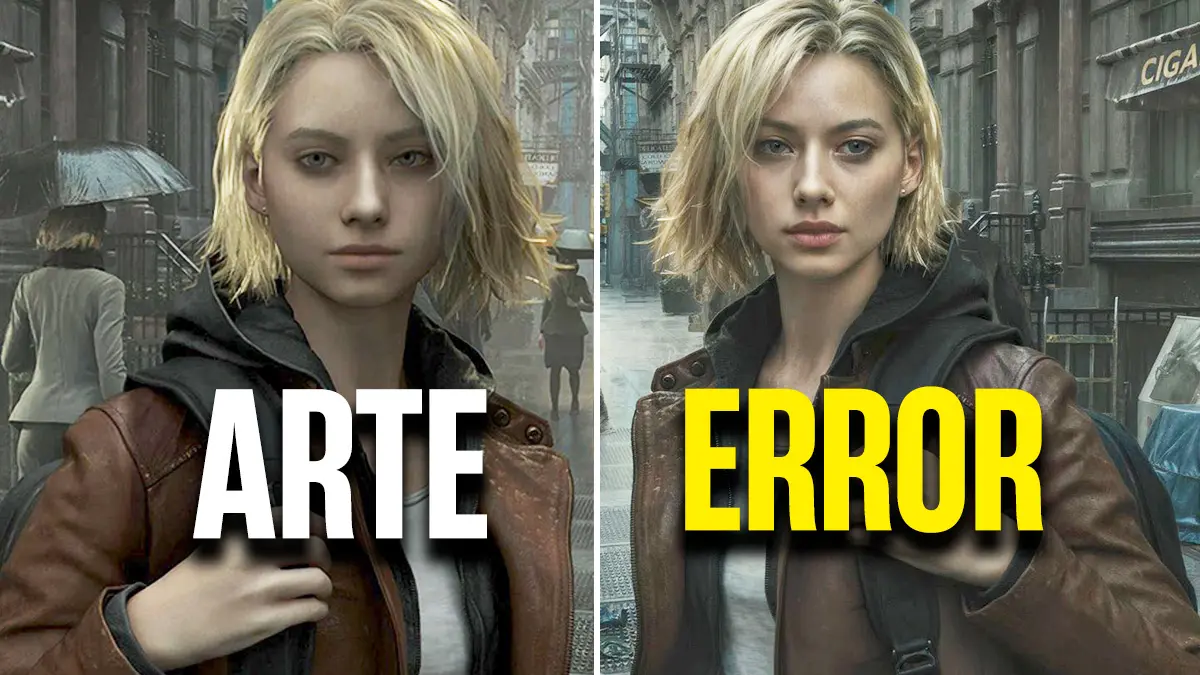
And now we’re baking that hollowness into a hardware feature. We’re turning it into a checkbox: “Enable AI photoreal lighting (beta).” If this is the future Nvidia wants us to celebrate, I want no part of it.
Outsourcing Your Imagination: The TTRPG Wake-Up Call
This isn’t just about graphics for me; it’s about a broader shift in how we relate to creativity.
Not long ago I played my first tabletop RPG campaign with a new group. Classic character creation session, right? I was hyped to dig into who my character was, what he feared, what he wanted. Then I realized half the table had done the same thing: they’d asked an AI chatbot to write their character backstory, their traits, even their damn personality quirks.
It honestly bummed me out. The whole point of roleplaying is that you put a piece of yourself into that avatar – your fantasies, your anxieties, your weird sense of humor. When you outsource that to an algorithm trained on a slurry of fiction tropes, what are you actually playing? A prompt engineering exercise?
DLSS 5 feels like the visual equivalent of that. Instead of letting a game look like what its creators meant it to look like, we’re handing the final pass to a machine trained on a vast dataset of “this is what real skin and real metal should look like,” and we’re saying, “You finish it for us.”
Where’s the joy in that? Where’s the weirdness, the rough edges, the deliberate exaggerations? Where’s the part that actually tells you, “A human being cared about how this scene makes you feel”?
The “More AI = Cheaper Games” Myth Is Straight-Up Delusional
Whenever I push back on this stuff, I inevitably see the same argument: “Relax, more AI will just make games cheaper to make. Less work for devs, lower prices for us in the long run.”
Come on. You don’t actually believe that, do you?
Come on. You don’t actually believe that, do you?
🎮 Get This Game at the Best Price
Compare prices instantly and save up to 80% on Steam keys with Kinguin — trusted by 15+ million gamers worldwide.
*Affiliate link — supports our independent coverage at no extra cost to you
AI isn’t free. Running massive inference models in real time isn’t free. Training them sure as hell isn’t free – not for Nvidia, not for the studios integrating this junk, and definitely not for the planet. We’re already seeing the collateral damage: the cost of high-end GPUs, the squeeze on RAM and storage markets, the crazy energy demands of big AI clusters.
Do you seriously think those costs are going to translate into lower game prices rather than fatter margins?
We’ve been through this cycle already. Games ballooned in scope and fidelity, studios invested in new engines and tech, and what did we get? $70 base prices, deluxe editions, season passes, battle passes, “early access” for preorders, and microtransactions stapled on top. Why would this new wave of AI-driven rendering be any different?
The more likely scenario is brutally simple:
- Nvidia and partners sell DLSS 5-capable GPUs at a premium, because now they’re “AI workstations for the living room.”
- Publishers lean into AI-driven features as a marketing bullet point: “Next-gen photoreal immersion! Only on RTX!”
- Game budgets bloat around integrating these tools into pipelines, while actual creative staff get squeezed.
- We’re told that higher prices are unavoidable because “you demanded this level of realism and AI, and it costs money to deliver.”
Meanwhile, the fundamental lie stays intact: that a game which “looks more real” automatically required more artistic effort and therefore deserves a higher price tag, even if a big chunk of that look came from a black box slapping the same pseudo-photoreal filter on everything.
Indies Are Quietly Showing a Better Future
The cruel irony is that while Nvidia is onstage preaching the gospel of photorealism, the games that actually move me the most right now look nothing like that.
Take Revamp, the new game from Spanish indie studio Digital Sun (the folks behind Moonlighter and Cataclismo). I watched the trailer and instantly knew what kind of experience they were going for. The art direction is sharp and deliberate: a clear homage to Castlevania, with a crisp, hand-crafted style that balances darkness with a playful, almost mischievous tone.
You can read so much about that game’s identity from just a single minute of footage. It telegraphs humor, pace, mood, nostalgia, and attitude before a single line of dialogue is read. That’s art direction doing heavy lifting – not some after-the-fact AI trying to “fix” it by making the candles more physically accurate.

And it’s not just Revamp. Look at Hades, Hollow Knight, Celeste, Hyper Light Drifter, Pizza Tower. These games don’t look “realistic,” and nobody cares. They look like themselves. You can’t confuse a screenshot from Hades with anything else. That’s cultural diversity at a visual level – different regions, different teams, different influences all expressing something specific.
Now picture that diversity slowly strangled by AI-driven rendering defaults. Picture every mid-budget game leaning on Nvidia’s pipeline because it’s cheaper than hiring strong art direction talent. Picture studios being told by marketing, “Players expect DLSS 5 and AI photoreal lighting now – we can’t ship without it enabled by default.”
That’s not a paranoid fantasy. That’s what happens when a tool becomes a standard. We’ve already watched it play out with “realistic” PBR materials, with Unreal Engine’s signature look, with the same overused bloom and film grain filters in a hundred AA shooters. DLSS 5 just takes that homogenization and engraves it directly into the GPU stack.
AI as a Tool? Sure. AI as the Default Look? Absolutely Not.
I’m not anti-technology. I’m not even anti-AI in a blanket sense. If a dev team wants to use AI internally as a rough lighting preview tool, or to generate quick placeholder materials they’ll later repaint by hand, or to help scale performance on lower-end hardware, fine. Tools are tools. Used under tight artistic supervision, they can save time without wrecking intent.
What I’m against is this: turning AI rendering into a user-facing, default-on “enhancement” that overrides a game’s chosen aesthetic in the name of some fake universal ideal of realism. I’m against pretending that an AI filter is just a neutral upgrade, rather than a creative choice being made after the actual creatives are done.
Nvidia can insist all they want that DLSS 5 will be “optional” and “tunable by artists,” but we’ve heard that song before with other tech. Once hardware vendors and platform holders decide something is the future, the pressure is immense. Studios that opt out will be treated as “behind the times.” Players will be conditioned to see non-AI-lit games as ugly or “last gen,” no matter how smart the art direction actually is.
And that’s the core of my problem: the dlss nvidia futuro being sold to us isn’t a future of more expressive, more varied, more human games. It’s a future where visual identity is steadily ironed flat by whatever the dominant AI stack thinks “good graphics” look like this year.
Where I Draw the Line as a Player
So what do I actually do with all this frustration, other than yell into the void online?
For starters, I’m done blindly trusting that “graphics options” are always improvements. If DLSS 5 or its clones show up in the settings menu, my default is going to be: off. If turning it on makes a game look like a generic AI-assisted tech demo instead of a distinct work of art, I’ll take the “inferior” version every single time.
I’m also rethinking my upgrade path. I’m not shelling out four figures for a GPU whose headline feature is an AI filter I fundamentally disagree with. If the main pitch is “your old games will look more ‘real’ now,” I honestly don’t care. I’d rather play them as the artists made them, warts and all, than see them forcibly morphed into 2026’s idea of photorealism.
Most importantly, I’m putting my money behind studios that clearly give a damn about art direction over hardware flexing. If an indie game nails a cohesive style on a fraction of a AAA budget, that tells me those devs respect my time and my imagination more than a publisher cramming in every AI buzzword under the sun.
If we just shrug and accept DLSS 5 as the inevitable future, we don’t get to act surprised later when every big release looks like a slightly tweaked variant of the same AI-lit blockbuster template. We don’t get to complain when prices creep toward 100 or 120 euros and publishers point at their AI-driven pipelines as the excuse.
This isn’t about being a luddite or fearing new tech. It’s about drawing a line and saying: games are art first, technology second. If your fancy AI lighting makes them less human, less distinct, less culturally rich, I don’t care how efficient it is. That’s not progress. That’s a very expensive step backward wrapped in a shiny keynote.
Nvidia can keep calling DLSS 5 “the future of graphics.” As far as I’m concerned, if this is the future they’re offering, I’ll be happily stuck in the past with my weird, imperfect, human-made games.
FinalBoss // Gear
Level up your setup
01Graphics cardson Amazon→02Gaming laptopson Amazon→03High-refresh gaming monitorson Amazon→04Discounted game keyson Kinguin→Affiliate links · As an Amazon Associate, FinalBoss earns from qualifying purchases.
Want to Level Up Your Gaming?
Get access to exclusive strategies, hidden tips, and pro-level insights that we don't share publicly.
Ultimate Gaming Strategy Guide + Weekly Pro Tips