
Table of Contents (11)
The night Midnight launched, I realized I was done sprinting
The first night of World of Warcraft: Midnight, my guild chat looked like a stock ticker having a panic attack.
“68 already.”
“Hit 72, skipping all RP, let’s go.”
“Voidstorm campaign done, what’s the fastest Prey route?”
I’ve played WoW on and off since vanilla. I’ve done the no-life thing. I’ve taken time off work for expansions. I remember chain-running Utgarde Keep in Wrath until my eyes felt like they were actually bleeding. But this time, sitting there in a freshly remade Silvermoon with the Midnight soundtrack humming away, I did something borderline sacrilegious by old-me standards:
I logged out after the prologue.
Not because it was bad. Quite the opposite. Midnight’s intro was the first time in years I felt even a shred of that old-school Warcraft magic – the kind where you actually want to read the quest text instead of mashing the accept button like a lab rat. I walked through the revamped Eversong, checked out the visual glow-up, poked my head into my starter housing plot, then called it a night.
Meanwhile, Discord was full of people treating this like a 48-hour esports event. Routes, spreadsheets, XP-per-hour breakdowns. Four days of paid early access only poured gasoline on it; those folks were already sitting in early delves and theorycrafting endgame builds while the rest of us were still clicking through our first dialogue box.
That’s when it really clicked for me: this “speed-run the expansion or get left behind” mindset is one of the dumbest, most self-sabotaging habits MMO players have collectively decided to adopt. And Midnight, of all expansions, makes that grind-brain feel more out of touch than ever.
The big lie: “If you don’t rush, you’re screwed”
There’s this unspoken rule that weighs on modern MMO launches: the expansion isn’t about the expansion, it’s about the endgame that comes after it. Leveling? That’s “the chore you do to unlock the real game.” Story? “Watch it on YouTube later.” Zones? “You’ll fly over them when you’re geared.”
I bought into that for years. Legion, Battle for Azeroth, Shadowlands, The War Within – launch night meant slamming coffee, stacking XP buffs, forming dungeon chains, and leveling like Blizzard was going to unplug the servers in 72 hours. I hit caps fast. I saw raid content early. And at least half the time, I also hit a brick wall of burnout a few weeks later and just stopped logging in.
Here’s the part nobody wants to admit: that pressure is almost never coming from the game itself anymore. It’s coming from us.
Modern WoW, including Midnight, is stacked with systems specifically designed to make not sprinting completely viable:
- Catch-up gear floods the game a few weeks into the season.
- XP buffs, rested XP, and account-wide unlocks mean latecomers can rocket through levels when they feel like it.
- World quests, delves, and the new hunting/Prey system scale in ways that don’t demand day-one item level.
- Even raids are more accessible than ever thanks to LFR and story modes.
Blizzard still has its share of FOMO nonsense, but Midnight is not Classic WoW. You are not being hard-gated out of content for months because you didn’t chain-pull mobs on launch night.
The “if you’re not 80 by day three you’ll never catch up” line is community cope – a collective justification for playing a brand-new expansion like it’s a limited-time contest instead of a two-year playground.
Midnight is quietly built for savoring, not sprinting
Midnight’s design screams “take your time” if you’re actually paying attention instead of just staring at your XP bar.
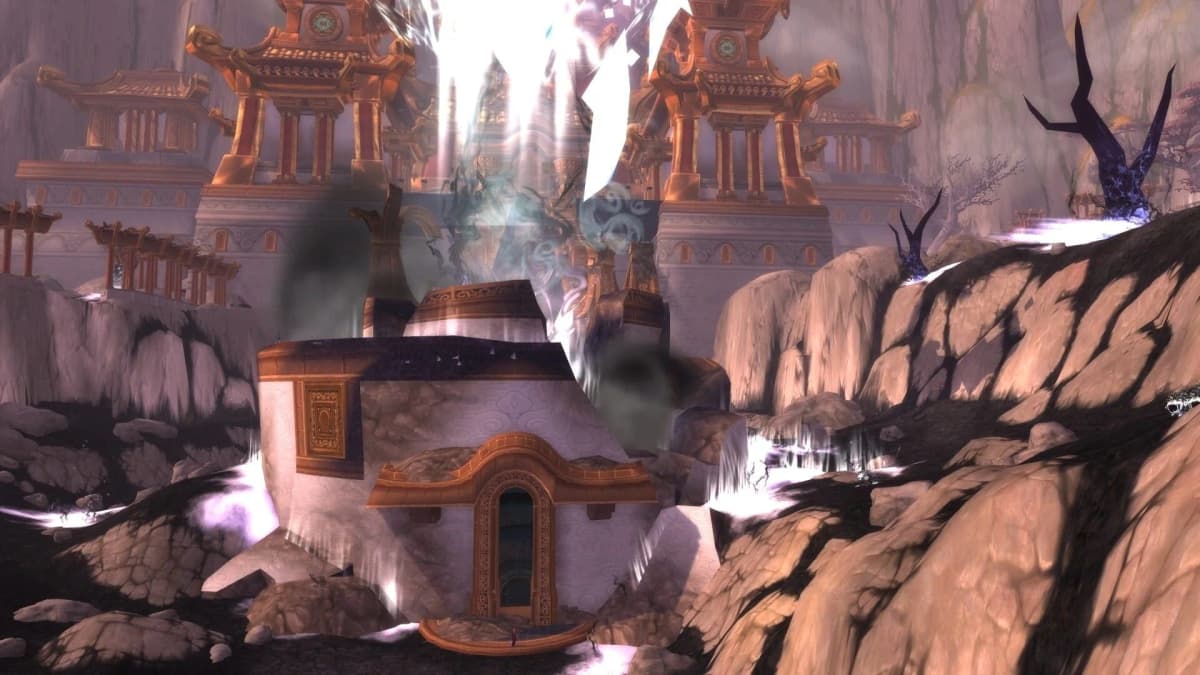
The obvious stuff hits first: the revamped Quel’Thalas is straight-up fanservice for anyone who’s been around since Burning Crusade. Silvermoon finally feels like more than a static backdrop. Eversong and the Ghostlands aren’t just up-resed; they’re threaded into a full Blood Elf-centric storyline that actually rewards listening instead of just following the quest markers like a drunk Roomba.
Then there’s the new systems. The player housing rollout is the clearest clue. Housing is, by definition, not sprint content. It’s long-tail, hobbyist content. It’s about slowly tweaking layouts, collecting cosmetics, showing off to friends, not racing for a World First Sofa of the Void. Same with transmog improvements and visual collectibles: these are there to deepen the expansion’s day-to-day life, not pressure you to hit a gear score threshold in week one.
The Prey open-world hunting system is another anti-speed-run mechanic hiding in plain sight. It encourages roaming, exploring, reacting to dynamic events. It plays way better when you’re paying attention to your surroundings instead of alt-tabbing to check the next hyper-optimized farming loop.
Delves and the continued push for solo-friendly content drive the point home. Midnight doubles down on the idea that you can meaningfully engage with “endgame” without being shackled to a raid schedule or Mythic+ ladder. Blizzard literally shipped solo raid story experiences so people can see the narrative arc without needing to pass some absurd DPS check on a tight timetable.
If you zoom out, the shape of Midnight is obvious: leveling zones full of hand-crafted story beats, a nostalgia-heavy core region to wander through, side systems that reward meandering more than min-maxing, and catch-up mechanics lurking in the wings for when you or your alts eventually want to blast through.
And we looked at all that and collectively said, “Cool, but how fast can we turn this into just another checklist?”
The real villain isn’t Blizzard – it’s pressure culture
Midnight isn’t innocent here. Paid early access absolutely juiced the rush mentality. If you charge people extra for four days of head start, of course those people are going to squeeze those days dry and then flex their progress afterwards. That’s just human nature.
The real villain isn’t Blizzard – it’s pressure culture
Midnight isn’t innocent here. Paid early access absolutely juiced the rush mentality. If you charge people extra for four days of head start, of course those people are going to squeeze those days dry and then flex their progress afterwards. That’s just human nature.
🎮 Get This Game at the Best Price
Compare prices instantly and save up to 80% on Steam keys with Kinguin — trusted by 15+ million gamers worldwide.
*Affiliate link — supports our independent coverage at no extra cost to you
But the way that turns into full-blown pressure culture is on us as players.
Guilds that demand “no-lifing” the first week or you lose your raid spot. Streamers and YouTubers framing every design decision through the lens of “efficiency” and “best use of your limited weekly lockouts.” Discord meta-discussions that treat anyone who dares to stop and listen to an NPC as a dead weight dragging the group down.
Most of us aren’t chasing World First mythic kills. We’re not being paid to stream Midnight for twelve hours a day. Yet we still act like failing to clear every campaign chapter and hit soft-cap ilvl in week one is some kind of personal failing.
I’ve seen the same pattern play out expansion after expansion:
- Launch week: people grind like their sub expires in 72 hours.
- Week three: the same people start complaining there’s “nothing to do.”
- Month two: half of them quietly disappear until the next major patch.
Midnight already has burnouts popping up in chat talking about feeling “done” even though they’ve barely touched housing, ignored half the side zones, and speed-clicked through a story that took a decade of lore threads to set up.
This isn’t a pacing problem Blizzard can fix with some magic timer. It’s a mindset problem. A refusal to accept that maybe, just maybe, the value of a big-box MMO expansion isn’t how fast you can chew through it, but how long it can keep meaningfully entertaining you without feeling like work.
Why slowing down actually makes Midnight worth the money
Here’s where the rubber hits the road for me: I do not have infinite time, and Midnight was not cheap. If I’m paying expansion box price plus a sub, I want months of satisfaction out of it, not three weeks of cracked-out progression followed by a content hangover.
Playing slowly instantly boosts that value. The leveling zones become actual environments, not transit corridors. That quiet little questline in a corner of the Voidstorm that would’ve been an auto-skip on my old meta route suddenly becomes a highlight because it ties into some obscure Burning Crusade callback I vaguely remember from 2007.
Housing is the big one. If you’re sprinting, housing feels like a distraction. “I’ll come back to it when I’m done gearing.” Spoiler: you won’t. You’ll be too deep in weekly chore mode by then. Building the habit of popping back to your place between sessions, grabbing a new decoration from a side objective, slowly shaping a space that feels yours – that’s the kind of stuff that makes Midnight feel like a world, not a treadmill.
Same for hunts, delves, and those little time-limited events that pop up like a Warcraft version of carnival days. The updated Darkmoon-style happenings, shared hubs buzzing with activity, cross-faction randoms emoting and messing around – those moments land way harder when you’re not treating them as “sub-optimal XP compared to chain-pulling in the newest dungeon.”
I’ve had more genuine “this is why I still play MMOs” moments in Midnight just walking around listening to NPCs in Silvermoon or following a breadcrumb quest into a weird little side cave than I ever did slamming my head against a fresh Mythic+ key on 3 hours of sleep.
How to play Midnight at your own pace without sabotaging yourself
This is the part where people usually push back. “Slowing down sounds nice, but I don’t want to be useless in group content.” The good news is that Midnight – and modern WoW in general – is set up so you can absolutely take your time and still be functional when you want to dip into harder stuff.
A few practical ground rules I’ve set for myself
- Cap your daily grind window. I hard-limit myself to a small chunk of time for “maintenance” tasks: world quests, a delve, maybe a dungeon. After that, I am not allowed to think about “optimal.” I just explore, quest, decorate, or log off.
- Read at least one full quest chain per session. Not every quest, I’m not a saint. But one story arc gets my full attention each time I log in. Midnight’s main narrative and some zone chains absolutely justify the effort.
- Use rested XP like Blizzard clearly intends. Logging off in hubs, letting XP stack up, and then burning through a session when it feels good to level is far healthier than forcing yourself through the final grind of a level when you’re already brain-dead.
- Don’t engage with gear FOMO until the first big catch-up wave hits. That first raid tier, first season of Mythic+, first wave of crafted gear updates – that’s when it actually makes sense to care about being “caught up.” Before that, trying to keep pace with no-lifers is a straight path to resenting the game.
- Make housing and cosmetics a core goal, not side fluff. Treating your house, your transmogs, and your collection as main content instead of “when I have time” automatically shifts your mindset from sprinting to nesting.
And for anyone worried about alts: Midnight’s systems already show the usual trend of making subsequent playthroughs smoother. Account-wide unlocks, XP catch-up, and streamlined campaign options make it trivial to blast an alt through the story later. That’s when you min-max routes if you crave that efficiency hit – on your second or third character, not the first time you’re seeing this stuff.
What I’m watching to see if Midnight’s “slow lane” actually sticks
I’m not naïve. WoW’s community habits are stubborn. There will always be players and guilds treating every expansion like a checklist race. But Midnight does feel like a turning point, not just for the game’s systems but for how feasible it is to openly say “I’m not racing this time” without being completely locked out of meaningful content.
Over the next few months, a few things will show how strong the slow lane really is:
- Season 1 raid progression. If story mode and flex difficulties see solid uptake even among slower, more casual players, that’s a clear sign you don’t need to be a launch-week sprinter to participate in the “big” moments.
- Housing feature rollouts. If patches expand housing with new neighborhoods, systems, and rewards, Blizzard is betting on long-term, creative engagement – the natural enemy of speed-run culture.
- Alt catch-up tweaks. When Blizzard inevitably buffs XP gains, adds more account-wide unlocks, and tosses in catch-up gear vendors, it will only further undercut the argument that you had to grind like a maniac at launch.
- Community sentiment on forums and Reddit. There’s already a visible split between the “burned through it, now bored” crowd and people openly loving a slower, story-first approach. If that second group keeps growing, it changes the social pressure calculus.
I fully expect Midnight to have the same uneven patches and balance drama every WoW expansion gets. But if the long-term takeaway is that the players who didn’t sprint are the ones still happily puttering around in their Blood Elf mansions six months from now, that sends a stronger message than any design blog post.
This is where I draw the line on how I play new expansions
Midnight forced me to admit something I probably should’ve realized years ago: tearing through expansions like a to-do list is my problem, not the game’s. WoW absolutely has design sins, but speed-running the fresh story, zones, and systems has never once made me enjoy an expansion more. It’s just made me the first one to reach the point where everything turns into chores.
So I made myself a promise for Midnight and whatever comes after it: no more treating launch like an emergency. No more turning off the music, muting NPCs, and sprinting between objective markers with a podcast blasting just to “be efficient.”
If that means I’m behind the curve on raid unlocks, so be it. If that means someone in /trade flexes their early achievement while I’m still happily wandering through a side zone they already forgot existed, I’m fine with that. The expansion doesn’t vanish because I chose to breathe.
Midnight is the first time in a long time that WoW has genuinely felt like a world I want to live in for a while instead of a box of content I’m obligated to empty. I’m not going to ruin that by roleplaying as a hamster in a lab experiment for the first two weeks.
The pressure to treat every expansion like a speed-run is real, but it is also voluntary. Midnight gives you permission to ignore it. I’m taking that permission and running in the opposite direction – slowly, on foot, detouring through every weird little quest hub I can find.
If WoW is going to survive into yet another decade, it won’t be because a tiny slice of players no-lifed the first raid tier. It’ll be because more of us remembered that it’s allowed, even in 2026, to log into Azeroth, take a deep breath, and just exist in it at our own damn pace.
FinalBoss // Gear
Level up your setup
01Racing wheels (PC & PS5)on Amazon→02High-refresh gaming monitorson Amazon→03Gaming chairson Amazon→04Discounted game keyson Kinguin→
Affiliate links · As an Amazon Associate, FinalBoss earns from qualifying purchases.
Want to Level Up Your Gaming?
Get access to exclusive strategies, hidden tips, and pro-level insights that we don't share publicly.
Ultimate Gaming Strategy Guide + Weekly Pro Tips