
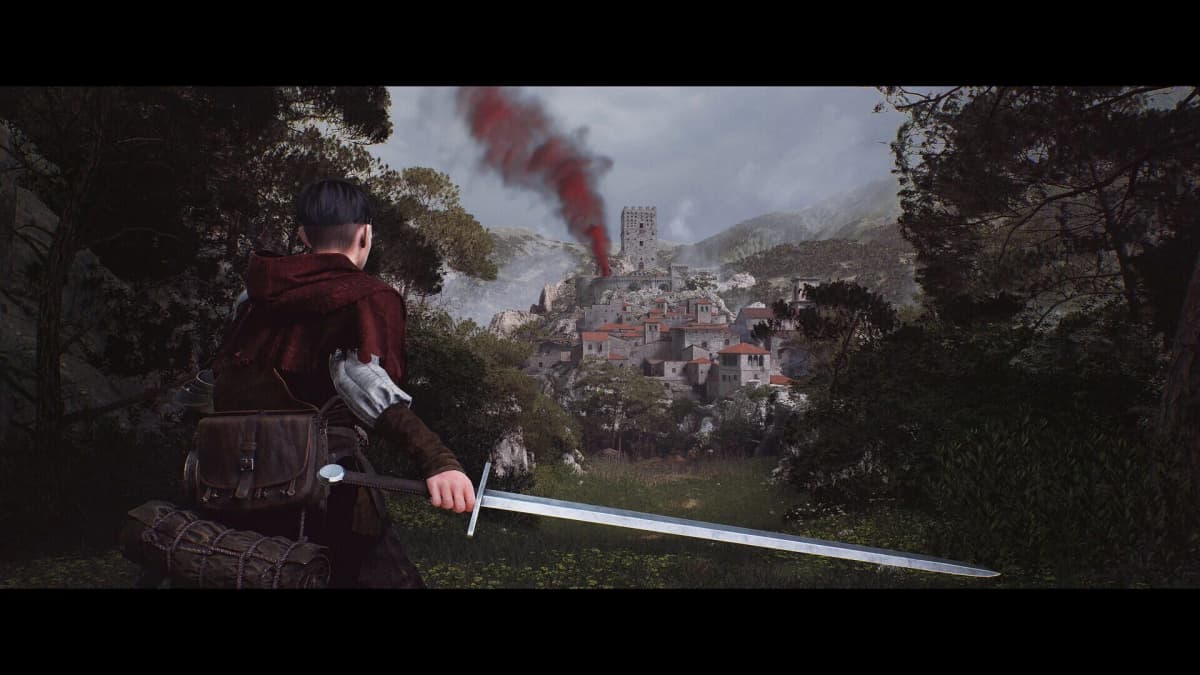
A ridge outside a plague-struck village sold me on EX Voto 1348 for about thirty seconds. The light was gorgeous in that dry, golden Tuscan way, the stonework looked almost too clean to be part of a game this small, and the whole frame had the kind of photoreal pull that makes you lean in a little. It felt like the start of a medieval obsession. Then someone spoke. The face barely moved. The eyes stared ahead like glass marbles. A few minutes later I was pushed down another narrow path, into another blunt fight, on my way to another destination that never felt like a real place. That rise and collapse is the whole experience in miniature.
This is a short PS5 action-adventure set against the Black Death and religious fanaticism, following a woman knight on a desperate search for her beloved Bianca. Credits come after roughly five hours, though crashes and chapter restarts can make it feel longer in the least flattering way. What stays with me is not one single disaster. It is the frustration of seeing a game with a striking setting, strong voice acting, and one legitimately satisfying combat mechanic constantly undercut by corridor level design, empty environmental storytelling, and bugs that break the rhythm every time it starts to build one.
The result is mixed in the truest sense. There is something here worth noticing. There is also not enough of it, and what surrounds it often feels half-finished.
Table of Contents (9)
Key takeaways
- EX Voto 1348 looks impressive on PS5 in 4K, especially in its sunlit Tuscan landscapes and stone villages.
- The visual illusion falls apart up close because facial animation is weak and character eyes look oddly fixed and lifeless.
- Level design is painfully linear, with very little to discover off the main path and almost no meaningful environmental storytelling.
- Combat is repetitive for most of the game, though parrying becomes a genuine bright spot once unlocked and understood.
- Jennifer English and the wider voice cast do serious heavy lifting, often making scenes land harder than the writing itself.
- Bugs, collision problems, enemies getting stuck, and crashes drag down an already short campaign.
A medieval postcard with waxwork people in it
The easiest thing to praise is the broad visual read. On PS5 in 4K, EX Voto 1348 can look beautiful from a few steps back. The landscape work is strong. Hills roll out under warm light, villages sit in the distance with a painterly sense of place, and the Mediterranean color palette gives the game a personality that instantly separates it from the muddier, grayer medieval worlds that so many games default to. If all you saw were screenshots of the countryside, you could easily convince yourself this was a hidden gem.
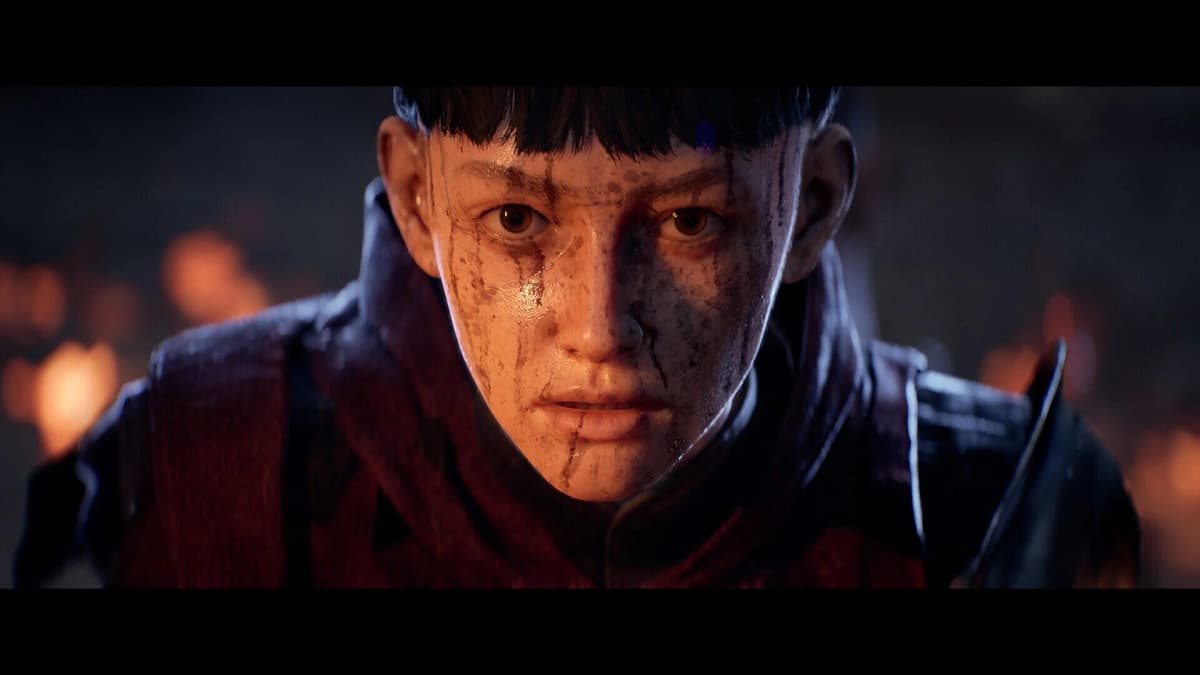
That impression does not survive close inspection. Faces look unfinished, not stylized. There is a stiffness to them that kills scene after scene, and the eyes are the biggest culprit. They are too round, too fixed, too dead. Characters can be speaking with real emotion, thanks to the cast, while their models stand there like preserved figures in a chapel display. It is uncanny in the wrong way. Instead of feeling pulled into a desperate plague-era journey, I kept being reminded that I was watching game puppets in expensive costumes.
That contrast becomes the game’s visual identity whether it wants it or not: strong environmental art, weak human expression. The world looks more alive than the people in it. In a story that leans hard on longing, fear, faith, and grief, that is not a small problem. You need faces to carry some of that burden. Here, the actors are doing the work while the models stand in their way.
A plague story that rarely feels inhabited
The bigger disappointment is not even technical. It is structural. EX Voto 1348 is built like a long corridor that occasionally puts on a nice mask. Paths twist, gates open, villages burn, but the feeling is the same almost everywhere: walk forward, hit the next checkpoint, trigger the next encounter, move to the next zone. Side spaces rarely matter. Curiosity is almost never rewarded. The game does not seem interested in the idea that a player might want to stop, read the room, and piece together what happened here before the protagonist arrived.
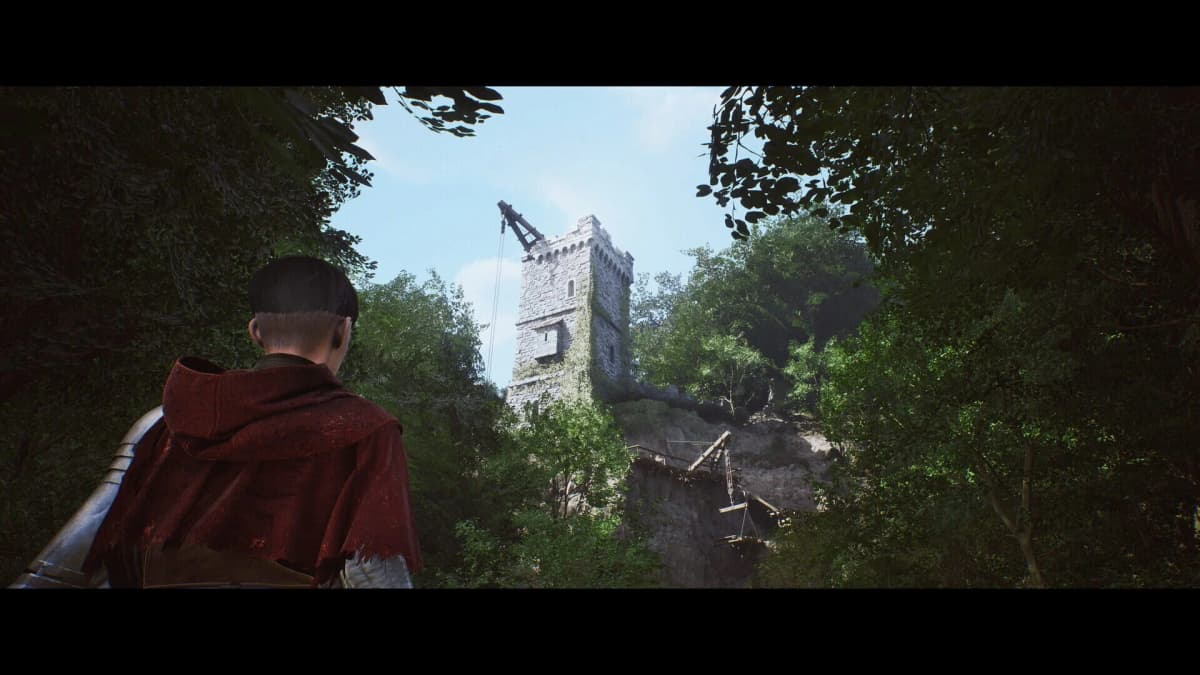
That emptiness hurts more because the premise should have been fertile ground. Black Death. Religious fanaticism. A knight chasing a loved one across a frightened, collapsing world. There is enough there for a memorable, intimate medieval road story. Instead, the plague and the zealotry often feel like labels dropped into dialogue rather than forces shaping every inch of the space. You pass through places rather than learning from them. There are no meaningful notes to uncover, no tragic little tableaus that make you pause, no conversations with side characters that thicken the world beyond the immediate objective.
That is where the comparison to A Plague Tale becomes useful. Not because the two games are trying to be the same thing mechanically, but because that series understands how a setting can tell on itself. A cart left in haste, a room sealed from the inside, a body positioned in a way that says more than dialogue ever could. EX Voto 1348 does not have that instinct. Its spaces are often just routes to the next fight. Even the story’s emotional motor suffers from this. Bianca is constantly the reason you keep moving, but she starts to feel less like a person in a world and more like the excuse the game uses to send you to the next chapter.
The irony is that the game clearly wants weight. It wants decay, obsession, loss, and moral ugliness. It just does not build a world sturdy enough to hold those themes. You cannot lean on atmosphere alone when the spaces have so little to say.
Combat only wakes up when parry enters the room
Playing EX Voto 1348 feels strange from the hands outward. The button mapping is counterintuitive in a way that never really becomes elegant. Face buttons feel oddly abandoned while too much is pushed onto the triggers, and the basic rhythm of fighting quickly settles into repetition: attack, pressure guard, break guard, repeat. The game offers two stances, but they do not meaningfully change your thinking. They exist, yet most encounters still collapse into the same blunt routine.
The problem is not that combat is simple. Plenty of short action games work because they are simple and sharp. The problem here is sameness. Enemy animations start to blur together. Your own strings stop feeling expressive. Encounters appear in spaces that do not encourage much improvisation, so the whole thing becomes a test of tolerance rather than skill. By the middle stretch, I was not asking how to win more stylishly or cleverly. I was asking how quickly I could get this room over with and return to the one thing the game does better than fighting: looking good from a distance.
Then the parry comes along and, for a while, everything improves. It is unlockable, a little demanding to learn, and easily the best mechanic in the game. Timing a clean deflection finally gives combat some snap. There is a real little spark there, the sense that the system has briefly remembered it should feel good rather than merely functional. I genuinely liked those moments. They made the first boss stand out more as well, especially because that encounter arrives with one of the better pieces of writing in the campaign: a bandit leader talking about the burden of command in a way that suggests a deeper game hiding under the surface.
But parry cannot save the whole structure. It adds seasoning to a meal that still lacks substance. Once the novelty settles, the fights go back to feeling recycled, and the game does not have the enemy variety, encounter design, or movement freedom to push beyond that.
The voice cast works harder than the script
If I sound harsh on the game, the actors deserve to be separated from that frustration because they are doing excellent work. Jennifer English, voicing Bianca, brings warmth and inner life to material that often leaves too much unsaid. More broadly, the cast gives scenes shape and texture that the facial animation and staging cannot. There were multiple moments where I stayed emotionally engaged because of a vocal performance after the scene itself had already done everything possible to flatten the mood.
That matters in a game this short. A five-hour campaign cannot afford weak performances, and EX Voto 1348 at least gets that part right. The problem is that the script rarely rises to match the talent reading it. Emotional beats are present, but the connective tissue between them is thin. Themes of faith, disease, desire, and class tension flicker in and out rather than gathering force. You can sense the outline of something more daring, maybe even more intimate, but the finished version tends to rush onward before those ideas can leave a bruise.
The soundtrack is less successful. A few pieces are pleasant enough, but very little sticks, and the combat music becomes repetitive fast. Too often the game falls back on ambient emptiness that does not feel purposeful. Silence can be powerful in a plague-ridden medieval story. Here it often reads more like absence than intent, as if the soundscape ran out of things to say. That leaves the actors carrying even more of the mood by themselves.
PS5 technical issues turn a short campaign into a stubborn one
A five-hour game can survive a lot if it stays in motion. EX Voto 1348 does not. On PS5, the technical problems are not rare little blemishes. They actively shape the experience. Enemies can get caught on scenery. Collision can behave badly enough to make spaces feel rough and unreliable. Crashes happen. In the worst cases, I had to replay chapters just to keep moving toward the ending.
That is the kind of issue that changes the conversation around value. If a short game is tightly paced, polished, and memorable, five hours can feel perfect. If a short game is unstable, mechanically thin, and constantly interrupting itself, five hours can start to feel oddly exhausting. That is where EX Voto 1348 lands. Its campaign is not long, but it still drags because it burns time in the wrong places: repeated fights, dead-end pacing, restarts after bugs, and stretches of walking through spaces that look lovely but say nothing.
I do not want to oversell the technical disaster angle and pretend every minute is broken. It is not that. There are stretches where the game behaves, and when it does, the art and acting can briefly convince you it is about to turn a corner. That is almost more frustrating. The competence is visible. So is the gap between what the game wants to be and what it currently is.
Who should play it and who should walk away
There is an audience for this, but it is narrow. If you care deeply about medieval settings, you can tolerate linear structure, and you are specifically hungry for a short, voice-driven adventure with some striking environmental art, there is enough here to justify keeping an eye on future patches or a deep sale. The atmosphere does have moments. The parry mechanic does add a little steel to the combat. The performances are good enough that I never felt embarrassed for the cast being here.
Most players should be more cautious. If you want your medieval world to feel lived in, if environmental storytelling matters to you, if repetitive combat wears you down quickly, or if bugs can poison your mood in a short game, this is hard to recommend in its current state. Anyone coming in hoping for something with the tactile narrative density of A Plague Tale, or the kind of worldbuilding that makes faith and decay feel inseparable from the environment, is going to hit a wall fast.
Bottom line
EX Voto 1348 is a missed opportunity more than a failure without merit. Its photoreal Tuscan scenery is genuinely eye-catching at a glance, the voice cast adds conviction the script cannot always provide, and the parry system hints at a sharper action game hidden underneath. But those positives sit inside a shell weakened by stiff facial work, corridor level design, thin environmental storytelling, repetitive combat, and technical issues serious enough to force restarts. I finished it feeling less angry than disappointed. There is craft here. There is just not enough game around it.
TL;DR
- Best part: the PS5 4K presentation of plague-era Tuscany and a very strong voice cast, especially Jennifer English.
- Biggest problem: a rigid corridor structure that makes exploration feel pointless and leaves the world strangely hollow.
- Combat starts bland, improves once parry is unlocked, then settles back into repetition because the encounter design never grows with it.
- Technical issues matter here: crashes, collision trouble, and enemies getting stuck can force chapter replays in a game that only lasts around five hours.
- Recommended for: players who can forgive rough mechanics in exchange for atmosphere and performances.
- Skip or wait if: you need polished combat, meaningful exploration, or a medieval setting that tells its story through the world rather than just talking about it.
FinalBoss // Gear
Level up your setup
01Top-rated gaming headsetson Amazon→02High-refresh gaming monitorson Amazon→03Gaming chairson Amazon→04Discounted game keyson Kinguin→Affiliate links · As an Amazon Associate, FinalBoss earns from qualifying purchases.
Want to Level Up Your Gaming?
Get access to exclusive strategies, hidden tips, and pro-level insights that we don't share publicly.
Ultimate Reviews Strategy Guide + Weekly Pro Tips