

Exodus has earned the Mass Effect comparison, but fans will ruin their own expectations if they treat it as Mass Effect 2.0. Archetype Entertainment is clearly reaching for the same emotional territory: a third-person sci-fi RPG, a hand-picked crew, cinematic conversations, dangerous missions, romances, moral pressure, and the constant promise that the people beside you matter as much as the aliens shooting at you.
That is a powerful pitch. It is also a loaded one. “Spiritual successor” has become a lazy marketing phrase in games, usually deployed whenever a studio wants the halo of a beloved series without accepting the burden of proving it. Exodus has more credibility than most because Archetype was formed by former BioWare developers, including narrative director Drew Karpyshyn. The game has carried that Mass Effect-shaped expectation since its reveal at The Game Awards in December 2023.
Now there is a hard date attached to the promise. Exodus launches on April 7, 2027 for PC, PlayStation 5, and Xbox Series X|S, with the PC version coming to Steam and the Epic Games Store. The release-date reveal at Gamescom 2026 Opening Night Live put a very specific face on Archetype’s ambitions: Salt, an awakened octopus companion who operates a mech suit, lays down long-range fire, and can throw up ink-smoke curtains to blind enemies.
That absurd sentence is exactly why I think Exodus has a shot. Salt is the kind of companion concept that tells me somebody at Archetype understands the assignment. Great party RPGs need teammates with more personality than a damage number and a tragic codex entry. Salt sounds strange, useful, visually memorable, and built to create stories players will immediately repeat to one another. That is real companion-RPG DNA.
Table of Contents (6)
The Mass Effect DNA Is Obvious, and It Matters
Exodus uses the familiar over-the-shoulder camera, real-time gunplay, companion-focused mission setup, cinematic dialogue, and choice-driven story structure that made Mass Effect such an easy reference point. Archetype is not asking players to squint until they see the resemblance. The trailers put it front and center.
The game’s companion framework is especially important. Jun Aslan, the Traveler at the center of Exodus, gathers allies for missions across a collapsing interstellar civilization. Those companions offer firepower, support, personal motivations, friendships, and romance opportunities. Emrys, a Celestial member of the Deva species, even channels stolen power back into Jun as protection. That is more than a decorative party roster. It suggests characters built into the action loop and the emotional spine of the campaign.
For players exhausted by faceless open worlds full of interchangeable quest markers, that focus is a relief. I want crew members with opinions. I want missions to feel different depending on who came with me. I want the person saving my life in a firefight to have enough history with my character that the rescue lands as more than a scripted animation.
Exodus is pursuing that feeling. The June 2026 gameplay footage showed direct combat, traversal, party interaction, and dialogue rather than hiding behind a vague cinematic trailer. The groundwork for a proper character-driven sci-fi RPG is there. Calling it a Mass Effect spiritual successor makes sense when the promise is companionship, cinematic momentum, and player decisions with personal weight.
But Exodus Has a Different Fantasy at Its Core
Mass Effect built its identity around authority. Its central fantasy was leading an elite team through galaxy-defining conflict. Exodus puts players in the role of a Traveler, a salvager forced into a survival story that grows into something far larger. That distinction changes everything.
Jun is not being sold as a polished military commander with institutional power and a fleet waiting for orders. Exodus leans into a harsher, more unstable kind of science fiction: humanity altered by alien forces, civilizations under pressure, the Silicates and Daemon material, and a universe where travel itself can rip people apart across time.

Lightspeed travel advances time by years or even decades for the people left behind. The Traveler can depart for an “exodus” mission and return to a world that has moved on without them. That is the feature that should define Exodus far more than the Mass Effect comparison. A companion drama hits differently when distance does not merely separate people across star systems; it lets time steal whole chapters of their lives.
That premise has real teeth. It can make a choice feel less like a morality meter bump and more like a wound that keeps opening long after the player has moved on. A decision made during one mission could become painfully relevant when Jun returns decades later to find a community transformed, a relationship aged into resentment, or an old promise rendered impossible by the clock.
That is a far more interesting direction than simply recreating a familiar galaxy map and filling it with another batch of charming specialists. Exodus needs to trust its own premise. Time dilation is not lore wallpaper. It is the game’s best chance to make player choice feel cruel, intimate, and genuinely sci-fi.
Combat Looks Faster Than the Comparison Suggests
The danger of the Mass Effect label is that it encourages players to expect a certain kind of squad control. Exodus has not promised a full party-command system where players are constantly pausing, directing every ability, and building encounter plans around tightly managed power combinations.
What Archetype has shown points toward a more immediate action RPG. Players bring a couple of companions on a mission, companions provide support and firepower, and Jun is clearly the active center of combat. The March 2026 trailer also showed a grappling hook and vertical traversal tools that push Exodus toward faster, more movement-heavy level design.
That is good news, frankly. I do not want Exodus chained to somebody else’s combat rhythm simply because it shares a camera angle and a party roster. Grappling through an alien environment, breaking sightlines with Salt’s ink screen, then shifting positions while a mech-piloting octopus provides sniper support sounds like its own action fantasy. It has speed and physicality that fit a scavenger-survivor story far better than stiff cover-to-cover imitation would.
The problem is expectation management. Players should not assume deep class trees, elaborate buildcraft, complete party micro-management, or intricate ability chaining until Archetype puts those systems on the table. The public material has not nailed down the full class structure, defensive options, ability economy, or the depth of RPG progression. Anybody treating a cinematic trailer as proof of a massive tactical system is filling in blanks with nostalgia.
Companions Need to Be More Than Great Trailers
Salt has already done more to sell Exodus than a dozen solemn monologues about destiny. An awakened octopus in a mech is a brilliant piece of character design because it instantly raises questions about personality, combat role, loyalty, and just how strange this universe is willing to get. Salt feels like a companion built to be remembered rather than a mascot engineered to appear on a collector’s box.
Emrys carries a different kind of intrigue. A celestial being from a species defined by many consciousnesses has the potential to make the party dynamic properly alien, especially when that character’s support power literally protects Jun. Archetype has room here to make the crew feel less human-shaped than the usual collection of space rogues, soldiers, and wisecracking technicians.
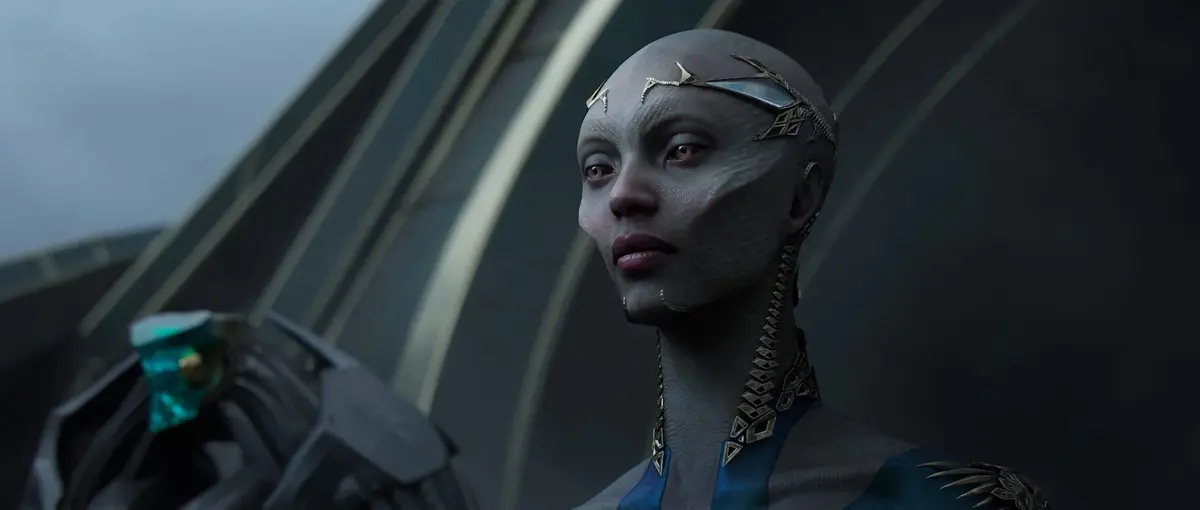
Still, personality hooks are the opening bid. The real test is whether companions change the texture of play. Do mission choices alter their loyalty? Can a relationship collapse without the game quietly steering everyone back to the same broad outcome? Will bringing Salt instead of Emrys do more than swap damage types and a few voice lines? Can Jun’s time-dilation journeys leave meaningful scars on the people who stay behind?
Archetype has confirmed friendship, guidance, and romance, which is enough to establish intent. It has not yet defined the full romance roster, companion count, customization depth, or how deeply party members reshape missions. Those details will decide whether Exodus earns the emotional devotion that the Mass Effect comparison invites.
“Choice-Driven” Needs Proof, Not Vibes
Every RPG trailer has learned to say “your choices matter.” The phrase barely registers anymore because games have spent years using it to describe dialogue detours that end at the same boss door. Exodus has a stronger opportunity than most because time dilation gives it a natural way to show consequence across a huge span of time.
That opportunity also makes vague promises less acceptable. Archetype does not need to publish a spreadsheet of endings, but it does need to demonstrate the scale of reactivity before launch. The current material does not confirm how many major ending states Exodus has, how faction alignment works, whether choices permanently transform regions, or how often the party can break apart over Jun’s decisions.
I am not demanding a hundred disconnected story branches. That approach can turn a narrative RPG into a pile of underwritten fragments. I want consequences with shape. If Exodus asks me to leave people behind for decades, it should have the nerve to make that absence matter when I come back. If Jun’s crew is the game’s heart, the game should allow that heart to crack.
The strongest version of Exodus does not copy the biggest possible galaxy-state fantasy. It makes a smaller number of choices hit with horrifying permanence because time makes reversal impossible. That is a sharper and more honest use of the premise.
Exodus Should Stop Borrowing Confidence From Mass Effect
Archetype should keep the comparison because it tells the right audience where to look: here is a cinematic sci-fi RPG where companions, conversations, romance, and mission choices are central rather than optional garnish. That promise is earned.
But Exodus will live or die on the things Mass Effect cannot supply for it: a hard-sci-fi world that treats time as a weapon, an action loop built around speed and traversal, companions as strange and mechanically meaningful as Salt, and consequences that make every lightspeed departure feel expensive.
My verdict is simple. Expect Exodus to deliver the emotional pull of a companion-driven sci-fi RPG. Do not expect a carbon copy of Mass Effect’s squad command, progression systems, or galaxy-scale branching until Archetype proves those details. The game looks most exciting when it abandons imitation and lets its own weird, time-scarred identity take the controls. That is the Exodus worth waiting for on April 7, 2027.
FinalBoss // Gear
Level up your setup
01Top-rated gaming headsetson Amazon→02High-refresh gaming monitorson Amazon→03Gaming chairson Amazon→04Discounted game keyson Kinguin→Affiliate links · As an Amazon Associate, FinalBoss earns from qualifying purchases.
Want to Level Up Your Gaming?
Get access to exclusive strategies, hidden tips, and pro-level insights that we don't share publicly.
Ultimate Gaming Strategy Guide + Weekly Pro Tips